CPSC Launches New Spot Checks on Chinese Industrial Protective Clothing
Author
Date Published
Reading Time

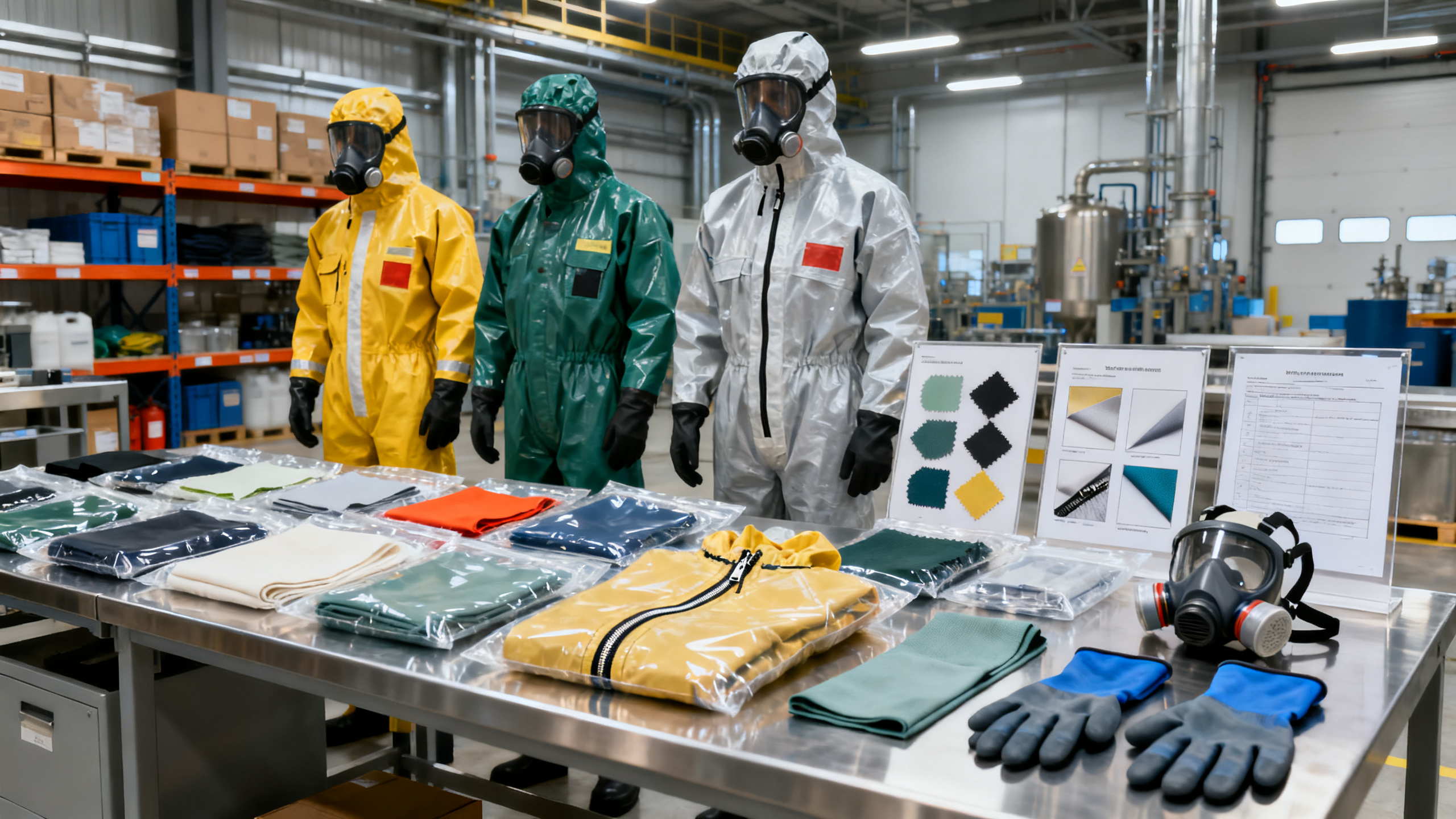
On May 16, 2026, the U.S. Consumer Product Safety Commission (CPSC) announced a targeted inspection initiative for industrial protective clothing imported from China—specifically garments rated for arc flash and molten metal splash protection. This action directly affects PPE and workwear exporters, especially those supplying to U.S. industrial safety markets, and signals heightened scrutiny of flame-resistant (FR) performance consistency under ASTM F1506 and NFPA 2112 standards.
Event Overview
On May 16, 2026, the CPSC issued an official notice initiating spot checks on industrial protective clothing imported from China. The inspections focus on flame resistance verification, particularly compliance with ASTM F1506 (for electrical arc-rated apparel) and NFPA 2112 (for flash fire–rated apparel). As confirmed in the notice, three PPE exporters based in Zhejiang and Jiangsu provinces have already had shipments detained at U.S. ports due to inter-batch Thermal Protective Performance (TPP) value deviations exceeding 5%. These firms are required to submit third-party retest reports bearing UL or FM certification before clearance can resume.
Industries Affected by This Action
Direct Exporters (PPE & Workwear Manufacturers)
These companies face immediate customs delays and potential shipment holds. Since CPSC’s enforcement targets product-level FR performance consistency—not just documentation—their exposure lies in batch-to-batch variability in fabric TPP values, especially when sourcing from multiple dye lots or subcontracted finishing facilities.
Raw Material Suppliers (FR Fabric Producers)
Suppliers of base fabrics—including modacrylic, aramid, and FR-treated cotton blends—are indirectly impacted: export clients may now impose tighter tolerances on TPP reporting and require pre-shipment validation against final garment construction. A single non-conforming lot could trigger downstream compliance failures across multiple OEMs.
Contract Manufacturers & Garment Assemblers
Facilities that cut, sew, and label FR garments for foreign brands must verify whether their processes—such as seam reinforcement, lining selection, or post-sew flame-retardant reapplication—affect final TPP outcomes. CPSC’s focus on ‘garment-level’ performance means assembly practices are now part of the compliance scope, not just fabric specs.
Distribution & Compliance Support Providers
U.S.-based importers, customs brokers, and testing consultants are seeing increased demand for pre-arrival conformity assessments. Their role shifts from documentation facilitation toward proactive technical alignment—e.g., verifying whether submitted test reports reflect actual production batches, not lab prototypes.
What Relevant Enterprises or Practitioners Should Focus On and How to Respond
Monitor CPSC’s Public Updates and Enforcement Patterns
Track CPSC’s official notices and recall bulletins for references to ASTM F1506/NFPA 2112 enforcement frequency, geographic targeting (e.g., port-specific trends), and whether sampling includes finished garments only—or extends to cut panels or raw rolls. This helps distinguish isolated actions from systemic policy shifts.
Prioritize Batch-Level TPP Traceability for High-Risk Categories
Focus verification efforts on arc-rated (ATPV/EBT) and flash fire–rated (NFPA 2112) garments—especially those with layered constructions or mixed-fiber components. Maintain documented TPP test records per production batch, linked to fabric lot numbers, sewing line IDs, and finishing parameters—not just annual certification files.
Validate Third-Party Lab Credentials Against CPSC-Recognized Schemes
Confirm that testing labs used for retesting hold active UL or FM accreditation *specifically for ASTM F1506 and/or NFPA 2112*, and that their scope covers full-garment testing (not fabric-only). CPSC has rejected reports from labs whose accreditation was limited to textile testing without garment-level validation.
Initiate Internal Gap Assessments on FR Consistency Protocols
Review internal quality control procedures for FR performance drift: e.g., whether TPP is measured on finished garments (not just fabric swatches), whether seam allowances and attachment methods are included in test samples, and whether washing/dry-cleaning cycles are replicated per standard protocols before testing.
Editorial Perspective / Industry Observation
Observably, this CPSC action functions less as a new regulatory rule and more as an enforcement signal—reinforcing existing requirements rather than introducing novel criteria. Analysis shows it reflects growing emphasis on real-world product consistency over paper compliance, especially where performance-critical PPE intersects with occupational safety liability. From an industry perspective, the pause in clearances for three exporters suggests CPSC is applying statistical tolerance thresholds (e.g., ±5% TPP deviation) operationally—not just theoretically—which raises the bar for manufacturing repeatability. Current enforcement appears focused on high-risk categories first; broader application to other FR workwear segments remains unconfirmed but warrants monitoring.

This development underscores that FR certification is no longer a one-time gatekeeping step—it is an ongoing process tied to production discipline and traceability. For exporters, the shift is from ‘meeting the standard’ to ‘demonstrating consistent adherence’ across every shipment.
Conclusion
This CPSC initiative does not revise U.S. FR standards but sharpens their operational enforcement—particularly around batch-level thermal performance reliability. It highlights a maturing regulatory expectation: that compliance must be verifiable, repeatable, and embedded in manufacturing execution—not outsourced to certification paperwork alone. Currently, it is more accurate to interpret this as a targeted quality-control escalation than a broad-based policy change; however, its precedent-setting nature makes sustained attention advisable for all stakeholders in the industrial PPE supply chain.
Source Attribution
Main source: U.S. Consumer Product Safety Commission (CPSC) official notice dated May 16, 2026.
Unconfirmed elements requiring ongoing observation: expansion of inspections beyond arc/flash fire–rated garments; inclusion of additional standards (e.g., NFPA 70E-related labeling); or extension to non-U.S.-bound shipments transiting U.S. ports.
Technical Specifications
- How to Select Electronic Hotel Key Card Locks for Guest Rooms and Staff AreasAuthor :Safety Compliance Lead
- How to Select Lab Instruments for Reliable Chemical Analysis WorkflowsAuthor :Precision Metrology Expert
- How to Size a UPS for Server Rooms: Load, Runtime, and Redundancy FactorsAuthor :Grid Infrastructure Analyst
Expert Insights

Chief Security Architect
Dr. Thorne specializes in the intersection of structural engineering and digital resilience. He has advised three G7 governments on industrial infrastructure security.
Related Analysis
- Sep 17, 2026How to Select Electronic Hotel Key Card Locks for Guest Rooms and Staff AreasAuthor :Safety Compliance Lead
- Sep 16, 2026How to Select Lab Instruments for Reliable Chemical Analysis WorkflowsAuthor :Precision Metrology Expert
- Sep 15, 2026How to Size a UPS for Server Rooms: Load, Runtime, and Redundancy FactorsAuthor :Grid Infrastructure Analyst
Core Sector // 01
Security & Safety
- Can One Supplier Provide Both IEC- and ATEX-Certified Safety Equipment?Author :Safety Compliance Lead

- Are Dual IEC and NEC Safety Certifications Worth the Cost?Author :Safety Compliance Lead

- What Is the Difference Between Class I and Class II PPE?Author :Safety Compliance Lead

- Which Oil and Gas Safety Standards Should Contractors Meet Before Site Mobilization?Author :Safety Compliance Lead

- EU REACH Adds PFAS Cap for PPE WorkwearAuthor :Safety Compliance Lead

- How to Evaluate a Chemical Resistant Suit Supplier for Industrial Safety ProcurementAuthor :Safety Compliance Lead

- EU REACH Sets 50 ppb PFAS Cap for PPE WorkwearAuthor :Safety Compliance Lead

- EU Tightens PFOA Limit for PPE and Industrial Filter MediaAuthor :Safety Compliance Lead