When Are Welding Flame Retardant Coveralls Required on Site? Risks and PPE Standards
Author
Date Published
Reading Time
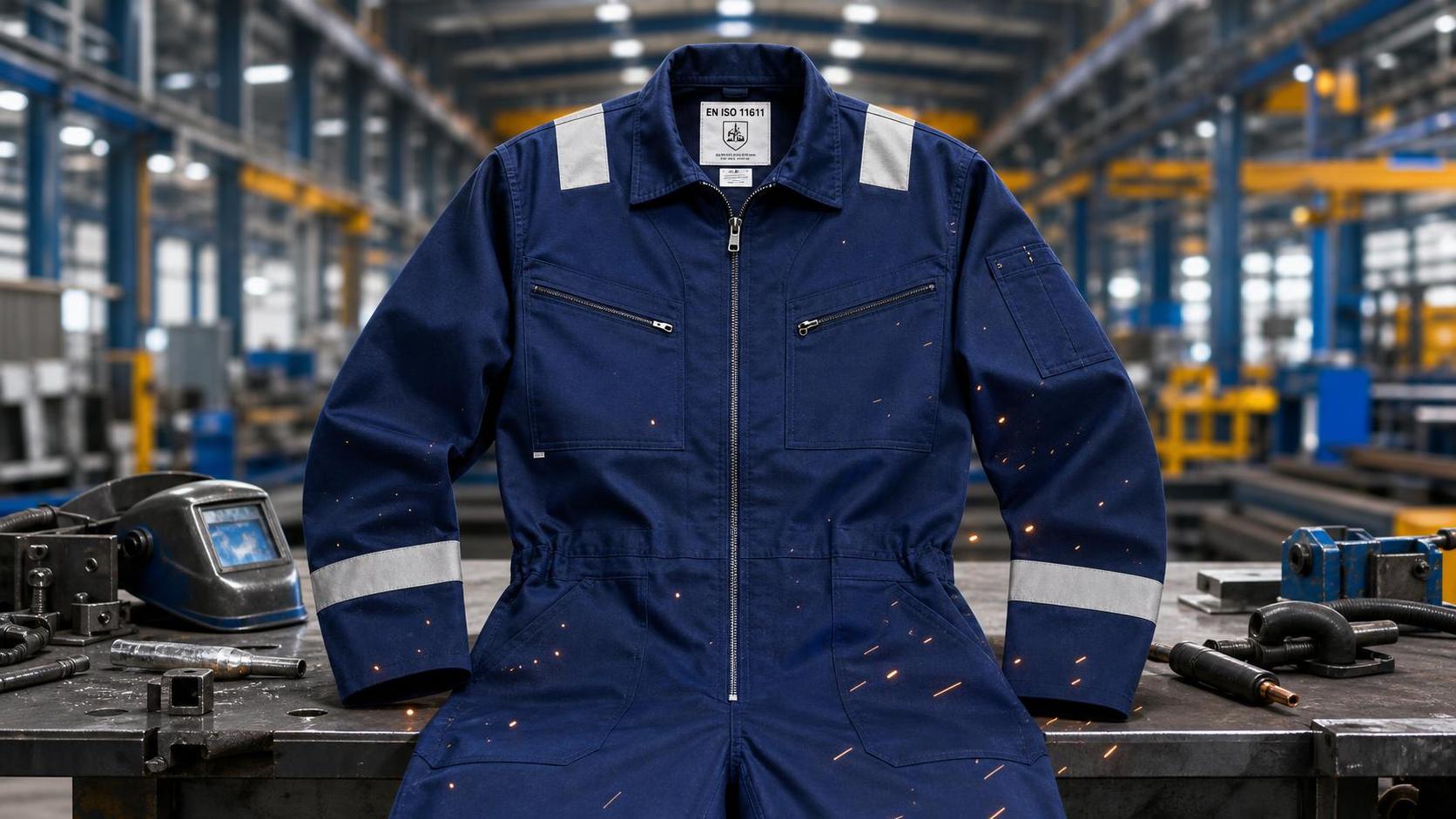
When do welding flame retardant coveralls become mandatory on site?
Welding work rarely fails in dramatic ways by accident. Most burn injuries start with a missed hazard, the wrong garment, or a weak site rule.
That is why welding flame retardant coveralls matter in fabrication yards, shutdown projects, utility maintenance, and field repair operations.
They are usually required when the task exposes the body to sparks, molten splash, radiant heat, or flash fire potential.
In practical terms, that includes arc welding, cutting, gouging, grinding near hot work, and rework inside confined or congested industrial zones.
The requirement may come from a site hot work permit, a risk assessment, a client safety rule, or national PPE law.
Across heavy industry, the safer approach is simple: if ignition, heat transfer, or molten particle contact is reasonably foreseeable, standard workwear is not enough.
Global Industrial Core often frames this issue as a systems decision, not just a clothing choice.
Protective garments only work when they align with process controls, permit conditions, equipment type, and the standards written into the site specification.
Is flame retardant clothing needed for every welding task?
Not always, but assuming it is optional creates problems.
The better question is whether the task can generate enough heat, sparks, or molten material to ignite ordinary fabric or injure exposed skin.
A brief tack weld in a controlled workshop may present lower exposure than overhead flux-cored welding inside a live plant.
Even so, lower exposure does not mean no exposure.
More commonly, welding flame retardant coveralls are required whenever one or more of these conditions apply:
- Visible spark or spatter generation during welding or cutting.
- Work above shoulder height, where molten particles can fall onto sleeves, chest, or lap.
- Confined spaces with restricted escape routes or elevated flash fire concern.
- Nearby flammable dusts, vapors, coatings, insulation, or oily residues.
- Hot work permits that specify FR clothing as mandatory PPE.
- Client, EPC, or plant rules referencing ISO, EN, NFPA, or OSHA-aligned controls.
In actual operations, the site rule often goes further than the minimum law.
That is common in power, petrochemical, marine, rail, and steel environments, where one clothing failure can stop work or trigger a reportable incident.
How can you judge whether the risk really justifies welding flame retardant coveralls?
A quick visual check is not enough. The decision should follow the task risk assessment and the permit-to-work controls.
The table below gives a practical judgment guide used across mixed industrial sites.
Need to watch one detail here: “flame retardant” is often used loosely in conversation.
On site, what matters is whether the coveralls are certified for the actual hazard profile, not whether the label sounds protective.
Which standards should operators look for in welding coveralls?
This is where many clothing decisions go wrong.
A garment can feel heavy and durable yet still miss the standard needed for welding exposure.
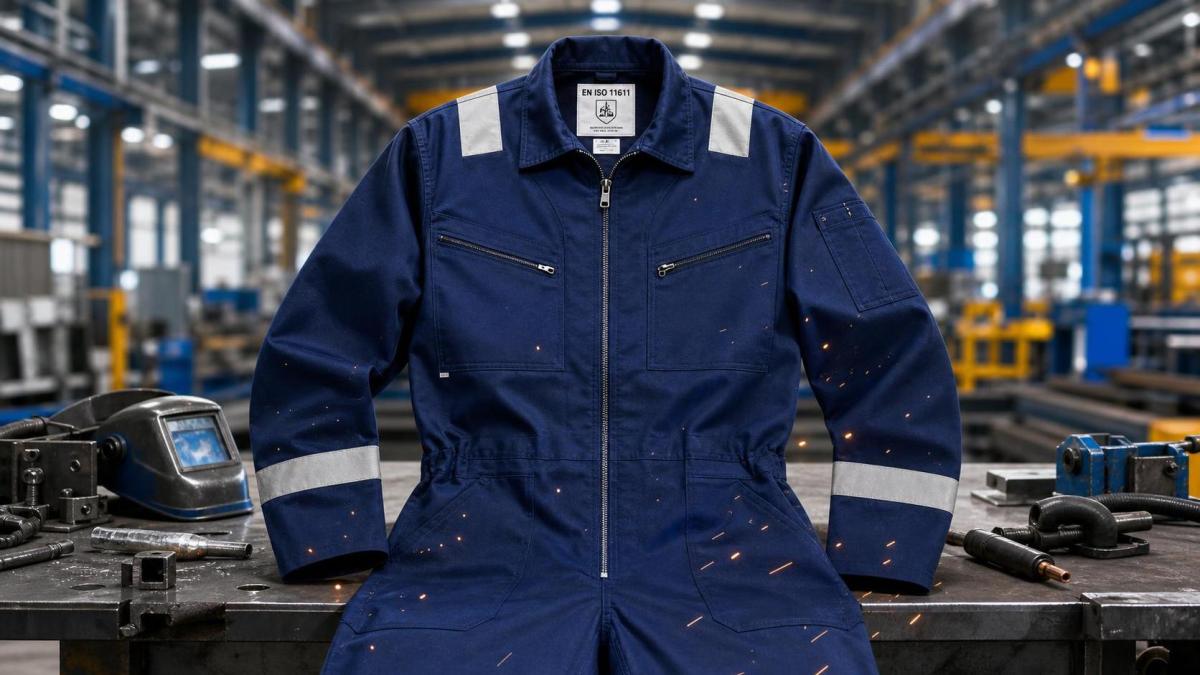
For welding flame retardant coveralls, the most relevant references often include EN ISO 11611 for welding and allied processes.
Where flash fire is a concern, EN ISO 11612 may also apply.
In North American contexts, NFPA 2112, ASTM F1506, or OSHA-aligned site rules may appear in garment specifications.
A useful reading of the garment label or technical sheet should confirm:
- The exact standard number, not a generic “FR” claim.
- The protection class, especially for welding exposure levels.
- Fabric composition and whether protection is inherent or treated.
- Closure design, pocket coverage, and seam construction.
- Care instructions that preserve protective performance over service life.
Global Industrial Core regularly emphasizes this point in compliance-focused guidance: certification evidence should be traceable, current, and relevant to the work method.
That is especially important on multinational projects, where CE, ISO, or client technical requirements may overlap.
What is the difference between standard FR workwear and welding-specific protection?
This distinction matters more than many teams expect.
Standard FR workwear is designed to resist ignition and reduce continued burning.
Welding-specific clothing also needs to manage molten metal splash, radiant heat, and design features that prevent particles from lodging in folds or openings.
In other words, not every FR garment is suitable for welding, even if it carries a flame resistance claim.
More suitable welding flame retardant coveralls usually include covered fasteners, non-cuff sleeves, protected pockets, and stronger resistance around high-contact areas.
That reduces the chance of hot particles catching, pooling, or burning through vulnerable points.
Comfort still matters. If the coveralls are too stiff, too hot, or poorly sized, they are less likely to stay closed correctly during work.
Poor wear compliance is a real safety problem, not just a convenience issue.
What mistakes make compliant coveralls fail on site?
Failures often come from usage, maintenance, and layering decisions rather than the garment alone.
Some of the most common mistakes are easy to miss during busy work periods:
- Wearing synthetic base layers that can melt under heat exposure.
- Leaving front closures partly open for ventilation.
- Using damaged garments with tears, oil contamination, or worn cuffs.
- Choosing untreated cotton coveralls because they “look industrial.”
- Washing treated fabrics incorrectly and shortening protective life.
- Assuming one garment rating covers welding, arc flash, and chemical splash equally.
A coverall is only one layer of the PPE system.
Gloves, footwear, visor protection, respiratory controls, and job setup all need to match the same hazard picture.
Where the risk is higher, leather sleeves, aprons, or spats may still be necessary over welding flame retardant coveralls.
How should you choose the right coveralls for ongoing site use?
Start with the task, not the catalog.
A garment that works in a workshop may underperform in field shutdowns, energy facilities, or repair work around corrosion, dirt, and weather.
A practical selection review should cover these points:
- Hazard type: sparks, molten splash, radiant heat, or flash fire.
- Certification match: EN ISO 11611, EN ISO 11612, NFPA, or site-specific standard.
- Work environment: indoor fabrication, offshore, utilities, refinery, or civil repair.
- Fit and mobility: bending, kneeling, climbing, and overhead posture.
- Garment life: laundering method, replacement interval, and inspection routine.
- Compatibility with helmets, harnesses, gloves, and other mandatory PPE.
The most reliable choice is usually the one supported by a documented risk assessment and a verified test record.
That approach keeps decisions consistent across crews, contractors, and work zones.
If there is uncertainty, review the hot work permit, the site PPE matrix, and the garment certification before the shift begins.
In short, welding flame retardant coveralls are required whenever the task presents credible ignition or burn exposure, and the site standard demands certified protection.
The next sensible step is to map each welding task against hazard level, applicable standards, and garment condition, then update site PPE rules where gaps appear.
Technical Specifications
- Air Handling Unit Supplier Checklist: Performance Data, Lead Times, and SupportAuthor :Environmental Engineering Director
- Buying Fiberglass Water Tanks Wholesale: Compare Quotes and Delivery CostsAuthor :Environmental Engineering Director
- Choosing an XLPE Power Cable Supplier: Test Reports, Traceability, and Lead TimesAuthor :Grid Infrastructure Analyst
Expert Insights

Chief Security Architect
Dr. Thorne specializes in the intersection of structural engineering and digital resilience. He has advised three G7 governments on industrial infrastructure security.
Related Analysis
- Oct 19, 2026Air Handling Unit Supplier Checklist: Performance Data, Lead Times, and SupportAuthor :Environmental Engineering Director
- Oct 18, 2026Buying Fiberglass Water Tanks Wholesale: Compare Quotes and Delivery CostsAuthor :Environmental Engineering Director
- Oct 17, 2026Choosing an XLPE Power Cable Supplier: Test Reports, Traceability, and Lead TimesAuthor :Grid Infrastructure Analyst
Core Sector // 01
Security & Safety
- Can One Supplier Provide Both IEC- and ATEX-Certified Safety Equipment?Author :Safety Compliance Lead

- Are Dual IEC and NEC Safety Certifications Worth the Cost?Author :Safety Compliance Lead

- What Is the Difference Between Class I and Class II PPE?Author :Safety Compliance Lead

- Which Oil and Gas Safety Standards Should Contractors Meet Before Site Mobilization?Author :Safety Compliance Lead

- EU REACH Adds PFAS Cap for PPE WorkwearAuthor :Safety Compliance Lead

- How to Evaluate a Chemical Resistant Suit Supplier for Industrial Safety ProcurementAuthor :Safety Compliance Lead

- EU REACH Sets 50 ppb PFAS Cap for PPE WorkwearAuthor :Safety Compliance Lead

- EU Tightens PFOA Limit for PPE and Industrial Filter MediaAuthor :Safety Compliance Lead