China Launches Battery Recycling Enforcement Campaign
Author
Date Published
Reading Time

China has launched a cross-departmental enforcement campaign targeting illegal practices in the used power battery recycling sector. Though the exact start date remains unannounced, the initiative signals an immediate tightening of regulatory oversight across the end-of-life lithium-ion battery value chain. This move directly affects global supply chains for specialized industrial safety and environmental equipment — particularly those serving battery dismantling, fire response, and waste sorting applications — by elevating baseline compliance expectations and reshaping international buyer perceptions of Chinese suppliers’ ESG accountability.
Event Overview
The Ministry of Industry and Information Technology (MIIT) and four other state departments jointly initiated an enforcement campaign focused on the recycling and utilization of spent power batteries. The campaign prioritizes inspection and punishment of unauthorized disassembly, illicit smelting, and non-compliant emissions control at processing facilities.
Industries Affected
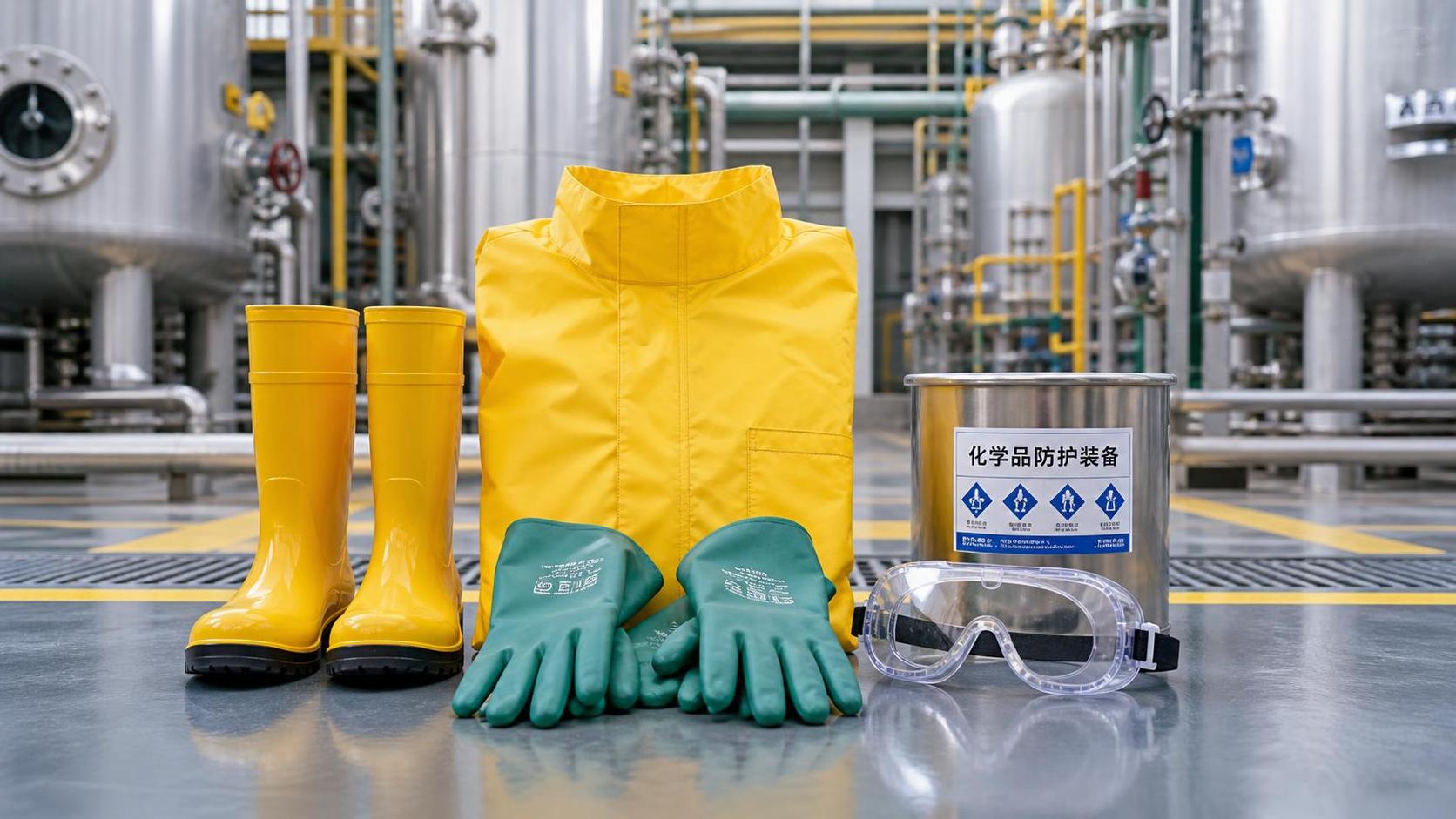
Direct Exporters: Companies exporting PPE & Workwear (e.g., arc-flash-resistant suits for battery pack disassembly), Fire & Rescue Equipment (e.g., Class D fire extinguishing systems for lithium metal fires), and Solid Waste Management machinery (e.g., automated battery crushing and component separation lines) face heightened scrutiny during overseas certification renewals and tender evaluations. Buyers in EU, Japan, and Canada increasingly reference China’s domestic enforcement rigor as a proxy for supplier reliability — not just product conformity.
Raw Material Procurement Firms: Entities sourcing black mass, cathode scrap, or recovered cobalt/nickel from Chinese recyclers must now verify upstream traceability documentation aligned with the campaign’s enforcement criteria. Absence of auditable records on feedstock origin or emission controls may trigger due diligence red flags under emerging import regulations such as the EU Battery Regulation (EU 2023/1542).
Equipment Manufacturers: Domestic producers of battery shredders, electrolyte recovery units, and thermal runaway suppression modules are experiencing increased demand for integrated compliance features — e.g., real-time stack gas monitoring outputs, sealed disassembly enclosures, or built-in material tracking interfaces — to meet both domestic enforcement thresholds and export market prequalification requirements.
Supply Chain Service Providers: Third-party logistics firms, testing labs, and certification bodies supporting battery recyclers are adjusting service scopes: adding verification of MIIT-registered facility status, validating emissions reporting formats, and offering gap assessments against newly emphasized enforcement parameters (e.g., wastewater pH limits, dust capture efficiency thresholds).
Key Focus Areas and Recommended Actions
Verify Facility Licensing Status Against MIIT’s Public Registry
Exporters and procurement teams should cross-check all Chinese partner facilities against the official list of licensed recyclers published by MIIT — non-listed entities are subject to immediate enforcement action, potentially disrupting supply continuity.
Update Technical Documentation to Reflect On-Site Compliance Controls
Manufacturers of fire suppression systems or protective clothing must explicitly document how their products enable adherence to the campaign’s priority violations — e.g., demonstrating that a fire suppression nozzle design mitigates thermal runaway propagation during illegal disassembly scenarios.
Integrate Traceability into Product Lifecycle Reporting
Suppliers of battery sorting equipment should embed digital logging capabilities (e.g., QR-code–linked batch records, sensor-triggered operational logs) to support downstream buyers’ ESG reporting obligations — a capability now implicitly valued in enforcement-aligned procurement reviews.
Editorial Insight / Industry Observation
Observably, this is not merely an environmental crackdown but a strategic calibration of China’s circular economy infrastructure toward internationally benchmarked governance standards. Analysis shows the five-department coordination — involving MIIT, MEE, MOJ, SAMR, and MPS — reflects institutional recognition that battery recycling integrity hinges on synchronized enforcement across technical, legal, and operational domains. From an industry perspective, the campaign’s emphasis on *detectable behaviors* (e.g., visible smoke plumes, open-bay disassembly) rather than solely on permit-holding suggests regulators prioritize verifiable outcomes over procedural formalities — a shift likely to accelerate adoption of smart monitoring hardware among mid-tier recyclers.
Conclusion
This enforcement campaign marks a structural inflection point: regulatory credibility in China’s battery recycling ecosystem is becoming a transferable asset for its industrial equipment exporters. Rather than representing a barrier, strengthened domestic oversight serves as a de facto endorsement mechanism for high-integrity suppliers — one that resonates with sustainability-driven procurement policies abroad. A rational interpretation is that compliance maturity, once viewed as a cost center, is now functioning as a competitive differentiator in global tenders for circular economy infrastructure.
Source Attribution
Official notice issued jointly by the Ministry of Industry and Information Technology (MIIT), Ministry of Ecology and Environment (MEE), Ministry of Justice (MOJ), State Administration for Market Regulation (SAMR), and Ministry of Public Security (MPS). Further implementation details — including provincial rollout timelines, penalty benchmarks, and audit frequency — remain pending official release and are under active monitoring.

Technical Specifications
- How to Select Electronic Hotel Key Card Locks for Guest Rooms and Staff AreasAuthor :Safety Compliance Lead
- How to Select Lab Instruments for Reliable Chemical Analysis WorkflowsAuthor :Precision Metrology Expert
- How to Size a UPS for Server Rooms: Load, Runtime, and Redundancy FactorsAuthor :Grid Infrastructure Analyst
Expert Insights

Chief Security Architect
Dr. Thorne specializes in the intersection of structural engineering and digital resilience. He has advised three G7 governments on industrial infrastructure security.
Related Analysis
- Sep 17, 2026How to Select Electronic Hotel Key Card Locks for Guest Rooms and Staff AreasAuthor :Safety Compliance Lead
- Sep 16, 2026How to Select Lab Instruments for Reliable Chemical Analysis WorkflowsAuthor :Precision Metrology Expert
- Sep 15, 2026How to Size a UPS for Server Rooms: Load, Runtime, and Redundancy FactorsAuthor :Grid Infrastructure Analyst
Core Sector // 01
Security & Safety
- Can One Supplier Provide Both IEC- and ATEX-Certified Safety Equipment?Author :Safety Compliance Lead

- Are Dual IEC and NEC Safety Certifications Worth the Cost?Author :Safety Compliance Lead

- What Is the Difference Between Class I and Class II PPE?Author :Safety Compliance Lead

- Which Oil and Gas Safety Standards Should Contractors Meet Before Site Mobilization?Author :Safety Compliance Lead

- EU REACH Adds PFAS Cap for PPE WorkwearAuthor :Safety Compliance Lead

- How to Evaluate a Chemical Resistant Suit Supplier for Industrial Safety ProcurementAuthor :Safety Compliance Lead

- EU REACH Sets 50 ppb PFAS Cap for PPE WorkwearAuthor :Safety Compliance Lead

- EU Tightens PFOA Limit for PPE and Industrial Filter MediaAuthor :Safety Compliance Lead