How to compare Security & Safety price without overpaying
Author
Date Published
Reading Time
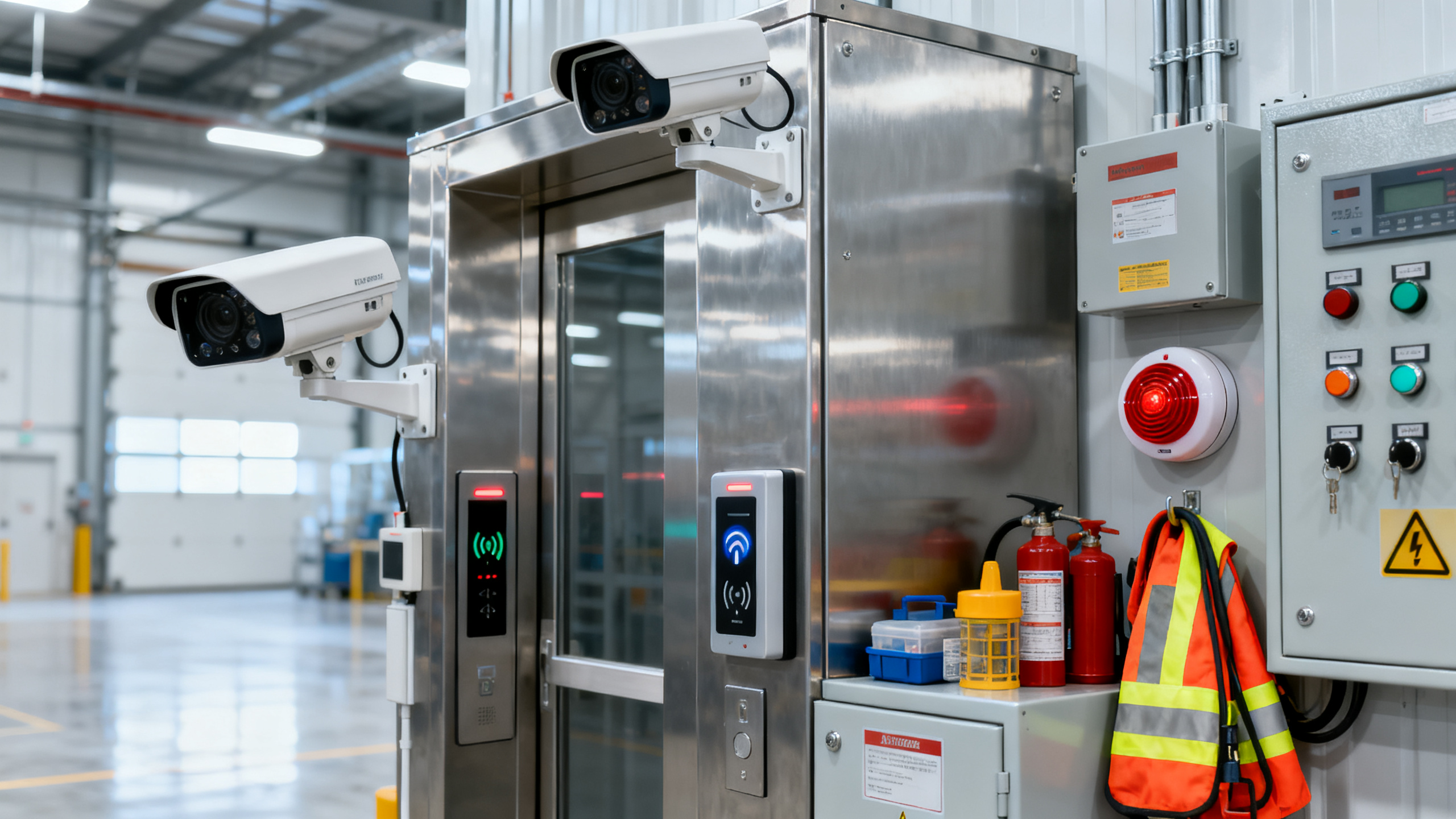
Comparing Security & Safety price in industrial procurement is not just about finding the lowest quote—it is about balancing compliance, durability, lifecycle cost, and supplier credibility. For business evaluators, a smart comparison framework helps prevent hidden expenses, avoid underqualified vendors, and support safer long-term investments in critical infrastructure.
Why a checklist matters when comparing Security & Safety price
Industrial security and safety products protect people, equipment, sites, and uptime. A lower initial quote can still become the highest total cost after failures, delays, fines, or replacement cycles.
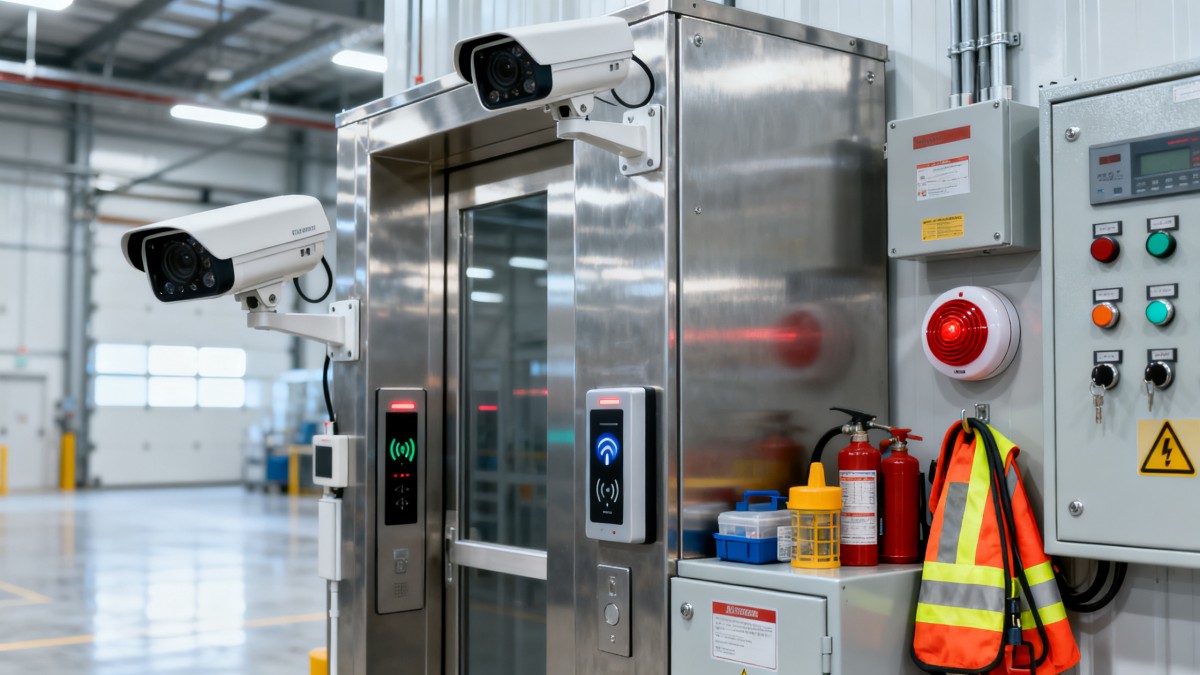
That is why Security & Safety price must be reviewed through a structured checklist. The goal is not only cost control, but also fit-for-purpose performance across real operating conditions.
In broad industrial environments, price comparison often spans PPE, fire detection, access control, surveillance, alarms, emergency lighting, guarding systems, and compliance-related accessories. Each category carries different cost drivers.
Core checklist to compare Security & Safety price without overpaying
Use the following checklist before accepting any quotation. Each point helps separate a competitive offer from a deceptively cheap one.
- Define the application first, then compare price. Match the item to hazard level, operating temperature, exposure, occupancy, and duty cycle before reviewing any Security & Safety price.
- Verify compliance documents early. Check CE, UL, ISO, EN, NFPA, or local certifications so a lower quote does not hide non-compliant materials or unapproved assemblies.
- Break down the quotation line by line. Separate unit cost, installation hardware, calibration, software licenses, training, freight, taxes, and maintenance to compare Security & Safety price accurately.
- Compare like-for-like specifications. Review housing grade, sensor accuracy, alarm range, coverage angle, response time, battery life, and enclosure protection instead of headline price only.
- Check lifecycle cost, not purchase cost. Include inspection intervals, spare parts, consumables, firmware support, downtime risk, and expected service life in every Security & Safety price review.
- Ask for test evidence from real operating conditions. Laboratory claims matter, but field performance under vibration, dust, moisture, chemicals, and heat often explains major price differences.
- Review supplier traceability and after-sales support. Fast warranty handling, local stock, replacement lead time, and technical response quality can justify a higher Security & Safety price.
- Measure integration cost with existing systems. A lower standalone price may require expensive rewiring, protocol conversion, retraining, or software customization after delivery.
- Benchmark minimum order and packaging terms. Bulk discounts, pallet configuration, storage conditions, and shelf-life limits can materially change the true Security & Safety price.
- Score risk and value together. Use a weighted matrix covering compliance, reliability, lead time, support, and total cost to prevent overpaying for features you do not need.
A practical comparison table
How Security & Safety price changes by application
Process plants and heavy industrial sites
In process plants, Security & Safety price is heavily influenced by hazardous area classification, corrosion resistance, and continuous-duty reliability. Products often require certified enclosures, higher-grade seals, and stronger maintenance support.
A cheap detector, camera, alarm, or emergency device may fail under dust, vibration, or chemical exposure. In these settings, replacement labor and downtime usually exceed the original purchase savings.
Commercial buildings and public facilities
For offices, hospitals, schools, and transport hubs, Security & Safety price often depends on code compliance, occupancy scale, user accessibility, and monitoring integration. Aesthetics may matter, but functionality remains the main cost driver.
Here, installation efficiency and central control compatibility can be as important as the device cost. Lower-priced products may create expensive retrofit work or weak monitoring coverage later.
Warehousing and logistics operations
In distribution centers, the right Security & Safety price depends on site size, traffic flow, loading activity, and inventory value. Access control, surveillance, collision prevention, and emergency signaling must support operational speed.
If quote comparison ignores coverage layout and installation geometry, under-specification becomes likely. That can result in blind spots, alarm gaps, or repeated equipment damage near forklifts and docks.
Commonly overlooked items that distort Security & Safety price
Freight, storage, and handling conditions
Some quotations exclude special packaging, controlled storage, or international freight insurance. These omissions can make one Security & Safety price appear better, even when landed cost is higher.
Commissioning and training effort
Devices with proprietary interfaces or complex setup needs may require vendor attendance, extra tools, or user training. Those costs are often hidden outside the initial Security & Safety price quote.
Maintenance intervals and consumables
Filters, batteries, calibration gases, replacement lenses, and software subscriptions can significantly alter annual ownership cost. A low purchase figure may mask a very high operating burden.
Lead time and continuity risk
Long replenishment cycles can force emergency purchases or temporary substitutions. When supply continuity is uncertain, the true Security & Safety price includes delay risk and operational exposure.
Practical steps to compare quotes more accurately
- Create one specification sheet and issue it to every bidder to eliminate inconsistent assumptions.
- Request certificates, datasheets, warranty terms, and recommended spare parts together with the commercial offer.
- Convert every quotation into landed cost and annualized ownership cost before ranking suppliers.
- Use a weighted scoring model so compliance and reliability influence the final decision.
- Run a pilot or sample validation when the product affects life safety, site access, or process continuity.
A useful method is to score price at 30%, compliance at 25%, performance at 20%, support at 15%, and delivery at 10%. The exact weighting can change by project criticality.
This approach helps prevent emotional buying, sales-driven upselling, and unsafe cost cutting. It also makes internal review easier when multiple brands appear similar on the surface.
Conclusion: reduce cost without weakening protection
The best Security & Safety price is not the lowest number on a quotation sheet. It is the most defensible combination of compliance, durability, service support, integration fit, and lifecycle value.
Start with a fixed specification, compare like-for-like details, quantify hidden costs, and verify supplier credibility. That process reduces overpayment while protecting both operational continuity and safety performance.
For complex industrial sourcing, a disciplined comparison model delivers stronger purchasing outcomes than price chasing alone. In critical environments, accuracy in evaluation is itself a form of risk control.
Technical Specifications
- How to Select Electronic Hotel Key Card Locks for Guest Rooms and Staff AreasAuthor :Safety Compliance Lead
- How to Select Lab Instruments for Reliable Chemical Analysis WorkflowsAuthor :Precision Metrology Expert
- How to Size a UPS for Server Rooms: Load, Runtime, and Redundancy FactorsAuthor :Grid Infrastructure Analyst
Expert Insights

Chief Security Architect
Dr. Thorne specializes in the intersection of structural engineering and digital resilience. He has advised three G7 governments on industrial infrastructure security.
Related Analysis
- Sep 17, 2026How to Select Electronic Hotel Key Card Locks for Guest Rooms and Staff AreasAuthor :Safety Compliance Lead
- Sep 16, 2026How to Select Lab Instruments for Reliable Chemical Analysis WorkflowsAuthor :Precision Metrology Expert
- Sep 15, 2026How to Size a UPS for Server Rooms: Load, Runtime, and Redundancy FactorsAuthor :Grid Infrastructure Analyst
Core Sector // 01
Security & Safety
- Can One Supplier Provide Both IEC- and ATEX-Certified Safety Equipment?Author :Safety Compliance Lead

- Are Dual IEC and NEC Safety Certifications Worth the Cost?Author :Safety Compliance Lead

- What Is the Difference Between Class I and Class II PPE?Author :Safety Compliance Lead

- Which Oil and Gas Safety Standards Should Contractors Meet Before Site Mobilization?Author :Safety Compliance Lead

- EU REACH Adds PFAS Cap for PPE WorkwearAuthor :Safety Compliance Lead

- How to Evaluate a Chemical Resistant Suit Supplier for Industrial Safety ProcurementAuthor :Safety Compliance Lead

- EU REACH Sets 50 ppb PFAS Cap for PPE WorkwearAuthor :Safety Compliance Lead

- EU Tightens PFOA Limit for PPE and Industrial Filter MediaAuthor :Safety Compliance Lead