CPSC Launches New Round of Inspections on Chinese Industrial Flame-Resistant Workwear
Author
Date Published
Reading Time
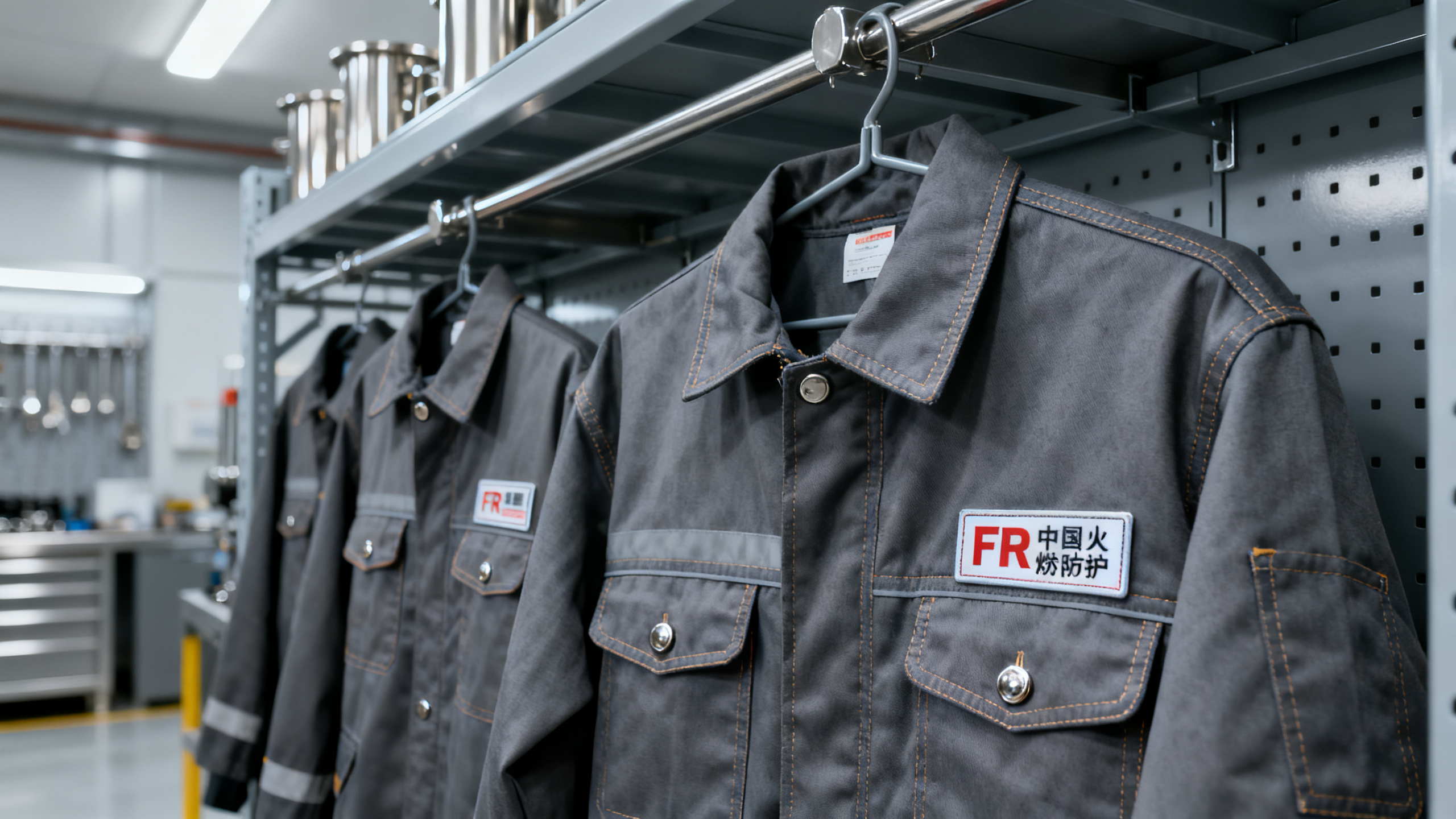
On May 17, 2026, the U.S. Consumer Product Safety Commission (CPSC) initiated its second annual targeted inspection campaign for industrial personal protective equipment (PPE), focusing specifically on flame-resistant (FR) workwear used in welding, metallurgy, and electrical operations. This action directly affects exporters of PPE and workwear from China—and signals tightening compliance expectations for FR performance verification under the updated ASTM F1506-23 standard.
Event Overview
The CPSC announced on May 17, 2026, the launch of its 2026 second-round special inspection program for industrial-grade PPE. The scope centers on flame-resistant protective clothing intended for high-risk occupational settings—including welding, metallurgical, and power utility applications. The inspections are conducted in accordance with ASTM F1506-23, which newly mandates two critical verification steps: (1) actual arc thermal performance value (ATPV) testing, and (2) re-evaluation of performance decay after repeated laundering cycles. Multiple Chinese export firms have reportedly had shipments denied entry due to third-party laboratory reports failing to include these newly required test items.
Industries Affected by Segment
Direct Exporters (Trading Companies)
These firms face immediate customs clearance delays and potential shipment rejections when documentation lacks ATPV and post-wash performance data aligned with ASTM F1506-23. Impact manifests in increased port hold times, added retesting costs, and contractual penalties tied to delivery timelines.
Raw Material Suppliers (e.g., FR Fabric Mills)
Suppliers must now ensure their base fabrics—especially those marketed for end-use in ASTM F1506-compliant garments—carry certified ATPV values and documented wash-cycle stability data. Absence of such data limits downstream buyers’ ability to meet CPSC requirements, reducing order volume and qualification opportunities.
Garment Manufacturers (OEM/ODM Factories)
Factories producing finished FR workwear are impacted at the quality assurance and labeling stages. They must verify that final assemblies—not just fabric substrates—meet ATPV thresholds and retain performance after specified laundering. This requires coordination with labs capable of full-garment ATPV testing and post-wash validation, which remains limited among domestic Chinese testing providers.
Supply Chain & Compliance Service Providers
Testing labs, certification consultants, and logistics compliance agents are seeing rising demand for ASTM F1506-23–specific services—particularly ATPV measurement and multi-cycle wash durability reporting. However, capacity constraints and inconsistent interpretation of the new wash-decay protocol are creating bottlenecks and variability in report acceptance.
Key Focus Areas and Practical Responses for Stakeholders
Monitor official CPSC guidance and enforcement patterns
Stakeholders should track CPSC’s public enforcement bulletins and Import Alert updates for indications of expanded product categories or intensified sampling frequency beyond the current focus on welding/metallurgy/power garments.
Prioritize verification for high-risk application categories
Given the stated focus on welding, metallurgical, and electrical use cases, exporters and manufacturers should treat these as priority segments for immediate revalidation—rather than applying blanket reassessment across all FR product lines.
Distinguish between standard revision and operational implementation
ASTM F1506-23 became effective in 2023, but CPSC’s enforcement action as of May 2026 marks its first coordinated, publicly announced field-level application. Companies should not assume prior certifications remain sufficient; instead, they must confirm whether their existing test reports explicitly cover ATPV and post-wash decay per the latest edition’s mandatory clauses.
Prepare documentation and lab coordination ahead of shipment
Exporters should allocate additional lead time—minimum 10–14 days—for ATPV and wash-cycle retesting, especially if engaging non-U.S.-accredited labs. Where possible, coordinate pre-shipment verification with labs recognized by CPSC or accredited to ISO/IEC 17025 for ASTM F1506-23 testing.
Editorial Observation / Industry Perspective
Observably, this CPSC action functions less as a one-off enforcement wave and more as a calibrated signal toward stricter, outcome-based verification of FR performance—shifting emphasis from material composition claims to measurable, repeatable thermal protection results. Analysis shows the inclusion of post-wash decay assessment reflects growing regulatory attention to real-world garment durability, not just initial certification. From an industry perspective, the May 2026 initiative is best understood not as a sudden policy change, but as the operational activation of long-anticipated requirements embedded in ASTM F1506-23. Its significance lies in confirming that CPSC has moved from awareness-building to active gatekeeping—making compliance verification a prerequisite for market access, not merely a commercial differentiator.
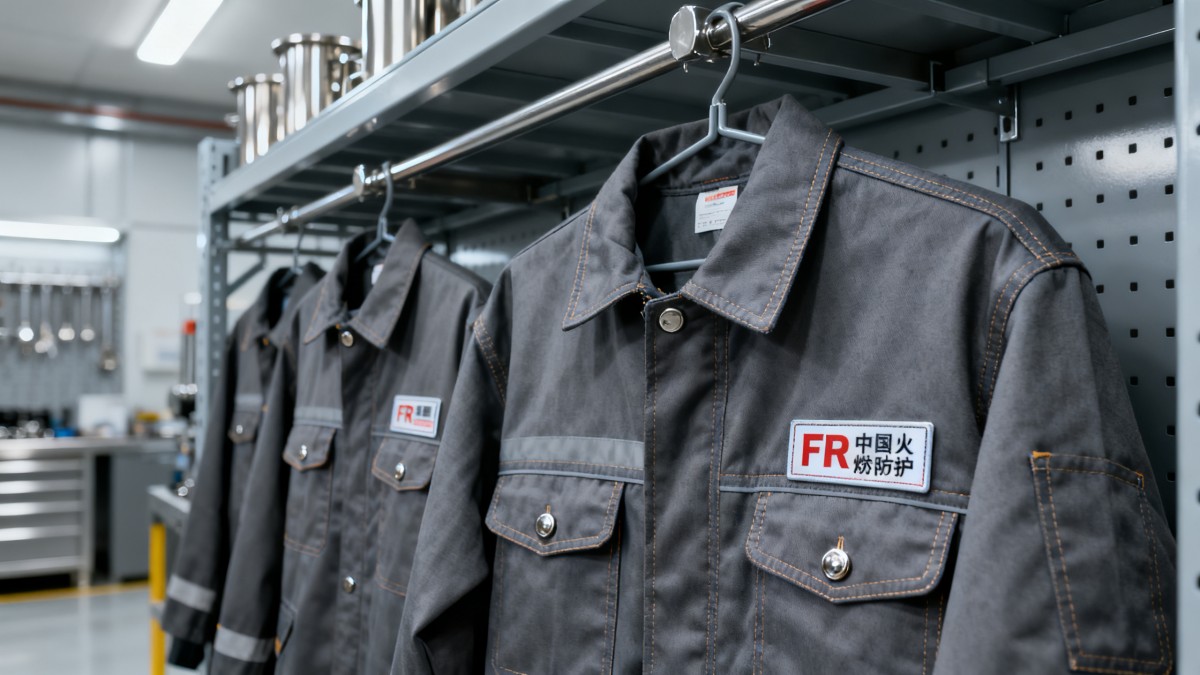
Conclusion: This CPSC action underscores that flame-resistant workwear exports to the U.S. market now require demonstrable, test-backed evidence of both arc thermal resistance and laundering resilience—under the specific parameters of ASTM F1506-23. It is not a broad-based regulatory overhaul, but a focused enforcement step that elevates evidentiary rigor for high-hazard PPE categories. Current understanding should center on its role as a compliance checkpoint—not a structural shift in standards—but one with tangible implications for documentation, lab readiness, and shipment planning.
Source: U.S. Consumer Product Safety Commission (CPSC) official notice issued May 17, 2026.
Note: Ongoing observation is recommended for CPSC’s subsequent import alert updates and any clarifications regarding acceptable test methodologies for post-wash performance decay evaluation.
Technical Specifications
- How to Select Electronic Hotel Key Card Locks for Guest Rooms and Staff AreasAuthor :Safety Compliance Lead
- How to Select Lab Instruments for Reliable Chemical Analysis WorkflowsAuthor :Precision Metrology Expert
- How to Size a UPS for Server Rooms: Load, Runtime, and Redundancy FactorsAuthor :Grid Infrastructure Analyst
Expert Insights

Chief Security Architect
Dr. Thorne specializes in the intersection of structural engineering and digital resilience. He has advised three G7 governments on industrial infrastructure security.
Related Analysis
- Sep 17, 2026How to Select Electronic Hotel Key Card Locks for Guest Rooms and Staff AreasAuthor :Safety Compliance Lead
- Sep 16, 2026How to Select Lab Instruments for Reliable Chemical Analysis WorkflowsAuthor :Precision Metrology Expert
- Sep 15, 2026How to Size a UPS for Server Rooms: Load, Runtime, and Redundancy FactorsAuthor :Grid Infrastructure Analyst
Core Sector // 01
Security & Safety
- Can One Supplier Provide Both IEC- and ATEX-Certified Safety Equipment?Author :Safety Compliance Lead

- Are Dual IEC and NEC Safety Certifications Worth the Cost?Author :Safety Compliance Lead

- What Is the Difference Between Class I and Class II PPE?Author :Safety Compliance Lead

- Which Oil and Gas Safety Standards Should Contractors Meet Before Site Mobilization?Author :Safety Compliance Lead

- EU REACH Adds PFAS Cap for PPE WorkwearAuthor :Safety Compliance Lead

- How to Evaluate a Chemical Resistant Suit Supplier for Industrial Safety ProcurementAuthor :Safety Compliance Lead

- EU REACH Sets 50 ppb PFAS Cap for PPE WorkwearAuthor :Safety Compliance Lead

- EU Tightens PFOA Limit for PPE and Industrial Filter MediaAuthor :Safety Compliance Lead