How to Evaluate a Steel Toe Work Boots Manufacturer for Bulk PPE Orders
Author
Date Published
Reading Time
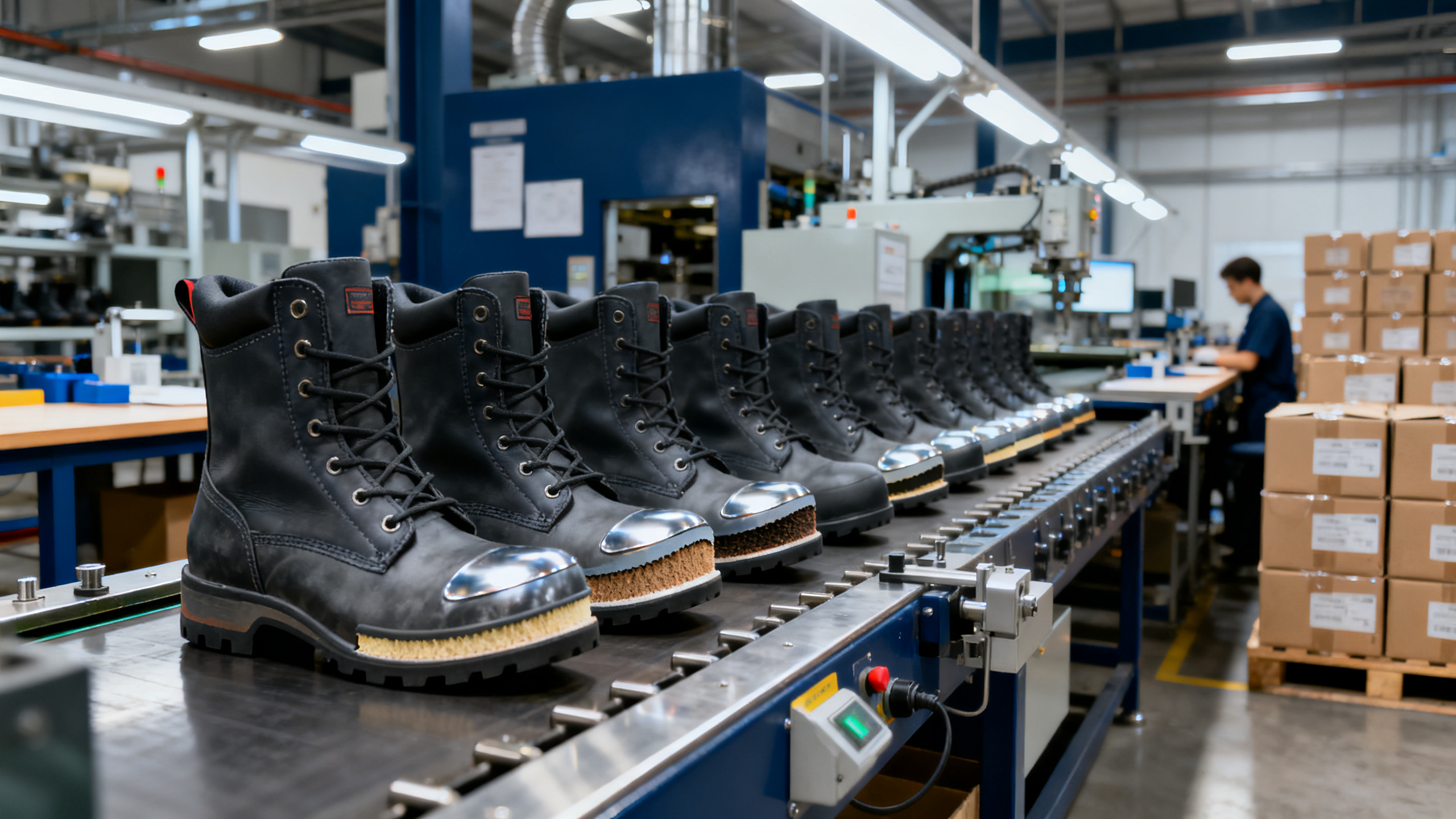
What should you really check before choosing a steel toe work boots manufacturer?
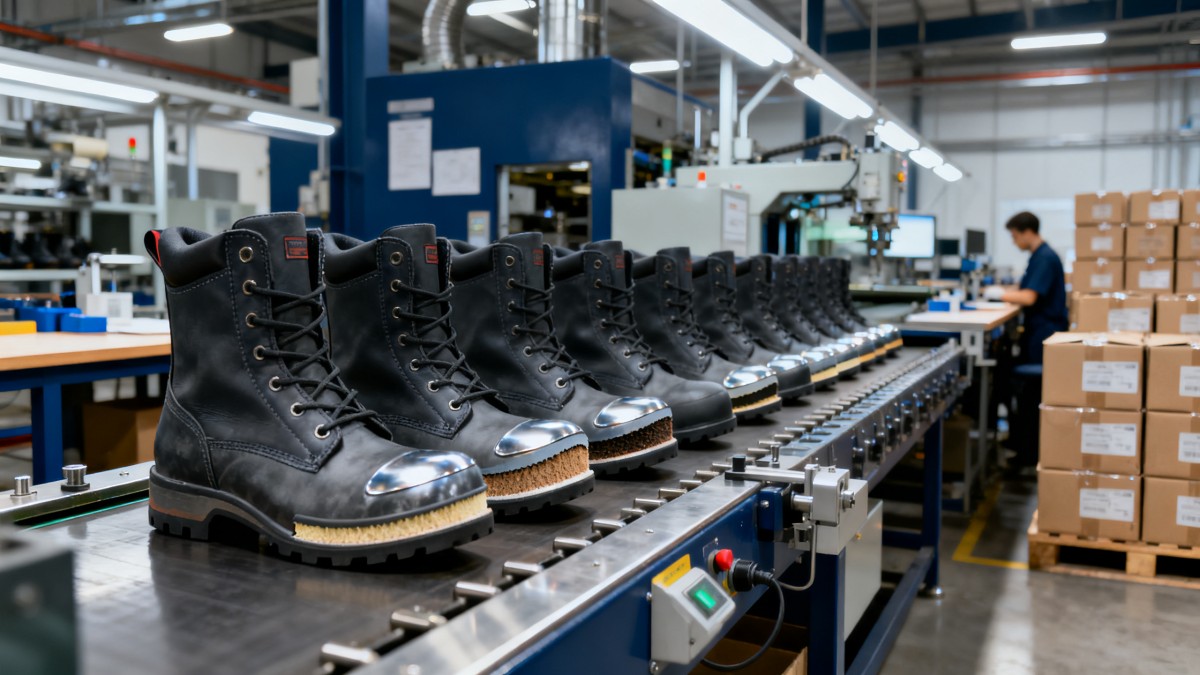
Bulk PPE buying usually starts with price sheets. That is rarely where the real decision should end.
When the item is protective footwear, supplier quality directly affects safety exposure, replacement cycles, and site compliance.
A reliable steel toe work boots manufacturer should be reviewed as both a product source and a risk-control partner.
In practical sourcing, the best choice is not always the lowest quote. It is the supplier that performs consistently under industrial conditions.
That means looking at certification, factory discipline, material traceability, lead-time stability, and after-sales response.
This matters even more in heavy industry, construction, utilities, logistics, and maintenance environments, where failure costs are immediate.
From the perspective of Global Industrial Core, sourcing decisions should support safe, resilient operations rather than short-term unit savings alone.
So the useful question is not simply, “Can this factory make boots?” It is, “Can this manufacturer protect performance at scale?”
How do you tell if compliance claims are real or just sales language?
This is often the first screening point, because a steel toe work boots manufacturer may advertise standards without showing full test evidence.
Ask for current certification documents, not old marketing PDFs. Dates, issuing bodies, and model references should all match.
For many bulk PPE programs, the core references include CE, ISO, ASTM, or other market-specific footwear standards.
Need to note one detail here. A certified factory is not the same as a certified boot model.
A careful review checks whether the exact product being quoted passed toe impact, compression, slip resistance, puncture, and electrical hazard tests.
It also helps to ask who performed the testing. Independent labs usually carry more weight than internal declarations.
If documents are vague, missing, or difficult to verify, that is not a paperwork issue. It is a sourcing risk.
A quick verification table helps separate stronger suppliers from weaker ones
A dependable steel toe work boots manufacturer should provide this level of visibility without repeated pushing.
Does factory capacity matter as much as boot quality?
Yes, especially when orders support multiple sites, phased rollouts, or long framework agreements.
A supplier can send a strong sample and still fail under volume pressure.
The more useful discussion is about repeatability. Can the same fit, sole bond, toe cap performance, and finishing quality be maintained across batches?
Ask about monthly output, active production lines, size run capability, and peak-season scheduling.
Also ask whether the steel toe work boots manufacturer controls key processes in-house or outsources stitching, molding, or sole attachment.
More outsourced steps can mean less process control and wider quality variation.
In actual tenders, sample approval should be followed by pilot-order validation. That reveals how the factory performs beyond showroom conditions.
- Check defect rate targets and final inspection method.
- Confirm packaging standards for export and site distribution.
- Review lead times for repeat orders, not only first orders.
- Ask how raw material shortages are managed.
Those details often explain future delivery performance better than a polished factory video.
Which material and design details affect lifecycle cost the most?
This is where total cost becomes clearer. A cheaper pair may cost more if replacement happens too early.
The better question for any steel toe work boots manufacturer is how the boot holds up in the actual work environment.
Leather grade, outsole compound, liner durability, insole support, stitching density, and toe cap type all influence service life.
For wet sites, sole slip performance and upper water resistance may matter more than cosmetic finish.
For hot climates, breathability and weight become critical because discomfort drives non-compliance on the floor.
For electrical work, anti-static or EH properties need careful confirmation against local safety requirements.
In other words, the right specification depends on use conditions, not on broad claims of “industrial grade.”
What should be compared beyond the unit price?
- Expected wear life under site conditions.
- Return or failure rate from previous bulk orders.
- Fit consistency across full size ranges.
- Comfort factors that affect all-day use.
- Availability of replacement models for ongoing contracts.
This is the point where many buyers shift from comparing quotations to comparing operating impact.
When are customization and private labeling worth the extra effort?
Not every bulk PPE program needs customization. Still, some projects benefit from it more than expected.
A steel toe work boots manufacturer with flexible development capability can support size labeling, branded packaging, color coding, and site-specific features.
That matters when footwear must align with internal issue systems, contractor controls, or regional compliance needs.
The mistake is assuming customization is only a marketing feature. In many industrial programs, it improves traceability and distribution accuracy.
However, custom work can extend sampling cycles, tooling discussions, and approval timelines.
Before approving a custom order, confirm minimum order quantities, sample turnaround, artwork control, and revision management.
If the manufacturer cannot document changes clearly, custom projects become harder to repeat consistently.
A more mature supplier usually treats customization as a controlled engineering process, not an informal promise.
What are the most common sourcing mistakes with a steel toe work boots manufacturer?
One common error is approving samples without defining acceptance criteria for production lots.
Another is treating all certified boots as equal, even though comfort, fit retention, and material quality vary widely.
Some teams also underestimate delivery risk. A boot arriving late can disrupt site mobilization just as seriously as a failed product.
More subtle problems appear when supplier comparison uses only FOB price and ignores warranty handling, defect response, and replenishment speed.
In cross-border programs, communication discipline is another separator. Delays often start with unclear specifications, not shipping alone.
A stronger steel toe work boots manufacturer will usually ask detailed technical questions early. That is often a good sign, not friction.
A short decision checklist can reduce avoidable problems
So how should you make the final bulk-order decision?
A sound decision usually comes from weighted comparison, not instinct.
Start with must-have compliance. Then compare manufacturing stability, material performance, delivery history, and total lifecycle cost.
If two suppliers look similar on price, the stronger steel toe work boots manufacturer is often the one with clearer process evidence.
That includes test traceability, batch consistency, communication speed, and willingness to support pre-shipment checks.
In real industrial sourcing, good footwear buying protects more than feet. It supports uptime, workforce confidence, and compliance continuity.
This is also why data-led evaluation matters. GIC’s editorial approach reflects the same principle seen across safety, metallurgy, and infrastructure sourcing.
For the next step, build a comparison sheet using the exact hazards, site conditions, quantity plan, and delivery window involved.
Then request documents, samples, and pilot-order evidence in the same format from each supplier. That makes the final choice easier to defend.
Technical Specifications
- How to Select Electronic Hotel Key Card Locks for Guest Rooms and Staff AreasAuthor :Safety Compliance Lead
- How to Select Lab Instruments for Reliable Chemical Analysis WorkflowsAuthor :Precision Metrology Expert
- How to Size a UPS for Server Rooms: Load, Runtime, and Redundancy FactorsAuthor :Grid Infrastructure Analyst
Expert Insights

Chief Security Architect
Dr. Thorne specializes in the intersection of structural engineering and digital resilience. He has advised three G7 governments on industrial infrastructure security.
Related Analysis
- Sep 17, 2026How to Select Electronic Hotel Key Card Locks for Guest Rooms and Staff AreasAuthor :Safety Compliance Lead
- Sep 16, 2026How to Select Lab Instruments for Reliable Chemical Analysis WorkflowsAuthor :Precision Metrology Expert
- Sep 15, 2026How to Size a UPS for Server Rooms: Load, Runtime, and Redundancy FactorsAuthor :Grid Infrastructure Analyst
Core Sector // 01
Security & Safety
- Can One Supplier Provide Both IEC- and ATEX-Certified Safety Equipment?Author :Safety Compliance Lead

- Are Dual IEC and NEC Safety Certifications Worth the Cost?Author :Safety Compliance Lead

- What Is the Difference Between Class I and Class II PPE?Author :Safety Compliance Lead

- Which Oil and Gas Safety Standards Should Contractors Meet Before Site Mobilization?Author :Safety Compliance Lead

- EU REACH Adds PFAS Cap for PPE WorkwearAuthor :Safety Compliance Lead

- How to Evaluate a Chemical Resistant Suit Supplier for Industrial Safety ProcurementAuthor :Safety Compliance Lead

- EU REACH Sets 50 ppb PFAS Cap for PPE WorkwearAuthor :Safety Compliance Lead

- EU Tightens PFOA Limit for PPE and Industrial Filter MediaAuthor :Safety Compliance Lead