USTR Tariff Review Raises Compliance Bar for PPE Imports
Author
Date Published
Reading Time

On June 2, 2026, the Office of the United States Trade Representative (USTR) issued the conclusion of a Section 301 investigation, finding that 60 economies have institutional gaps in blocking imports made with forced labor. The measure applies an additional 10%–12.5% tariff to related PPE, protective clothing, and safety workwear, while also requiring importers to maintain full three-tier supply chain traceability records and prepare for surprise CBP factory inspections. For importers, manufacturers, sourcing teams, and supply chain service providers, the development matters because it links tariff exposure directly with documentation depth, audit readiness, and delivery risk.

What the USTR Decision Formally Changes
According to the information provided, the USTR on June 2, 2026 formally released its Section 301 findings. It determined that 60 economies have system-level deficiencies in preventing the import of products made with forced labor.
The decision will impose an additional 10%–12.5% tariff on related PPE products, protective apparel, and safety workwear. At the same time, importers are required to provide complete three-tier supply chain traceability documentation, including raw material origin, processing steps, and labor employment records.
The new requirement also includes the possibility of surprise factory inspections by U.S. Customs and Border Protection (CBP). Based on the event summary provided, the direct result is a likely increase in compliance costs and longer delivery timelines for global industrial protective equipment procurement.
Where the Pressure Is Likely to Appear First
Import programs now face both tariff and document risk
From an industry perspective, direct trading companies and U.S.-bound importers are likely to feel the most immediate impact because the new requirement combines higher duty rates with a deeper proof burden. The pressure is not limited to customs clearance; it extends to supplier onboarding, document collection, internal review, and shipment release planning.
Manufacturing and processing links may come under closer scrutiny
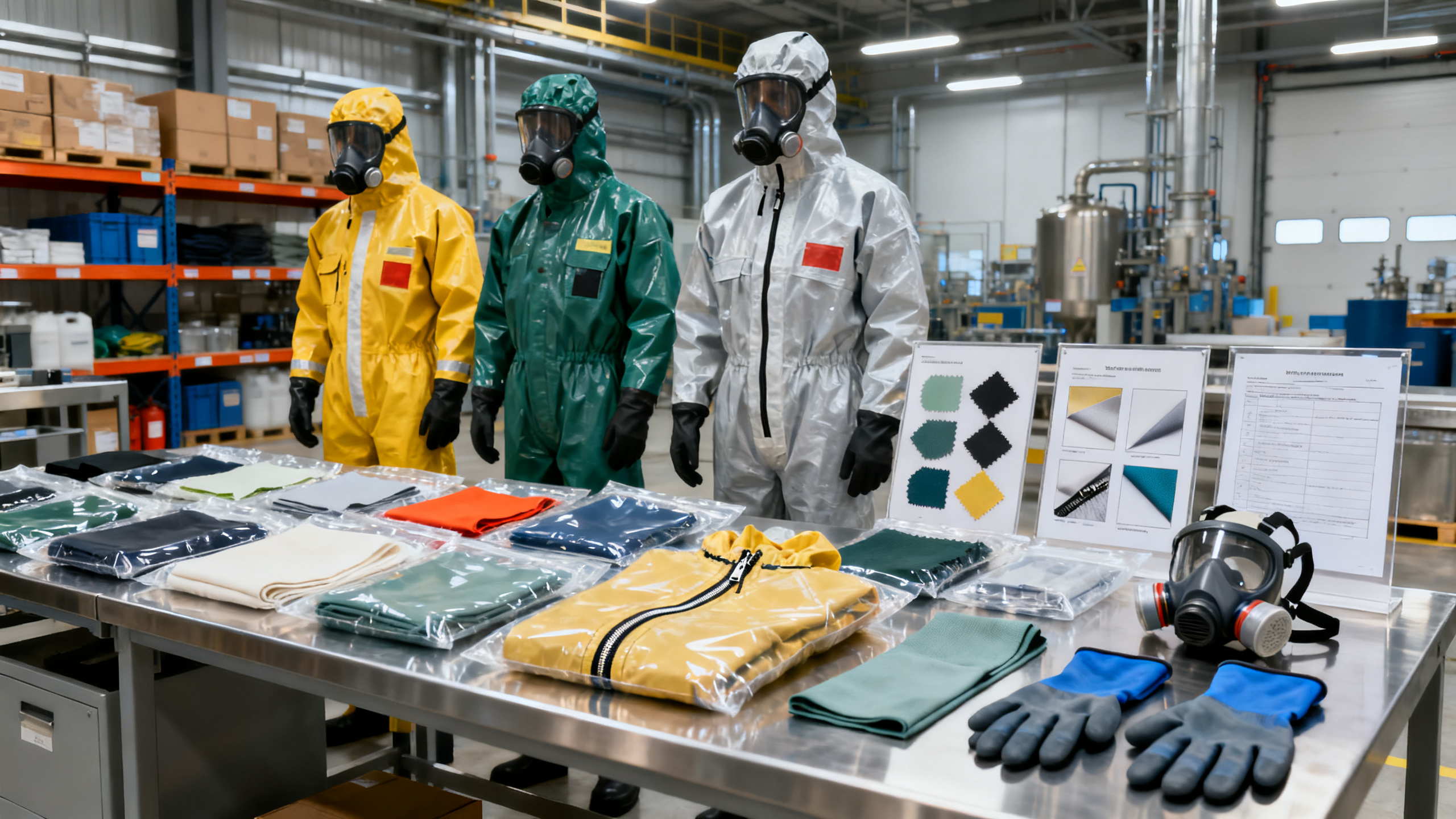
For processing manufacturers of PPE, protective garments, and safety workwear, the issue is not only whether goods can be produced on time, but whether each production stage can be documented in a way that supports three-tier traceability. What deserves closer attention is that processing records and labor-related records now become part of trade compliance readiness, not just factory administration.
Procurement and sourcing teams may need to reset lead-time assumptions
For buyers and sourcing teams, the likely impact sits in vendor selection, replenishment timing, and order confirmation. If traceability files are incomplete or supplier responses are slow, procurement cycles may lengthen even before goods move. Observably, this makes compliance readiness part of commercial planning rather than a post-order paperwork task.
Supply chain service providers may see heavier audit coordination work
Service providers involved in trade compliance, documentation, logistics coordination, or factory audit support may also be affected. The main issue is that documentation integrity, factory readiness, and shipment scheduling become more tightly connected under a regime that includes possible CBP surprise inspections.
What Companies Should Watch Closely Now
Track the exact scope of affected goods and transactions
Analysis shows that companies handling PPE, protective clothing, and safety workwear should first focus on whether their current products, orders, and supplier structures fall within the practical scope of the new tariff and traceability requirement. The difference between category exposure and actual shipment exposure will matter in day-to-day operations.
Review whether three-tier records can be produced consistently
The new rule specifically points to raw material origin, processing procedures, and labor employment records. That means companies should pay close attention to whether upstream suppliers, processors, and contract manufacturers can provide records in a complete and consistent format when requested.
Prepare for audit readiness, not just file collection
What deserves closer attention is the gap between having documents on paper and being able to withstand a surprise inspection. Companies may need to look at internal review workflows, supplier response mechanisms, and record retention discipline, because the requirement is tied to both traceability and inspection exposure.
Reassess delivery and customer communication assumptions
Because the provided summary indicates higher compliance costs and longer delivery cycles, businesses should also watch how this affects lead-time commitments, contract discussions, and customer expectations. In practical terms, procurement, compliance, and account teams may need closer coordination than before.
Why This Looks Bigger Than a Short-Term Tariff Adjustment
Analysis shows that this development should not be read only as a duty increase on selected protective products. It also signals a stricter linkage between trade access and supply chain proof standards in PPE and workwear-related imports.
At the same time, it is more appropriate to understand this as a confirmed regulatory move with further operational implications still worth watching. The tariff range and documentation requirement are already clear in the provided information, but the full business effect will depend on how importers, suppliers, and enforcement processes interact in practice.
How the Market May Need to Frame This Development
At this stage, the industry is better served by viewing the USTR action as both an immediate compliance change and a longer-term signal about documentation expectations in industrial protective equipment trade. The confirmed facts already point to higher audit burdens, more complex supplier verification, and possible pressure on delivery schedules.
A neutral reading is that the measure has already created a concrete operating issue for affected import flows, while its broader commercial impact still needs continued observation. For companies in PPE, protective apparel, and safety workwear, the near-term priority is likely to be traceability readiness rather than assumption-based forecasting.
Basis of This Article
This article is based on the user-provided news title, event date, and event summary. The specific official source link was not provided in the input, so continued verification remains necessary.
For this type of development, the source types usually relevant for ongoing checks include official government announcements, company disclosures, industry association updates, authoritative media reporting, and standard or compliance-related documents. Further attention should remain on any follow-up official wording, implementation detail, and enforcement-related clarification connected to the June 2, 2026 USTR action.
Technical Specifications
- How to Select Electronic Hotel Key Card Locks for Guest Rooms and Staff AreasAuthor :Safety Compliance Lead
- How to Select Lab Instruments for Reliable Chemical Analysis WorkflowsAuthor :Precision Metrology Expert
- How to Size a UPS for Server Rooms: Load, Runtime, and Redundancy FactorsAuthor :Grid Infrastructure Analyst
Expert Insights

Chief Security Architect
Dr. Thorne specializes in the intersection of structural engineering and digital resilience. He has advised three G7 governments on industrial infrastructure security.
Related Analysis
- Sep 17, 2026How to Select Electronic Hotel Key Card Locks for Guest Rooms and Staff AreasAuthor :Safety Compliance Lead
- Sep 16, 2026How to Select Lab Instruments for Reliable Chemical Analysis WorkflowsAuthor :Precision Metrology Expert
- Sep 15, 2026How to Size a UPS for Server Rooms: Load, Runtime, and Redundancy FactorsAuthor :Grid Infrastructure Analyst
Core Sector // 01
Security & Safety
- Can One Supplier Provide Both IEC- and ATEX-Certified Safety Equipment?Author :Safety Compliance Lead

- Are Dual IEC and NEC Safety Certifications Worth the Cost?Author :Safety Compliance Lead

- What Is the Difference Between Class I and Class II PPE?Author :Safety Compliance Lead

- Which Oil and Gas Safety Standards Should Contractors Meet Before Site Mobilization?Author :Safety Compliance Lead

- EU REACH Adds PFAS Cap for PPE WorkwearAuthor :Safety Compliance Lead

- How to Evaluate a Chemical Resistant Suit Supplier for Industrial Safety ProcurementAuthor :Safety Compliance Lead

- EU REACH Sets 50 ppb PFAS Cap for PPE WorkwearAuthor :Safety Compliance Lead

- EU Tightens PFOA Limit for PPE and Industrial Filter MediaAuthor :Safety Compliance Lead