Four Departments Back Smart Fire Safety Systems for Elder Care and Childcare
Author
Date Published
Reading Time
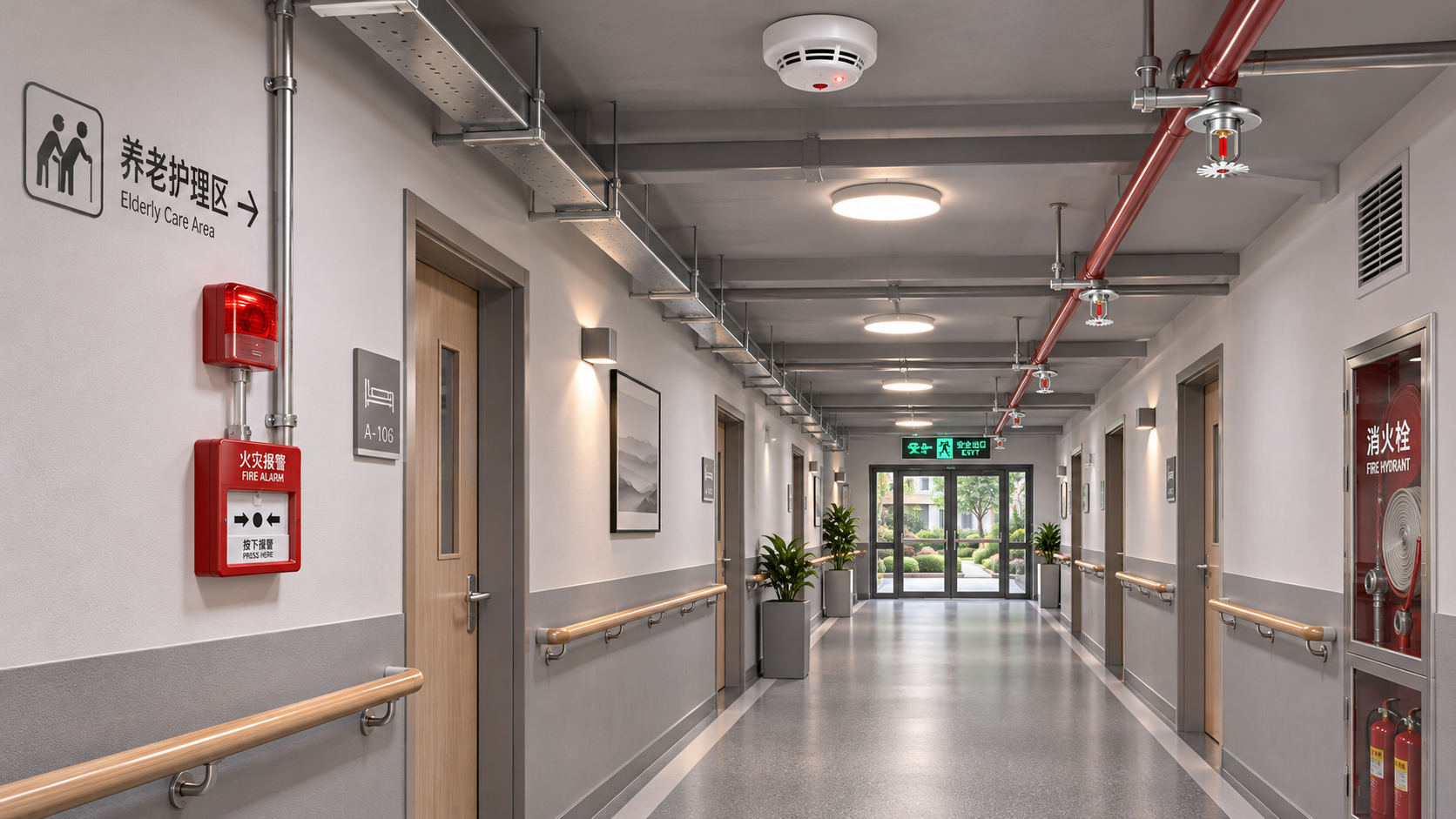
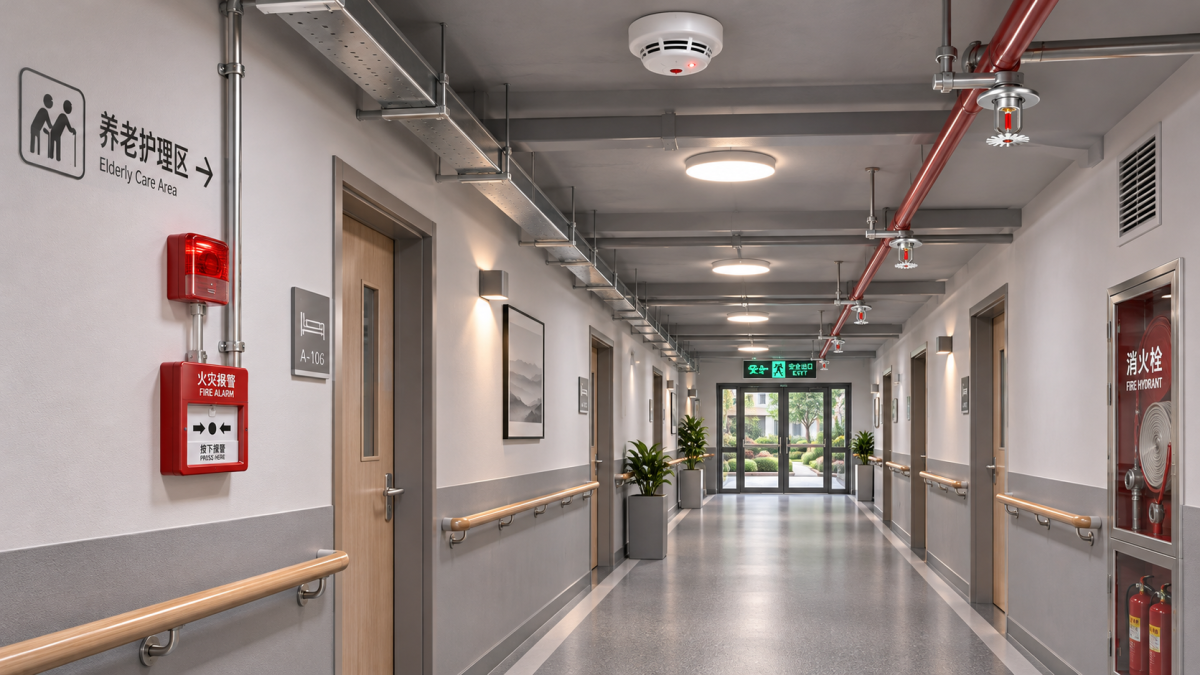
On November 23, 2026, four departments, including the National Development and Reform Commission, issued an implementation plan for developing services for older adults and young children. The plan supports the use of smart management, fire safety and security systems in elder care and childcare facilities, and encourages products such as AI agents and service robots suited to elder care settings.
The measures bring safety systems into the same discussion as digital management and care technology. For facilities and suppliers, the immediate significance is the policy's explicit support for applying these systems in two service settings where management needs and the people served can differ considerably.
What the plan says about technology use
The plan calls for a deeper use of technology to support services for older adults and young children. Its stated purpose in supporting smart management, fire safety and security systems is to improve the management of elder care and childcare facilities. Separately, it encourages the development of new products, including AI agents and service robots, for elder care scenarios.
These provisions cover different stages of technology use. Support for applying management and safety systems concerns their use within facilities, while encouragement for AI agents and robots concerns product development for elder care. The distinction matters when assessing potential effects: the former points directly to facilities' use of systems, whereas the latter identifies a product area without establishing when or how particular products will be adopted.
Where the potential effects could emerge
For elder care and childcare operators, the practical question is how a proposed system would serve facility management and safety needs. Smart fire safety and security are named alongside management services, but the plan's stated direction does not by itself establish a specific configuration for every facility. The suitability of a system would depend on the setting and the way it is intended to be used.
For suppliers, the announcement identifies elder care and childcare facilities as relevant application settings for smart safety and management systems. It does not establish a procurement commitment, a required product type or a timetable for purchases. Any effect on orders would depend on subsequent decisions by facilities and on how the policy is put into practice.
The reference to AI agents and service robots creates a related but distinct area to watch. Product developers may consider how their offerings fit elder care scenarios; the announcement alone does not indicate that a particular function, product or supplier has been selected. Nor does support for development establish the pace at which such products might reach facilities.
Further public information about implementation and facilities' use of these systems could help clarify how the policy translates into practice. For now, the clearest signal is that smart management and safety applications, alongside new elder care products, have been identified as areas for technology support within the service plan.
Technical Specifications
Expert Insights

Chief Security Architect
Dr. Thorne specializes in the intersection of structural engineering and digital resilience. He has advised three G7 governments on industrial infrastructure security.
Related Analysis
- Nov 24, 2026Visayas Grid Again Under Red Alert as Power Supply TightensAuthor :Grid Infrastructure Analyst
- Nov 24, 2026World’s First 35 kV IGBT Static Full-Power Generator Enters OperationAuthor :Grid Infrastructure Analyst
- Nov 24, 2026World Steel Association: Global Crude Steel Output Fell 1.1% in October 2026Author :
Core Sector // 01
Security & Safety
- Four Departments Back Smart Fire Safety Systems for Elder Care and ChildcareAuthor :Safety Compliance Lead

- Buying Wholesale Fire Alarm Panels: Pricing, Compatibility and Supplier ChecksAuthor :Safety Compliance Lead

- How to Vet a Wholesale CO2 Extinguisher Supplier for Certified Bulk OrdersAuthor :Safety Compliance Lead

- How to Select a Conventional Fire Alarm Panel by Zone Capacity and Building RiskAuthor :Safety Compliance Lead

- Steel Rescue Tripods Wholesale: Key Load Ratings, Standards, and Buying MistakesAuthor :Safety Compliance Lead

- India Lifts Duty on Fire Rescue Imports to 22%Author :Safety Compliance Lead

- IEC 62061 Amendment 2 Targets Fire & Rescue ControllersAuthor :Safety Compliance Lead

- IEC 62819-2:2026 Sets New Cybersecurity CheckpointAuthor :Safety Compliance Lead