Why a Security & Safety supplier may fail compliance
Author
Date Published
Reading Time
A Security & Safety supplier may look compliant during sourcing, yet fail under real audit pressure. Missing records, expired approvals, and weak batch traceability often surface too late.
In industrial settings, that failure affects uptime, legal defensibility, contractor access, insurance response, and site safety. Compliance is no longer a paperwork exercise. It is a resilience signal.
As standards tighten across global projects, every Security & Safety supplier is being judged by evidence quality, test consistency, and documentation discipline. That shift is reshaping supplier selection across industries.
Why the compliance bar for a Security & Safety supplier is rising
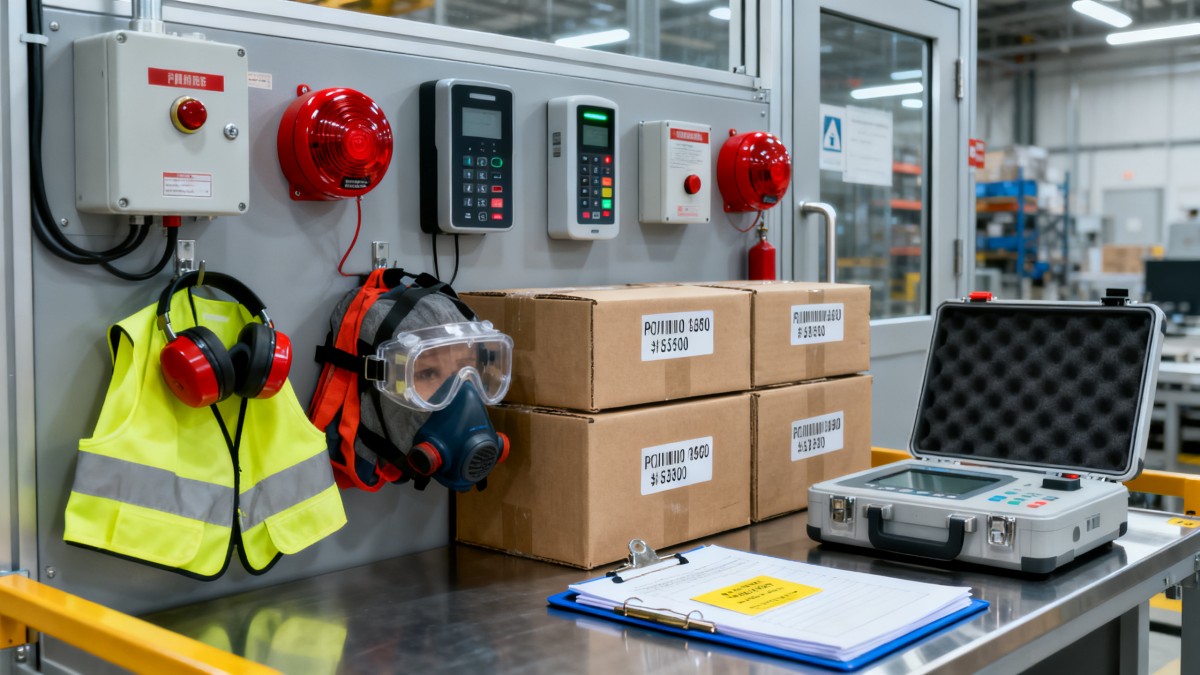
Industrial projects now face closer scrutiny from regulators, insurers, EPC contractors, and end users. A Security & Safety supplier must prove conformity across multiple layers, not just provide certificates.
Several trend signals explain this change. Audit depth is increasing. Product liability exposure is expanding. Cross-border procurement is growing. Digital traceability expectations are also becoming standard.
For fire detection devices, PPE, access control systems, alarms, emergency lighting, and protective barriers, compliance now extends beyond product design. It includes process control, labeling accuracy, and field documentation.
This is why a Security & Safety supplier may fail compliance despite strong pricing or technical brochures. The weak point is often operational evidence, not product claims.
The warning signs are becoming easier to detect
In the past, inconsistent supplier records could remain hidden until installation. Today, digital audits and integrated quality systems expose mismatches much faster.
A Security & Safety supplier often triggers concern when technical files differ across regions, test reports reference outdated versions, or serial numbers cannot link back to production data.
Another common signal is overreliance on distributor statements. If the Security & Safety supplier cannot produce original declarations, lab references, calibration history, or material data, trust declines quickly.
Common audit signals that suggest future failure
- Certificates exist, but model numbers do not match shipped items.
- Inspection records are incomplete or signed without measurable criteria.
- Change control history is missing after design or material revisions.
- Critical components come from unapproved sub-suppliers.
- Factory tests cannot be repeated with the same acceptance thresholds.
- Labels, manuals, and declarations use inconsistent standard references.
Where a Security & Safety supplier usually breaks compliance
Compliance failures rarely come from one issue alone. They develop through small weaknesses across documentation, testing, manufacturing, and post-delivery control.
Main drivers behind supplier non-compliance
A Security & Safety supplier also fails when compliance is treated as a one-time achievement. In reality, conformity must follow every product revision, sourcing change, firmware update, and packaging change.
The impact reaches far beyond one failed audit
When a Security & Safety supplier fails compliance, project consequences spread quickly. Technical acceptance may stop. Site commissioning may shift. Rework costs rise. Insurance and contractual exposure can increase.
In complex facilities, one non-compliant safety component can delay integrated testing of electrical, mechanical, and environmental systems. The disruption is operational, not only administrative.
Business areas most affected
- Project schedules slow when approvals must be repeated.
- Installation teams lose time sorting unsupported documentation.
- Maintenance planning suffers when spare parts lack traceable status.
- Warranty disputes increase when evidence trails are incomplete.
- Reputation damage grows when safety systems fail external review.
For high-risk industries, supplier compliance affects emergency preparedness and long-term asset integrity. A weak Security & Safety supplier can become a hidden vulnerability within the entire infrastructure chain.
What should be examined before approval is granted
The strongest response is preventive verification. A Security & Safety supplier should be assessed through evidence depth, not surface presentation.
Priority checkpoints worth close attention
- Validate certificates against actual model numbers and production sites.
- Review whether CE, UL, ISO, or local approvals are current.
- Check if test methods align with the latest standard editions.
- Confirm serial, lot, and material traceability across the full chain.
- Examine control of subcontracted parts and critical components.
- Verify document revision history and engineering change records.
- Request sample audit trails from complaint to corrective action closure.
These checks help separate a dependable Security & Safety supplier from one that only performs well during commercial evaluation.
How supplier assessment is shifting from certificates to systems
The market is moving toward system-based qualification. That means judging whether a Security & Safety supplier can sustain conformity over time, across product families and production changes.
Static documents still matter, but auditors increasingly want process evidence. They look for calibration discipline, nonconformance handling, corrective action speed, and digital record consistency.
A practical way to judge readiness
This approach reflects current industrial reality. A compliant Security & Safety supplier is not defined by one certificate. It is defined by a reliable evidence system.
What to do next when risk signals appear
When concerns emerge, immediate rejection is not always necessary. But unmanaged uncertainty is dangerous. The better path is structured escalation and targeted verification.
- Request updated compliance packs linked to exact product codes.
- Run a focused audit on testing, traceability, and change control.
- Compare approved documents against delivered labels and markings.
- Set corrective action deadlines with measurable closure evidence.
- Restrict high-risk items until conformity is fully demonstrated.
A Security & Safety supplier that responds with transparency, data integrity, and controlled remediation may still be viable. One that delays, generalizes, or redirects responsibility usually presents deeper risk.
In today’s industrial environment, supplier compliance is a live capability. Review the evidence chain, test the control system, and verify that conformity survives real operational change.
For stronger sourcing decisions, build evaluation criteria around traceability, certification currency, and audit-ready records. That is how a Security & Safety supplier earns confidence beyond the quotation stage.
Technical Specifications
- How to Select Electronic Hotel Key Card Locks for Guest Rooms and Staff AreasAuthor :Safety Compliance Lead
- How to Select Lab Instruments for Reliable Chemical Analysis WorkflowsAuthor :Precision Metrology Expert
- How to Size a UPS for Server Rooms: Load, Runtime, and Redundancy FactorsAuthor :Grid Infrastructure Analyst
Expert Insights

Chief Security Architect
Dr. Thorne specializes in the intersection of structural engineering and digital resilience. He has advised three G7 governments on industrial infrastructure security.
Related Analysis
- Sep 17, 2026How to Select Electronic Hotel Key Card Locks for Guest Rooms and Staff AreasAuthor :Safety Compliance Lead
- Sep 16, 2026How to Select Lab Instruments for Reliable Chemical Analysis WorkflowsAuthor :Precision Metrology Expert
- Sep 15, 2026How to Size a UPS for Server Rooms: Load, Runtime, and Redundancy FactorsAuthor :Grid Infrastructure Analyst
Core Sector // 01
Security & Safety
- How to Select Electronic Hotel Key Card Locks for Guest Rooms and Staff AreasAuthor :Safety Compliance Lead

- How to Evaluate a Hotel Key Card Lock Supplier for Multi-Property RolloutsAuthor :Safety Compliance Lead

- Pre-Contract Audit Checklist for Verified Production Safety and Environmental ComplianceAuthor :Safety Compliance Lead

- How Can Distributors Build Procurement-Oriented Industrial Content That Drives RFQs?Author :Safety Compliance Lead

- EU Mandates EN 50131-1:2026 for Security SystemsAuthor :Safety Compliance Lead

- EU EN 50131-1:2026 Takes Effect on CCTV ComplianceAuthor :Safety Compliance Lead

- IEC Issues CCTV Interoperability Test StandardAuthor :Safety Compliance Lead

- EN 50131-4:2026 Raises EU Security Compliance BarAuthor :Safety Compliance Lead