China Releases Green Design Guidelines for Industrial Products (2026 Edition)
Author
Date Published
Reading Time
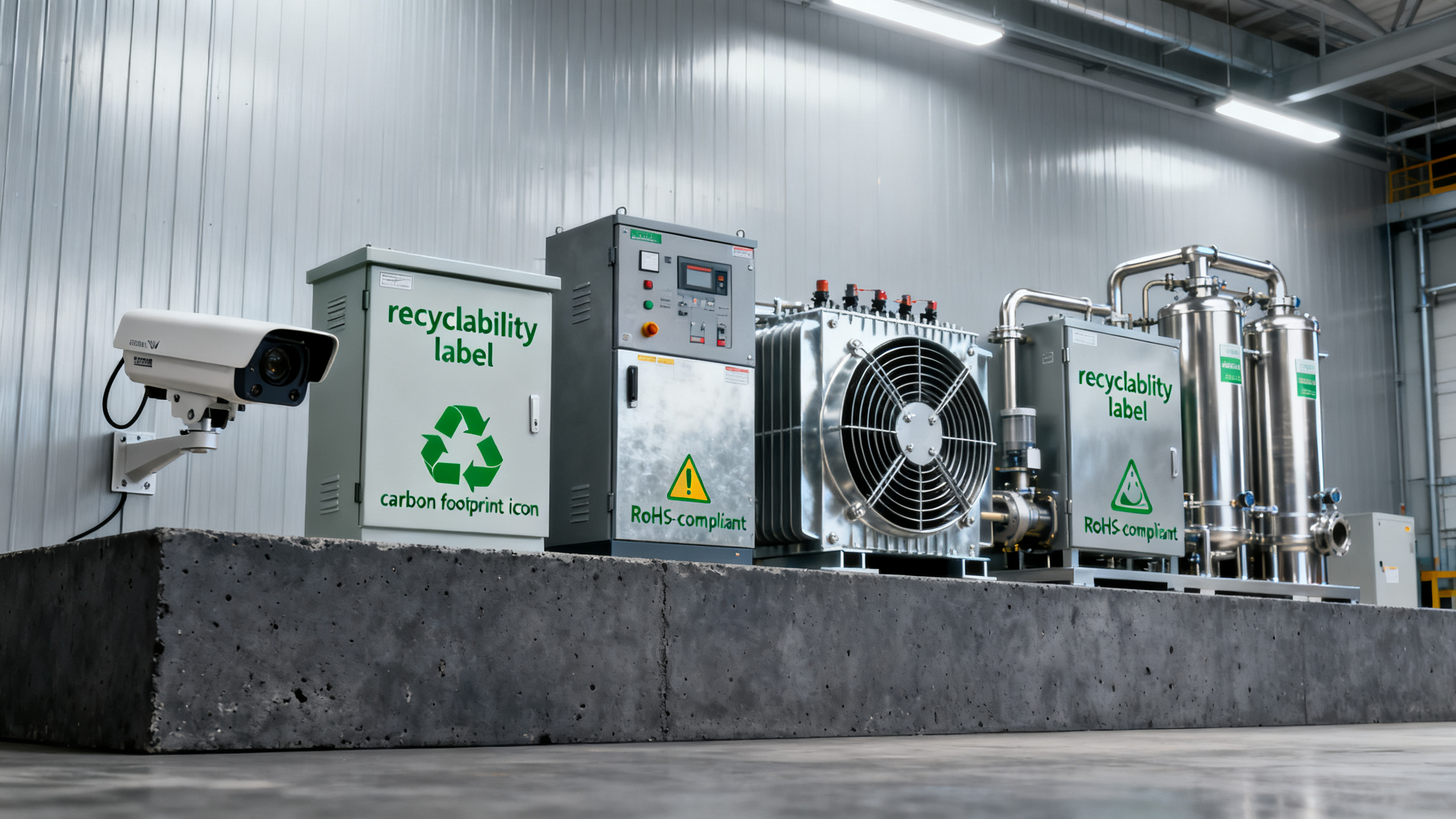
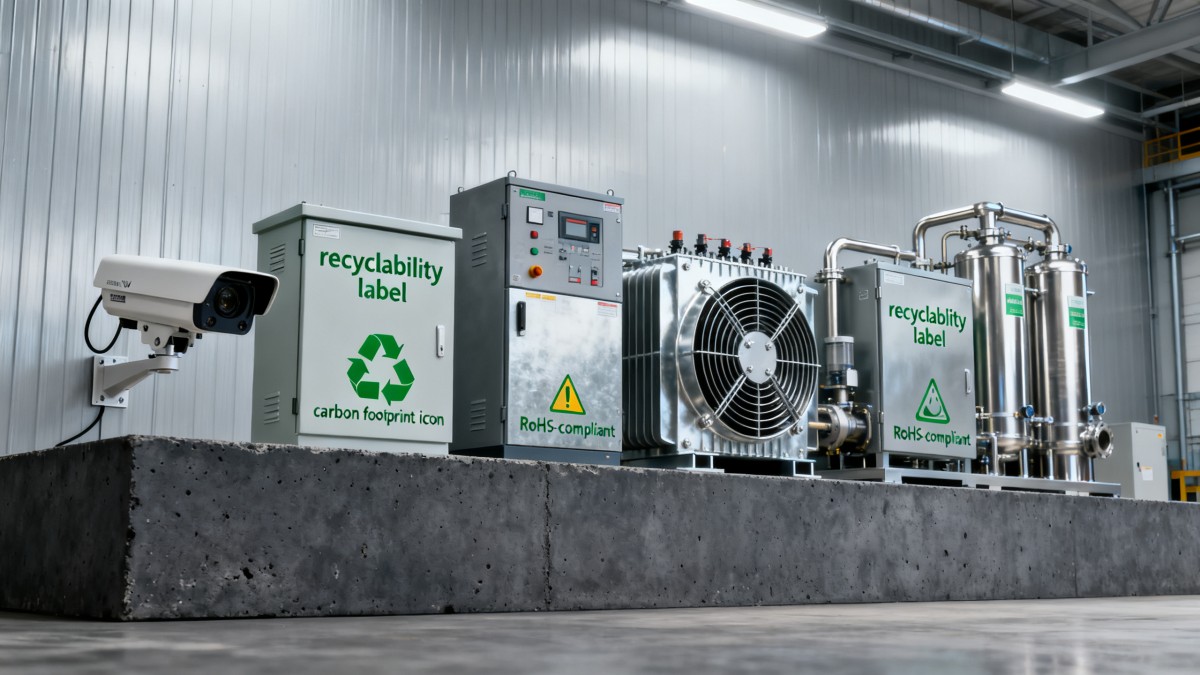
On April 17, 2026, six Chinese government departments—including the Ministry of Industry and Information Technology—jointly issued the Green Design Guidelines for Industrial Products (2026 Edition). The document explicitly identifies CCTV systems, fire protection equipment, circuit breakers, transformers, and industrial water treatment equipment as priority categories for green design implementation. It mandates full life-cycle carbon footprint assessment, hazardous substance control, and recyclability labeling. As the Guidelines have been integrated into China’s technical trade barrier early-warning system for exports to the EU and ASEAN, they directly affect overseas market access, green procurement certification, and Extended Producer Responsibility (EPR) compliance for exporters in electromechanical and security equipment sectors.
Event Overview
The Ministry of Industry and Information Technology and five other departments released the Green Design Guidelines for Industrial Products (2026 Edition) on April 17, 2026. The Guidelines designate CCTV systems, fire protection equipment, circuit breakers, transformers, and industrial water treatment equipment as key product categories subject to green design requirements. These include mandatory life-cycle carbon footprint calculation, hazardous substance management, and standardized recyclability labeling. The Guidelines are now incorporated into China’s technical trade measures early-warning system for exports to the European Union and the Association of Southeast Asian Nations (ASEAN), affecting product market access, green procurement eligibility, and EPR obligations for relevant exporters.
Industries Affected
Direct Exporters of Electromechanical and Security Equipment
These enterprises face immediate implications for export compliance, especially when supplying to the EU and ASEAN markets. The Guidelines’ integration into China’s technical trade barrier early-warning system means that non-compliant products may encounter delays or rejection during customs clearance, certification audits, or green procurement tenders.
Manufacturers of Key Listed Products (e.g., Transformers, Fire Protection Systems)
Manufacturers producing the designated categories must adapt design processes, material selection, and documentation practices to meet new green design criteria. This includes establishing internal carbon accounting protocols and updating technical files to reflect recyclability metrics and hazardous substance declarations.
Supply Chain and Component Suppliers
Suppliers providing sub-assemblies, PCBs, enclosures, or chemical materials (e.g., flame retardants, coolants, coatings) to manufacturers of listed products may be required to provide verified environmental data—such as substance declarations or recycled content certificates—to support downstream green design reporting.
Distributors and System Integrators
Entities aggregating and reselling products—including bundled CCTV or fire safety systems—may need to verify green design compliance across all components. Their ability to issue compliant documentation (e.g., recyclability labels, carbon summary sheets) will influence buyer acceptance, particularly in public-sector or ESG-driven procurement contexts.
What Enterprises and Practitioners Should Focus On and How to Respond
Monitor official implementation timelines and supporting standards
The Guidelines establish requirements but do not specify enforcement dates or testing methodologies. Enterprises should track subsequent announcements from MIIT or Standardization Administration of China (SAC) regarding technical specifications, verification procedures, or pilot implementation phases.
Prioritize compliance preparation for high-risk product categories and target markets
CCTV, fire protection equipment, and transformers exported to the EU or ASEAN warrant urgent review. Companies should assess current product documentation against the three core requirements: life-cycle carbon footprint reporting, hazardous substance disclosure (aligned with RoHS/REACH expectations), and visible recyclability labeling.
Distinguish policy signals from operational mandates
While the Guidelines are binding as a regulatory framework, their direct legal enforceability depends on incorporation into national standards or administrative rules. For now, they function primarily as a technical trade barrier signal—meaning readiness matters more than immediate certification.
Initiate cross-functional alignment on data collection and supplier engagement
Manufacturers should convene engineering, procurement, and sustainability teams to map existing data gaps—especially on raw material origins, energy use in production, and end-of-life recovery pathways—and begin requesting environmental declarations from Tier-1 suppliers.
Editorial Perspective / Industry Observation
Observably, this update functions less as an immediate compliance deadline and more as a formalized escalation of green design expectations within China’s export governance framework. Analysis shows the inclusion of specific product categories—and their linkage to EU and ASEAN trade mechanisms—signals growing alignment between domestic industrial policy and international environmental trade norms. From an industry perspective, the Guidelines represent a consolidation of pre-existing green manufacturing trends rather than a sudden departure; however, their codification in a multi-departmental directive elevates their strategic weight. Current attention should focus on how quickly supporting standards and verification tools emerge—not whether the direction has shifted.
Conclusion
The release of the Green Design Guidelines for Industrial Products (2026 Edition) marks a procedural tightening in China’s approach to sustainable industrial exports—not a standalone regulation, but a coordinated signal embedded within broader technical trade infrastructure. It is best understood not as an isolated compliance event, but as a forward-looking marker of evolving due diligence expectations for electromechanical and security equipment value chains serving regulated markets. Enterprises are advised to treat it as a catalyst for systematic environmental data governance, rather than a short-term checklist item.
Source Attribution
Main source: Joint announcement by the Ministry of Industry and Information Technology of the People’s Republic of China and five other departments, issued on April 17, 2026.
Points requiring ongoing observation: Specific implementation timelines, associated national standards, third-party verification mechanisms, and sector-specific guidance documents.
Technical Specifications
- How to Select Electronic Hotel Key Card Locks for Guest Rooms and Staff AreasAuthor :Safety Compliance Lead
- How to Select Lab Instruments for Reliable Chemical Analysis WorkflowsAuthor :Precision Metrology Expert
- How to Size a UPS for Server Rooms: Load, Runtime, and Redundancy FactorsAuthor :Grid Infrastructure Analyst
Expert Insights

Chief Security Architect
Dr. Thorne specializes in the intersection of structural engineering and digital resilience. He has advised three G7 governments on industrial infrastructure security.
Related Analysis
- Sep 17, 2026How to Select Electronic Hotel Key Card Locks for Guest Rooms and Staff AreasAuthor :Safety Compliance Lead
- Sep 16, 2026How to Select Lab Instruments for Reliable Chemical Analysis WorkflowsAuthor :Precision Metrology Expert
- Sep 15, 2026How to Size a UPS for Server Rooms: Load, Runtime, and Redundancy FactorsAuthor :Grid Infrastructure Analyst
Core Sector // 01
Security & Safety
- How to Select Electronic Hotel Key Card Locks for Guest Rooms and Staff AreasAuthor :Safety Compliance Lead

- How to Evaluate a Hotel Key Card Lock Supplier for Multi-Property RolloutsAuthor :Safety Compliance Lead

- Pre-Contract Audit Checklist for Verified Production Safety and Environmental ComplianceAuthor :Safety Compliance Lead

- How Can Distributors Build Procurement-Oriented Industrial Content That Drives RFQs?Author :Safety Compliance Lead

- EU Mandates EN 50131-1:2026 for Security SystemsAuthor :Safety Compliance Lead

- EU EN 50131-1:2026 Takes Effect on CCTV ComplianceAuthor :Safety Compliance Lead

- IEC Issues CCTV Interoperability Test StandardAuthor :Safety Compliance Lead

- EN 50131-4:2026 Raises EU Security Compliance BarAuthor :Safety Compliance Lead