Inbound Tourism 'Sinks' to Tier-3 Cities, Boosting Brand Exposure for Chinese Industrial Brands
Author
Date Published
Reading Time

Lead
On 2026-05-05, industry observers noted accelerated geographic diversification in China’s inbound tourism flow during the 2026 Labor Day holiday — with foreign visitors increasingly choosing lesser-known cities and historic towns over traditional first-tier destinations. This shift is reshaping how overseas buyers engage with Chinese industrial brands, particularly those in security, fire safety, and occupational protective equipment sectors, by enabling immersive, context-rich brand exposure within authentic local settings.
Event Overview
During the 2026 Labor Day holiday, numerous distinctive small cities and ancient towns across China attracted a notable influx of foreign tourists, drawn by cultural authenticity and low-density experiential offerings. Local industrial parks opened for guided visits; themed industrial tourism routes — integrating factory tours, live demonstrations, and product trials — were launched in collaboration with municipal authorities and local enterprises.
Industries Affected
Direct Export Enterprises
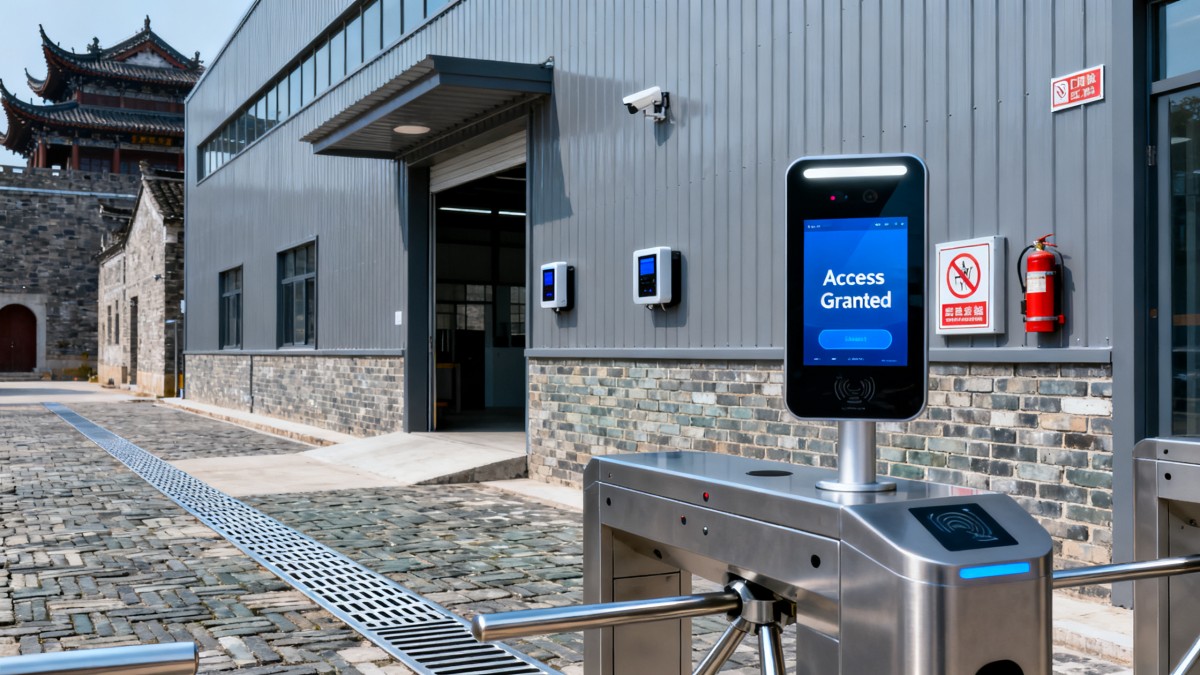
Companies exporting CCTV & Access Control systems, Fire & Rescue Equipment, and PPE & Workwear face newly elevated opportunities for direct B2B engagement. Foreign procurement teams visiting as part of cultural-tourism itineraries now encounter products in operational environments — e.g., smart access terminals deployed at heritage site entrances or flame-resistant workwear used by restoration technicians. This exposure strengthens brand credibility beyond catalogues or trade fairs, shortening trust-building cycles. However, impact remains uneven: only firms with localized visitor infrastructure (multilingual signage, trained staff, compliant tour protocols) are currently capturing measurable benefit.
Raw Material Suppliers
Suppliers of high-performance textiles (e.g., aramid fibers for PPE), optical-grade polycarbonates (for CCTV housings), and fire-retardant composites report early-stage demand signals from downstream manufacturers seeking to highlight material provenance in visitor-facing storytelling. For example, some factories now label raw material origins on display panels (“Woven with DuPont™ Nomex® fiber, sourced via certified EU-China supply chain”). Yet, this trend has not yet translated into volume-based order shifts — rather, it reflects emerging strategic alignment between material traceability and brand narrative coherence.
Contract Manufacturing Firms
OEM/ODM manufacturers serving global safety and security brands are adapting production lines to accommodate ‘tour-ready’ configurations — such as modular demo units, bilingual UI firmware, or quick-swap branding kits for visitor zones. These adjustments require minor CAPEX but carry no direct revenue uplift unless tied to new contract clauses specifying ‘on-site experience integration’. Observably, firms that proactively co-developed visitor experiences with municipal tourism bureaus gained preferential placement in official itineraries — suggesting competitive differentiation is becoming location- and collaboration-sensitive.
Supply Chain Service Providers
Logistics integrators, certification consultants (e.g., CE/UL/NFPA compliance support), and multilingual technical trainers report rising inquiries related to ‘tour-aligned compliance’ — such as translating safety documentation into German/French/Spanish for visitor handouts, or validating demonstration setups against local fire codes for public access. While still niche, this service layer signals an emergent sub-vertical: regulatory-adjacent experience enablement. Current demand is project-based and sporadic, not systemic.
Key Considerations and Recommended Actions
Map Local Tourism Partnerships Strategically
Enterprises should prioritize formal MOUs with municipal culture-and-tourism bureaus in cities where their facilities are located — not merely for visibility, but to align factory visit protocols with national inbound tourism quality standards (e.g., GB/T 31383–2015 for tourism service quality). Priority cities include those recently added to the Ministry of Culture and Tourism’s ‘2025 Inbound Friendly Small City Pilot List’.
Develop ‘Dual-Purpose’ Product Configurations
Manufacturers should design demo units and visitor-facing interfaces that serve both marketing and functional purposes — e.g., access control kiosks that operate live during tours while feeding anonymized footfall analytics back to operations teams. This avoids creating isolated ‘showroom-only’ assets that depreciate rapidly.
Train Frontline Staff for Cross-Cultural Engagement
Technical staff guiding foreign visitors require more than language fluency: they need contextual awareness (e.g., explaining why certain PPE standards differ across EU/US/ASEAN markets) and narrative discipline (avoiding proprietary disclosures while conveying innovation value). Internal micro-certification programs — validated by local tourism academies — are emerging as scalable solutions.
Editorial Perspective / Industry Observation
This trend is better understood not as ‘tourism-driven export growth’, but as a structural recalibration of buyer engagement pathways. Analysis shows that foreign procurement decisions increasingly hinge on embodied trust — built through witnessed reliability, not just third-party certifications. The ‘small city’ setting matters because it reduces perceptual distance between brand promise and real-world application: when a fire hose reel is demonstrated at a centuries-old temple renovation site, its durability claim gains tangible weight. That said, scalability remains constrained by infrastructure readiness — fewer than 12% of eligible industrial parks currently meet minimum accessibility, safety, and interpretation benchmarks for international visitors (per 2026 pilot audit data).
Conclusion
The geographic ‘sinking’ of inbound tourism does not replace traditional export channels — rather, it introduces a parallel, high-fidelity touchpoint for relationship deepening. Its long-term significance lies less in immediate sales lift and more in shifting the basis of cross-border B2B trust from transactional assurance to experiential validation. For industrial brands, this represents a rare opportunity to embed product narratives within living cultural ecosystems — provided they invest deliberately in integration, not just exposure.
Source Attribution
Primary data drawn from the Ministry of Culture and Tourism’s ‘2026 Labor Day Inbound Tourism Behavior Report’ (released May 4, 2026); supplementary insights from the China Council for the Promotion of International Trade (CCPIT) Industrial Brand Visibility Survey (Q2 2026). Note: Municipal-level implementation guidelines for industrial tourism integration remain under inter-ministerial consultation — ongoing monitoring advised for updates on national standardization (draft GB/T XXXXX–2026 expected Q3 2026).
Technical Specifications
- How to Select Electronic Hotel Key Card Locks for Guest Rooms and Staff AreasAuthor :Safety Compliance Lead
- How to Select Lab Instruments for Reliable Chemical Analysis WorkflowsAuthor :Precision Metrology Expert
- How to Size a UPS for Server Rooms: Load, Runtime, and Redundancy FactorsAuthor :Grid Infrastructure Analyst
Expert Insights

Chief Security Architect
Dr. Thorne specializes in the intersection of structural engineering and digital resilience. He has advised three G7 governments on industrial infrastructure security.
Related Analysis
- Sep 17, 2026How to Select Electronic Hotel Key Card Locks for Guest Rooms and Staff AreasAuthor :Safety Compliance Lead
- Sep 16, 2026How to Select Lab Instruments for Reliable Chemical Analysis WorkflowsAuthor :Precision Metrology Expert
- Sep 15, 2026How to Size a UPS for Server Rooms: Load, Runtime, and Redundancy FactorsAuthor :Grid Infrastructure Analyst
Core Sector // 01
Security & Safety
- How to Select Electronic Hotel Key Card Locks for Guest Rooms and Staff AreasAuthor :Safety Compliance Lead

- How to Evaluate a Hotel Key Card Lock Supplier for Multi-Property RolloutsAuthor :Safety Compliance Lead

- Pre-Contract Audit Checklist for Verified Production Safety and Environmental ComplianceAuthor :Safety Compliance Lead

- How Can Distributors Build Procurement-Oriented Industrial Content That Drives RFQs?Author :Safety Compliance Lead

- EU Mandates EN 50131-1:2026 for Security SystemsAuthor :Safety Compliance Lead

- EU EN 50131-1:2026 Takes Effect on CCTV ComplianceAuthor :Safety Compliance Lead

- IEC Issues CCTV Interoperability Test StandardAuthor :Safety Compliance Lead

- EN 50131-4:2026 Raises EU Security Compliance BarAuthor :Safety Compliance Lead