What to check before switching Security & Safety supplier
Author
Date Published
Reading Time

Before switching a Security & Safety supplier, the decision should start with risk, not price. A lower quote can hide weak certification control, slow service, unstable quality, or poor traceability.
In industrial settings, failures affect people, uptime, audits, insurance exposure, and regulatory standing. A disciplined review helps confirm whether a new Security & Safety supplier can protect operations over the long term.
What should be checked first when evaluating a Security & Safety supplier?
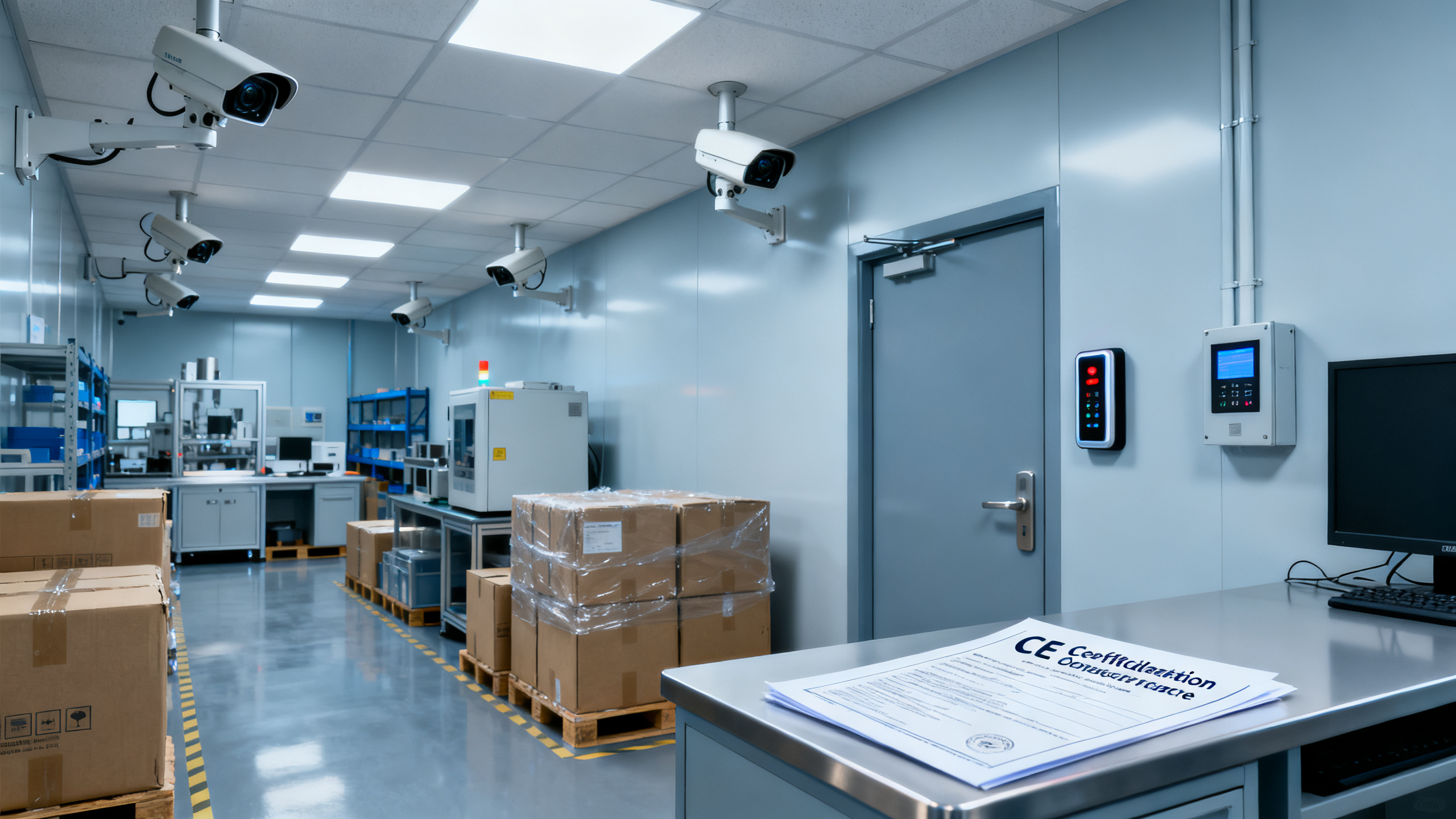
Start with compliance legitimacy. Verify whether the Security & Safety supplier holds current certifications relevant to the products being sourced, not just general company-level claims.

Check CE, UL, ISO, ATEX, IECEx, or sector-specific approvals where applicable. Ask for certificate numbers, issuing bodies, validity dates, and exact product scope.
A common mistake is accepting catalog labels without document verification. Product families may vary, and one certified model does not validate all variants.
Next, review legal and quality history. Request records covering recalls, non-conformities, field failures, and corrective actions during the past three years.
Strong suppliers usually provide structured CAPA documentation. Weak suppliers often answer with vague statements and no root-cause evidence.
Also confirm production consistency. Audit reports, batch controls, incoming inspection rules, and final test procedures reveal whether quality is repeatable.
How can real product reliability be verified beyond certificates?
Certification proves baseline compliance, but it does not guarantee durability in every operating condition. Reliability must be checked against actual use environments.
Review test data for temperature extremes, vibration, humidity, dust ingress, corrosion, UV exposure, washdown, or chemical contact, depending on the site profile.
Ask how the Security & Safety supplier validates product life. Useful evidence includes accelerated aging, ingress protection testing, impact testing, and continuous duty results.
Field performance matters even more. Request installation references from comparable facilities, especially those with harsh duty cycles or strict safety requirements.
Look for measurable indicators:
- failure rate by batch or installed base
- mean time between failures
- warranty claim frequency
- replacement turnaround time
- documented performance under emergency use
If the Security & Safety supplier cannot provide application-specific evidence, the risk of hidden performance gaps increases sharply after deployment.
Why do traceability and documentation matter so much?
Traceability is essential when incidents, audits, or warranty disputes occur. Every critical item should be linked to batch data, manufacturing date, material records, and test results.
A reliable Security & Safety supplier can quickly identify affected lots, isolate risk, and support corrective action without delaying site operations.
Review document control practices carefully. Check whether manuals, declarations, SDS files, inspection reports, and installation instructions are version-controlled and easy to retrieve.
Documentation quality affects more than compliance. It also shapes maintenance speed, technician accuracy, training quality, and future spare-part matching.
Useful questions include:
- Can each delivered unit be traced to a production lot?
- Are inspection records linked to serial or batch numbers?
- How quickly can revised safety documents be issued?
- Is there a formal change notification process?
When documentation is weak, even a technically acceptable product may create operational uncertainty and audit pressure.
How should service, response speed, and supply continuity be compared?
Many supplier switches fail because service assumptions were never tested. A strong Security & Safety supplier must perform well before, during, and after delivery.
Evaluate technical response time first. Ask how quickly the supplier answers specification questions, installation issues, failure analysis requests, and emergency replacement needs.
Then assess supply resilience. Review inventory strategy, second-source components, regional warehousing, and business continuity plans for transport or raw material disruption.
Lead time should be tested under normal and peak conditions. A short quoted lead time means little if fulfillment becomes unstable during demand spikes.
Compare service using practical checkpoints:
A capable Security & Safety supplier should offer evidence, not promises, for each point above.
What hidden risks appear when changing a Security & Safety supplier?
The biggest risk is assuming equivalence. Two products may look similar yet differ in tolerances, installation method, materials, maintenance cycle, or alarm behavior.
A supplier switch can also affect training, spare parts, software compatibility, inspection routines, and emergency procedures. These indirect costs are often ignored.
Watch for these warning signs:
- unverified “equivalent” product claims
- missing installation or calibration guidance
- unclear warranty exclusions
- limited local technical support
- poor spare-part compatibility planning
Another hidden issue is regulatory mismatch across regions. A Security & Safety supplier may comply in one market but lack approvals needed elsewhere.
That becomes critical in global industrial projects, where one approved source may serve multiple plants and jurisdictions.
How can total cost be assessed before switching suppliers?
Unit price should never be the only comparison point. Total cost includes validation time, retraining, documentation updates, installation changes, downtime risk, and replacement exposure.
A lower-cost Security & Safety supplier may become more expensive if extra inspections, faster wear, or repeated support calls are required.
Use a structured pre-switch review:
When comparing a Security & Safety supplier, a pilot run or staged rollout often reveals practical issues before full replacement begins.
What is the safest way to make the final switching decision?
Use a documented decision matrix. Score the Security & Safety supplier across compliance, reliability, service, traceability, lifecycle cost, and transition effort.
Weight the factors according to operational risk. Life-protection products, fire systems, access control, gas detection, and emergency devices should receive stricter thresholds.
A prudent process usually includes sample validation, installation review, document approval, performance observation, and contingency planning before broad substitution.
It also helps to define clear exit conditions. If the new Security & Safety supplier misses a critical requirement, the switch should pause automatically.
The goal is not simply to replace one vendor. It is to preserve safety integrity, compliance readiness, and operational continuity without introducing avoidable uncertainty.
Switching a Security & Safety supplier is a technical and risk-sensitive decision. Certifications, field reliability, traceability, service capability, and total lifecycle cost all deserve close review.
Build a checklist, verify documents directly, test real-world performance, and compare support commitments in writing. A careful process reduces compliance gaps and protects long-term operational resilience.
Technical Specifications
- How to Select Electronic Hotel Key Card Locks for Guest Rooms and Staff AreasAuthor :Safety Compliance Lead
- How to Select Lab Instruments for Reliable Chemical Analysis WorkflowsAuthor :Precision Metrology Expert
- How to Size a UPS for Server Rooms: Load, Runtime, and Redundancy FactorsAuthor :Grid Infrastructure Analyst
Expert Insights

Chief Security Architect
Dr. Thorne specializes in the intersection of structural engineering and digital resilience. He has advised three G7 governments on industrial infrastructure security.
Related Analysis
- Sep 17, 2026How to Select Electronic Hotel Key Card Locks for Guest Rooms and Staff AreasAuthor :Safety Compliance Lead
- Sep 16, 2026How to Select Lab Instruments for Reliable Chemical Analysis WorkflowsAuthor :Precision Metrology Expert
- Sep 15, 2026How to Size a UPS for Server Rooms: Load, Runtime, and Redundancy FactorsAuthor :Grid Infrastructure Analyst
Core Sector // 01
Security & Safety
- How to Select Electronic Hotel Key Card Locks for Guest Rooms and Staff AreasAuthor :Safety Compliance Lead

- How to Evaluate a Hotel Key Card Lock Supplier for Multi-Property RolloutsAuthor :Safety Compliance Lead

- Pre-Contract Audit Checklist for Verified Production Safety and Environmental ComplianceAuthor :Safety Compliance Lead

- How Can Distributors Build Procurement-Oriented Industrial Content That Drives RFQs?Author :Safety Compliance Lead

- EU Mandates EN 50131-1:2026 for Security SystemsAuthor :Safety Compliance Lead

- EU EN 50131-1:2026 Takes Effect on CCTV ComplianceAuthor :Safety Compliance Lead

- IEC Issues CCTV Interoperability Test StandardAuthor :Safety Compliance Lead

- EN 50131-4:2026 Raises EU Security Compliance BarAuthor :Safety Compliance Lead