SASO IEC 62368-1:2026 Enforced in Middle East for Security Devices
Author
Date Published
Reading Time

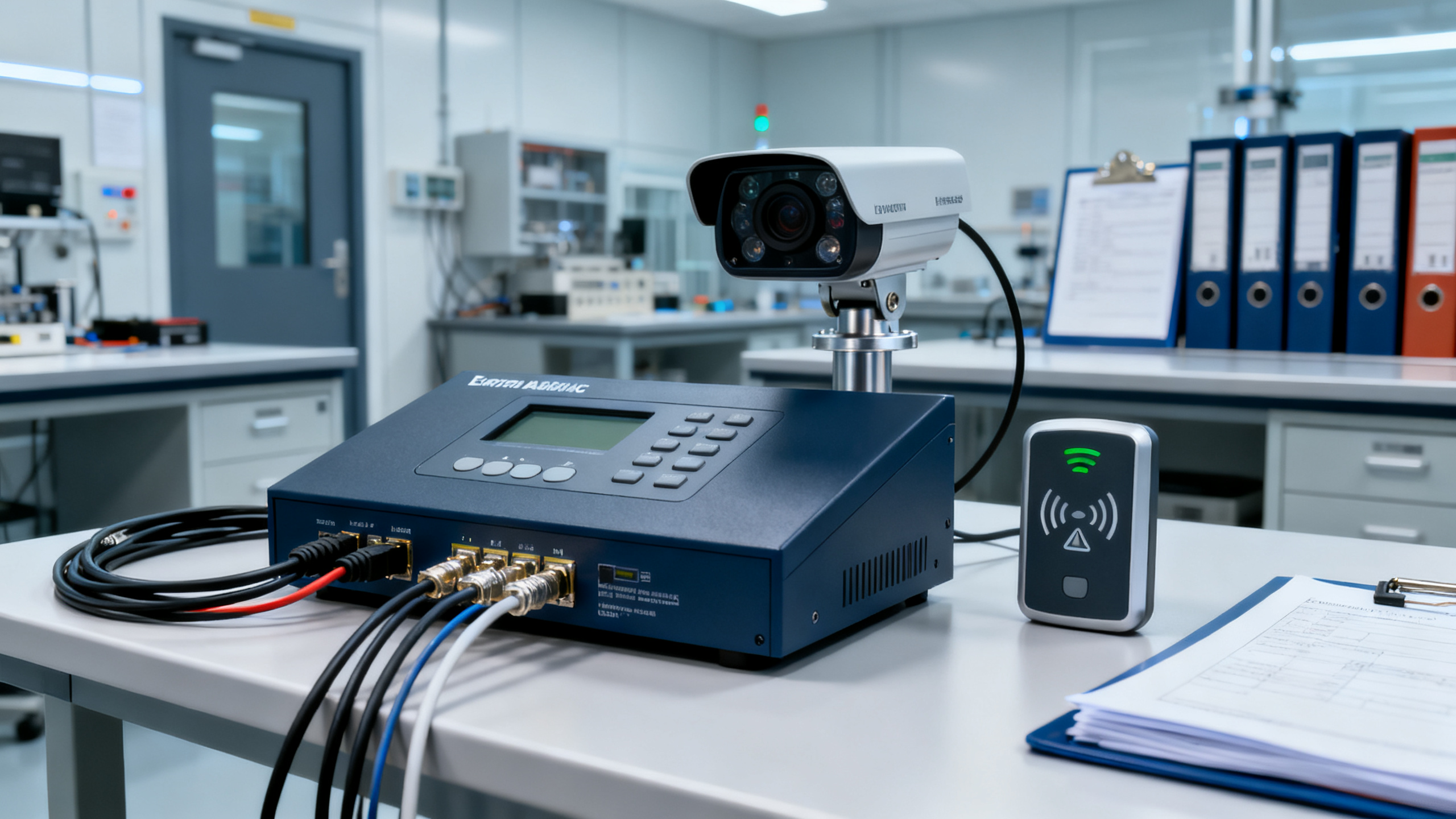
Starting 1 September 2026, the Saudi Standards, Metrology and Quality Organization (SASO) will enforce SASO IEC 62368-1:2026 for audio/video and IT equipment — including CCTV cameras, network video recorders (NVRs), and smart access controllers. This update introduces mandatory thermal runaway propagation testing (per UL 1642 Annex B) and a standby power limit of ≤0.5 W. The regulation directly impacts manufacturers and exporters of security and surveillance equipment targeting the Gulf Cooperation Council (GCC) market, particularly Saudi Arabia.
Event Overview
On 11 May 2026, SASO announced the official implementation of SASO IEC 62368-1:2026, effective 1 September 2026. The standard applies to all categories of audio/video, information technology, and communication equipment — with explicit inclusion of security monitoring devices such as CCTV cameras, NVRs, and intelligent door access controllers. Two new technical requirements are mandatory: (1) battery pack thermal runaway propagation testing per UL 1642 Annex B; and (2) maximum standby power consumption of 0.5 W. Certification lead time for affected products has increased from an average of six weeks to ten weeks, and applicants must now submit additional documentation for local energy efficiency label registration in Saudi Arabia.
Industries Affected
Direct Exporters & OEM Manufacturers
Companies exporting CCTV cameras, NVRs, or access controllers to Saudi Arabia face revised conformity assessment requirements. The added thermal and energy efficiency tests extend certification timelines and require updated product design documentation — especially for devices incorporating lithium-based batteries or low-power standby modes.
Contract Manufacturers & EMS Providers
OEMs relying on third-party manufacturing partners must ensure those facilities can support test-ready prototypes compliant with UL 1642 Annex B and precise standby power validation. Production line calibration, firmware-level power management settings, and battery cell sourcing traceability become critical inputs for certification readiness.
Supply Chain & Certification Service Providers
Third-party labs and certification bodies handling SASO submissions report extended review cycles due to dual-test verification. Local Saudi accreditation of test reports — particularly for thermal propagation — may necessitate coordination with SASO-recognized laboratories inside or outside the Kingdom, adding logistical complexity.
Key Considerations and Recommended Actions
Monitor official SASO guidance on test method equivalency
While UL 1642 Annex B is cited, SASO has not yet published detailed interpretation rules for alternative standards (e.g., IEC 62619 or UN 38.3 sub-tests). Exporters should track SASO’s Technical Circulars or notifications via the SASO e-Services portal for any permitted equivalencies or transitional allowances.
Prioritize high-volume SKUs for early re-certification
Given the 10-week average certification timeline, companies should identify top-selling models destined for Saudi Arabia and initiate re-testing by July 2026 to avoid shipment delays post-1 September 2026. Battery-integrated products and PoE-powered devices warrant priority due to higher thermal and power management complexity.
Prepare for local energy efficiency labeling compliance
The requirement for Saudi-specific energy efficiency label registration means product data sheets must include verified standby power measurements under defined ambient conditions (e.g., ISO/IEC 17025-accredited lab reports). Companies should engage local Saudi representatives early to initiate label registration in the SASO Energy Efficiency Labeling System (EELS).
Review battery supply chain documentation
Thermal runaway propagation testing requires full traceability of battery cells, including manufacturer, model, safety certifications (e.g., UL 1642, IEC 62133), and cell-level test reports. Procurement teams should verify supplier documentation packages align with SASO’s evidentiary expectations before initiating certification.
Editorial Insight / Industry Observation
Observably, this regulatory update reflects SASO’s broader alignment with global safety and sustainability benchmarks — particularly the integration of battery safety and energy performance into ICT equipment frameworks. Analysis shows it functions less as an isolated compliance milestone and more as a signal of tightening convergence between functional safety, electrochemical risk management, and energy policy in GCC markets. From an industry perspective, the extension of certification timelines and introduction of local labeling indicate that SASO is strengthening enforcement capacity rather than merely adopting international text. Current implementation remains procedural — no exemptions or grace periods have been announced — meaning the requirement is operational, not prospective.

Conclusion: SASO IEC 62368-1:2026 marks a structural shift in market access criteria for security electronics in Saudi Arabia — one that embeds battery safety and ultra-low-power operation as non-negotiable elements of product compliance. It is better understood not as a temporary adjustment but as a foundational requirement for continued market participation. Companies should treat the 1 September 2026 deadline as binding and integrate thermal and energy efficiency validation into core product development workflows — not as a final-stage certification step.
Source: Saudi Standards, Metrology and Quality Organization (SASO), Official Announcement dated 11 May 2026.
Note: SASO’s interpretation of UL 1642 Annex B applicability to multi-cell battery packs and acceptance of non-U.S. test reports remain under observation.
Technical Specifications
- How to Select Electronic Hotel Key Card Locks for Guest Rooms and Staff AreasAuthor :Safety Compliance Lead
- How to Select Lab Instruments for Reliable Chemical Analysis WorkflowsAuthor :Precision Metrology Expert
- How to Size a UPS for Server Rooms: Load, Runtime, and Redundancy FactorsAuthor :Grid Infrastructure Analyst
Expert Insights

Chief Security Architect
Dr. Thorne specializes in the intersection of structural engineering and digital resilience. He has advised three G7 governments on industrial infrastructure security.
Related Analysis
- Sep 17, 2026How to Select Electronic Hotel Key Card Locks for Guest Rooms and Staff AreasAuthor :Safety Compliance Lead
- Sep 16, 2026How to Select Lab Instruments for Reliable Chemical Analysis WorkflowsAuthor :Precision Metrology Expert
- Sep 15, 2026How to Size a UPS for Server Rooms: Load, Runtime, and Redundancy FactorsAuthor :Grid Infrastructure Analyst
Core Sector // 01
Security & Safety
- How to Select Electronic Hotel Key Card Locks for Guest Rooms and Staff AreasAuthor :Safety Compliance Lead

- How to Evaluate a Hotel Key Card Lock Supplier for Multi-Property RolloutsAuthor :Safety Compliance Lead

- Pre-Contract Audit Checklist for Verified Production Safety and Environmental ComplianceAuthor :Safety Compliance Lead

- How Can Distributors Build Procurement-Oriented Industrial Content That Drives RFQs?Author :Safety Compliance Lead

- EU Mandates EN 50131-1:2026 for Security SystemsAuthor :Safety Compliance Lead

- EU EN 50131-1:2026 Takes Effect on CCTV ComplianceAuthor :Safety Compliance Lead

- IEC Issues CCTV Interoperability Test StandardAuthor :Safety Compliance Lead

- EN 50131-4:2026 Raises EU Security Compliance BarAuthor :Safety Compliance Lead