Middle East Adopts SASO IEC 62368-1:2026 for Security Devices
Author
Date Published
Reading Time
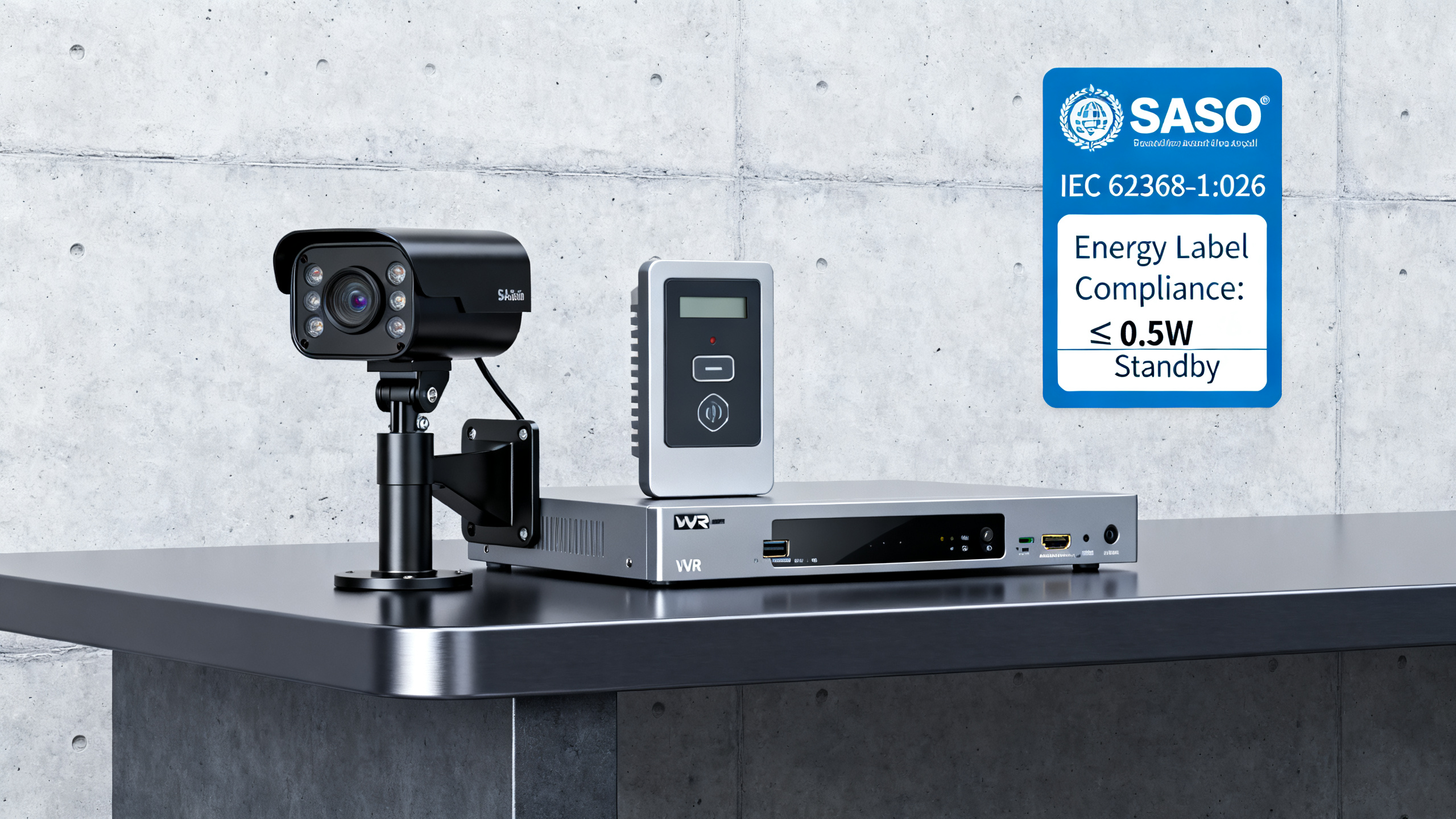
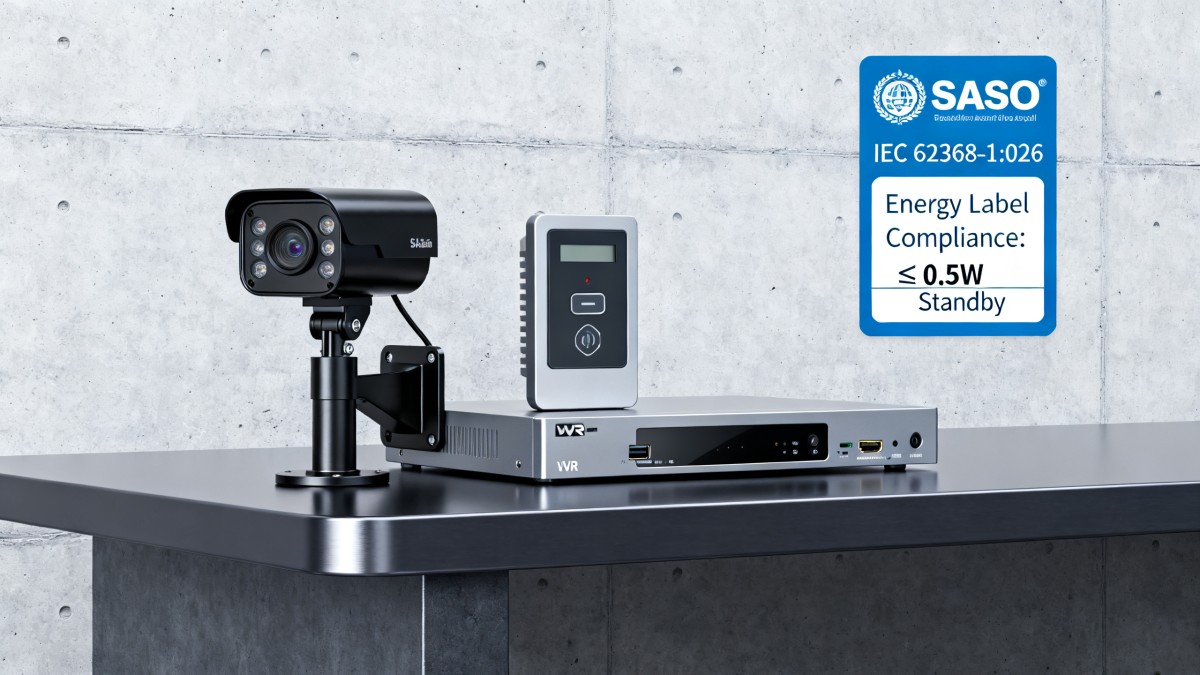
On September 1, 2026, the new SASO IEC 62368-1:2026 standard officially takes effect across multiple Middle Eastern countries—including Saudi Arabia—impacting exporters of CCTV cameras, network video recorders (NVRs), and access control controllers. This update introduces mandatory battery thermal runaway propagation testing (per UL 1642 Annex B) and a strict standby power limit of ≤0.5 W. Chinese security equipment manufacturers and exporters must now navigate extended certification timelines (from 6 to 10 weeks) and additional local energy labeling registration in Saudi Arabia—making this a critical compliance milestone for hardware exporters targeting Gulf markets.
Event Overview
The Saudi Standards, Metrology and Quality Organization (SASO) announced on May 11, 2026, the implementation of SASO IEC 62368-1:2026, effective September 1, 2026. The standard applies to audio/video, information, and communication technology equipment—including CCTV cameras, NVRs, and door access controllers. Key technical additions include: (1) mandatory battery thermal runaway propagation testing per UL 1642 Annex B; and (2) a maximum standby power consumption requirement of 0.5 W. Certification processing time for Chinese manufacturers has increased from six to ten weeks, and all applicable products must complete Saudi-specific energy label registration prior to market entry.
Industries Affected
Direct Exporters of Security Hardware
Chinese companies exporting CCTV systems, NVRs, or access controllers to Saudi Arabia and other SASO-aligned markets are directly affected. Compliance is now conditional not only on safety certification but also on verified energy performance and battery safety under thermal stress conditions—requiring updated test reports and documentation.
Manufacturers with Integrated Battery Designs
Firms producing battery-powered or hybrid-powered security devices (e.g., wireless cameras, solar-NVR kits) face heightened technical scrutiny. The inclusion of UL 1642 Annex B means existing battery qualification data may no longer suffice; retesting against thermal propagation criteria is required—even if cells were previously certified for general use.
Supply Chain & Certification Service Providers
Third-party labs, certification bodies, and local Saudi representatives handling SASO conformity assessment must adapt workflows to accommodate the new thermal and energy efficiency test requirements. Lead times for test scheduling, report generation, and label registration have demonstrably lengthened—creating bottlenecks for clients with tight launch schedules.
Key Considerations and Recommended Actions
Monitor official SASO updates and interpretation guidance
SASO has not yet published detailed technical implementation notes or transitional arrangements for legacy certifications. Exporters should track SASO’s official portal and engage accredited local representatives for clarifications—particularly regarding grandfathering clauses or phased enforcement for existing product lines.
Prioritize high-volume and battery-integrated SKUs for early re-certification
Given the 10-week average certification cycle, companies should identify top-selling models—especially those with lithium-based batteries—and initiate testing and documentation well ahead of September 2026. Delayed submissions risk shipment holds or customs rejection at Saudi ports.
Distinguish between regulatory signal and operational readiness
The September 1, 2026, date marks formal enforcement—but customs authorities may begin verifying compliance incrementally from Q3 2026. Firms should treat pre-enforcement shipments as subject to retrospective checks, especially for products entering via Jeddah or Dammam ports.
Align procurement and labeling logistics with Saudi local registration
The new energy label registration is separate from SASO SABER certification and requires submission through the SASO e-labeling portal. Manufacturers must ensure their local Saudi representative is authorized to submit energy data—and that test reports include full model-level standby power measurements (not just averages or typical values).
Editorial Perspective / Industry Observation
Observably, this revision signals a broader regional shift toward harmonizing product safety with energy performance and battery risk management—not merely as standalone requirements, but as interdependent compliance pillars. Analysis shows that SASO’s adoption of UL 1642 Annex B reflects growing alignment with global EV and portable electronics safety frameworks, suggesting future extensions to other battery-dependent ICT categories. From an industry standpoint, this is less a one-off regulatory update and more an early indicator of tightening convergence between safety, energy, and sustainability mandates in Gulf standardization. Continued monitoring is warranted—not only for SASO, but also for potential follow-on actions by the GCC Standardization Organization (GSO) and UAE ESMA.
Conclusion
This update does not represent a sudden market barrier, but rather a calibrated escalation in technical due diligence for security hardware entering key Middle Eastern jurisdictions. It underscores that compliance is increasingly multi-dimensional—spanning electrical safety, thermal resilience, and energy efficiency—and cannot be addressed through isolated test campaigns. For exporters, the current phase is best understood as a preparation window—not a deadline-driven crisis—where systematic alignment of design, testing, and documentation processes delivers sustainable market access.
Source Attribution
Main source: Saudi Standards, Metrology and Quality Organization (SASO), official announcement dated May 11, 2026.
Areas requiring ongoing observation: SASO’s forthcoming technical implementation guidelines, potential GSO/GCC-wide adoption timeline, and enforcement consistency across Saudi customs checkpoints.
Technical Specifications
- How to Select Electronic Hotel Key Card Locks for Guest Rooms and Staff AreasAuthor :Safety Compliance Lead
- How to Select Lab Instruments for Reliable Chemical Analysis WorkflowsAuthor :Precision Metrology Expert
- How to Size a UPS for Server Rooms: Load, Runtime, and Redundancy FactorsAuthor :Grid Infrastructure Analyst
Expert Insights

Chief Security Architect
Dr. Thorne specializes in the intersection of structural engineering and digital resilience. He has advised three G7 governments on industrial infrastructure security.
Related Analysis
- Sep 17, 2026How to Select Electronic Hotel Key Card Locks for Guest Rooms and Staff AreasAuthor :Safety Compliance Lead
- Sep 16, 2026How to Select Lab Instruments for Reliable Chemical Analysis WorkflowsAuthor :Precision Metrology Expert
- Sep 15, 2026How to Size a UPS for Server Rooms: Load, Runtime, and Redundancy FactorsAuthor :Grid Infrastructure Analyst
Core Sector // 01
Security & Safety
- How to Select Electronic Hotel Key Card Locks for Guest Rooms and Staff AreasAuthor :Safety Compliance Lead

- How to Evaluate a Hotel Key Card Lock Supplier for Multi-Property RolloutsAuthor :Safety Compliance Lead

- Pre-Contract Audit Checklist for Verified Production Safety and Environmental ComplianceAuthor :Safety Compliance Lead

- How Can Distributors Build Procurement-Oriented Industrial Content That Drives RFQs?Author :Safety Compliance Lead

- EU Mandates EN 50131-1:2026 for Security SystemsAuthor :Safety Compliance Lead

- EU EN 50131-1:2026 Takes Effect on CCTV ComplianceAuthor :Safety Compliance Lead

- IEC Issues CCTV Interoperability Test StandardAuthor :Safety Compliance Lead

- EN 50131-4:2026 Raises EU Security Compliance BarAuthor :Safety Compliance Lead