Network Video Recorder NVR vs DVR: Which System Fits Multi-Camera Security Projects?
Author
Date Published
Reading Time
Network Video Recorder NVR vs DVR: why does this choice matter so much?
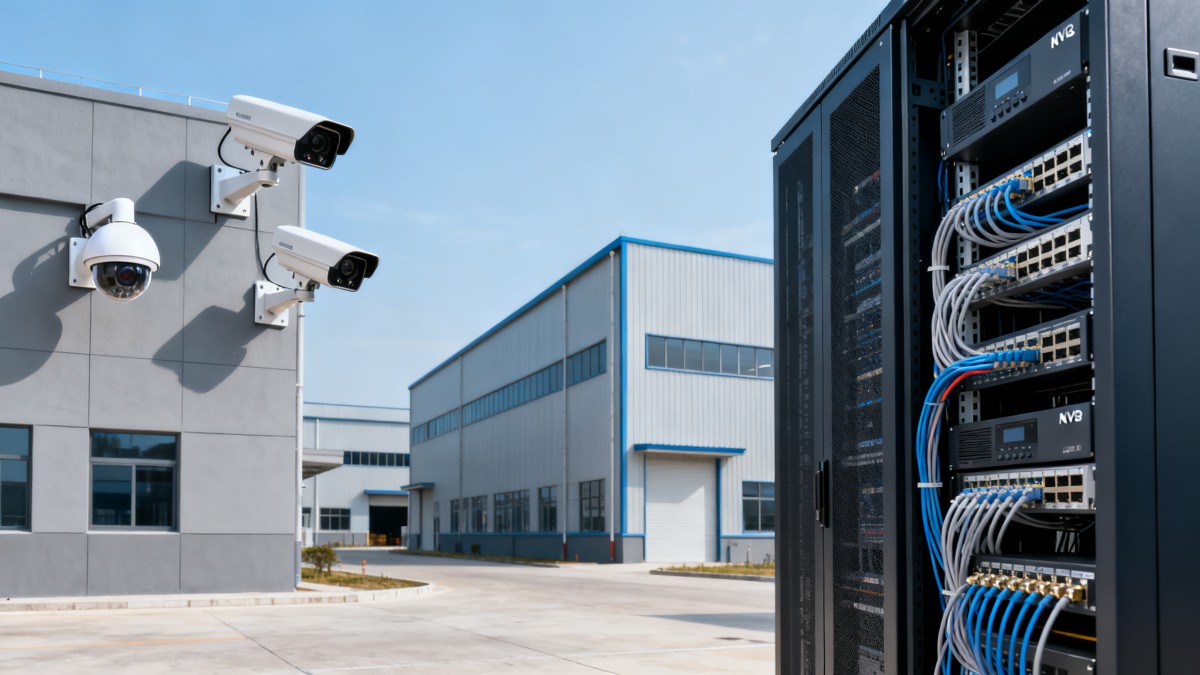
In multi-camera security projects, recorder choice shapes far more than storage. It affects image detail, wiring paths, expansion speed, maintenance workload, and future integration.
That is why the debate around network video recorder NVR and DVR remains practical, not theoretical. One wrong decision can lock a site into avoidable cost.
In industrial environments, those costs are rarely limited to equipment. Downtime, compliance gaps, blind spots, and troubleshooting delays often carry the heavier burden.
A useful way to approach the topic is simple: start with infrastructure reality, then match the recording system to camera count, network design, and operational risk.
Global Industrial Core often frames security decisions this way. Reliable systems are not chosen by headline specs alone, but by resilience, standards alignment, and lifecycle clarity.
What is the real difference between a network video recorder NVR and a DVR?
The core difference is where video becomes digital and how it travels. A DVR works with analog cameras. An NVR works with IP cameras over a network.
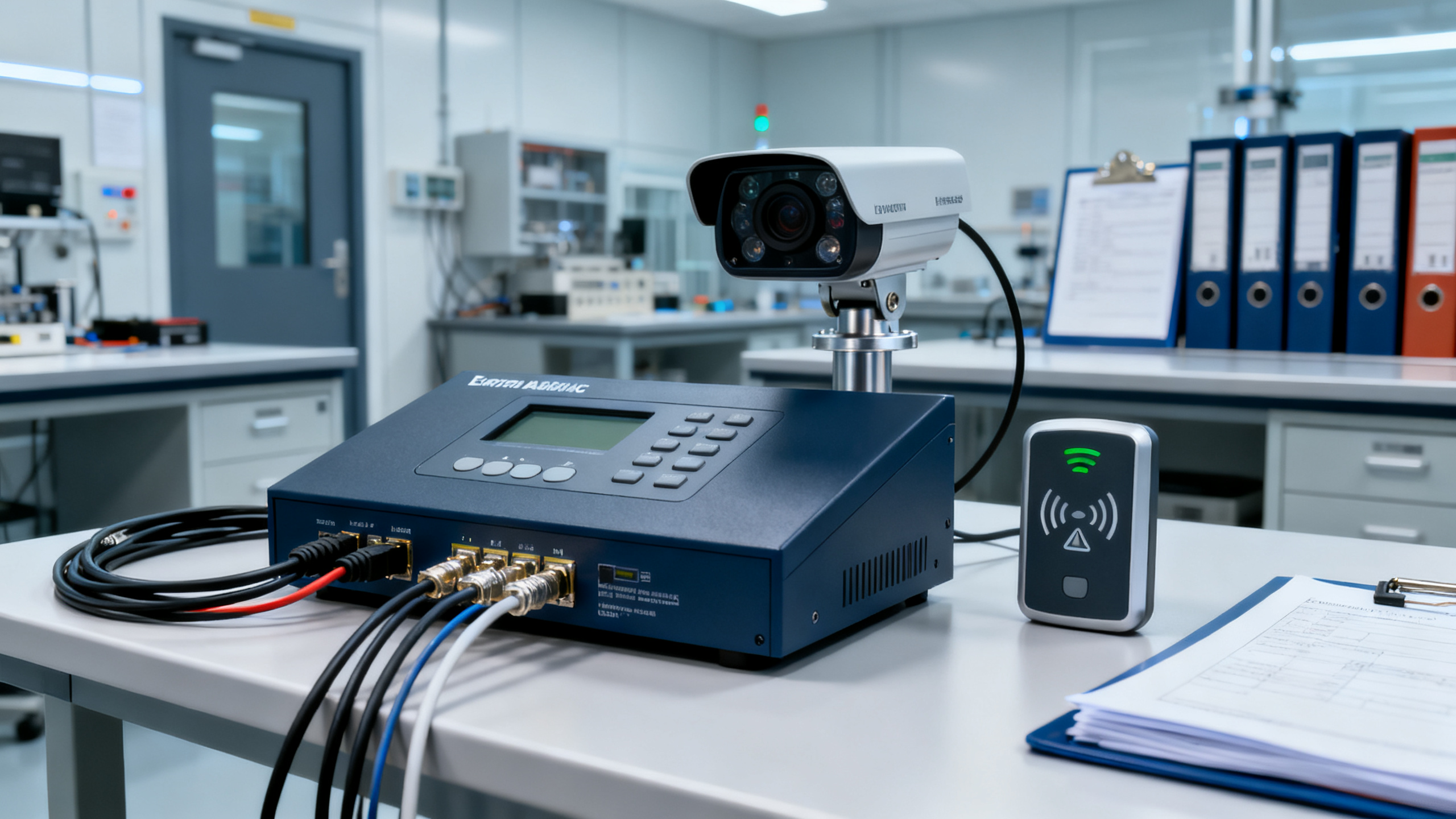
With a DVR, video is captured from coaxial cable and encoded at the recorder. With a network video recorder NVR, encoding usually happens inside each camera.
That design shift changes everything. IP cameras can support higher resolutions, analytics, remote configuration, and easier placement across wide facilities.
DVR systems still make sense in retrofit projects. If a site already has stable coaxial cabling, replacing only the recorder and cameras may reduce disruption.
By contrast, a network video recorder NVR is usually stronger where growth is expected. New cameras can often be added through existing network architecture.
The difference is not only analog versus digital. It is also centralized control versus distributed intelligence, and fixed layouts versus more flexible system design.
A quick comparison helps
This table does not replace a site survey, but it gives a dependable first filter before detailed engineering begins.
When does a network video recorder NVR make more sense for multi-camera projects?
A network video recorder NVR usually stands out when camera counts are high and coverage zones are spread across buildings, yards, loading areas, or production lines.
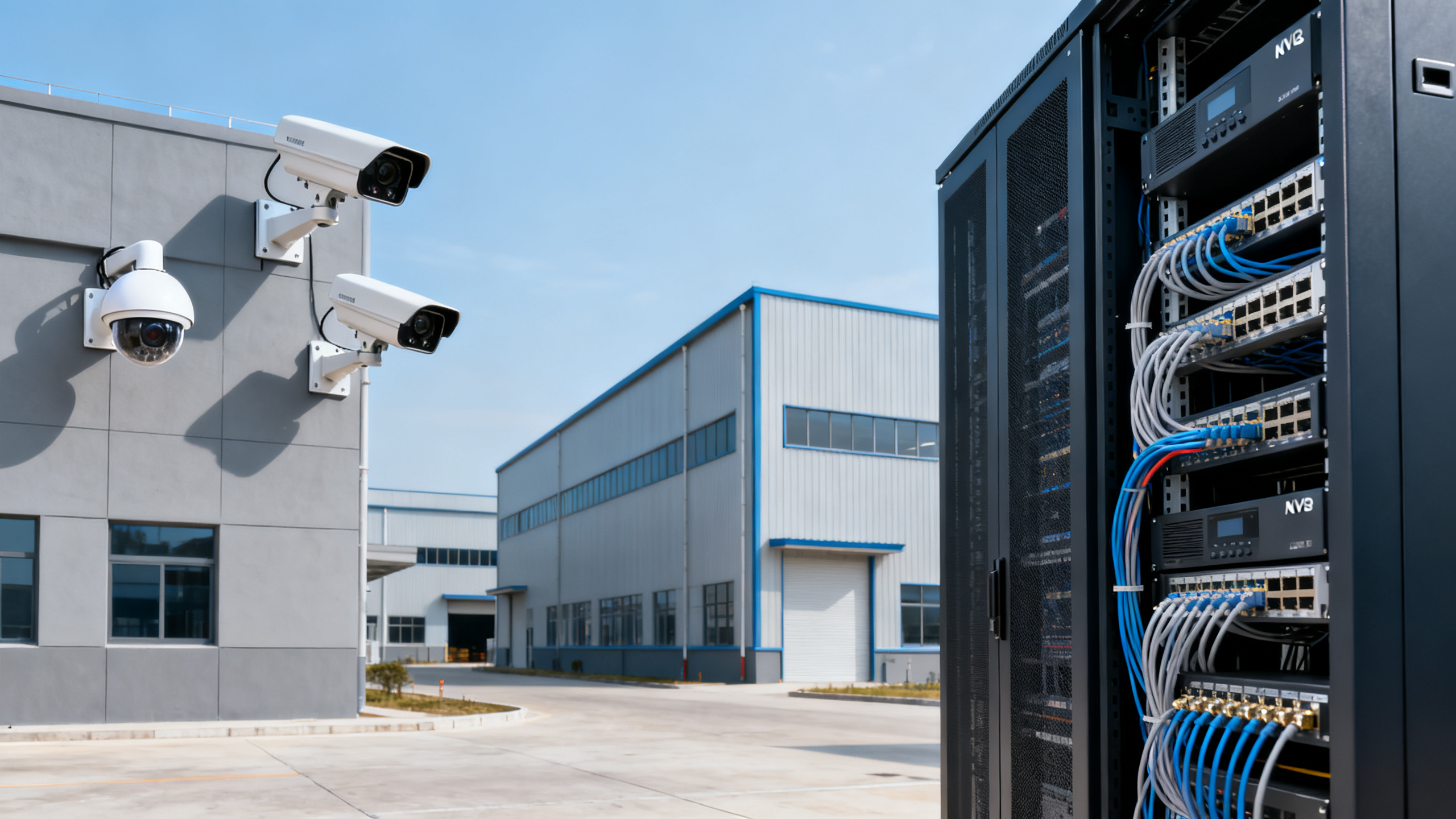
In those settings, IP architecture supports distributed deployment. Cameras can connect through switches, fiber uplinks, and segmented networks rather than direct home runs.
That matters in real projects. Long analog cable routes increase installation complexity, while PoE-based IP designs can reduce field hardware and simplify power planning.
Another advantage is image detail. If the application needs license plate capture, perimeter analytics, or event verification, a network video recorder NVR supports stronger camera options.
The same logic applies where cyber and physical security overlap. IP systems can be integrated with access control, alarms, and central monitoring workflows.
In practice, the best fit appears in projects with these traits:
- More than one building or a large external perimeter
- Planned camera growth within two to five years
- Need for 4MP, 8MP, or advanced video analytics
- Centralized remote management requirements
- Integration with broader industrial control or safety systems
Where reliability standards matter, recorder selection should also consider environmental ratings, cybersecurity hardening, and compatibility with certified components.
Is DVR still a smart option, or is it becoming obsolete?
DVR is not obsolete. It is simply more situational now. In many existing facilities, coaxial infrastructure is already installed, tested, labeled, and operational.
Replacing that entire physical layer may not be the best use of budget, especially when surveillance goals are basic observation and incident review.
A DVR can be a sensible answer when the project must move quickly, avoid wall disruption, and preserve known cable routes in active operations.
Some modern analog formats also deliver respectable image quality. For corridors, gates, storage aisles, and indoor low-risk zones, that may be fully adequate.
The limitation appears when expectations grow. Once a site wants analytics, broad remote access, or large-scale expansion, DVR architecture may become the bottleneck.
So the better question is not whether DVR is outdated. It is whether the existing site conditions justify preserving analog pathways.
How should cost, installation, and maintenance be compared in real life?
Many comparisons stop at recorder price. That is rarely enough. The real cost sits in cabling labor, network switches, storage sizing, software licenses, and service access.
DVR often looks cheaper at first. Existing coax can lower installation cost, and technicians may finish a replacement faster with limited civil work.
A network video recorder NVR can cost more upfront if network upgrades are required. Yet it may reduce expansion cost later, especially in larger sites.
Maintenance also differs. Analog issues often involve cable faults and power supply checks. IP issues can involve bandwidth, firmware, switch power budgets, and cybersecurity updates.
Neither system is automatically easier. The better choice depends on which support capabilities already exist on site.
A more realistic evaluation framework
- Count all camera endpoints, not just current phases
- Estimate storage from retention policy and resolution
- Check whether existing power and conduit can be reused
- Review environmental protection for recorders and switches
- Include firmware, patching, and cybersecurity tasks
- Account for downtime risk during migration
This lifecycle view is consistent with how GIC approaches industrial sourcing: technical fit, compliance exposure, and service continuity should be evaluated together.
What mistakes cause trouble after deployment?
The first common mistake is sizing a recorder only for channel count. Storage throughput, simultaneous playback, and analytics load may matter just as much.
Another issue is underestimating network design. A network video recorder NVR may perform poorly if switches, VLAN planning, or uplink capacity are ignored.
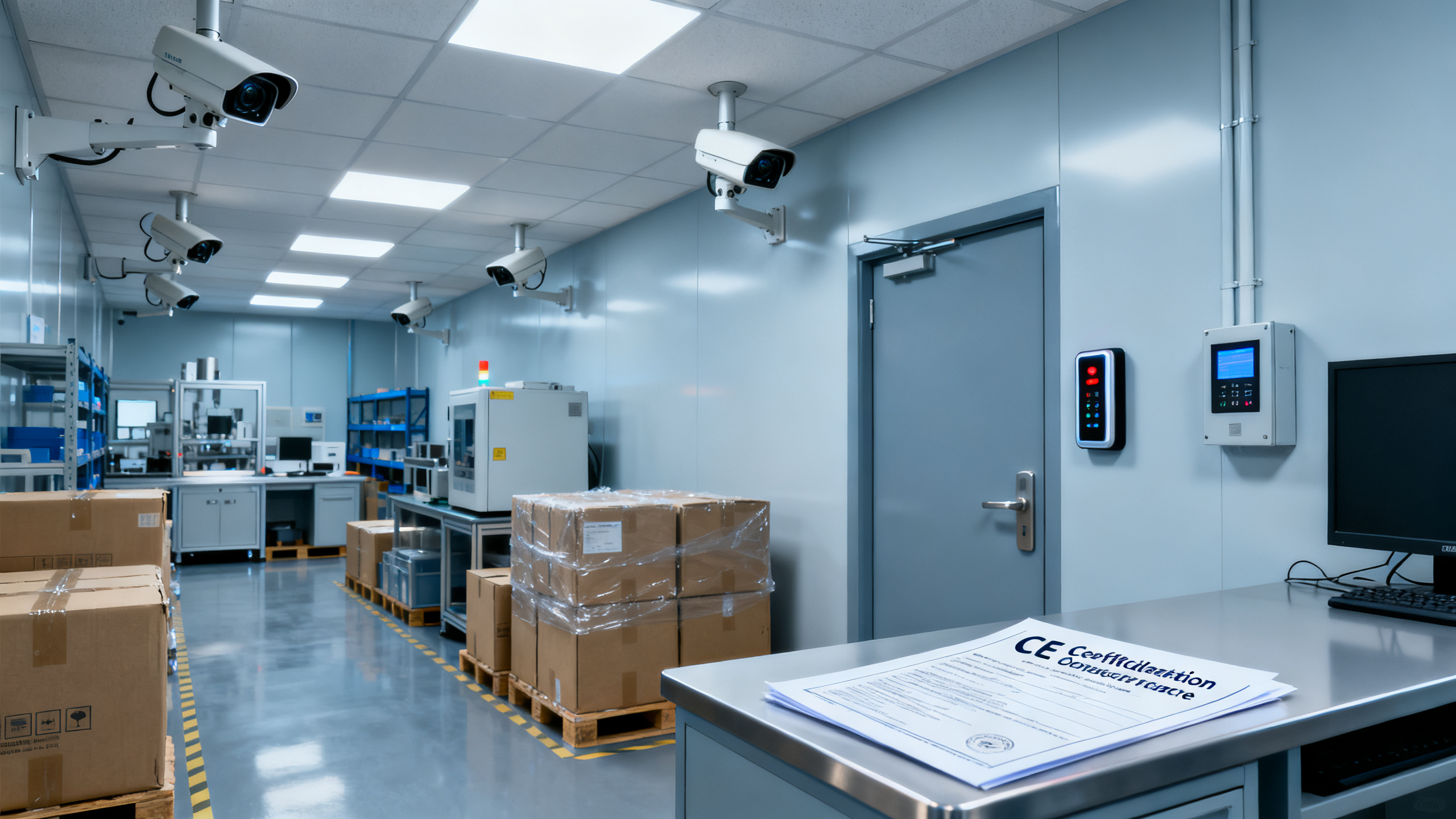
There is also a compliance blind spot. Security recording systems in industrial settings may need documented retention periods, export integrity, and aligned electrical certifications.
Mixed environments create their own confusion. Hybrid migrations can work well, but only if interoperability, user permissions, and maintenance ownership are clearly defined.
A final mistake is choosing for today alone. If the site is likely to add thermal cameras, remote sites, or AI-based detection, short-term savings may disappear quickly.
Warning signs worth checking early
So which system fits better, and what should be decided next?
If the project involves new construction, future expansion, analytics, or multiple buildings, a network video recorder NVR is usually the stronger long-term foundation.
If the site already has dependable coaxial infrastructure and only needs practical coverage improvement, DVR can still be the efficient answer.
The best decisions are rarely made from brochure comparisons. They come from matching the recorder type to actual topology, compliance needs, retention rules, and maintenance capability.
A useful next step is to document four basics: current cabling, required image quality, target retention period, and expected camera growth.
After that, compare one DVR path and one network video recorder NVR path using total installed cost, upgrade flexibility, and operational risk.
That approach creates a more defensible decision, especially where security performance must support broader industrial continuity rather than isolated monitoring alone.
Technical Specifications
- How to Select Electronic Hotel Key Card Locks for Guest Rooms and Staff AreasAuthor :Safety Compliance Lead
- How to Select Lab Instruments for Reliable Chemical Analysis WorkflowsAuthor :Precision Metrology Expert
- How to Size a UPS for Server Rooms: Load, Runtime, and Redundancy FactorsAuthor :Grid Infrastructure Analyst
Expert Insights

Chief Security Architect
Dr. Thorne specializes in the intersection of structural engineering and digital resilience. He has advised three G7 governments on industrial infrastructure security.
Related Analysis
- Sep 17, 2026How to Select Electronic Hotel Key Card Locks for Guest Rooms and Staff AreasAuthor :Safety Compliance Lead
- Sep 16, 2026How to Select Lab Instruments for Reliable Chemical Analysis WorkflowsAuthor :Precision Metrology Expert
- Sep 15, 2026How to Size a UPS for Server Rooms: Load, Runtime, and Redundancy FactorsAuthor :Grid Infrastructure Analyst
Core Sector // 01
Security & Safety
- How to Select Electronic Hotel Key Card Locks for Guest Rooms and Staff AreasAuthor :Safety Compliance Lead

- How to Evaluate a Hotel Key Card Lock Supplier for Multi-Property RolloutsAuthor :Safety Compliance Lead

- Pre-Contract Audit Checklist for Verified Production Safety and Environmental ComplianceAuthor :Safety Compliance Lead

- How Can Distributors Build Procurement-Oriented Industrial Content That Drives RFQs?Author :Safety Compliance Lead

- EU Mandates EN 50131-1:2026 for Security SystemsAuthor :Safety Compliance Lead

- EU EN 50131-1:2026 Takes Effect on CCTV ComplianceAuthor :Safety Compliance Lead

- IEC Issues CCTV Interoperability Test StandardAuthor :Safety Compliance Lead

- EN 50131-4:2026 Raises EU Security Compliance BarAuthor :Safety Compliance Lead