How to spot a dependable Security & Safety supplier
Author
Date Published
Reading Time

Choosing a dependable Security & Safety supplier is more than a purchasing decision—it directly affects compliance, worker protection, and operational continuity. For quality control teams and safety managers, the right partner must prove consistent product performance, certified standards, and reliable support under real industrial conditions. This guide outlines the key signals that help identify suppliers you can trust.
In industrial settings, the margin for error is narrow. A delayed shipment of fire protection components, inconsistent PPE quality, or incomplete documentation can interrupt audits, expose workers to preventable hazards, and slow project handover. For procurement teams supporting EPC projects, manufacturing plants, utilities, warehouses, and processing sites, supplier selection must be evidence-based rather than price-led.
A dependable Security & Safety supplier should be able to demonstrate more than a catalog. They should show traceable quality processes, stable delivery capability, standards alignment, technical responsiveness, and after-sales support that holds up over 12–36 month operating cycles. That combination is what separates a transactional vendor from a long-term industrial supply partner.
Why supplier dependability matters in industrial Security & Safety procurement
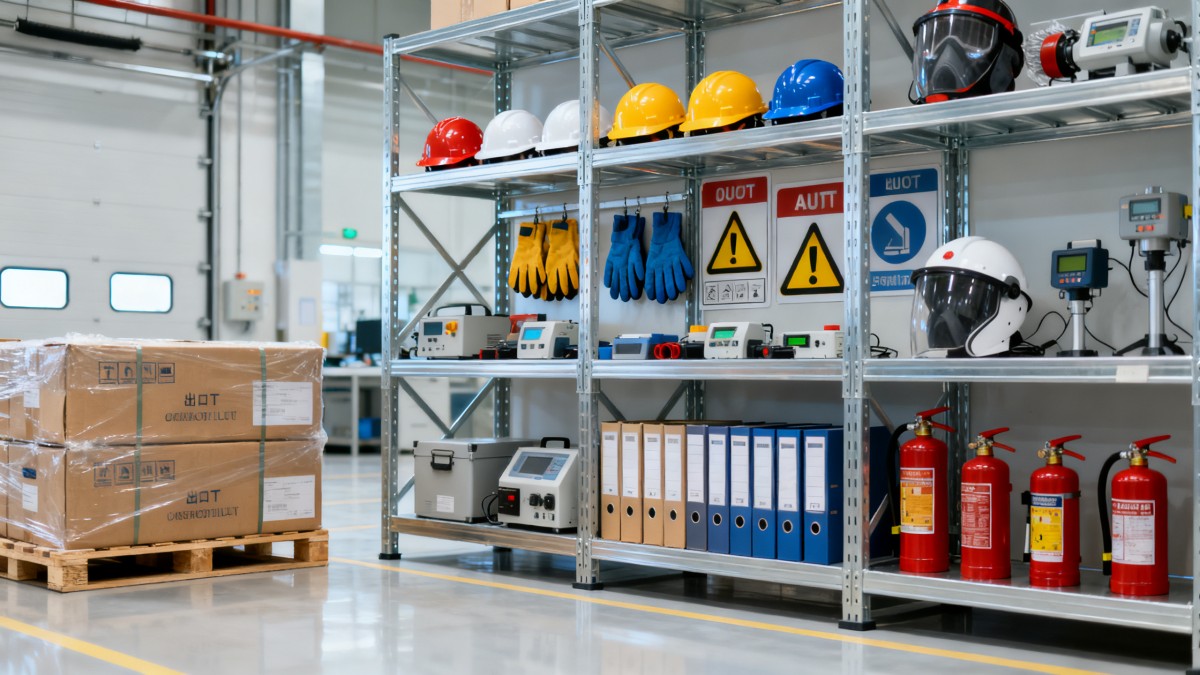
For quality control personnel and safety managers, supplier risk is operational risk. Security & Safety products are not isolated consumables; they connect to site access control, emergency readiness, hazard containment, alarm integrity, and worker compliance. A single weak supplier can affect 4 critical areas at once: product conformity, installation readiness, audit documentation, and replacement availability.
Dependability matters most when equipment must perform under pressure. This includes harsh-temperature environments, dusty workshops, corrosive plants, outdoor substations, and high-traffic logistics sites. In these settings, products may need to perform within temperature ranges such as -20°C to 60°C, maintain enclosure integrity, and retain functional accuracy over repeated use cycles.
The hidden cost of an unreliable supplier
A low initial quote can quickly become expensive when failure rates rise above acceptable thresholds. If incoming inspection rejects even 2%–5% of a shipment, teams must spend extra hours on containment, retesting, returns, and replacement coordination. In regulated facilities, missing declarations, batch traceability, or test records can also delay approvals by 7–14 days.
For safety-critical categories such as protective wear, warning systems, locks, barriers, detectors, emergency lighting, and signage, the downstream impact is even larger. Replacement lead times of 3–6 weeks may leave gaps in compliance, especially when sites operate on fixed shutdown windows or contractor mobilization schedules.
Where dependable performance shows up first
- Incoming inspection pass rates remain stable across multiple batches.
- Documentation is complete at shipment, including test reports and conformity files.
- Packaging protects calibration-sensitive or fragile items during export transit.
- Response times for technical questions stay within 24–48 hours.
- Spare parts or replenishment stock can be supplied within agreed windows.
These practical indicators often matter more than polished marketing claims. In many industrial buying cycles, the best Security & Safety supplier is not the one with the broadest product list, but the one that consistently supports plant uptime and compliance discipline.
Core signs of a dependable Security & Safety supplier
A reliable evaluation framework helps teams compare suppliers objectively. Instead of focusing on one factor such as unit price, assess at least 6 checkpoints: standards compliance, manufacturing consistency, documentation quality, delivery performance, technical support, and corrective action capability. The table below provides a practical scoring structure for industrial buyers.
The key lesson is that supplier dependability is measurable. If a supplier cannot provide these basics during the pre-qualification stage, performance usually becomes less predictable after the purchase order is placed.
Check standards, but also check how standards are managed
Certificates alone do not guarantee dependable supply. Quality teams should verify whether the Security & Safety supplier manages version control, batch traceability, and renewal timing. Ask how test files are linked to production lots, how nonconforming material is isolated, and how often internal audits are performed. A mature supplier can usually explain this in 3–5 steps without hesitation.
This matters especially for products exposed to regulatory scrutiny, including helmets, gloves, eye protection, gas detection accessories, emergency fixtures, lockout devices, and safety signage. Inconsistent labeling or outdated declarations can create audit friction even when the physical product appears acceptable.
Questions worth asking during qualification
- Can you provide lot-level traceability for the last 12 months?
- What is your standard corrective action turnaround time: 48 hours, 5 days, or longer?
- Do you keep buffer stock for high-rotation safety items?
- How do you handle engineering changes or material substitutions?
- Can you share packaging specifications for export and site storage?
Answers to these questions reveal whether the supplier is process-driven or only sales-driven. A dependable partner should communicate clearly, provide records quickly, and show a disciplined approach to quality containment.
How to assess product quality before long-term approval
Initial approval should not depend on samples alone. Many industrial teams approve a Security & Safety supplier after a 3-stage check: document review, sample validation, and pilot order evaluation. This staged method reduces risk because it tests both product performance and operational discipline.
Use a pilot order as a real-world stress test
A pilot order of 20–100 units, depending on category, helps uncover issues that do not appear in single-sample inspections. During the pilot, QC teams can verify labeling consistency, dimensional tolerance, packaging condition, installation fit, and usability feedback from field personnel. For electronic safety devices, teams may also run basic functional checks over 24–72 hours.
If the supplier performs well during this phase, the next step is to compare documented commitments against actual execution. Did the shipment leave on time? Were serial numbers or lot codes clear? Did technical files match the delivered item? These details often predict long-term reliability better than brochure claims.
Recommended approval checklist
The following checklist helps quality and safety teams structure a supplier review that is practical for ongoing procurement, audits, and contractor management.
This checklist also helps harmonize decisions between procurement, HSE, warehouse, and project teams. When every department uses the same approval logic, supplier onboarding becomes faster and less subjective.
Common approval mistakes to avoid
- Approving a supplier based only on price or a single urgent shipment.
- Skipping batch traceability checks for high-use PPE or safety consumables.
- Assuming export packaging is adequate without testing transit resilience.
- Accepting incomplete compliance files with a promise to send them later.
Each of these shortcuts can create avoidable friction during installation, inspection, or replenishment. A dependable Security & Safety supplier should make quality verification easier, not more complicated.
Service, communication, and supply continuity indicators
Dependability is not limited to product quality. In many projects, supply continuity and communication discipline are what keep safety programs running. A supplier may have acceptable products, but if they fail to update lead times, notify substitutions, or support incident reviews, they create planning risk for the site.
Response speed and escalation structure
Ask whether the supplier has a defined service path for urgent requests. For example, can they acknowledge a quality complaint within 24 hours, provide preliminary containment in 48 hours, and issue a formal corrective response within 5 business days? Clear timing matters when a safety item is blocked at receiving or a site needs immediate replacement stock.
It is also useful to confirm whether technical, quality, and commercial contacts are separate or combined. In more complex projects, a 3-point contact structure often works better because safety documentation, commercial revisions, and engineering clarifications do not move at the same pace.
Inventory support and replenishment planning
For recurring demand items such as signage, barriers, PPE, emergency accessories, locks, and inspection tags, dependable suppliers usually offer clearer replenishment planning. This may include MOQ guidance, reorder windows, substitute part approval rules, and stock visibility for the next 30–90 days. These details help sites avoid emergency buying at the worst possible time.
If your operation spans multiple plants or contractors, ask whether the supplier can maintain standardized specifications across regions. Cross-site consistency reduces training confusion and simplifies internal audits, especially when the same hazard controls must be recognized by different teams.
Practical signs of supply continuity strength
- Lead time updates are proactive rather than reactive.
- Equivalent replacement options are documented before shortages occur.
- High-turn items have agreed reorder points or safety stock levels.
- Complaint history is logged and trend-reviewed at least quarterly.
When these systems are in place, procurement becomes more stable, and safety managers spend less time firefighting supply issues. That is often the clearest sign that a Security & Safety supplier is ready for long-term cooperation.
How GIC supports smarter supplier evaluation
For industrial buyers, the challenge is not a lack of options but a lack of clear filtering. Global Industrial Core focuses on the foundational systems that protect, power, and sustain industrial operations. For Security & Safety sourcing, that means decision support grounded in compliance logic, technical practicality, and procurement realities rather than generic marketplace listings.
This approach is particularly relevant for EPC contractors, facility leaders, and procurement directors managing high-consequence environments. In these settings, product selection must align with installation conditions, documentation requirements, and lifecycle support expectations over months or years, not just at the point of order.
What decision-makers should prioritize next
If you are reviewing a new Security & Safety supplier, start with a controlled comparison. Score 3–4 suppliers against the same criteria, run a pilot order, and document results from receiving, installation, and user feedback. This method creates a stronger basis for approval than informal supplier preference.
The most dependable supplier is usually the one that combines compliant products, stable execution, and responsive service under real operating conditions. If your team needs support evaluating supplier capability, refining technical requirements, or comparing sourcing options for industrial safety systems, contact GIC to get a tailored solution, discuss product details, or explore more sourcing intelligence for your next project.
Technical Specifications
- How to Select Electronic Hotel Key Card Locks for Guest Rooms and Staff AreasAuthor :Safety Compliance Lead
- How to Select Lab Instruments for Reliable Chemical Analysis WorkflowsAuthor :Precision Metrology Expert
- How to Size a UPS for Server Rooms: Load, Runtime, and Redundancy FactorsAuthor :Grid Infrastructure Analyst
Expert Insights

Chief Security Architect
Dr. Thorne specializes in the intersection of structural engineering and digital resilience. He has advised three G7 governments on industrial infrastructure security.
Related Analysis
- Sep 17, 2026How to Select Electronic Hotel Key Card Locks for Guest Rooms and Staff AreasAuthor :Safety Compliance Lead
- Sep 16, 2026How to Select Lab Instruments for Reliable Chemical Analysis WorkflowsAuthor :Precision Metrology Expert
- Sep 15, 2026How to Size a UPS for Server Rooms: Load, Runtime, and Redundancy FactorsAuthor :Grid Infrastructure Analyst
Core Sector // 01
Security & Safety
- How to Select Electronic Hotel Key Card Locks for Guest Rooms and Staff AreasAuthor :Safety Compliance Lead

- How to Evaluate a Hotel Key Card Lock Supplier for Multi-Property RolloutsAuthor :Safety Compliance Lead

- Pre-Contract Audit Checklist for Verified Production Safety and Environmental ComplianceAuthor :Safety Compliance Lead

- How Can Distributors Build Procurement-Oriented Industrial Content That Drives RFQs?Author :Safety Compliance Lead

- EU Mandates EN 50131-1:2026 for Security SystemsAuthor :Safety Compliance Lead

- EU EN 50131-1:2026 Takes Effect on CCTV ComplianceAuthor :Safety Compliance Lead

- IEC Issues CCTV Interoperability Test StandardAuthor :Safety Compliance Lead

- EN 50131-4:2026 Raises EU Security Compliance BarAuthor :Safety Compliance Lead