China Railway Construction Wins $4.5B Dubai Airport Project
Author
Date Published
Reading Time

China Railway Construction Wins $4.5B Dubai Airport Project
On May 18, 2026, China Railway Construction Corporation (CRCC) — specifically its subsidiary China Railway 18th Bureau Group — secured the contract for new infrastructure at Dubai World Central Airport, valued at approximately RMB 3.24 billion (USD 450 million). The project’s stringent international compliance requirements and integrated system procurement scope signal a significant inflection point for Chinese industrial exporters targeting high-standard Middle Eastern infrastructure markets.
Event Overview
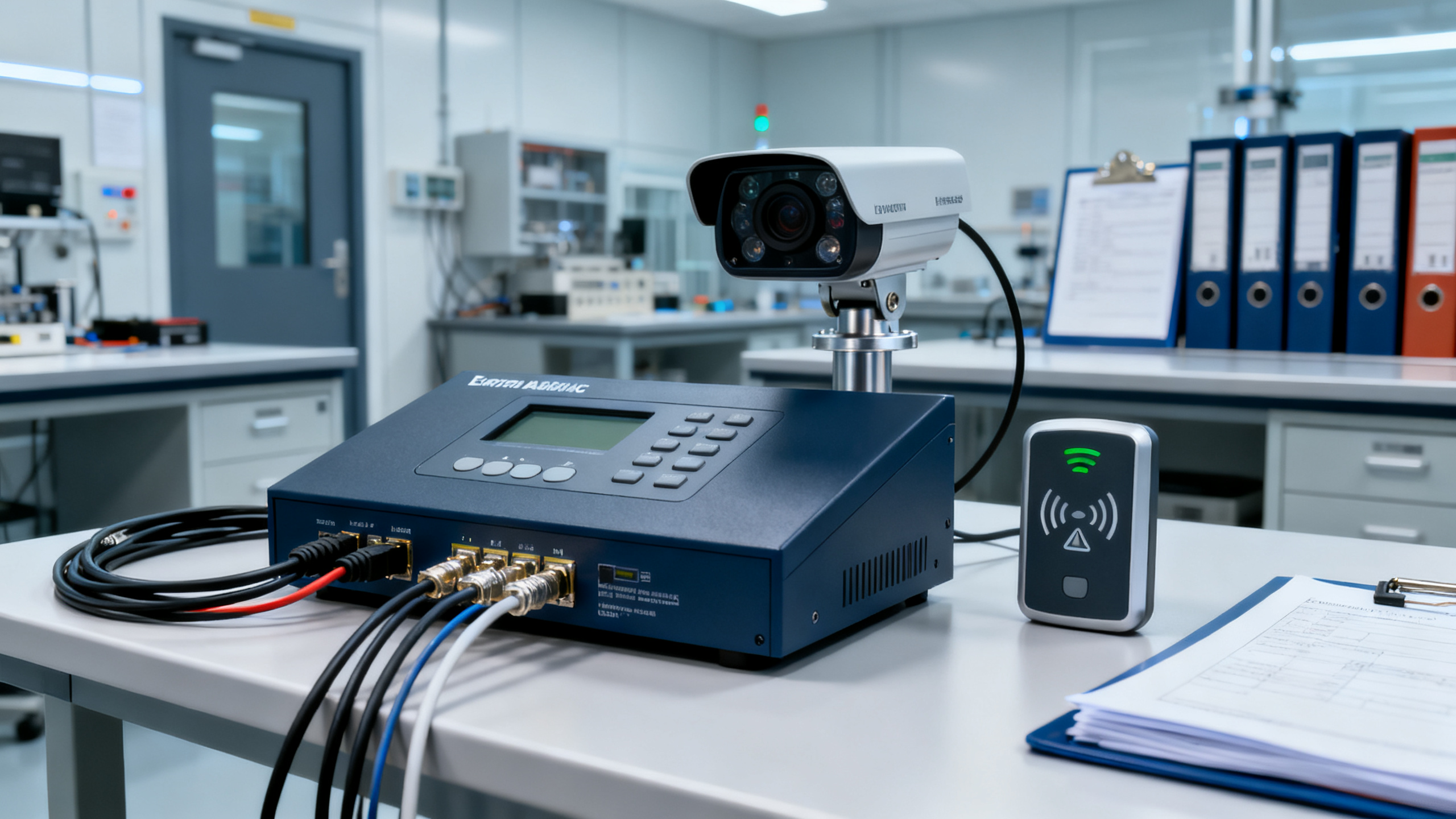
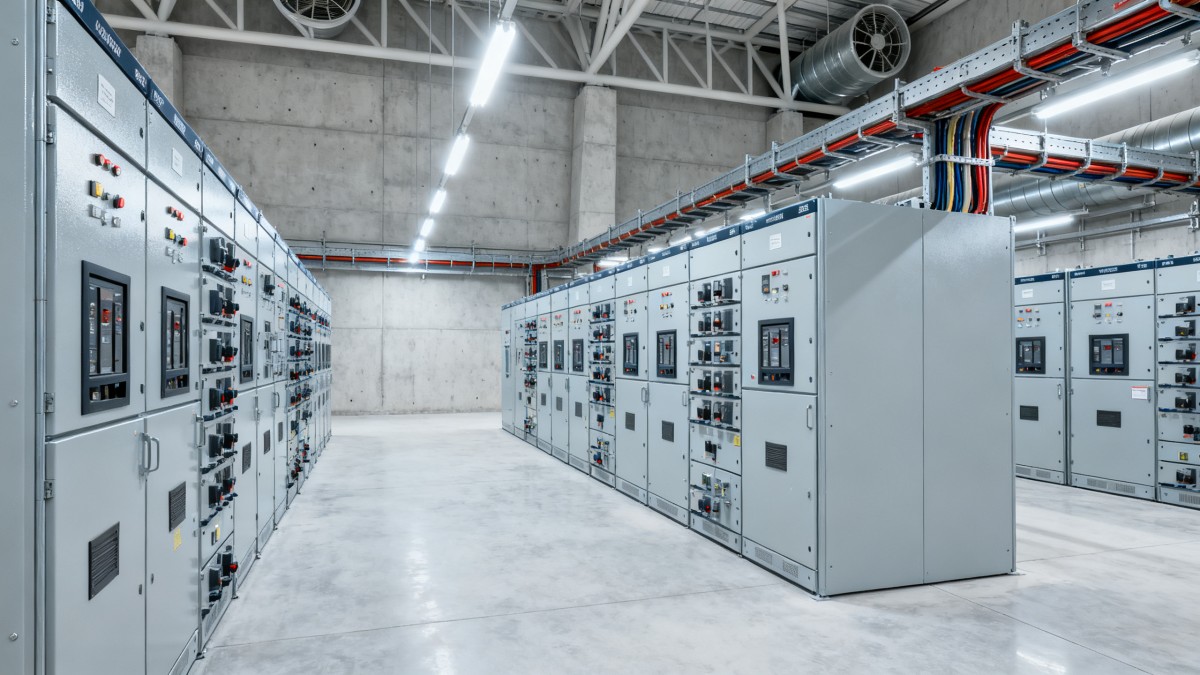
On May 18, 2026, China Railway 18th Bureau Group was awarded the Dubai World Central Airport new facilities contract, with a total value of ~RMB 3.24 billion and a scheduled duration of 50 months. The tender explicitly mandates that key subsystems — including CCTV intelligent analytics, fire alarm and rescue equipment, medium-voltage switchgear, fire-resistant cables, and industrial-grade air filtration units — conform to EN 50131 (intrusion detection), EN 54 (fire detection and alarm), IEC 61850 (substation automation), and ASHRAE Standard 170 (ventilation for healthcare facilities). Concurrently, regional distributors in the Middle East have initiated vetting of Chinese suppliers against a formal ‘qualified supplier whitelist’ aligned with these standards.
Impact on Key Industry Segments
Direct Exporters: Companies exporting security, fire safety, power distribution, and HVAC filtration systems face immediate demand uplift — but only if certified to EU/IEC/ASHRAE benchmarks. Non-compliant exporters risk exclusion from bidding consortia or subcontracting pools, as Dubai’s procurement now treats certification as non-negotiable gatekeeping, not post-award verification.
Raw Material Suppliers: Firms supplying base materials — such as halogen-free flame-retardant compounds for cables, arc-resistant copper alloys for switchgear busbars, or HEPA-grade filter media — are seeing upstream specification tightening. Buyers increasingly require test reports traceable to notified bodies (e.g., UL, TÜV, SGS) referencing the exact clauses cited in the tender (e.g., EN 54-22 for smoke detectors, IEC 61850-10 for conformance testing).
Contract Manufacturers & System Integrators: Domestic EMS providers and integrators must now embed compliance-by-design into engineering workflows. For example, CCTV analytics platforms must support ONVIF Profile S + M interoperability and metadata tagging per EN 50131-7; fire panels must implement bi-directional communication over IEC 61850 GOOSE messaging. This raises design validation costs and extends time-to-bid readiness.
Supply Chain Service Providers: Certification consultants, accredited test labs, and export logistics firms specializing in CE/UKCA/EN conformity documentation report rising inquiries — particularly for expedited EN 54 type-testing and IEC 61850 protocol stack validation. However, capacity constraints exist: only seven CNAS-accredited labs in China currently hold full EN 54-22 testing capability, creating bottlenecks for rapid qualification.
Key Priorities and Recommended Actions
Verify alignment with mandatory standards — not just product categories
Suppliers must map each required component (e.g., ‘medium-voltage switchgear’) to the *specific* standard clause referenced (IEC 61850-5 for functional specifications, IEC 61850-10 for conformance testing), rather than assuming generic IEC 61850 compliance suffices.
Engage early with Dubai-based distributors on whitelist criteria
Middle Eastern channel partners are defining technical, documentation, and after-sales service thresholds for the whitelist — including local warranty fulfillment capacity and Arabic-language user manuals. Proactive dialogue helps shape realistic entry pathways.
Prepare for cascading compliance across subcontracted subsystems
For integrators, compliance is no longer limited to their own hardware: firmware versions, third-party SDKs used in CCTV analytics engines, and even cable jacket material safety data sheets (SDS) must be auditable under EN 50131/EN 54 frameworks.
Editorial Insight / Industry Observation
Observably, this award marks a structural shift: Gulf infrastructure tenders are moving beyond price-led procurement toward ‘certification-weighted evaluation’, where 30–40% of technical scoring now hinges on demonstrable, third-party-verified conformity — not self-declared compliance. Analysis shows this trend is accelerating across Saudi Vision 2030 and UAE Centennial 2071 projects. Current more critical than ever is the gap between Chinese manufacturers’ ISO 9001 quality management systems and their actual capacity to produce *traceable, auditable, standards-aligned technical evidence*. It is better understood not as a one-off export win, but as a stress test for China’s industrial certification ecosystem.
Conclusion
This project does not merely represent a contract win — it functions as a de facto benchmark for regulatory readiness in high-integrity infrastructure markets. For Chinese industrial exporters, success here signals capacity to meet converging global standards, not just regional preferences. A rational interpretation is that sustained competitiveness will depend less on cost advantage and more on verifiable, portable compliance infrastructure — making certification investment a strategic priority, not a tactical overhead.
Source Attribution
Official tender notice published by Dubai Aviation Engineering Projects (DAEP), May 18, 2026; CRCC corporate announcement (ref: CRCC-IR-20260518-01); EN 50131-7:2022, EN 54-22:2022, IEC 61850-10:2023 and ASHRAE 170-2021 editions confirmed via CENELEC and IEC official portals. Note: Whitelist criteria and timeline remain under development by Dubai-based distribution consortium — subject to ongoing monitoring.
Technical Specifications
- How to Select Electronic Hotel Key Card Locks for Guest Rooms and Staff AreasAuthor :Safety Compliance Lead
- How to Select Lab Instruments for Reliable Chemical Analysis WorkflowsAuthor :Precision Metrology Expert
- How to Size a UPS for Server Rooms: Load, Runtime, and Redundancy FactorsAuthor :Grid Infrastructure Analyst
Expert Insights

Chief Security Architect
Dr. Thorne specializes in the intersection of structural engineering and digital resilience. He has advised three G7 governments on industrial infrastructure security.
Related Analysis
- Sep 17, 2026How to Select Electronic Hotel Key Card Locks for Guest Rooms and Staff AreasAuthor :Safety Compliance Lead
- Sep 16, 2026How to Select Lab Instruments for Reliable Chemical Analysis WorkflowsAuthor :Precision Metrology Expert
- Sep 15, 2026How to Size a UPS for Server Rooms: Load, Runtime, and Redundancy FactorsAuthor :Grid Infrastructure Analyst
Core Sector // 01
Security & Safety
- How to Select Electronic Hotel Key Card Locks for Guest Rooms and Staff AreasAuthor :Safety Compliance Lead

- How to Evaluate a Hotel Key Card Lock Supplier for Multi-Property RolloutsAuthor :Safety Compliance Lead

- Pre-Contract Audit Checklist for Verified Production Safety and Environmental ComplianceAuthor :Safety Compliance Lead

- How Can Distributors Build Procurement-Oriented Industrial Content That Drives RFQs?Author :Safety Compliance Lead

- EU Mandates EN 50131-1:2026 for Security SystemsAuthor :Safety Compliance Lead

- EU EN 50131-1:2026 Takes Effect on CCTV ComplianceAuthor :Safety Compliance Lead

- IEC Issues CCTV Interoperability Test StandardAuthor :Safety Compliance Lead

- EN 50131-4:2026 Raises EU Security Compliance BarAuthor :Safety Compliance Lead