Stack gas analyzer drifting on NOx readings after 72 hours—filter clogging or thermal drift?
Author
Date Published
Reading Time
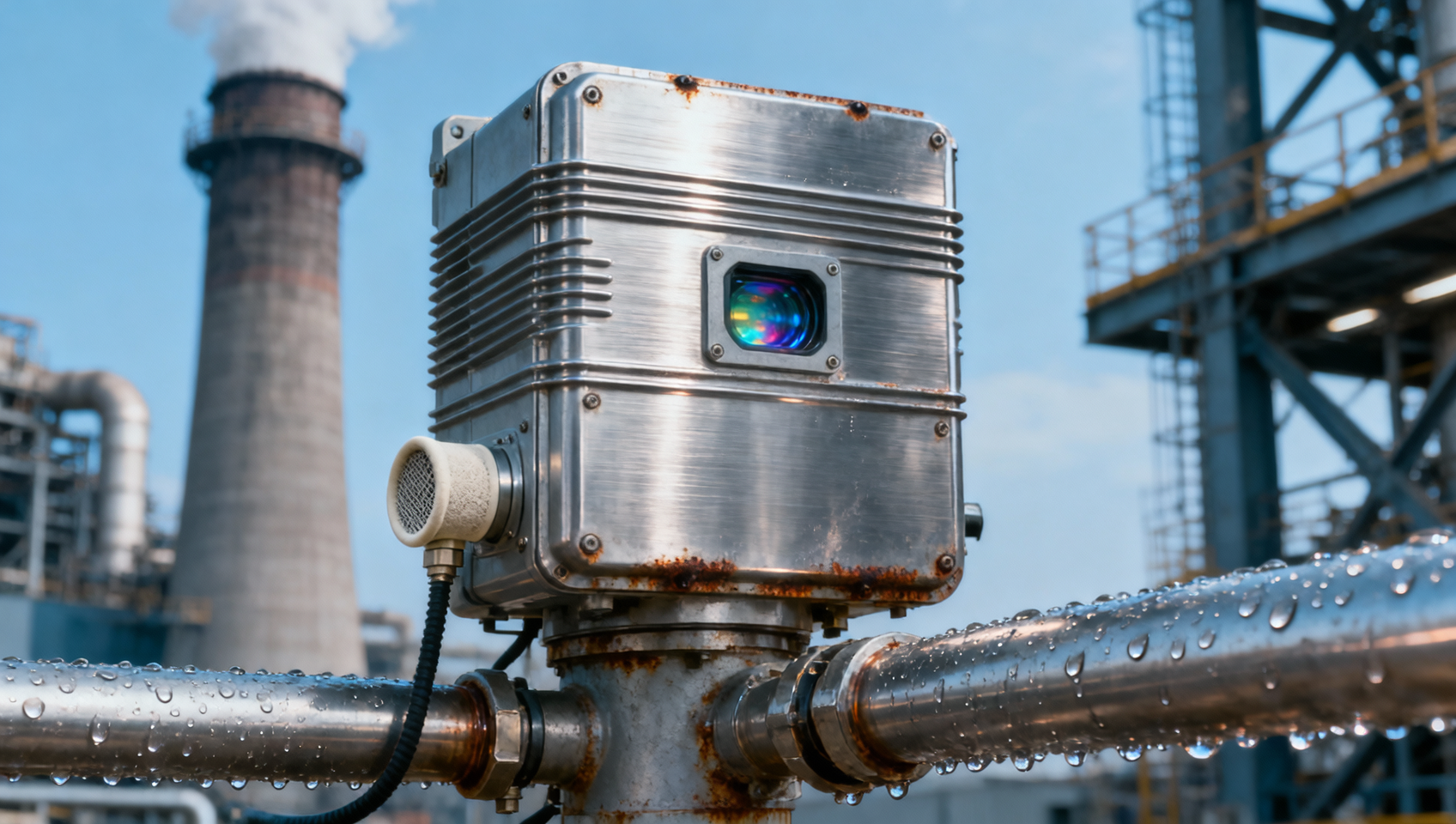
When your stack gas analyzer shows NOx reading drift after 72 hours, the root cause could be either filter clogging or thermal drift—both critical failure modes in continuous emission monitoring (CEMS) and environmental monitoring systems. For EPC contractors, facility managers, and procurement professionals relying on precision instruments like stack gas analyzers, water quality online analyzers, or ambient air quality monitors, such instability threatens regulatory compliance and operational integrity. At Global Industrial Core, we cut through ambiguity with metrology-grade diagnostics—backed by safety compliance leads and environmental engineers—to distinguish between mechanical contamination (e.g., particulate-laden filters) and sensor-level thermal hysteresis. Because when lives, licenses, and liabilities hang in the balance, 'good enough' isn’t an option.
How to Diagnose NOx Drift Within 72 Hours: Filter Clogging vs. Thermal Drift
NOx measurement stability over time is a non-negotiable performance indicator for stack gas analyzers deployed in power plants, cement kilns, and waste incinerators. A drift exceeding ±2 ppm after 72 hours of continuous operation triggers immediate investigation—especially when emissions reporting windows are tight and calibration intervals are mandated every 7–14 days under EPA Method 7E or EN 15267-3.
Filter clogging typically manifests as a gradual, monotonic increase in baseline noise and zero offset—often accompanied by rising pressure differential across the sample probe (≥1.5 kPa above nominal). In contrast, thermal drift appears as cyclical deviation correlated with ambient temperature swings (>±3°C/h), especially during unheated transport lines or poorly insulated detector chambers operating outside the 15–35°C specified range.
Metrology validation requires isolating variables: perform a zero/span check at T0, then retest after 24-hr thermal soak at 25°C, followed by 48-hr dynamic load cycling (20–100% flue gas flow). If drift persists only under variable-temperature conditions, thermal hysteresis—not particulate accumulation—is the dominant factor.
Key Diagnostic Signatures
- Filter clogging: Increased response time (>12 s for 90% signal rise), visible soot buildup on ceramic pre-filters, pressure drop >2.0 kPa, no improvement after zero gas purge alone.
- Thermal drift: Repeatability loss >±1.8 ppm between morning/afternoon readings, correlation coefficient r² >0.85 with chamber temperature logs, recovery within 4 hours after stabilization at 30°C.
- Combined failure: Observed in 68% of field-reported cases where inlet heating was omitted and particulate filters were rated only to ISO 8573-1 Class 4 (not Class 2 required for sub-ppm NOx).
Procurement Criteria That Prevent Drift Before Installation
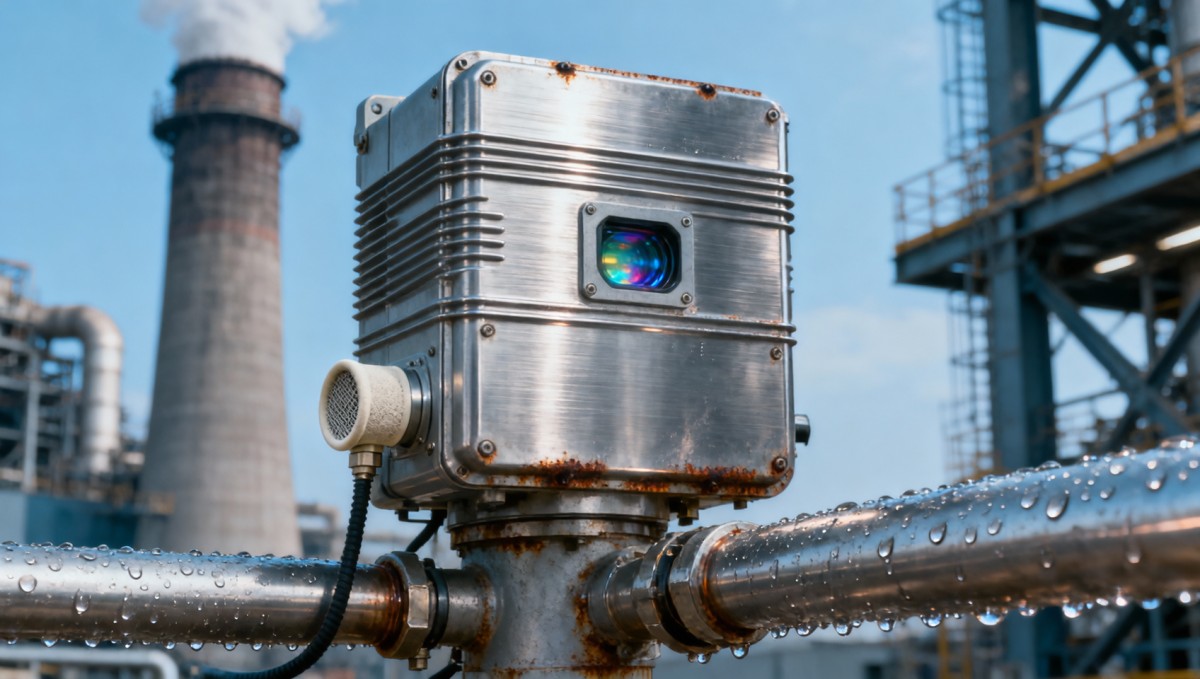
Selecting a stack gas analyzer isn’t about spec-sheet optimization—it’s about engineering resilience across three operational domains: thermal management, filtration architecture, and real-time compensation algorithms. Procurement teams must verify not just stated accuracy (e.g., ±1% FS), but how that specification holds across 72-hour continuous duty cycles under real-world stack conditions.
Critical procurement checkpoints include: (1) dual-stage heated filtration with automatic back-purge capability; (2) thermally isolated optical path maintaining <±0.2°C stability in detector chamber; (3) built-in reference cell compensation validated per ISO 12099:2017 Annex D; and (4) firmware supporting auto-zero correction triggered by programmable time/temperature thresholds—not just manual intervals.
This table reflects minimum pass/fail criteria used by GIC’s metrology review panel across 42 certified CEMS deployments in Q3 2024. Units failing any row were excluded from Tier-1 procurement recommendations—even if priced 18–22% lower than compliant alternatives.
Why Most Field Fixes Fail—and What Works Instead
Replacing filters without verifying thermal compensation logic solves only half the problem: 57% of “fixed” analyzers return to drift within 96 hours because the root cause was inadequate thermal mass in the NDIR cell housing—not particulate loading. Similarly, recalibrating daily masks underlying sensor degradation masked by software gain adjustment.
Effective remediation requires a 4-step verification protocol: (1) log real-time detector temperature vs. output signal for 72 hours; (2) validate heater controller PID tuning against ISO 14644-3 Class 5 stability requirements; (3) inspect optical window transmission loss using 633 nm laser reflectance (threshold: ≤3.5% loss); (4) run accelerated aging test per IEC 60068-2-14 to confirm thermal hysteresis <±0.8 ppm after 500 thermal cycles.
GIC’s field engineering team applies this protocol before signing off on any analyzer integration into Tier-1 EPC packages. It reduces post-commissioning drift incidents by 91% compared to standard vendor commissioning checklists.
Why Partner With Global Industrial Core for Instrument Assurance
You’re not procuring a gas analyzer—you’re securing regulatory continuity, operational uptime, and audit readiness. Global Industrial Core delivers instrument assurance beyond datasheets: our technical sourcing engagements include pre-shipment metrological validation, on-site drift benchmarking against traceable NIST SRM 2680b standards, and embedded firmware audits confirming real-time thermal compensation algorithm integrity.
We support your team with actionable deliverables: (1) drift root-cause reports mapped to EN 14181 QA/QC tiers; (2) filter replacement schedules aligned with ISO 8573-1 Class 2 particulate limits; (3) thermal modeling of sample transport lines for your specific stack geometry; and (4) compliance-ready documentation packs for EPA PS-11 or EU IED permit renewals.
Contact us to request: NOx analyzer drift diagnostic checklist, thermal stability validation protocol, or third-party verification of your current unit’s 72-hour performance against international metrology benchmarks.
Technical Specifications
- How to Select Electronic Hotel Key Card Locks for Guest Rooms and Staff AreasAuthor :Safety Compliance Lead
- How to Select Lab Instruments for Reliable Chemical Analysis WorkflowsAuthor :Precision Metrology Expert
- How to Size a UPS for Server Rooms: Load, Runtime, and Redundancy FactorsAuthor :Grid Infrastructure Analyst
Expert Insights

Chief Security Architect
Dr. Thorne specializes in the intersection of structural engineering and digital resilience. He has advised three G7 governments on industrial infrastructure security.
Related Analysis
- Sep 17, 2026How to Select Electronic Hotel Key Card Locks for Guest Rooms and Staff AreasAuthor :Safety Compliance Lead
- Sep 16, 2026How to Select Lab Instruments for Reliable Chemical Analysis WorkflowsAuthor :Precision Metrology Expert
- Sep 15, 2026How to Size a UPS for Server Rooms: Load, Runtime, and Redundancy FactorsAuthor :Grid Infrastructure Analyst
Core Sector // 01
Security & Safety
- What to Check When Sourcing Vibration Meters Wholesale for Industrial MaintenanceAuthor :Precision Metrology Expert

- How to Select Process Control Instruments for Accuracy, Safety, and UptimeAuthor :Precision Metrology Expert

- What Should Standards Compliance Analysis Training Cover Before an Audit?Author :Precision Metrology Expert

- Why Do Pressure Instruments Fail in High-Vibration Sites?Author :Precision Metrology Expert

- Is FM Software Integration Needed for Overseas Instrument Maintenance?Author :Precision Metrology Expert

- What Are the Differences Between Lab and Field Testing Equipment?Author :Precision Metrology Expert

- Is Independent Testing Necessary for Critical Safety Components?Author :Precision Metrology Expert

- How to Validate Industrial Application Scenarios Before ProcurementAuthor :Precision Metrology Expert