Iran Closes Strait of Hormuz, Raising Shipping Risks for Electrical Equipment
Author
Date Published
Reading Time
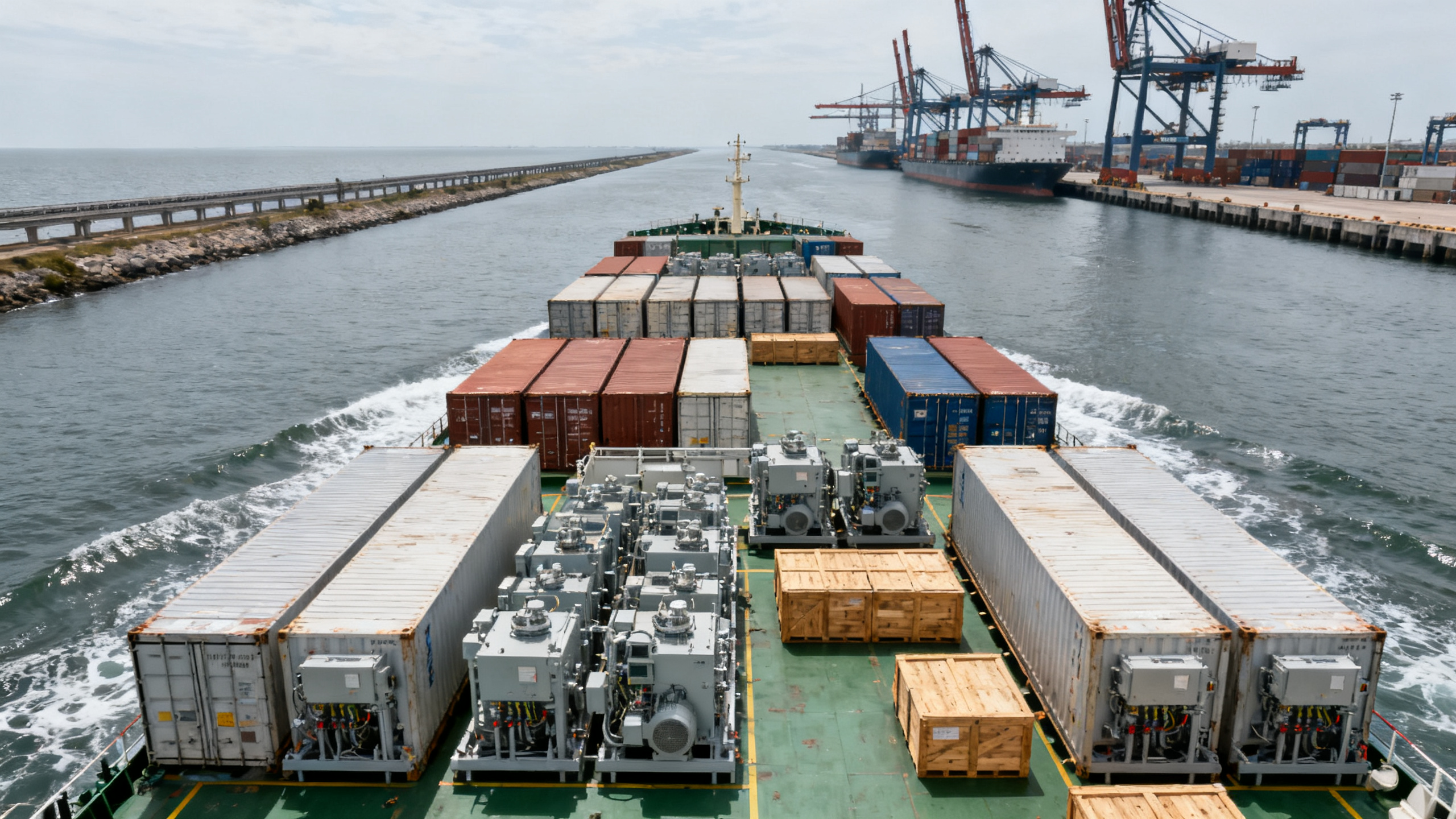
On June 20, 2026, Iran’s military announced the immediate closure of the Strait of Hormuz, describing the move as a response to what it said were violations of a ceasefire agreement by the United States and Israel. For the industrial market, this is not only an energy story. The strait is also a key transit route for industrial equipment, precision instruments, and electrical products such as transformers, switchgear, test and measurement devices, and cables, making the development especially relevant for exporters, overseas buyers, procurement teams, and supply chain service providers tied to Middle East-East Asia-Europe trade flows.
What Has Been Confirmed So Far
According to the provided event summary, Iran announced the closure of the Strait of Hormuz with immediate effect on June 20. The stated reason was a retaliatory response to alleged ceasefire violations by the United States and Israel.
The same summary indicates that the Strait of Hormuz handles about 30% of global oil transit and also serves as a major shipping route for industrial equipment, precision instruments, and electrical goods, including transformers, switchgear, testing and measuring instruments, and cables.
It has also been confirmed in the provided information that rerouting via the Cape of Good Hope would extend voyage times by 10 to 14 days, increase logistics costs by USD 2,000 to USD 4,000 per TEU, and add further uncertainty to delivery schedules.
Where the Pressure May Appear Across the Supply Chain
Exporters facing delivery schedule disruption
From an industry perspective, exporters of industrial electrical equipment and instrumentation are likely to be among the first affected because the event directly changes route availability and transit timing. The main pressure points are shipment scheduling, promised lead times, and contract delivery coordination, especially for cargo moving through Middle East-East Asia-Europe triangular routes.
Overseas buyers confronting higher landed cost uncertainty
Analysis shows that overseas purchasers may face a more complex procurement environment, not only because freight costs may rise, but also because the predictability of arrival dates may weaken. For buyers of high-value electrical equipment and precision instruments, the issue is not just price adjustment but whether installation, commissioning, or downstream production timelines can still be matched to revised delivery windows.
Manufacturers managing outbound planning and component flow
Observably, manufacturers linked to export orders may need to watch both finished-goods dispatch and the timing of any cross-regional material movement tied to the same shipping corridor. Even when production itself is unchanged, delayed maritime movement can still affect shipment batching, warehouse turnover, and coordination between factory release and customer acceptance.
Logistics and supply chain service providers under execution pressure
For freight forwarders, shipping coordinators, and related service providers, the event may quickly shift attention to routing, booking, transit commitments, and exception handling. What deserves closer attention is not only the nominal route change, but also the knock-on effect on schedule reliability and communication frequency across multiple parties in a single order chain.
What Companies Should Watch in the Near Term
Track official wording separately from operational execution
Analysis shows that companies should distinguish between the announced closure itself and how shipping execution changes in practice. In a situation like this, official statements, carrier arrangements, and actual routing outcomes may not move at exactly the same pace, so operational teams need to keep shipment decisions tied to verified logistics updates rather than assumptions.
Review exposure by product category and route dependence
Businesses handling transformers, switchgear, test and measurement instruments, cables, and other industrial electrical goods should identify which shipments are most exposed to the affected corridor. The practical issue is to clarify which orders depend on the Middle East-East Asia-Europe route pattern and which customer commitments are most sensitive to transit delays.
Recheck lead times, documents, and delivery commitments
From a business execution perspective, current attention should center on shipment lead times, contract delivery dates, and documentation readiness. Where delivery windows were built around normal passage conditions, companies may need to reassess whether current terms, booking plans, and customer communication remain aligned with the new logistics risk profile.
Prepare for more frequent customer and supplier communication
Observably, uncertainty in voyage time tends to create pressure first in coordination rather than in production itself. That makes communication discipline important: procurement teams, exporters, and service providers may need clearer internal updates, revised external timelines, and more explicit contingency discussions with customers and suppliers.
How This Development Is Best Understood Right Now
Analysis shows that this development is best read as an immediate logistics-risk event for industrial cargo rather than as a fully settled long-term trade outcome. The confirmed facts already point to longer routes, higher freight costs, and weaker delivery certainty, but the broader industry meaning still depends on how long the disruption lasts and how consistently shipping execution changes across affected corridors.
It is more appropriate to understand this as a signal that route concentration risk remains highly relevant for industrial electrical equipment and instrumentation trade. At the same time, it still requires continued observation rather than a fixed conclusion about long-term market restructuring.
Why the Industry Should Keep Watching
For the industrial equipment and instrumentation sector, the importance of this event lies in its direct effect on shipment timing, cost structure, and delivery reliability across an already interconnected trade route. The current information supports a cautious reading: the disruption is material enough to affect execution decisions now, but the full business impact will depend on subsequent operational developments and whether the situation persists.
At this stage, the most balanced interpretation is to treat the event as a short-term shock with potentially wider implications if it continues, rather than to assume either a temporary inconvenience or a definitive long-term reset.
Basis of This Article and Ongoing Verification
This article is based on the user-provided news title, event date, and event summary. In coverage of this type, commonly relevant source categories may include official announcements, company notices, industry association updates, authoritative media reporting, and related trade or standards documentation.
No specific official source link was provided in the input, so the precise source chain still requires ongoing verification. Follow-up attention should remain on any further official statements, route implementation details, and practical changes affecting delivery schedules, freight costs, and trade execution for industrial electrical equipment and instruments.
Technical Specifications
- Portable Gas Monitor Calibration: How Often Is It Needed for Safe Confined-Space Work?Author :Precision Metrology Expert
- Wholesale Borosilicate Lab Glassware: How Buyers Verify Quality, Specs, and Supply ReliabilityAuthor :Precision Metrology Expert
- How to Select Electronic Hotel Key Card Locks for Guest Rooms and Staff AreasAuthor :Safety Compliance Lead
Expert Insights

Chief Security Architect
Dr. Thorne specializes in the intersection of structural engineering and digital resilience. He has advised three G7 governments on industrial infrastructure security.
Related Analysis
- Sep 19, 2026Portable Gas Monitor Calibration: How Often Is It Needed for Safe Confined-Space Work?Author :Precision Metrology Expert
- Sep 18, 2026Wholesale Borosilicate Lab Glassware: How Buyers Verify Quality, Specs, and Supply ReliabilityAuthor :Precision Metrology Expert
- Sep 17, 2026How to Select Electronic Hotel Key Card Locks for Guest Rooms and Staff AreasAuthor :Safety Compliance Lead
Core Sector // 01
Security & Safety
- Portable Gas Monitor Calibration: How Often Is It Needed for Safe Confined-Space Work?Author :Precision Metrology Expert

- What to Check When Sourcing Vibration Meters Wholesale for Industrial MaintenanceAuthor :Precision Metrology Expert

- How to Select Process Control Instruments for Accuracy, Safety, and UptimeAuthor :Precision Metrology Expert

- What Should Standards Compliance Analysis Training Cover Before an Audit?Author :Precision Metrology Expert

- Why Do Pressure Instruments Fail in High-Vibration Sites?Author :Precision Metrology Expert

- Is FM Software Integration Needed for Overseas Instrument Maintenance?Author :Precision Metrology Expert

- What Are the Differences Between Lab and Field Testing Equipment?Author :Precision Metrology Expert

- Is Independent Testing Necessary for Critical Safety Components?Author :Precision Metrology Expert