Coriolis Mass Flow Meter vs Magnetic Flow Meter: Which Fits Your Process Better?
Author
Date Published
Reading Time

Choosing between a coriolis mass flow meter and a magnetic flow meter affects more than a line item in an instrument list. It shapes measurement accuracy, maintenance exposure, process stability, and even compliance confidence across critical industrial operations.
That comparison matters now because plants are under pressure to reduce waste, document performance, and keep infrastructure reliable under demanding conditions. In many projects, the better fit is not the meter with the highest specification, but the one that matches fluid behavior, installation realities, and lifecycle priorities.
Why this comparison matters in real industrial environments
Across processing, utilities, water treatment, chemical production, food operations, and energy infrastructure, flow data influences control decisions every minute. A mismatch between meter technology and process conditions can create recurring calibration issues, unstable readings, or unnecessary downtime.
For organizations working in the GIC environment, the decision is rarely isolated. It connects with safety standards, asset resilience, maintenance strategy, and documentation quality. That is why the coriolis mass flow meter versus magnetic flow meter debate remains practical rather than theoretical.
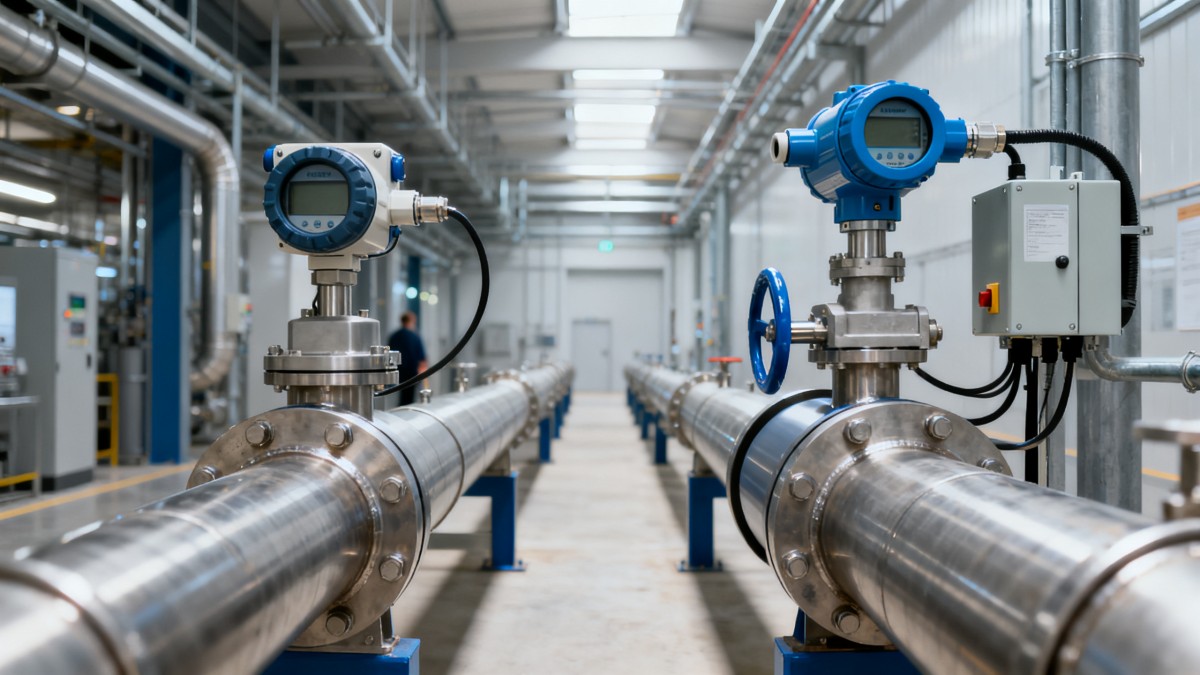
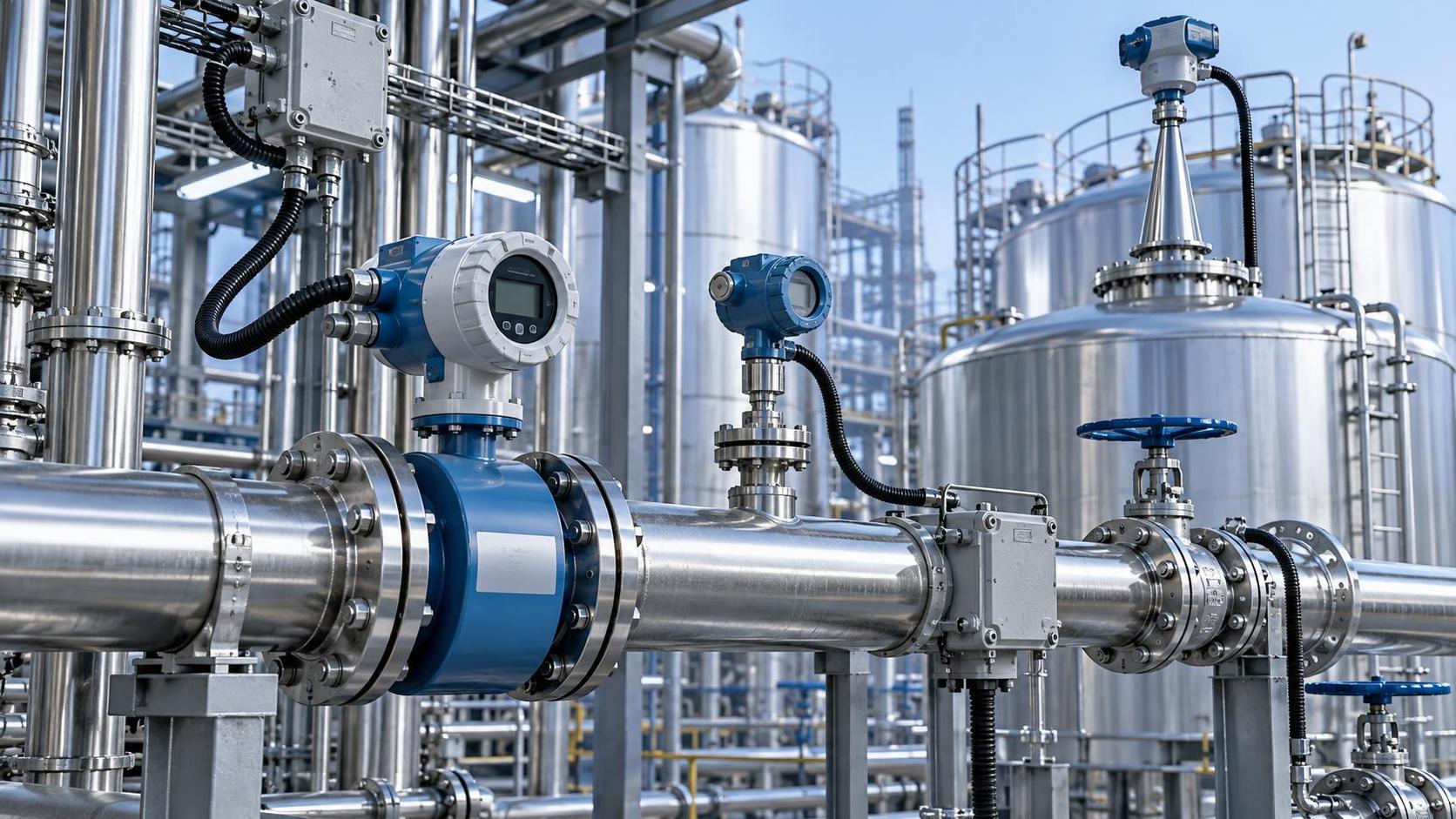
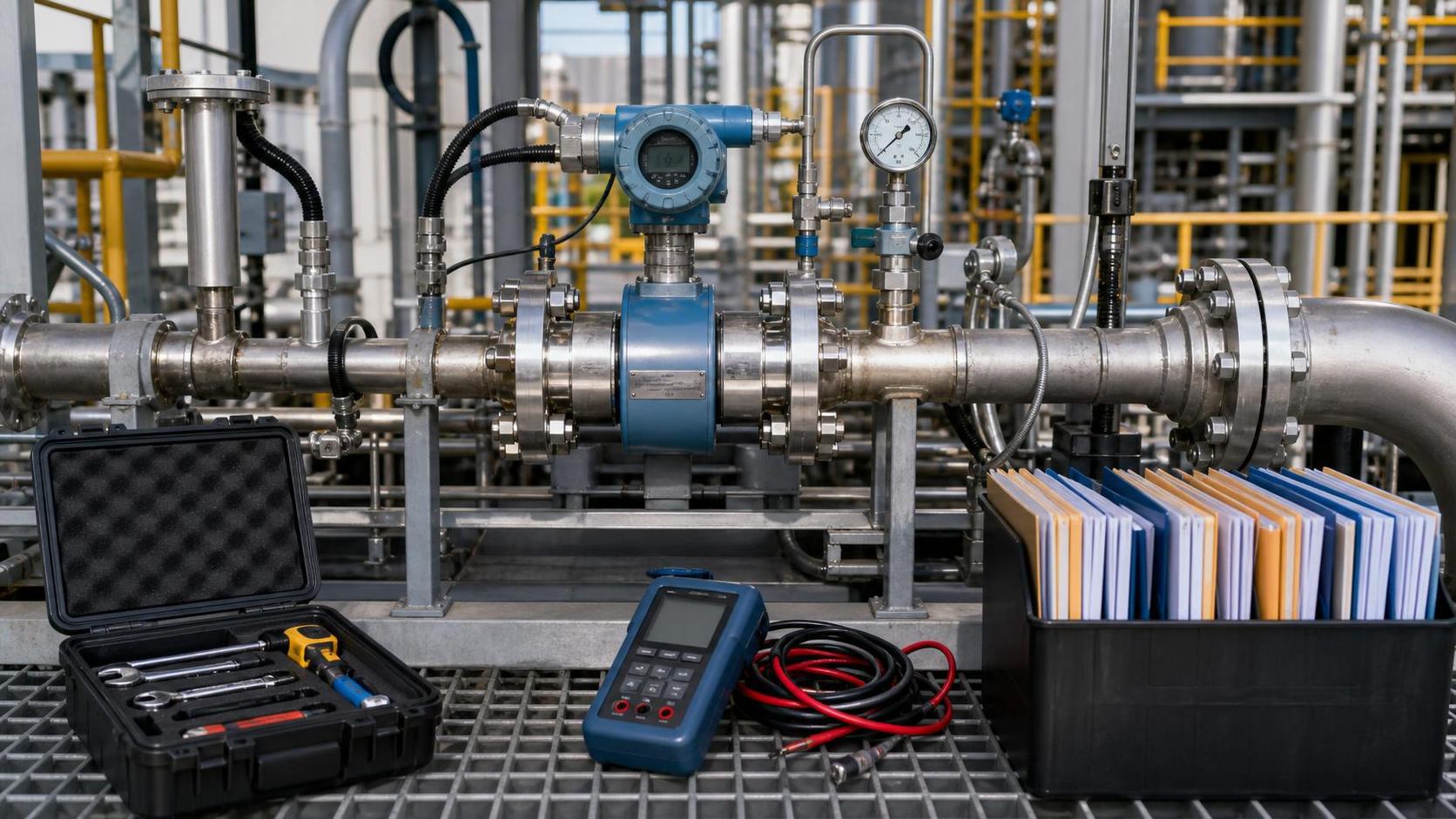
The visual distinction usually starts with what each meter is actually measuring. One focuses on mass directly. The other measures volumetric flow through electromagnetic principles.
Two technologies, two measurement logics
A coriolis mass flow meter measures mass flow by detecting tube movement caused by the Coriolis effect. In many models, it also provides density and temperature data, which makes it useful when process verification requires more than one variable.
A magnetic flow meter, often called a mag meter, measures the velocity of conductive liquids moving through a magnetic field. It then calculates volumetric flow. This makes it highly effective where the fluid is conductive and the application values low pressure loss.
The important distinction is simple. A coriolis mass flow meter tells you how much mass is moving. A magnetic flow meter tells you how much volume is moving, as long as the liquid can support electromagnetic measurement.
Where the core differences show up
Where a coriolis mass flow meter usually stands out
A coriolis mass flow meter is often selected when process economics depend on exact mass balance. This is common in chemical dosing, blending, custody-sensitive transfer, high-value ingredients, and applications where density changes affect product quality.
It also becomes valuable when fluid properties vary with temperature or composition. Because the meter measures mass directly, it avoids some conversion errors that appear when a volumetric reading must be corrected later.
In practical terms, a coriolis mass flow meter can reduce instrumentation layers. One device may cover mass flow, density insight, and temperature support. That can simplify skids, improve diagnostics, and strengthen traceable reporting.
Common fit-for-purpose cases
- Batch blending where ratio accuracy affects yield and consistency
- Chemical injection where very small errors scale into large material losses
- Fuel, solvent, or additive lines where density matters for reconciliation
- Processes handling non-conductive fluids that mag meters cannot measure
Where magnetic flow meters keep a strong advantage
Magnetic flow meters remain a preferred choice for many conductive liquid services. Water, wastewater, slurry, pulp, and corrosive process streams often fit mag meter strengths very well.
Their appeal is not only cost. They also provide a full-bore design with minimal obstruction, which helps maintain low pressure loss. In larger pipe sizes, that advantage becomes especially important for pumping efficiency and system design.
For infrastructure projects with broad flow ranges and practical maintenance goals, magnetic meters can offer a durable and economical path. When the fluid is conductive and mass is not required directly, they are often hard to dismiss.
Typical strengths of mag meters
- Well suited to large-diameter pipelines
- Effective with dirty or solids-bearing conductive liquids
- Lower pressure drop than many inline alternatives
- Often simpler lifecycle economics for water-oriented systems
The decision points that matter more than brochure claims
The best comparison starts with the process, not the instrument catalog. Several questions usually separate a justified selection from a default choice.
Fluid conductivity
If the fluid is non-conductive, a magnetic flow meter is generally out. Oils, hydrocarbons, and many specialty chemicals quickly shift the evaluation toward a coriolis mass flow meter or another suitable technology.
Mass versus volume
If accounting, formulation, or quality control is based on mass, a coriolis mass flow meter has a direct advantage. If volume is operationally sufficient, a magnetic meter may be fully adequate.
Pressure and line size
Large lines and low allowable pressure drop often favor magnetic meters. Smaller process lines with tighter accuracy demands often make the coriolis option easier to justify.
Maintenance philosophy
A stable process with strong diagnostics may support the higher capital cost of a coriolis mass flow meter. Utility-style systems may prioritize simplicity, spare availability, and lower replacement cost.
Verification and compliance
Facilities governed by strict audit trails, quality systems, or global standards often value measurement confidence as much as price. In that context, documented performance, certification alignment, and service support deserve as much attention as meter type.
How the comparison plays out across sectors
In water and wastewater, magnetic flow meters usually dominate because the fluids are conductive, line sizes are large, and low pressure loss matters. In dosing, blending, and specialty chemicals, the coriolis mass flow meter often becomes the stronger fit.
Food and beverage operations may use both. Ingredient lines may prefer a coriolis mass flow meter for recipe control, while cleaning water or conductive utility streams may use mag meters economically.
Mining, pulp, and slurry services often remain favorable territory for magnetic meters, especially where rugged conductive media move through larger pipes. Meanwhile, energy and fuel-related applications often lean toward coriolis technology because direct mass measurement supports tighter reconciliation.
This is where the GIC perspective is useful. Measurement decisions sit inside a broader industrial framework that includes reliability, certification, environmental exposure, and long-term asset planning, not just a single performance number.
A practical way to narrow the choice
A short evaluation matrix often prevents expensive misalignment later. The most reliable path is to compare both technologies against actual process conditions rather than ideal laboratory assumptions.
- Confirm whether the fluid is conductive across normal and upset conditions
- Decide whether billing, control, or quality decisions require mass or only volume
- Review line size, allowable pressure drop, and available straight-run conditions
- Check if density, temperature, or diagnostic data adds operational value
- Compare calibration, verification, and service expectations over the full lifecycle
- Validate material compatibility, enclosure ratings, and certification requirements
If the process depends on direct mass accuracy, fluid variability, or advanced diagnostics, a coriolis mass flow meter often earns its premium. If the fluid is conductive, the line is large, and volumetric measurement is enough, a magnetic flow meter may deliver the smarter overall fit.
The next step is not to ask which technology is better in general. It is to map process fluid, control objective, installation constraint, and lifecycle risk into one clear selection framework. That approach usually leads to a defensible answer long before procurement begins.
Technical Specifications
- How to Select Electronic Hotel Key Card Locks for Guest Rooms and Staff AreasAuthor :Safety Compliance Lead
- How to Select Lab Instruments for Reliable Chemical Analysis WorkflowsAuthor :Precision Metrology Expert
- How to Size a UPS for Server Rooms: Load, Runtime, and Redundancy FactorsAuthor :Grid Infrastructure Analyst
Expert Insights

Chief Security Architect
Dr. Thorne specializes in the intersection of structural engineering and digital resilience. He has advised three G7 governments on industrial infrastructure security.
Related Analysis
- Sep 17, 2026How to Select Electronic Hotel Key Card Locks for Guest Rooms and Staff AreasAuthor :Safety Compliance Lead
- Sep 16, 2026How to Select Lab Instruments for Reliable Chemical Analysis WorkflowsAuthor :Precision Metrology Expert
- Sep 15, 2026How to Size a UPS for Server Rooms: Load, Runtime, and Redundancy FactorsAuthor :Grid Infrastructure Analyst
Core Sector // 01
Security & Safety
- What to Check When Sourcing Vibration Meters Wholesale for Industrial MaintenanceAuthor :Precision Metrology Expert

- How to Select Process Control Instruments for Accuracy, Safety, and UptimeAuthor :Precision Metrology Expert

- What Should Standards Compliance Analysis Training Cover Before an Audit?Author :Precision Metrology Expert

- Why Do Pressure Instruments Fail in High-Vibration Sites?Author :Precision Metrology Expert

- Is FM Software Integration Needed for Overseas Instrument Maintenance?Author :Precision Metrology Expert

- What Are the Differences Between Lab and Field Testing Equipment?Author :Precision Metrology Expert

- Is Independent Testing Necessary for Critical Safety Components?Author :Precision Metrology Expert

- How to Validate Industrial Application Scenarios Before ProcurementAuthor :Precision Metrology Expert