China's Rail Investment Up 3.2% in First Four Months of 2026
Author
Date Published
Reading Time
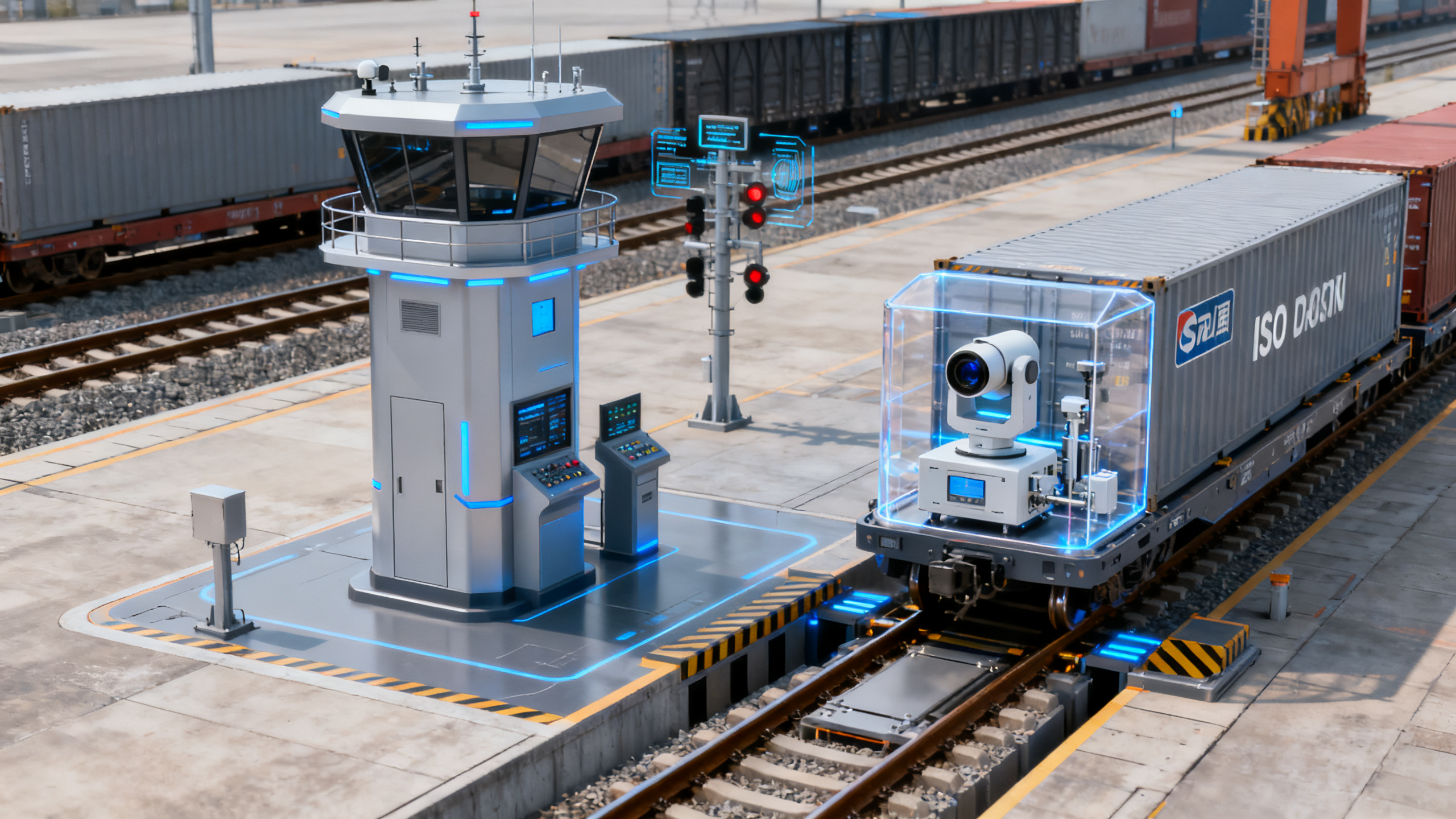
China’s railway infrastructure investment accelerated in early 2026, with fixed-asset investment reaching RMB 200.8 billion in the first four months — a 3.2% year-on-year increase. The timing coincides with intensified policy implementation under the national mid-term transport planning framework. This expansion directly affects industries reliant on high-precision, time-sensitive, and low-damage logistics — particularly those exporting testing & measurement equipment, lab & analytics instruments, and industrial optics components.
Event Overview
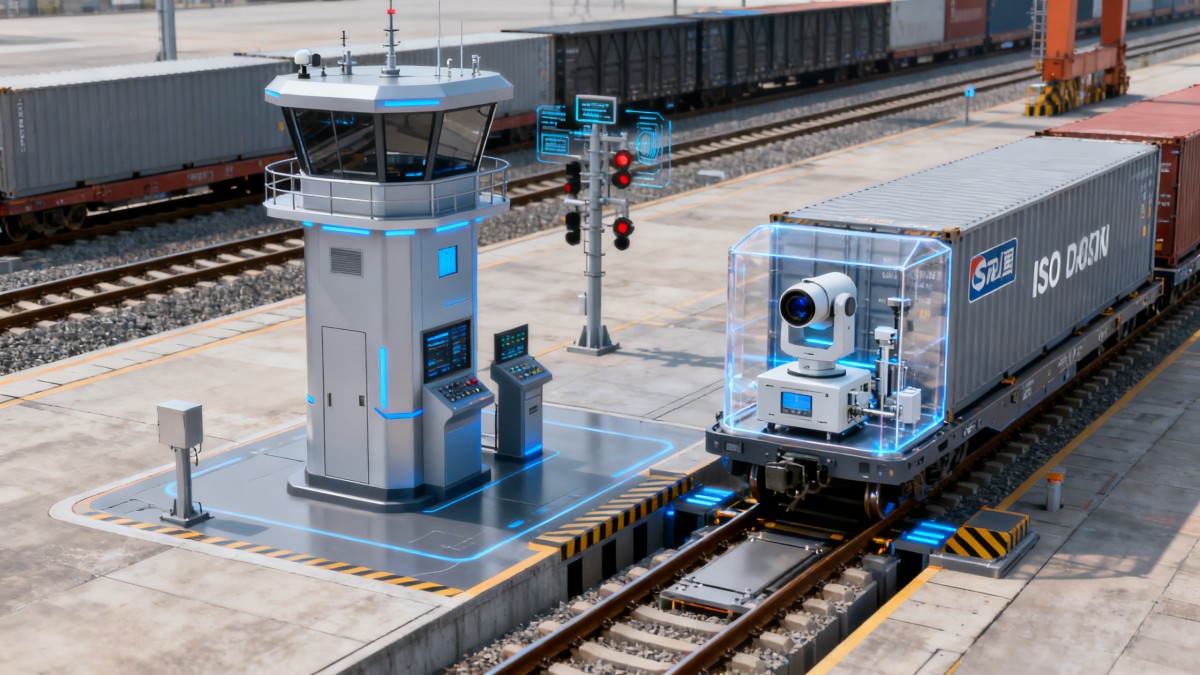
In the first four months of 2026, China’s national railway system completed fixed-asset investment totaling RMB 200.8 billion, up 3.2% year-on-year. Investment priorities included intelligent dispatching systems, heavy-haul rail lines, and multimodal transport hubs — all officially confirmed by the Ministry of Industry and Information Technology (MIIT) as of April 30, 2026.
Industries Affected
Direct export enterprises: Companies shipping high-value, vibration- and temperature-sensitive equipment face improved delivery reliability and lower physical damage rates due to enhanced rail-based intermodal connectivity — especially for rail-sea and road-rail transfer nodes. The upgrade in hub infrastructure reduces handling cycles and improves environmental control during transshipment.
Raw material procurement enterprises: Firms sourcing precision components (e.g., optical lenses, calibrated sensors, metrology-grade alloys) from domestic suppliers benefit from more predictable inbound logistics timelines. Reduced rail congestion and upgraded siding access at industrial parks shorten lead times for just-in-time deliveries — though this effect remains localized to corridors served by newly upgraded lines.
Manufacturing enterprises: OEMs producing analytical instrumentation or optical subsystems see indirect but measurable gains in finished-goods outbound logistics stability. More consistent rail capacity supports lean inventory strategies, especially where final assembly relies on synchronized inbound shipments of subcomponents via different transport modes.
Supply chain service providers: Third-party logistics (3PL) and freight forwarding firms specializing in high-value industrial cargo are seeing increased demand for integrated rail-linked solutions — particularly for cross-border shipments routed through inland ports like Chongqing or Xi’an. However, service scalability depends on interoperability between new digital dispatch platforms and legacy TMS systems.
Key Considerations and Recommended Actions
Monitor corridor-specific rollout timelines
Not all rail upgrades are nationally synchronized. Exporters should verify whether their origin/destination stations are included in the 2026 Phase I intelligent dispatch deployment list — available via MIIT’s public infrastructure dashboard — before adjusting logistics contracts.
Evaluate packaging specifications against updated handling standards
New multimodal hubs enforce stricter ISO container stacking protocols and vibration thresholds. Enterprises shipping lab instruments should revalidate packaging performance under EN 15308 and ISTA 3E test profiles aligned with rail-heavy routes.
Engage with rail-linked warehousing partners early
Several newly commissioned multimodal hubs offer bonded warehousing with direct rail siding access. Manufacturers aiming to reduce port dwell time should assess co-location opportunities — though availability remains limited to priority sectors per current MOU frameworks.
Editorial Perspective / Industry Observation
Analysis shows that this investment uptick is less about volume expansion and more about systemic resilience — targeting bottlenecks in handover integrity rather than raw throughput. Observably, the emphasis on intelligent dispatch and heavy-haul capacity reflects a deliberate shift toward supporting higher-value, lower-volume cargo segments. From an industry perspective, the current focus on multimodal integration signals a longer-term recalibration of China’s inland logistics hierarchy — one where rail no longer serves merely as a bulk hauler but as a precision-enabling layer in global supply chains.
Conclusion
This infrastructure acceleration does not represent a broad-based logistics overhaul, but rather a targeted reinforcement of specific logistical pain points affecting high-precision industrial exports. A rational interpretation is that it strengthens China’s position as a reliable source for mission-critical instrumentation — not by lowering costs, but by raising consistency thresholds across the delivery lifecycle.
Source Attribution
Data sourced from the Ministry of Industry and Information Technology (MIIT), official release dated April 30, 2026. Infrastructure deployment status and technical specifications remain subject to periodic updates; continued observation is recommended for corridor-level implementation details and associated service-level agreements (SLAs) issued by China State Railway Group Co., Ltd.
Technical Specifications
- How to Select Electronic Hotel Key Card Locks for Guest Rooms and Staff AreasAuthor :Safety Compliance Lead
- How to Select Lab Instruments for Reliable Chemical Analysis WorkflowsAuthor :Precision Metrology Expert
- How to Size a UPS for Server Rooms: Load, Runtime, and Redundancy FactorsAuthor :Grid Infrastructure Analyst
Expert Insights

Chief Security Architect
Dr. Thorne specializes in the intersection of structural engineering and digital resilience. He has advised three G7 governments on industrial infrastructure security.
Related Analysis
- Sep 17, 2026How to Select Electronic Hotel Key Card Locks for Guest Rooms and Staff AreasAuthor :Safety Compliance Lead
- Sep 16, 2026How to Select Lab Instruments for Reliable Chemical Analysis WorkflowsAuthor :Precision Metrology Expert
- Sep 15, 2026How to Size a UPS for Server Rooms: Load, Runtime, and Redundancy FactorsAuthor :Grid Infrastructure Analyst
Core Sector // 01
Security & Safety
- What to Check When Sourcing Vibration Meters Wholesale for Industrial MaintenanceAuthor :Precision Metrology Expert

- How to Select Process Control Instruments for Accuracy, Safety, and UptimeAuthor :Precision Metrology Expert

- What Should Standards Compliance Analysis Training Cover Before an Audit?Author :Precision Metrology Expert

- Why Do Pressure Instruments Fail in High-Vibration Sites?Author :Precision Metrology Expert

- Is FM Software Integration Needed for Overseas Instrument Maintenance?Author :Precision Metrology Expert

- What Are the Differences Between Lab and Field Testing Equipment?Author :Precision Metrology Expert

- Is Independent Testing Necessary for Critical Safety Components?Author :Precision Metrology Expert

- How to Validate Industrial Application Scenarios Before ProcurementAuthor :Precision Metrology Expert