K-REACH Launches Fast-Track Registration for Supply-Critical Chemicals
Author
Date Published
Reading Time
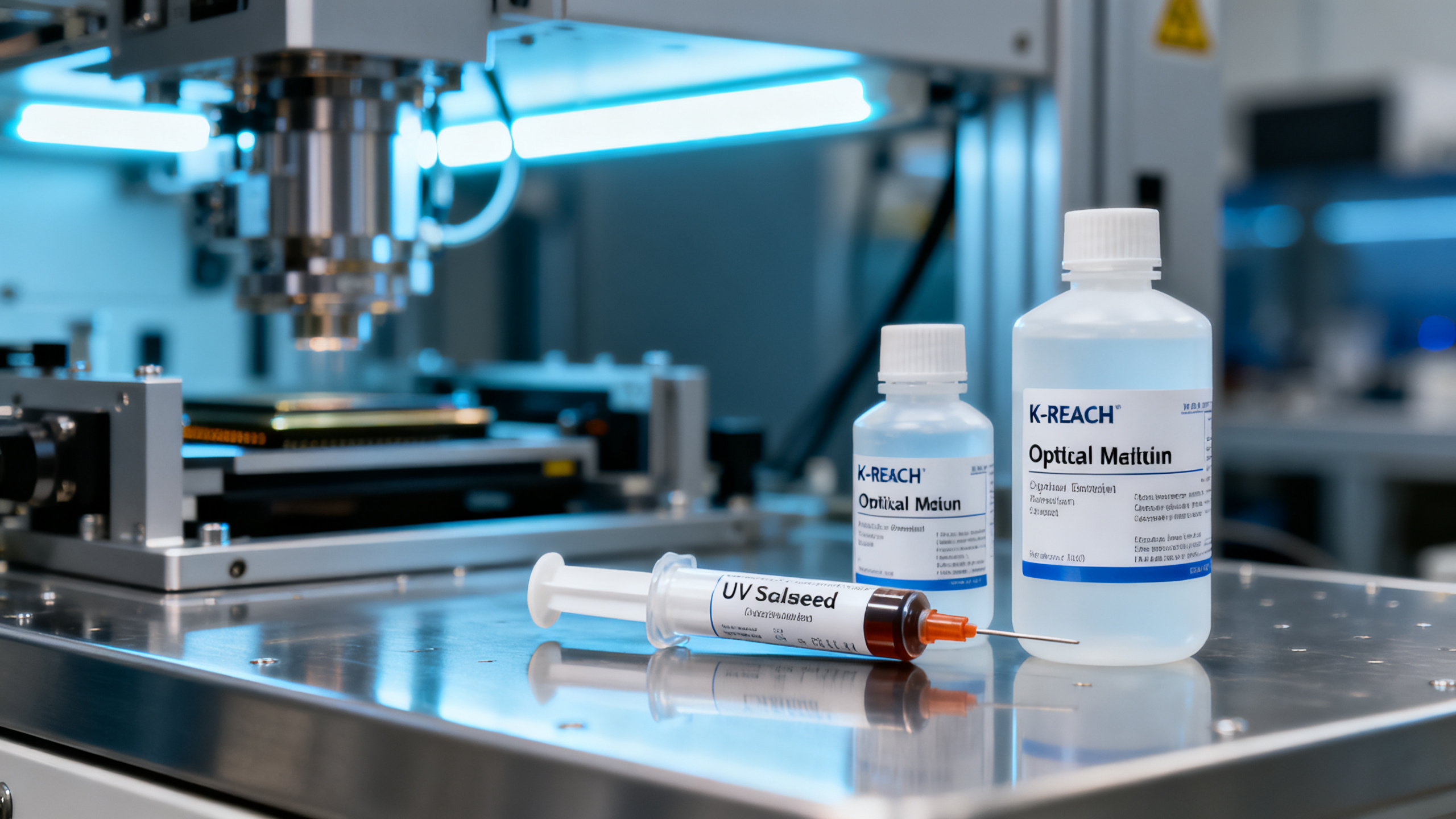
South Korea’s Ministry of Environment announced on May 12, 2026, the activation of a special registration pathway under K-REACH for chemicals deemed critical to industrial supply chains — even if imported in quantities below 1 metric ton per year. The move directly affects exporters of industrial sealing compounds and optical coating liquids to Korea, particularly those serving semiconductor equipment maintenance and high-precision instrumentation markets.
Event Overview
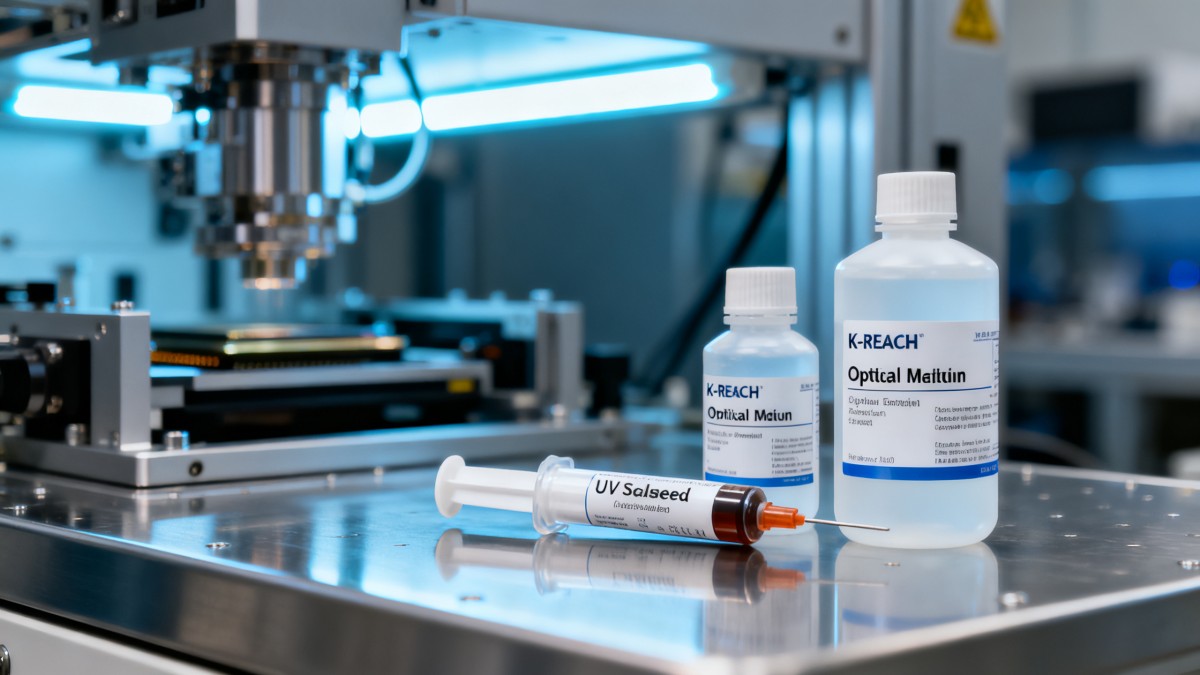
On May 12, 2026, the Korean Ministry of Environment launched the K-REACH ‘Supply-Tight Chemical Substances’ special registration channel. Under this mechanism, substances essential to domestic industrial continuity — including UV-curable sealing compounds and anti-reflective (AR) optical coating liquids — qualify for expedited registration within 60 days, provided annual import volume remains under 1 ton. The measure applies specifically to imports supporting critical after-sales service, repair, and maintenance operations in sectors such as semiconductor fabrication equipment and precision metrology instruments.
Industries Affected
Direct trading enterprises: Exporters of Bearings & Seals components and Industrial Optics consumables from China (and other third countries) face revised compliance timelines and documentation requirements. Impact manifests in accelerated pre-market authorization cycles, tighter customs coordination, and heightened need for substance-specific technical dossiers — especially for formulations containing unregistered monomers or additives.
Raw material procurement enterprises: Companies sourcing base resins, photoinitiators, or metal-oxide precursors for UV sealants or AR coatings must now verify whether upstream suppliers have completed K-REACH registration — or whether their materials fall under the new fast-track scope. Unregistered raw materials risk blocking downstream formulation exports, even if final products meet tonnage thresholds.
Contract manufacturing enterprises: Firms producing private-label sealing gels or custom optical coatings for Korean OEMs must reassess substance declarations in safety data sheets (SDS) and product specifications. Non-compliant formulations may trigger shipment delays at Korean ports or rejection by Korean importers seeking certified supply chain continuity.
Supply chain service providers: Regulatory consultants, testing labs, and REACH-only representatives handling Korean registrations face increased demand for rapid dossier preparation, substance identification support (e.g., UVCB characterization), and bilingual (Korean/English) submission assistance — particularly for niche, low-volume but functionally irreplaceable substances.
Key Considerations and Recommended Actions
Confirm eligibility before May 31, 2026
Only substances officially designated by the Ministry of Environment as ‘supply-tight’ qualify. Enterprises must cross-check their CAS numbers against the publicly updated list — not assume eligibility based on application sector alone.
Prepare full chemical identity documentation in advance
The 60-day window applies only after complete dossier submission. Delays commonly stem from incomplete structural information, impurity profiles, or insufficient use descriptions — especially for complex mixtures like optical sol-gel precursors.
Engage Korean-only representatives with K-REACH enforcement experience
Unlike standard K-REACH registration, the special channel requires real-time coordination with Korea’s National Institute of Environmental Research (NIER) and adherence to Korean-language procedural protocols — including electronic filing via the K-REACH online portal (KORES).
Map dual-use substances across export destinations
Substances registered under this fast-track remain subject to full K-REACH obligations if annual import volume later exceeds 1 ton. Enterprises should track cumulative volumes across multiple customers to avoid inadvertent non-compliance.
Editorial Perspective / Industry Observation
Analysis shows this is not merely an administrative easing, but a strategic recalibration of K-REACH enforcement priorities — shifting from volume-based thresholds toward functional indispensability. Observably, the Korean government is signaling that regulatory agility matters more than rigid tonnage categorization when national technology infrastructure depends on stable access to specialty chemicals. From an industry perspective, this development better reflects real-world supply chain fragility than previous K-REACH iterations — yet it also raises questions about long-term transparency, as the ‘supply-tight’ designation process lacks public criteria or appeal mechanisms. Current monitoring suggests similar pathways may emerge in Japan’s CSCL and Taiwan’s OSCHA frameworks within 12–18 months.
Conclusion
This fast-track mechanism does not relax chemical safety standards — rather, it reorients compliance effort toward operational resilience. For global suppliers, it underscores that regulatory responsiveness is increasingly inseparable from market access in advanced manufacturing ecosystems. A rational conclusion is that proactive substance-level due diligence — not reactive registration — now defines competitive advantage in high-tech aftermarkets.
Source Attribution
Official announcement: Korean Ministry of Environment Press Release No. 2026-047 (May 12, 2026); K-REACH Enforcement Guidelines Addendum v.3.2 (effective June 1, 2026). Note: The official ‘Supply-Tight Substance List’ is updated biweekly on the KORES portal and remains subject to revision — ongoing monitoring is advised.
Technical Specifications
- How to Select Electronic Hotel Key Card Locks for Guest Rooms and Staff AreasAuthor :Safety Compliance Lead
- How to Select Lab Instruments for Reliable Chemical Analysis WorkflowsAuthor :Precision Metrology Expert
- How to Size a UPS for Server Rooms: Load, Runtime, and Redundancy FactorsAuthor :Grid Infrastructure Analyst
Expert Insights

Chief Security Architect
Dr. Thorne specializes in the intersection of structural engineering and digital resilience. He has advised three G7 governments on industrial infrastructure security.
Related Analysis
- Sep 17, 2026How to Select Electronic Hotel Key Card Locks for Guest Rooms and Staff AreasAuthor :Safety Compliance Lead
- Sep 16, 2026How to Select Lab Instruments for Reliable Chemical Analysis WorkflowsAuthor :Precision Metrology Expert
- Sep 15, 2026How to Size a UPS for Server Rooms: Load, Runtime, and Redundancy FactorsAuthor :Grid Infrastructure Analyst
Core Sector // 01
Security & Safety
- IEC 62443-3-3:2026 Raises Cybersecurity Bar for Industrial OpticsAuthor :Precision Metrology Expert

- EU Sets New CE Rules for Industrial OpticsAuthor :Precision Metrology Expert

- How to Evaluate a Metallurgical Microscope Exporter for Image Quality and ComplianceAuthor :Precision Metrology Expert

- UL Expands Certification Route for Hazardous-Area OpticsAuthor :Precision Metrology Expert

- Shanghai Port Delays Deepen Under Origin ChecksAuthor :Precision Metrology Expert

- CIOE 2026 to Spotlight Vision and Tactile SensorsAuthor :Precision Metrology Expert

- MWC Shanghai 2026 Opens June 24 With CPO and Industrial Security in FocusAuthor :Precision Metrology Expert

- Brazil Tightens INMETRO Rules for Industrial Optical LensesAuthor :Precision Metrology Expert