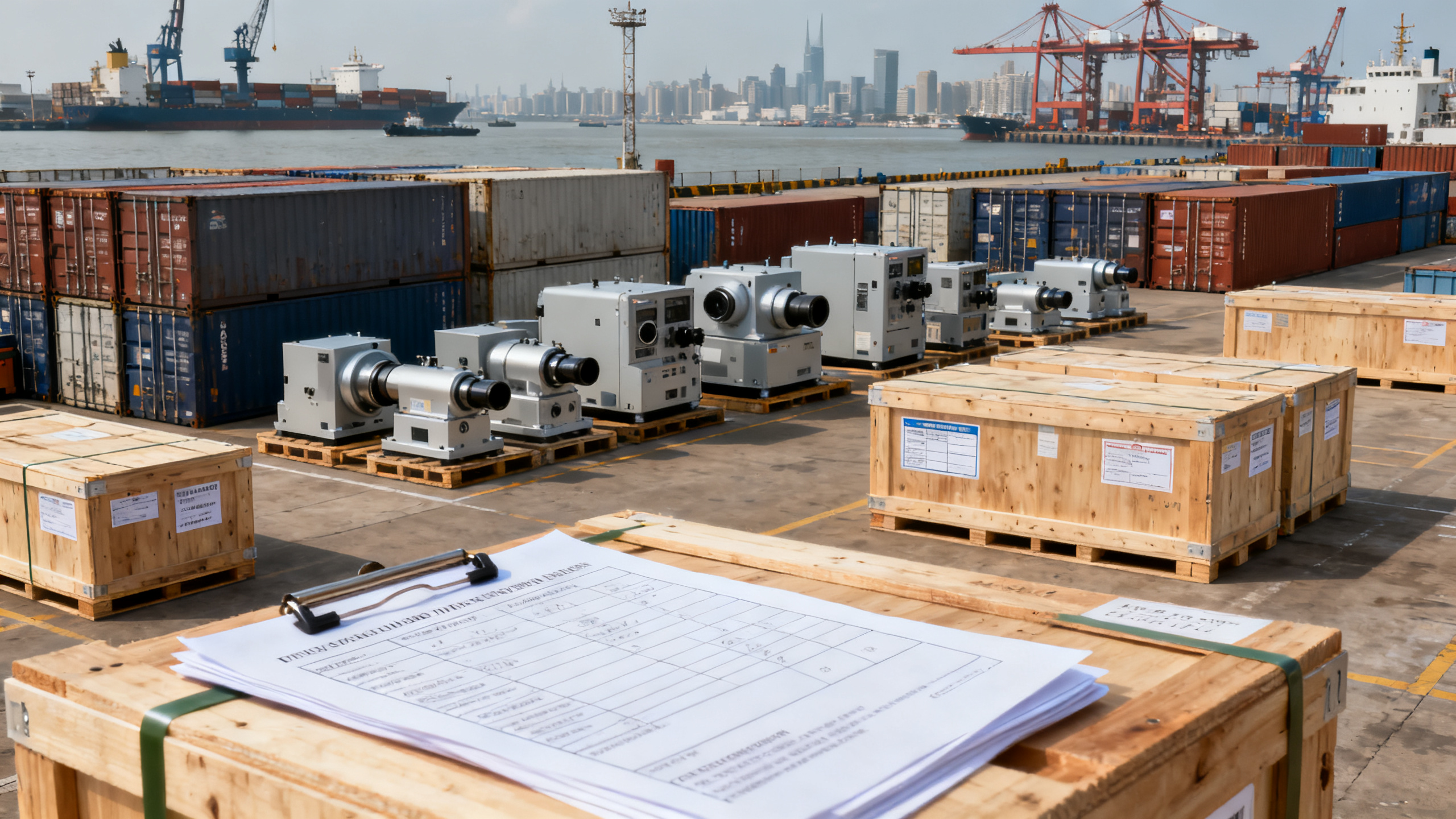
China Customs Adds 'Restriction Identification Code' to Export Declarations
Author
Date Published
Reading Time
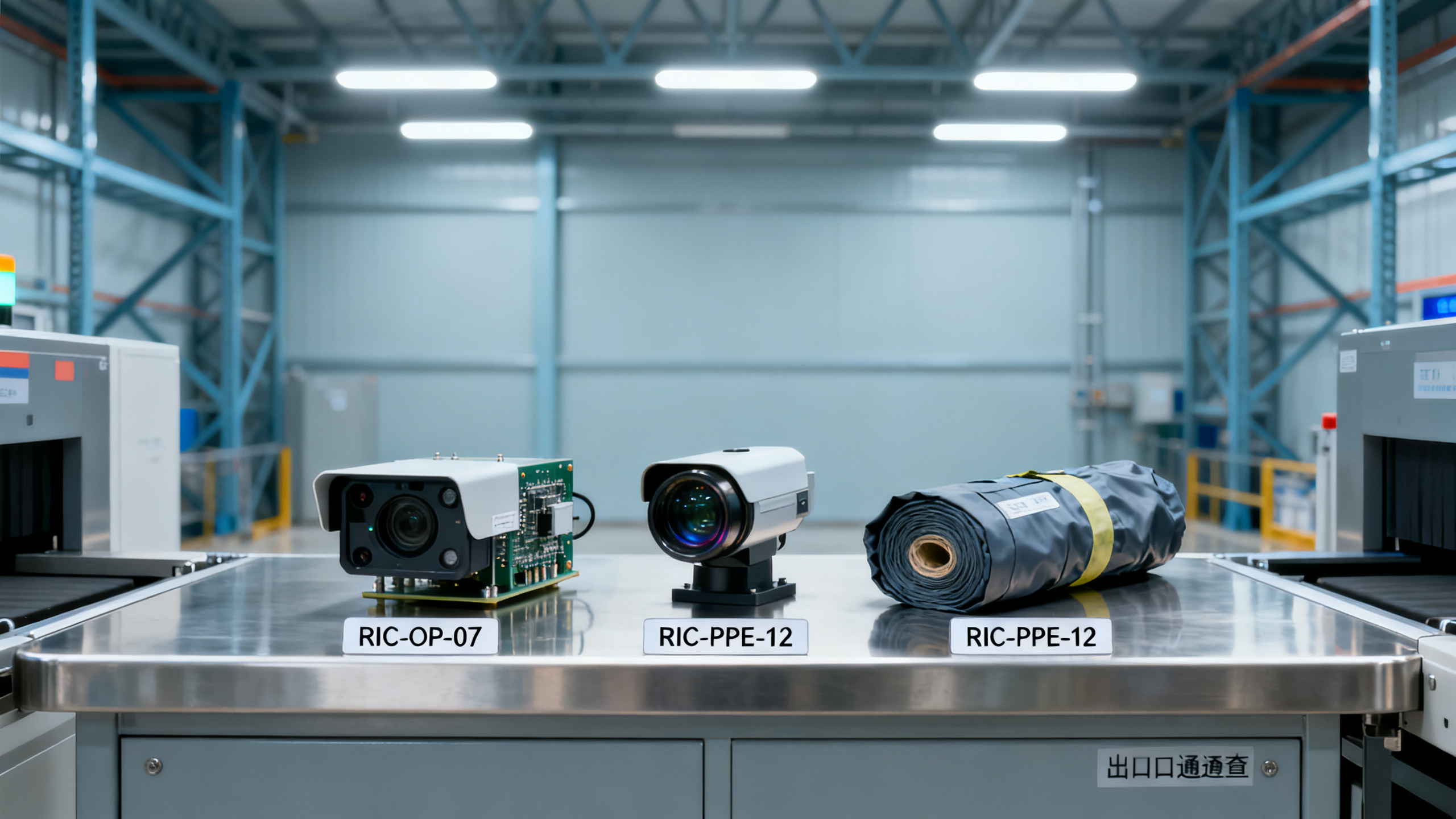
Starting May 16, 2026, China Customs will require exporters to declare a new 'Restriction Identification Code' on export customs declarations for specific industrial optics and personal protective equipment (PPE) products. This change directly affects manufacturers, traders, and logistics providers in optical instrumentation, safety apparel, and medical device–adjacent supply chains — and signals heightened scrutiny of dual-use and regulated goods exports.
Event Overview
On April 16, 2026, the General Administration of Customs of the People’s Republic of China issued an official announcement stating that, effective May 16, 2026, the 'Restriction Identification Code' and associated 'Restriction Declaration Elements' will become conditionally mandatory fields on export customs declaration forms. The requirement applies to select categories including Industrial Optics (e.g., laser rangefinding lenses, infrared monitoring modules) and PPE & Workwear (e.g., anti-static, flame-retardant, and chemical-resistant protective clothing). Exporters must match these goods against the List of Dual-Use Items Subject to Export Control and the Export Directory of Medical Devices to determine applicable codes. Inaccurate or missing entries may result in full declaration rejection or escalated port inspections.
Which Subsectors Are Affected
Direct Export Trading Enterprises
These enterprises file customs declarations directly and bear primary responsibility for code accuracy. They are affected because the new field introduces a compliance checkpoint not previously required for many optics and PPE items — especially those historically classified as non-medical or non-dual-use. Impact includes increased pre-filing verification time, higher risk of customs delays, and potential liability for misclassification.
Manufacturers of Industrial Optics Components
Manufacturers supplying lenses, imaging modules, or optical subassemblies used in surveillance, surveying, or industrial automation systems are affected because their end-use applications may now trigger dual-use classification. Impact includes pressure to document technical specifications more rigorously and provide traceable use-case information to downstream exporters.
Producers and Distributors of Specialized PPE
Firms producing or distributing flame-retardant, anti-static, or chemically resistant workwear are affected because such garments may fall under medical device or occupational safety control frameworks depending on performance claims or intended markets. Impact includes tighter alignment between product labeling, technical dossiers, and export documentation — particularly when exporting to jurisdictions with overlapping regulatory expectations.
Supply Chain and Customs Brokerage Service Providers
Third-party logistics firms, freight forwarders, and customs brokers are affected because they often support declaration preparation. Impact includes expanded due diligence obligations: verifying client-provided technical data, cross-referencing product descriptions with control lists, and maintaining updated internal classification guides — all without formal authority to bind the declarant.
What Relevant Enterprises or Practitioners Should Focus On — And How to Respond Now
Verify current product classifications against official control lists
Before May 16, 2026, exporters and manufacturers should map existing SKUs — especially industrial optics and functional workwear — to the latest versions of the List of Dual-Use Items Subject to Export Control and the Export Directory of Medical Devices. Internal technical documentation (e.g., optical wavelength ranges, material flammability test reports) should be reviewed to confirm whether thresholds for regulation are met.
Distinguish between policy intent and operational implementation
Analysis shows this requirement reflects a procedural tightening rather than an expansion of controlled items. No new commodities have been added to control lists; instead, visibility into existing controls is being enforced at the declaration level. Enterprises should avoid over-classifying based on precaution alone — but also avoid assuming prior clearance implies continued exemption.
Update internal workflows and supplier communications
Exporters should revise order intake checklists to include restriction code validation. Where applicable, procurement teams should request updated technical compliance statements from component suppliers — especially for optical modules where end-use context determines classification. Brokers and logistics partners should formalize data exchange protocols with clients to ensure timely access to necessary specifications.
Monitor for supplementary guidance from customs authorities
Observably, the April 16 announcement does not specify enforcement thresholds (e.g., tolerance for minor discrepancies), nor does it publish a lookup table linking product descriptions to codes. Enterprises should track official notices and industry circulars issued by local customs offices in the coming weeks — particularly those from Shanghai, Shenzhen, and Ningbo, which handle high volumes of optics and PPE exports.
Editorial Perspective / Industry Observation
This measure is better understood as an administrative signal — not yet a substantive regulatory shift. It enhances traceability and audit readiness for goods already subject to control, rather than introducing novel restrictions. From an industry perspective, it underscores a broader trend: Chinese export controls are evolving from list-based identification toward process-based accountability, placing greater emphasis on declarant competence and documentation integrity. Continued attention is warranted not because the rule itself is complex, but because its consistent application across regional customs offices remains to be observed.
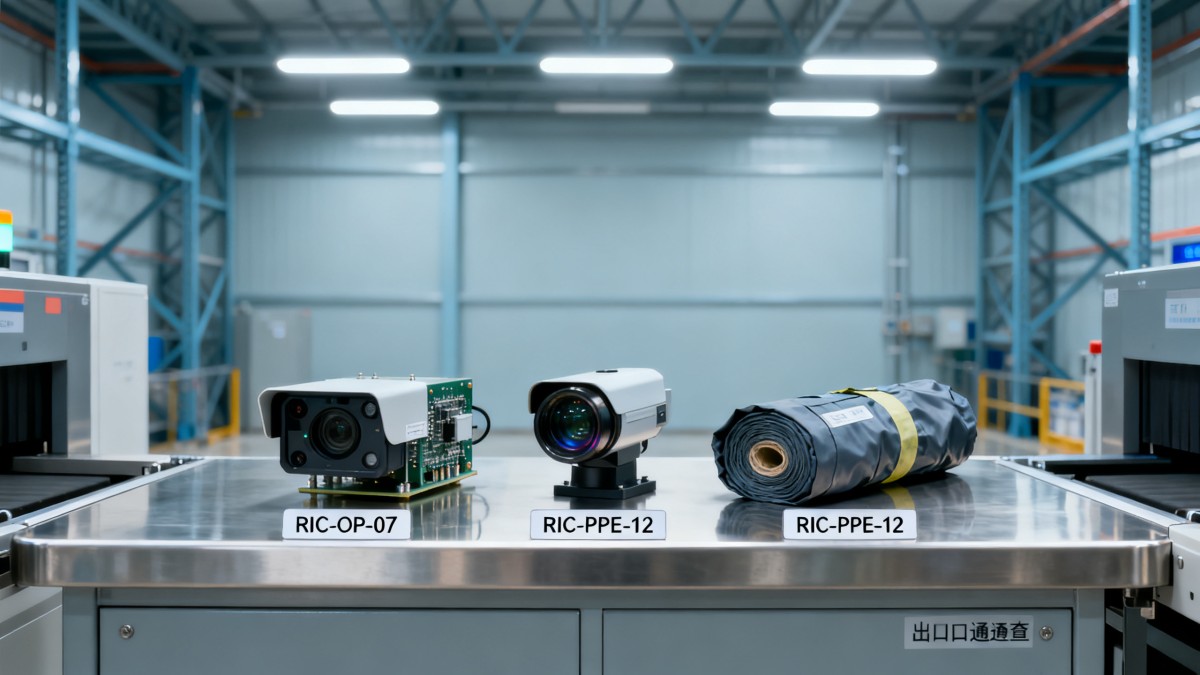
Conclusion: This update represents a procedural refinement in export compliance — one that increases documentation precision for certain optics and PPE categories without altering underlying control scope. It is best interpreted as a calibration of enforcement focus, not a broadening of regulatory reach. Enterprises should treat it as a near-term operational adjustment requiring cross-functional coordination, not a strategic pivot.
Source: Announcement by the General Administration of Customs of the People’s Republic of China, issued April 16, 2026. Note: Implementation details — including interpretation of 'conditionally mandatory', regional enforcement variance, and availability of official code-matching tools — remain subject to ongoing observation.
Technical Specifications
- How to Select Electronic Hotel Key Card Locks for Guest Rooms and Staff AreasAuthor :Safety Compliance Lead
- How to Select Lab Instruments for Reliable Chemical Analysis WorkflowsAuthor :Precision Metrology Expert
- How to Size a UPS for Server Rooms: Load, Runtime, and Redundancy FactorsAuthor :Grid Infrastructure Analyst
Expert Insights

Chief Security Architect
Dr. Thorne specializes in the intersection of structural engineering and digital resilience. He has advised three G7 governments on industrial infrastructure security.
Related Analysis
- Sep 17, 2026How to Select Electronic Hotel Key Card Locks for Guest Rooms and Staff AreasAuthor :Safety Compliance Lead
- Sep 16, 2026How to Select Lab Instruments for Reliable Chemical Analysis WorkflowsAuthor :Precision Metrology Expert
- Sep 15, 2026How to Size a UPS for Server Rooms: Load, Runtime, and Redundancy FactorsAuthor :Grid Infrastructure Analyst
Core Sector // 01
Security & Safety
- IEC 62443-3-3:2026 Raises Cybersecurity Bar for Industrial OpticsAuthor :Precision Metrology Expert

- EU Sets New CE Rules for Industrial OpticsAuthor :Precision Metrology Expert

- How to Evaluate a Metallurgical Microscope Exporter for Image Quality and ComplianceAuthor :Precision Metrology Expert

- UL Expands Certification Route for Hazardous-Area OpticsAuthor :Precision Metrology Expert

- Shanghai Port Delays Deepen Under Origin ChecksAuthor :Precision Metrology Expert

- CIOE 2026 to Spotlight Vision and Tactile SensorsAuthor :Precision Metrology Expert

- MWC Shanghai 2026 Opens June 24 With CPO and Industrial Security in FocusAuthor :Precision Metrology Expert

- Brazil Tightens INMETRO Rules for Industrial Optical LensesAuthor :Precision Metrology Expert