2026 World Drone Conference in Shenzhen Highlights Industrial Inspection
Author
Date Published
Reading Time
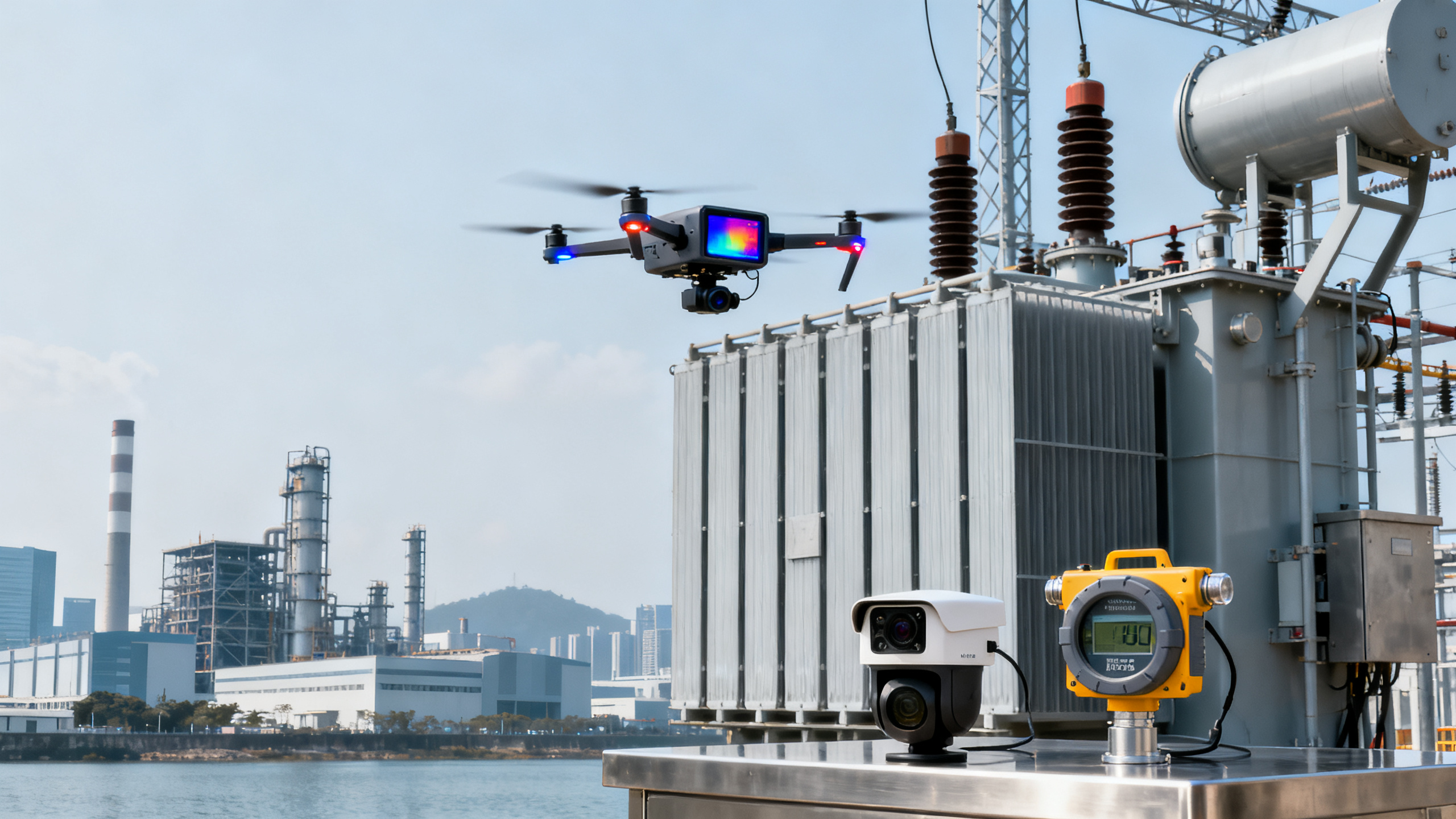
From May 21–23, 2026, the World Drone Conference was held in Shenzhen, with industrial inspection drones accounting for over 65% of exhibited UAV systems. This event signals growing traction for drone-based solutions in power infrastructure (transformers & switchgears), petrochemical facilities (fire & rescue equipment), and water utility networks (industrial water treatment). Companies engaged in industrial optics, testing & measurement devices, and CCTV & access control systems—particularly those supplying infrared thermal imagers, explosion-proof gas detectors, and weather-resistant PTZ cameras—should monitor downstream demand shifts closely, as order volumes for these supporting components rose 140% year-on-year.
Event Overview
The 2026 World Drone Conference took place in Shenzhen from May 21 to 23, 2026. Publicly reported data indicates that industrial-grade inspection drones represented more than 65% of showcased UAV systems. Key application domains included power transmission infrastructure (transformers & switchgears), petrochemical storage areas (fire & rescue equipment), and municipal water distribution networks (industrial water treatment). Accompanying hardware—including infrared thermal imagers (industrial optics), explosion-proof gas detectors (testing & measurement), and weather-resistant CCTV pan-tilt-zoom (PTZ) cameras (CCTV & access control)—recorded a 140% year-on-year increase in order volume.
Impact on Specific Industry Segments
Export-oriented trade enterprises: These firms face heightened demand for integrated drone subsystems and certified peripheral sensors targeting overseas infrastructure operators. The 140% order growth reflects not just volume but also tightening compliance expectations—especially around ATEX/IECEx certification for gas detectors and IP66+/IK10 ratings for outdoor CCTV housings.
Manufacturers of industrial optical and sensing equipment: Producers of infrared thermal imagers and explosion-proof gas detectors experienced direct demand acceleration. Impact manifests in production planning cycles, calibration capacity utilization, and lead-time pressure—particularly for models compliant with EN 60079 (explosion protection) or IEC 62906 (laser-based thermography).
Suppliers of ruggedized video infrastructure: Firms providing weather-resistant CCTV PTZ systems saw elevated procurement signals from drone integrators serving utilities and energy clients. Demand is shifting toward units with extended temperature ranges (−40°C to +70°C), built-in edge analytics, and ONVIF Profile T compatibility—features increasingly specified in tender documents for cross-border infrastructure projects.
What Relevant Enterprises or Practitioners Should Monitor and Act On
Track official export classification updates and dual-use technology guidance
Given the convergence of UAV platforms and sensitive sensor payloads (e.g., thermal imagers with >640 × 512 resolution), national export control authorities may revise harmonized system (HS) codes or licensing thresholds. Enterprises should review updated guidance from China’s Ministry of Commerce and the U.S. Bureau of Industry and Security (BIS) before finalizing Q3 2026 shipment plans.
Validate specification alignment for priority markets
Orders surged across three verticals—power, petrochemical, and water—but technical requirements differ significantly. For example, transformer inspections prioritize high-frame-rate thermal imaging (≥60 Hz), while tank farm monitoring emphasizes multi-gas detection (H₂S, CH₄, VOCs). Firms should cross-check product datasheets against EN 50121 (rail/power EMC), API RP 2510 (petrochemical zoning), and ISO 24518 (water asset management) where applicable.
Distinguish between tender activity and actual deployment timelines
The 140% order-volume increase reflects near-term procurement intent—not necessarily immediate field deployment. Many orders originate from pilot-phase tenders in Southeast Asia and the Middle East, where regulatory approval for BVLOS (beyond visual line of sight) operations remains pending. Companies should avoid overextending manufacturing capacity until flight certification status in target jurisdictions is confirmed.
Pre-position logistics and documentation for regional compliance
Export-ready shipments require pre-cleared documentation: CE declarations (for EU), CCC mark verification (for China domestic resale), and RoHS/REACH test reports. With lead times for third-party lab testing now averaging 6–8 weeks, firms should initiate conformity assessments for top-three SKUs by early June 2026 to avoid Q3 delivery delays.
Editorial Perspective / Industry Observation
Observably, this event functions less as a standalone milestone and more as a consolidation signal: industrial drone adoption has moved past proof-of-concept into structured procurement cycles across regulated infrastructure sectors. Analysis shows the 65%+ share of inspection UAVs—and the correlated 140% surge in sensor orders—reflects maturing integration pathways, not isolated project wins. From an industry perspective, the emphasis on certified, hardened peripherals (rather than UAV airframes alone) suggests value is migrating downstream toward interoperable, standards-compliant subsystems. Current developments are better understood as reinforcing existing trends in automation-driven O&M (operations & maintenance) outsourcing, rather than initiating new market dynamics.
Conclusion: The 2026 World Drone Conference in Shenzhen underscores a measurable shift toward industrial-grade drone deployment in critical infrastructure segments. It does not indicate sudden market expansion, but rather a step-change in procurement maturity—where sensor-level specifications, regional compliance readiness, and supply chain resilience now determine competitive positioning more decisively than platform novelty alone. This development is更适合理解为 a validation of ongoing commercialization efforts, not the onset of a new phase.
Information Source: Official conference press release (Shenzhen Municipal Government & China Association of Unmanned Systems); publicly disclosed exhibitor participation data; aggregated order metrics released by China General Chamber of Commerce – Machinery & Electronics Import & Export (CCCME-M&E). Note: Regulatory implementation timelines for BVLOS operations in key export markets remain under observation and are not yet finalized.
Technical Specifications
- How to Select Electronic Hotel Key Card Locks for Guest Rooms and Staff AreasAuthor :Safety Compliance Lead
- How to Select Lab Instruments for Reliable Chemical Analysis WorkflowsAuthor :Precision Metrology Expert
- How to Size a UPS for Server Rooms: Load, Runtime, and Redundancy FactorsAuthor :Grid Infrastructure Analyst
Expert Insights

Chief Security Architect
Dr. Thorne specializes in the intersection of structural engineering and digital resilience. He has advised three G7 governments on industrial infrastructure security.
Related Analysis
- Sep 17, 2026How to Select Electronic Hotel Key Card Locks for Guest Rooms and Staff AreasAuthor :Safety Compliance Lead
- Sep 16, 2026How to Select Lab Instruments for Reliable Chemical Analysis WorkflowsAuthor :Precision Metrology Expert
- Sep 15, 2026How to Size a UPS for Server Rooms: Load, Runtime, and Redundancy FactorsAuthor :Grid Infrastructure Analyst
Core Sector // 01
Security & Safety
- IEC 62443-3-3:2026 Raises Cybersecurity Bar for Industrial OpticsAuthor :Precision Metrology Expert

- EU Sets New CE Rules for Industrial OpticsAuthor :Precision Metrology Expert

- How to Evaluate a Metallurgical Microscope Exporter for Image Quality and ComplianceAuthor :Precision Metrology Expert

- UL Expands Certification Route for Hazardous-Area OpticsAuthor :Precision Metrology Expert

- Shanghai Port Delays Deepen Under Origin ChecksAuthor :Precision Metrology Expert

- CIOE 2026 to Spotlight Vision and Tactile SensorsAuthor :Precision Metrology Expert

- MWC Shanghai 2026 Opens June 24 With CPO and Industrial Security in FocusAuthor :Precision Metrology Expert

- Brazil Tightens INMETRO Rules for Industrial Optical LensesAuthor :Precision Metrology Expert