What makes an Environment & Ecology exporter worth trusting
Author
Date Published
Reading Time
Choosing an Environment & Ecology exporter is more than comparing prices—it is a risk assessment tied to compliance, reliability, and long-term operational performance. For global industrial sourcing, the right partner supports stable projects, smoother audits, and lower lifecycle uncertainty.
A trustworthy Environment & Ecology exporter shows evidence, not claims. That evidence appears in certifications, traceable materials, documented testing, transparent communication, and repeatable performance across complex industrial environments.
In sectors linked to water treatment, emissions control, waste management, remediation, and ecological protection, weak supplier discipline can create compliance failures, downtime, and reputational exposure. Trust therefore becomes an operational requirement, not a branding preference.
Defining trust in an Environment & Ecology exporter
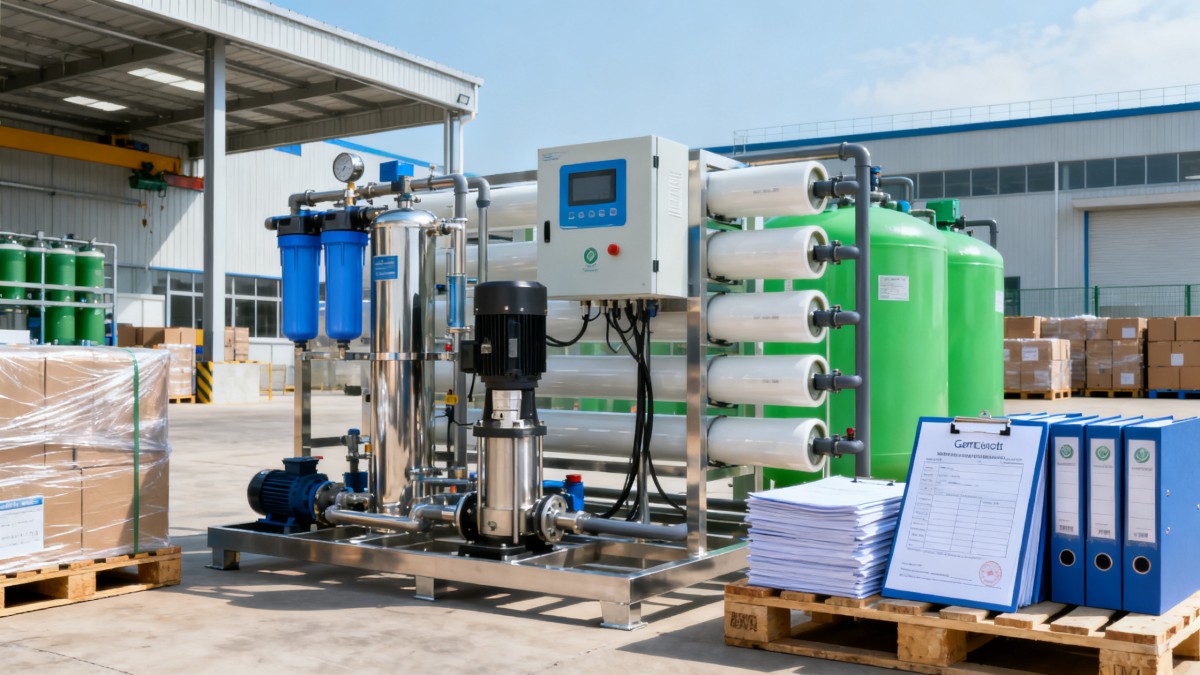
An Environment & Ecology exporter typically supplies equipment, components, systems, or materials used to manage environmental impact and ecological performance. This may include filtration units, monitoring devices, containment materials, treatment systems, and supporting industrial hardware.
Trust, in this context, means the exporter can consistently meet technical, legal, and logistical expectations. It also means documents, test data, and shipment details can be verified without ambiguity.
A reliable Environment & Ecology exporter usually demonstrates five core qualities:
- Valid compliance with applicable standards and destination rules
- Stable production and quality assurance processes
- Clear traceability for raw materials and finished goods
- Accurate technical communication and specification control
- Dependable export execution, delivery planning, and after-sales support
These factors matter across the broader industrial economy. Environmental systems are often tied to safety, permitting, utilities, and public accountability, making supplier reliability especially visible.
Current industry signals that indicate exporter credibility
Today’s market places stronger emphasis on evidence-based qualification. Environmental regulations are tightening, customs scrutiny is rising, and end users expect better operational data from every critical supplier.
A trustworthy Environment & Ecology exporter is often identified through practical signals rather than polished marketing content. The table below summarizes the most useful checkpoints.
Another strong indicator is consistency between quotation, technical file, test record, and shipment label. When those documents align, the exporter usually has better internal control.
Why trust directly affects business value
Selecting the right Environment & Ecology exporter creates value beyond product acquisition. It influences commissioning timelines, maintenance predictability, permit readiness, and total cost over the asset lifecycle.
In industrial projects, environmental equipment often interacts with electrical systems, instrumentation, civil works, and operating procedures. A weak exporter can therefore affect several disciplines at once.
The main benefits of a trusted Environment & Ecology exporter include:
- Lower compliance exposure through valid documentation and tested products
- Reduced project delay because packaging, labeling, and paperwork are managed correctly
- Better field performance due to specification accuracy and quality consistency
- Faster issue resolution when traceability and technical support are available
- Stronger long-term resilience across maintenance and future expansion phases
This is especially relevant when environmental systems support legal discharge limits, workplace health, emission reduction targets, or ecological restoration commitments. In such cases, trust protects both operations and reputation.
Typical categories and evaluation differences
Not every Environment & Ecology exporter should be evaluated in the same way. The product category changes the risk profile, evidence requirements, and performance indicators.
A credible Environment & Ecology exporter understands these differences and provides category-specific evidence. Generic brochures are rarely enough for high-consequence industrial use.
Practical checks before shortlisting an Environment & Ecology exporter
A structured review process can quickly separate dependable exporters from risky ones. The goal is to test consistency, not only capability.
Documentation review
Request product datasheets, certificate copies, inspection procedures, packing specifications, and sample shipment documents. Check whether names, models, standards, and revision dates match.
Manufacturing and quality evidence
Look for incoming inspection controls, in-process checkpoints, final release records, and corrective action logs. Consistent exporters explain their process without hesitation or contradiction.
Technical communication quality
A trustworthy Environment & Ecology exporter answers specific questions clearly. Useful answers include limits, assumptions, exclusions, maintenance conditions, and installation requirements.
Reference performance
Past supply history matters when products serve regulated or harsh environments. Repeated deliveries into demanding projects suggest process maturity and better reliability under pressure.
Logistics readiness
Verify export packing, lead-time logic, port familiarity, insurance handling, and responsiveness during document corrections. Logistics discipline is often a hidden sign of exporter competence.
Common warning signs and avoidable mistakes
Even experienced sourcing teams can miss basic warning signs when deadlines are tight. Several patterns often indicate elevated risk with an Environment & Ecology exporter.
- Certificates are provided, but issuing bodies or dates cannot be verified
- Technical values change between proposal, drawing, and final packing list
- Responses remain vague about material origin or test conditions
- Lead times appear unrealistically short for the stated manufacturing scope
- After-sales responsibility is unclear once goods cross borders
Another frequent mistake is focusing only on unit price. A low quote can hide weak packaging, poor component substitution, incomplete certification, or limited process control.
For a critical Environment & Ecology exporter, the better question is not “Who is cheapest?” but “Who can prove reliable performance with the lowest total risk?”
A disciplined path to the next sourcing decision
The best next step is to create a simple qualification matrix for each Environment & Ecology exporter under review. Score compliance, technical clarity, quality evidence, traceability, export readiness, and service responsiveness.
Then compare those results against project-critical needs such as operating conditions, permit constraints, documentation depth, and installation timeline. This approach turns trust from a vague impression into a measurable decision factor.
In complex industrial supply chains, a dependable Environment & Ecology exporter helps protect schedules, strengthen compliance confidence, and support durable operational outcomes. Verified evidence, not promises, is the clearest basis for trust.
Where technical rigor and global delivery matter, selecting an Environment & Ecology exporter with transparent systems and proven discipline is one of the most practical ways to reduce uncertainty before it becomes cost.
Technical Specifications
- How to Select Electronic Hotel Key Card Locks for Guest Rooms and Staff AreasAuthor :Safety Compliance Lead
- How to Select Lab Instruments for Reliable Chemical Analysis WorkflowsAuthor :Precision Metrology Expert
- How to Size a UPS for Server Rooms: Load, Runtime, and Redundancy FactorsAuthor :Grid Infrastructure Analyst
Expert Insights

Chief Security Architect
Dr. Thorne specializes in the intersection of structural engineering and digital resilience. He has advised three G7 governments on industrial infrastructure security.
Related Analysis
- Sep 17, 2026How to Select Electronic Hotel Key Card Locks for Guest Rooms and Staff AreasAuthor :Safety Compliance Lead
- Sep 16, 2026How to Select Lab Instruments for Reliable Chemical Analysis WorkflowsAuthor :Precision Metrology Expert
- Sep 15, 2026How to Size a UPS for Server Rooms: Load, Runtime, and Redundancy FactorsAuthor :Grid Infrastructure Analyst
Core Sector // 01
Security & Safety
- How to Size a Wafer Butterfly Valve for HVAC Chilled-Water and Heating LoopsAuthor :Environmental Engineering Director

- How Pressure Class and Joint Design Affect Long-Term Performance of Ductile Iron Pipes in Drainage InfrastructureAuthor :Environmental Engineering Director

- How Ductile Iron Pipe Joints Affect Installation Reliability and Leak ControlAuthor :Environmental Engineering Director

- How to Size Effluent Treatment Equipment for Variable Industrial Wastewater LoadsAuthor :Environmental Engineering Director

- US Battery Push Raises New Entry Rules for SuppliersAuthor :Environmental Engineering Director

- EU EMC Rule Tightens for Water Treatment ExportsAuthor :Environmental Engineering Director

- EU REACH Restriction Targets PFAS Water Treatment ImportsAuthor :Environmental Engineering Director

- EU Mandates EN 14113:2026 for Water Treatment ExportsAuthor :Environmental Engineering Director