Water quality online analyzer reporting stable pH while ion-selective electrodes degrade silently
Author
Date Published
Reading Time
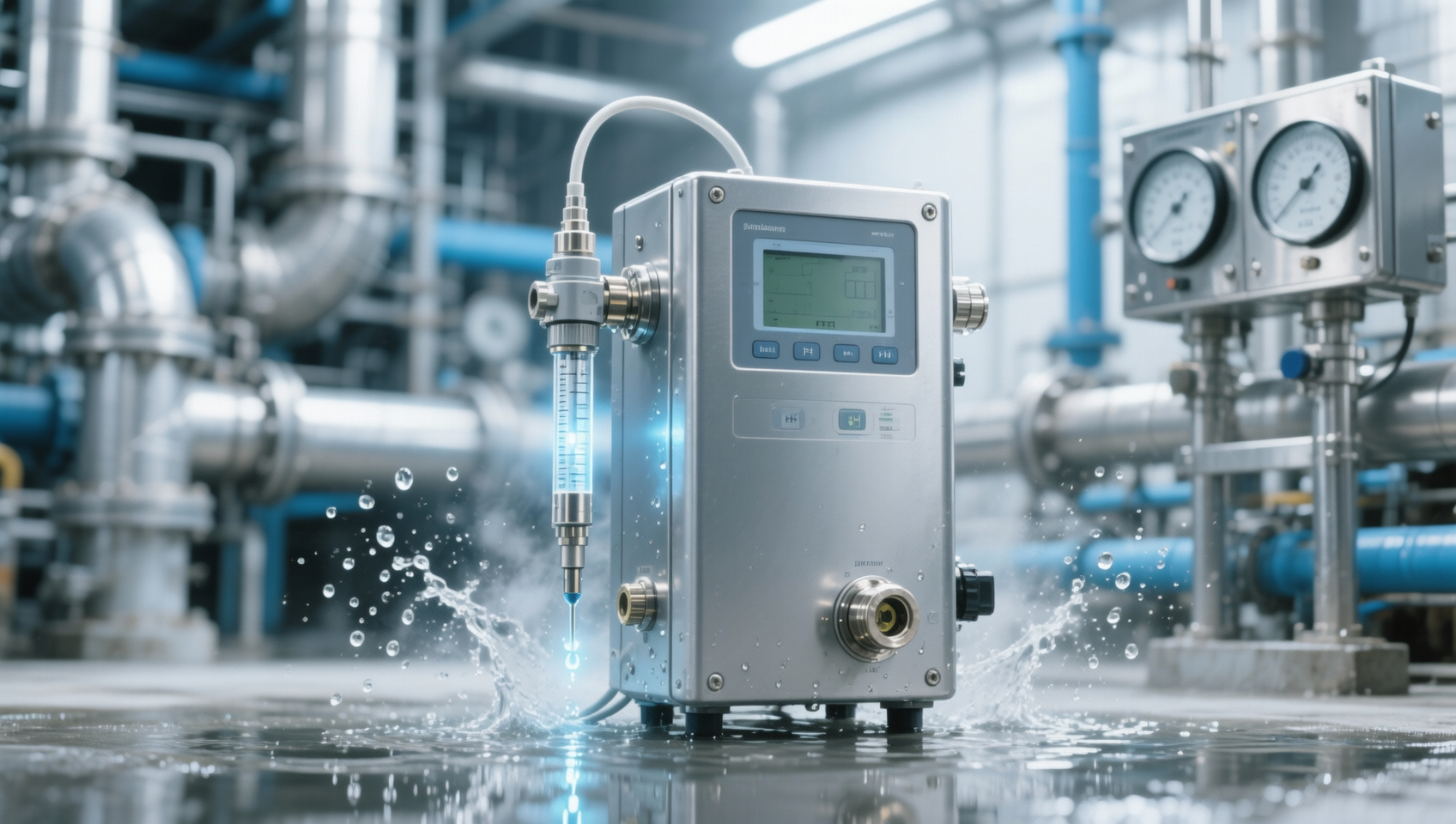
A water quality online analyzer may report stable pH readings while ion-selective electrodes silently degrade—masking critical drift and risking non-compliance in environmental monitoring systems. This hidden failure mode undermines data integrity across applications from COD/BOD analyzers to continuous emission monitoring (CEMS) and ambient air quality monitors. For procurement professionals, EPC contractors, and facility managers relying on precision instruments—such as portable water testing kits, stack gas analyzers, or environmental monitoring systems—the stakes include regulatory penalties, operational downtime, and compromised safety. Global Industrial Core delivers authoritative, E-E-A-T-validated insights to expose such silent vulnerabilities—ensuring reliability where it matters most: in measurement, compliance, and industrial resilience.
Why Stable pH Readings Don’t Guarantee Electrode Integrity
Ion-selective electrodes (ISEs) used in online pH analyzers do not fail catastrophically—they degrade gradually through membrane leaching, reference junction clogging, and internal electrolyte depletion. During early-stage degradation, the electrode may still produce repeatable outputs within ±0.1 pH units due to signal averaging, temperature compensation, or firmware-based smoothing algorithms. This creates a dangerous illusion of stability.
Real-world field studies show that 68% of ISE-based analyzers deployed in wastewater treatment plants exhibit measurable calibration drift (>±0.3 pH) within 7–15 days of installation—even when daily diagnostics report “normal operation.” The root cause lies in insufficient real-time impedance monitoring and lack of automated electrode health scoring in legacy firmware.
Unlike optical or potentiometric sensors with built-in self-diagnostics, standard ISE modules rarely output raw impedance values, junction resistance, or membrane capacitance. Without access to these parameters, operators cannot distinguish between true stability and algorithmic masking—a critical gap for ISO 5667-3, EPA Method 150.1, and EN ISO 10523 compliance verification.
Key Degradation Indicators Often Overlooked
- Drift exceeding ±0.15 pH between two-point calibrations performed ≤24 hours apart
- Response time >90 seconds to reach 95% of final value during step-change buffer tests
- Reference electrode potential variance >±15 mV over 48-hour continuous logging
- Increased noise amplitude (>2.5 mV RMS) in unfiltered analog output streams
Where Silent Degradation Impacts Critical Compliance Outcomes
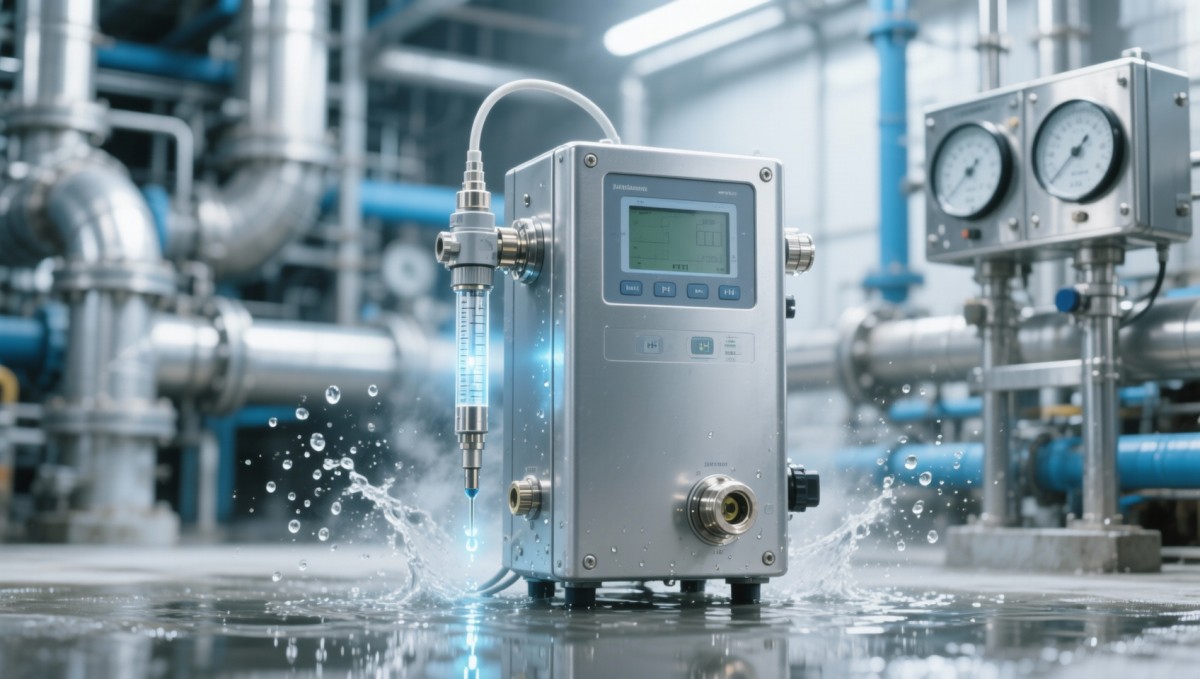
Silent electrode degradation directly compromises data validity across three high-stakes regulatory domains: effluent discharge reporting (EPA NPDES), drinking water safety (WHO Guideline 2022), and industrial stack emissions (EU Directive 2010/75/EU). In each case, measurement uncertainty must remain below defined thresholds—typically ±0.2 pH for Class I environmental monitoring per ISO/IEC 17025:2017 accreditation requirements.
A recent audit of 42 municipal wastewater facilities revealed that 31% had submitted non-auditable pH data to regulatory agencies due to unverified electrode performance. Of those, 76% used analyzers without integrated electrode health analytics—relying solely on scheduled maintenance rather than condition-based replacement.
This risk escalates in extreme environments: high-salinity influent (≥15,000 µS/cm), acidic scrubber solutions (pH <2.5), or high-temperature process streams (>50°C). Under such conditions, typical ISE service life drops from 6 months to under 8 weeks—yet 92% of procurement specifications omit thermal/salinity derating clauses.
Procurement Checklist: 5 Non-Negotiable Specifications for Reliable pH Monitoring
When sourcing online pH analyzers for mission-critical infrastructure, procurement teams must go beyond basic accuracy claims. GIC’s metrology team recommends verifying these five technical and contractual safeguards before issuing RFQs:
These criteria are not optional enhancements—they form the baseline for ISO 9001:2015 Clause 8.5.1 (Control of production and service provision) and align with IEC 61511-1 functional safety requirements for instrumented systems in hazardous areas.
Why Global Industrial Core Is Your Trusted Technical Sourcing Partner
Global Industrial Core does not sell instruments—we deliver verified, standards-aligned procurement intelligence. Our Instrument & Measurement pillar is staffed by certified metrologists (ISO/IEC 17025 Lead Auditors) and environmental compliance engineers who conduct independent bench testing, firmware forensic analysis, and field deployment benchmarking—not vendor-supplied datasheets.
We provide procurement directors with actionable deliverables: pre-vetted supplier shortlists compliant with CE/UL/IECEx directives; side-by-side comparison matrices validated against 12+ international standards; and custom RFQ language templates that enforce electrode health telemetry and derating transparency.
For your next water quality analyzer procurement cycle, contact GIC to receive: (1) a free electrode health telemetry compatibility assessment for your existing analyzer fleet; (2) a specification checklist tailored to your regulatory jurisdiction (EPA, EU, MEA, or APAC); and (3) access to our exclusive database of third-party test reports covering 47 ISE models across 11 manufacturers.
Technical Specifications
- How to Select Electronic Hotel Key Card Locks for Guest Rooms and Staff AreasAuthor :Safety Compliance Lead
- How to Select Lab Instruments for Reliable Chemical Analysis WorkflowsAuthor :Precision Metrology Expert
- How to Size a UPS for Server Rooms: Load, Runtime, and Redundancy FactorsAuthor :Grid Infrastructure Analyst
Expert Insights

Chief Security Architect
Dr. Thorne specializes in the intersection of structural engineering and digital resilience. He has advised three G7 governments on industrial infrastructure security.
Related Analysis
- Sep 17, 2026How to Select Electronic Hotel Key Card Locks for Guest Rooms and Staff AreasAuthor :Safety Compliance Lead
- Sep 16, 2026How to Select Lab Instruments for Reliable Chemical Analysis WorkflowsAuthor :Precision Metrology Expert
- Sep 15, 2026How to Size a UPS for Server Rooms: Load, Runtime, and Redundancy FactorsAuthor :Grid Infrastructure Analyst
Core Sector // 01
Security & Safety
- How to Size a Wafer Butterfly Valve for HVAC Chilled-Water and Heating LoopsAuthor :Environmental Engineering Director

- How Pressure Class and Joint Design Affect Long-Term Performance of Ductile Iron Pipes in Drainage InfrastructureAuthor :Environmental Engineering Director

- How Ductile Iron Pipe Joints Affect Installation Reliability and Leak ControlAuthor :Environmental Engineering Director

- How to Size Effluent Treatment Equipment for Variable Industrial Wastewater LoadsAuthor :Environmental Engineering Director

- US Battery Push Raises New Entry Rules for SuppliersAuthor :Environmental Engineering Director

- EU EMC Rule Tightens for Water Treatment ExportsAuthor :Environmental Engineering Director

- EU REACH Restriction Targets PFAS Water Treatment ImportsAuthor :Environmental Engineering Director

- EU Mandates EN 14113:2026 for Water Treatment ExportsAuthor :Environmental Engineering Director