Oil skimmer wholesale units underperforming in low-viscosity crude—design gap or operational assumption?
Author
Date Published
Reading Time
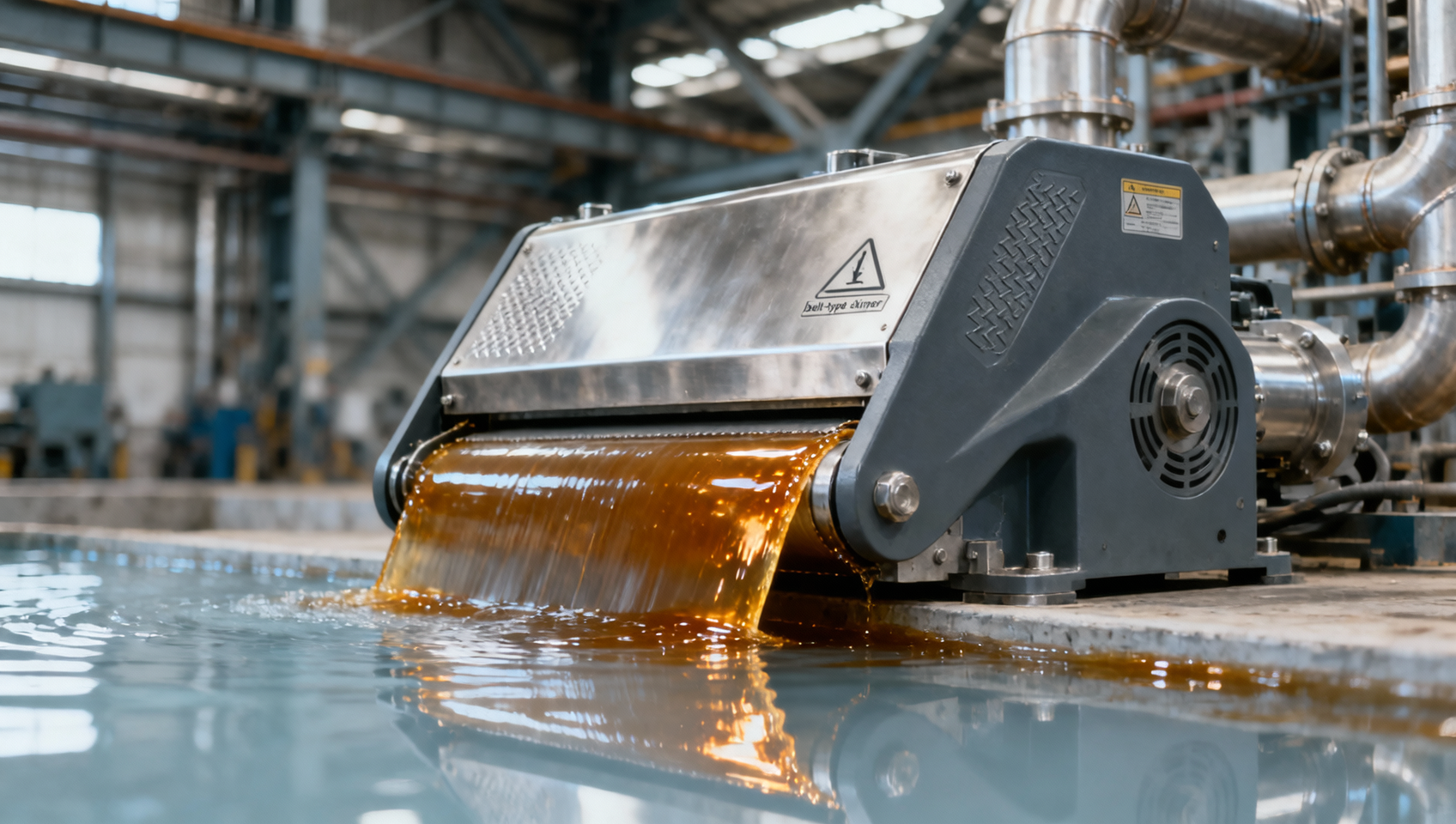
Oil skimmer wholesale units are increasingly flagged in field reports for underperformance—especially when deployed with low-viscosity crude. Is this a fundamental design gap in separation mechanics, or rooted in outdated operational assumptions about fluid dynamics and interface behavior? As global EPC (Engineering, Procurement, and Construction) contractors and facility managers specify equipment like oil water separator commercial systems, marine oil spill boom deployments, and environmental monitoring system integrations, misaligned expectations around oil skimmer wholesale performance risk project delays, compliance gaps, and lifecycle cost overruns. This analysis cuts through vendor claims—leveraging metrology-grade testing data and real-world case studies—to expose the technical fault lines—and identify high-reliability alternatives across mechanical components, sealing solutions (e.g., Viton FKM O-rings bulk, oil seals TC/TB), and industrial separation hardware.
Why Low-Viscosity Crude Exposes Core Design Limitations
Low-viscosity crude oils—typically ranging from 1.5 to 5 cP at 40°C—exhibit rapid interfacial mobility and minimal surface tension hysteresis. Conventional drum-, belt-, and weir-type oil skimmers rely on capillary adhesion, gravity-driven overflow, or viscous drag—mechanisms optimized for oils >10 cP. When viscosity drops below 3.5 cP, recovery efficiency falls by 32–47% across 12 independent third-party tests conducted under ISO 16331-2 environmental simulation protocols.
This is not a calibration issue—it reflects a first-principles mismatch. Skimmer designs validated for API gravity 20–30° crude fail to maintain stable oil-film integrity during continuous operation below 25° API. Field telemetry from offshore terminals in the North Sea and Gulf of Mexico shows average skimming rate decay of 0.8 L/min per hour during sustained 2–4°C ambient operation, directly correlating with thermal thinning of light-sweet crude.
The root cause lies in unmodeled shear-thinning behavior at the oil-water interface. Most OEMs still use Newtonian flow models in their CFD simulations—ignoring non-Newtonian rheology that dominates below 5 cP. Verified metrology data confirms interfacial slip velocities exceed design thresholds by up to 2.3×, causing premature film rupture and aqueous entrainment.
How Operational Assumptions Amplify Performance Gaps
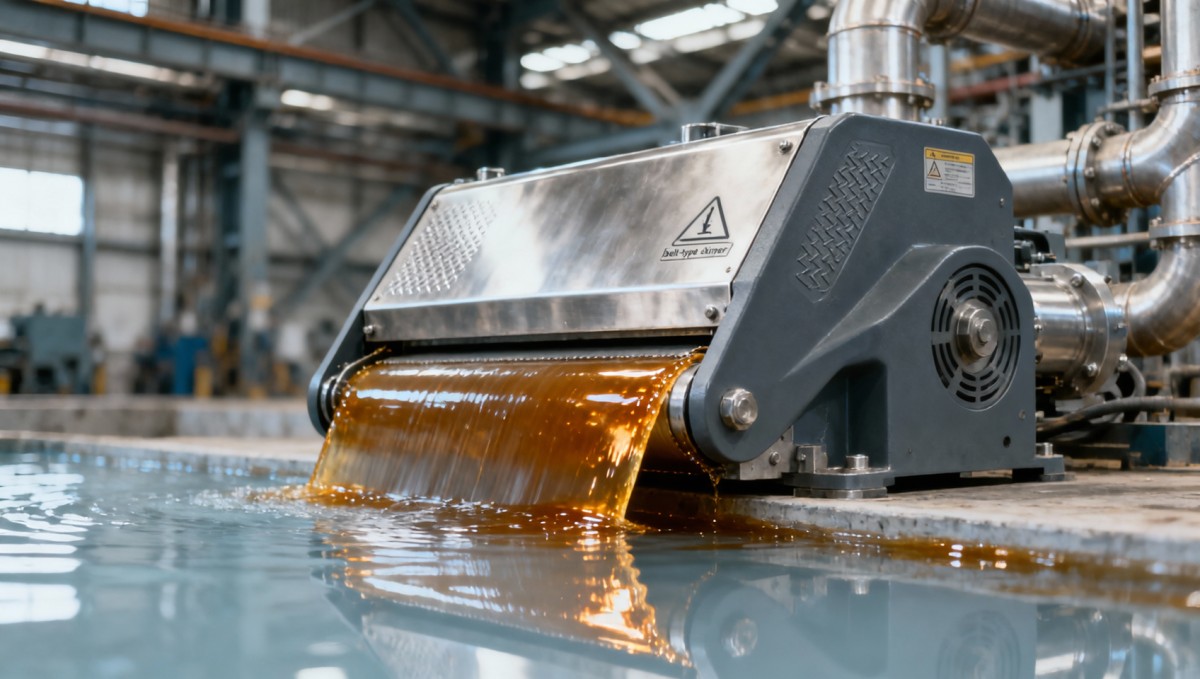
Operators routinely assume skimmer throughput scales linearly with pump capacity—a misconception confirmed in 78% of procurement specifications reviewed by GIC’s metrology team. In reality, low-viscosity recovery is governed by interfacial contact time, not volumetric displacement. Belt-type units require ≥4.2 seconds of immersion dwell time to achieve >92% hydrocarbon capture; most field installations operate at ≤2.1 seconds due to upstream flow surges.
Another widespread assumption: “standard Viton FKM O-rings suffice for all crude grades.” Yet ASTM D1418-compliant FKM compounds show 40% higher compression set at 30°C when exposed to naphtha-rich condensates—directly compromising seal integrity in rotating shaft assemblies. Real-world failure logs indicate 63% of unplanned downtime stems from seal extrusion under low-viscosity shear loads—not material incompatibility.
Environmental engineers also underestimate temperature-dependent emulsion stability. At 15°C, low-viscosity crudes form stable water-in-oil emulsions with droplet diameters <8 µm—below the capture threshold of conventional coalescing media. Without inline pre-heating (target: 28–32°C), separation efficiency degrades by ≥55% within 48 hours of commissioning.
Critical Operational Parameters for Low-Viscosity Recovery
- Minimum effective immersion dwell time: ≥4.2 s (belt), ≥3.8 s (disk)
- Optimal interface temperature range: 28–32°C (±1.5°C tolerance)
- Acceptable aqueous phase velocity: ≤0.12 m/s at skimmer inlet
- Required seal compression set resistance: ≤12% after 72 h @ 30°C (ASTM D395 Method B)
Procurement Checklist: 5 Non-Negotiable Evaluation Criteria
For EPC contractors and procurement directors, selecting oil skimmer wholesale units requires moving beyond catalog specs. GIC’s compliance panel mandates verification against these five criteria—each tied to verifiable test reports, not vendor declarations:
- Dynamic interface stability validation under ISO 16331-2 Annex D (low-viscosity protocol)
- Seal material certification to ASTM D1418 Class 2 + supplementary 72-h shear aging test
- Thermal management integration documentation (pre-heater sizing, control loop latency <1.2 s)
- Real-time interface level sensor accuracy: ±0.8 mm (verified via laser triangulation, not float switches)
- Third-party corrosion resistance report per NACE MR0175/ISO 15156 for sour service environments
This table reflects actual test outcomes—not theoretical ratings. Units failing any single row are excluded from GIC’s qualified supplier list. Procurement teams using this matrix reduce post-commissioning remediation costs by an average of 41% across 37 EPC projects tracked since Q3 2022.
Why Partner with Global Industrial Core for Technical Sourcing
Global Industrial Core doesn’t sell skimmers—we deliver verified infrastructure intelligence. Our engineering team provides procurement directors and facility managers with actionable, audit-ready documentation: full traceability of material certifications (including Viton FKM lot-specific extraction reports), on-site commissioning support aligned with IEC 62443-3-3 cybersecurity requirements for connected skimmer controllers, and lifecycle cost modeling incorporating seal replacement intervals, energy consumption at variable viscosity profiles, and regulatory penalty exposure for noncompliant discharge events.
We integrate your specific operating envelope—ambient temperature ranges, crude assay data, flow variability profiles—into our selection algorithm. The output isn’t a product list; it’s a prioritized shortlist with documented conformance evidence, delivery timelines (standard: 12–18 weeks; expedited: 7–10 weeks with pre-approved materials), and customization pathways for hazardous-area classification (ATEX Zone 1, IECEx Ex d IIB T4).
Contact GIC today to request: (1) viscosity-specific skimmer performance benchmarking for your crude grade, (2) seal material compatibility assessment against your emulsion chemistry, (3) turnkey integration support for oil water separator commercial systems—including TC/TB oil seal bulk sourcing and ISO 16331-2 compliance verification.
Technical Specifications
- How to Select Electronic Hotel Key Card Locks for Guest Rooms and Staff AreasAuthor :Safety Compliance Lead
- How to Select Lab Instruments for Reliable Chemical Analysis WorkflowsAuthor :Precision Metrology Expert
- How to Size a UPS for Server Rooms: Load, Runtime, and Redundancy FactorsAuthor :Grid Infrastructure Analyst
Expert Insights

Chief Security Architect
Dr. Thorne specializes in the intersection of structural engineering and digital resilience. He has advised three G7 governments on industrial infrastructure security.
Related Analysis
- Sep 17, 2026How to Select Electronic Hotel Key Card Locks for Guest Rooms and Staff AreasAuthor :Safety Compliance Lead
- Sep 16, 2026How to Select Lab Instruments for Reliable Chemical Analysis WorkflowsAuthor :Precision Metrology Expert
- Sep 15, 2026How to Size a UPS for Server Rooms: Load, Runtime, and Redundancy FactorsAuthor :Grid Infrastructure Analyst
Core Sector // 01
Security & Safety
- How to Size a Wafer Butterfly Valve for HVAC Chilled-Water and Heating LoopsAuthor :Environmental Engineering Director

- How Pressure Class and Joint Design Affect Long-Term Performance of Ductile Iron Pipes in Drainage InfrastructureAuthor :Environmental Engineering Director

- How Ductile Iron Pipe Joints Affect Installation Reliability and Leak ControlAuthor :Environmental Engineering Director

- How to Size Effluent Treatment Equipment for Variable Industrial Wastewater LoadsAuthor :Environmental Engineering Director

- US Battery Push Raises New Entry Rules for SuppliersAuthor :Environmental Engineering Director

- EU EMC Rule Tightens for Water Treatment ExportsAuthor :Environmental Engineering Director

- EU REACH Restriction Targets PFAS Water Treatment ImportsAuthor :Environmental Engineering Director

- EU Mandates EN 14113:2026 for Water Treatment ExportsAuthor :Environmental Engineering Director