Vietnam Enforces New Disclosure & Ban List for Biocides and Industrial Cleaners
Author
Date Published
Reading Time

Vietnam’s updated implementing regulations for the Agricultural Chemicals Management Decree, effective 1 May 2026, introduce mandatory full ingredient disclosure and a formal ban list for imported industrial biocides, pipe cleaning agents, and cooling tower algaecides. This development directly affects exporters of industrial water treatment chemicals and air purifier/dust control system auxiliaries — particularly those based in China — and signals a tightening of regulatory compliance requirements at Vietnam’s border.
Event Overview
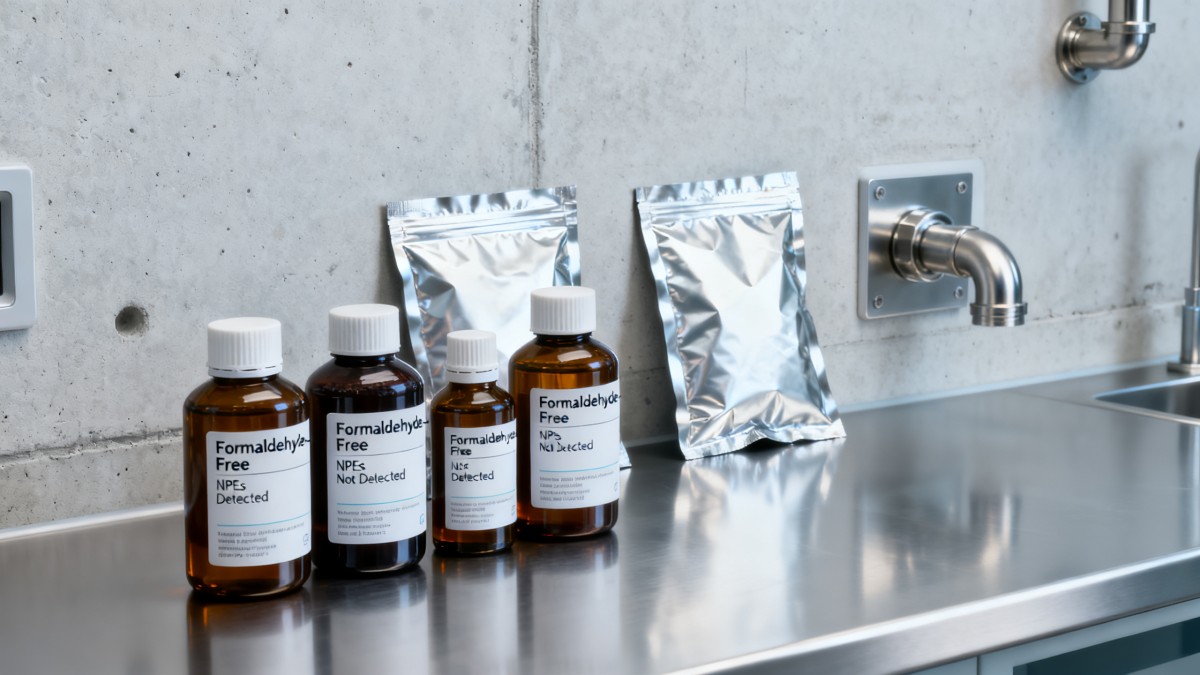
On 1 May 2026, Vietnam updated the implementing regulations of its Agricultural Chemicals Management Decree. The revision mandates that all imported industrial-grade disinfectants, pipeline cleaning agents, and cooling tower algaecides must clearly label their complete list of active ingredients and explicitly declare the absence of prohibited substances — including formaldehyde and nonylphenol ethoxylates (NPEs). Shipments failing to meet these labeling and composition disclosure requirements will be denied entry.
Industries Affected
Direct Exporters (Industrial Water Treatment & Air Purification Auxiliaries)
Manufacturers and traders exporting industrial water treatment chemicals or auxiliary agents for air purifiers and dust suppression equipment face immediate compliance risk. Since Vietnam now treats certain industrial biocides under the same regulatory framework as agricultural pesticides, products previously classified as ‘non-agricultural’ may now fall under mandatory registration and labeling obligations — especially if they contain active ingredients overlapping with the banned or restricted list.
Formulators & Contract Manufacturers
Companies outsourcing formulation or blending — particularly those supplying private-label or OEM products to Vietnamese importers — are affected through upstream accountability. Under the new rules, the importer bears legal responsibility for compliance, but is increasingly requiring full technical dossiers from suppliers, including certified composition statements and third-party test reports for listed prohibitions (e.g., NPEs, formaldehyde).
Supply Chain & Regulatory Compliance Service Providers
Agents, customs brokers, and regulatory consultants supporting chemical imports into Vietnam must now verify not only product classification and tariff codes, but also ingredient-level documentation. The requirement to disclose *all* active ingredients — not just those above threshold concentrations — raises the bar for dossier preparation and increases lead time for pre-shipment verification.
What Relevant Enterprises Should Monitor and Do Now
Track official guidance on scope interpretation
Analysis shows that the regulation references ‘industrial biocides’, but does not yet publish an exhaustive, legally binding definition distinguishing them from general-purpose cleaners. Enterprises should monitor updates from Vietnam’s Ministry of Agriculture and Rural Development (MARD) and General Department of Vietnam Customs for clarifications — particularly regarding whether pH adjusters, corrosion inhibitors, or dispersants without antimicrobial claims fall within the scope.
Review formulations against the prohibited substance list
Current more relevant action is verifying whether existing product formulas contain formaldehyde (including formaldehyde-releasing preservatives) or nonylphenol ethoxylates — both explicitly named. Even trace contaminants from raw materials or degradation pathways may trigger non-compliance; therefore, reviewing supplier CoAs and conducting targeted screening tests is advisable before shipment.
Prepare dual-labeling and documentation packages
Observably, many current export labels meet GHS or Chinese GB standards but omit full active ingredient percentages or include vague terms like ‘proprietary blend’. To align with Vietnam’s requirement, exporters should develop version-controlled technical labels specifying each active ingredient by INCI or CAS number, concentration range, and declaration of non-use for listed banned substances — supported by signed declarations and recent analytical reports.
Engage early with Vietnamese import partners on documentation handover
From industry perspective, Vietnamese importers are now liable for misdeclaration. Therefore, proactive alignment — including advance sharing of SDS, label drafts, and test reports — helps avoid last-minute rejections. Establishing a documented internal review checkpoint prior to bill-of-lading issuance is becoming standard practice among compliant exporters.
Editorial Perspective / Industry Observation
This update is better understood as a regulatory signal than an isolated enforcement milestone. Observably, Vietnam has been progressively harmonizing its chemical controls with ASEAN and EU frameworks — notably through stricter scrutiny of endocrine-disrupting substances like NPEs. The inclusion of formaldehyde and NPEs in a formal ‘ban + disclosure’ list suggests Vietnam is shifting toward preventive chemical governance, rather than reactive risk management. Analysis indicates this is less about immediate market closure and more about establishing traceability infrastructure: it lays groundwork for future substance-specific restrictions, digital submission portals, and possibly mandatory local agent registration — all likely to follow in subsequent amendments.
Conclusion
This regulation marks a step toward higher transparency and accountability in Vietnam’s industrial chemical import regime. It does not broadly prohibit industrial water treatment or air purification auxiliaries, but significantly raises the evidentiary and procedural bar for market access. Currently, it is more appropriately interpreted as an operational calibration point — requiring focused attention on formulation review, labeling precision, and documentation readiness — rather than a structural barrier to trade.
Source Attribution
Main source: Official Gazette of Vietnam, Implementing Regulations of the Agricultural Chemicals Management Decree (effective 1 May 2026).
Note: Interpretation of scope applicability to non-biocidal water treatment additives (e.g., scale inhibitors, chelants) remains pending formal guidance from MARD and is subject to ongoing monitoring.
Technical Specifications
- How to Select Electronic Hotel Key Card Locks for Guest Rooms and Staff AreasAuthor :Safety Compliance Lead
- How to Select Lab Instruments for Reliable Chemical Analysis WorkflowsAuthor :Precision Metrology Expert
- How to Size a UPS for Server Rooms: Load, Runtime, and Redundancy FactorsAuthor :Grid Infrastructure Analyst
Expert Insights

Chief Security Architect
Dr. Thorne specializes in the intersection of structural engineering and digital resilience. He has advised three G7 governments on industrial infrastructure security.
Related Analysis
- Sep 17, 2026How to Select Electronic Hotel Key Card Locks for Guest Rooms and Staff AreasAuthor :Safety Compliance Lead
- Sep 16, 2026How to Select Lab Instruments for Reliable Chemical Analysis WorkflowsAuthor :Precision Metrology Expert
- Sep 15, 2026How to Size a UPS for Server Rooms: Load, Runtime, and Redundancy FactorsAuthor :Grid Infrastructure Analyst
Core Sector // 01
Security & Safety
- How to Size a Wafer Butterfly Valve for HVAC Chilled-Water and Heating LoopsAuthor :Environmental Engineering Director

- How Pressure Class and Joint Design Affect Long-Term Performance of Ductile Iron Pipes in Drainage InfrastructureAuthor :Environmental Engineering Director

- How Ductile Iron Pipe Joints Affect Installation Reliability and Leak ControlAuthor :Environmental Engineering Director

- How to Size Effluent Treatment Equipment for Variable Industrial Wastewater LoadsAuthor :Environmental Engineering Director

- US Battery Push Raises New Entry Rules for SuppliersAuthor :Environmental Engineering Director

- EU EMC Rule Tightens for Water Treatment ExportsAuthor :Environmental Engineering Director

- EU REACH Restriction Targets PFAS Water Treatment ImportsAuthor :Environmental Engineering Director

- EU Mandates EN 14113:2026 for Water Treatment ExportsAuthor :Environmental Engineering Director