China Suspends Sulfuric Acid Exports, Disrupting Global Industrial Supply Chains
Author
Date Published
Reading Time
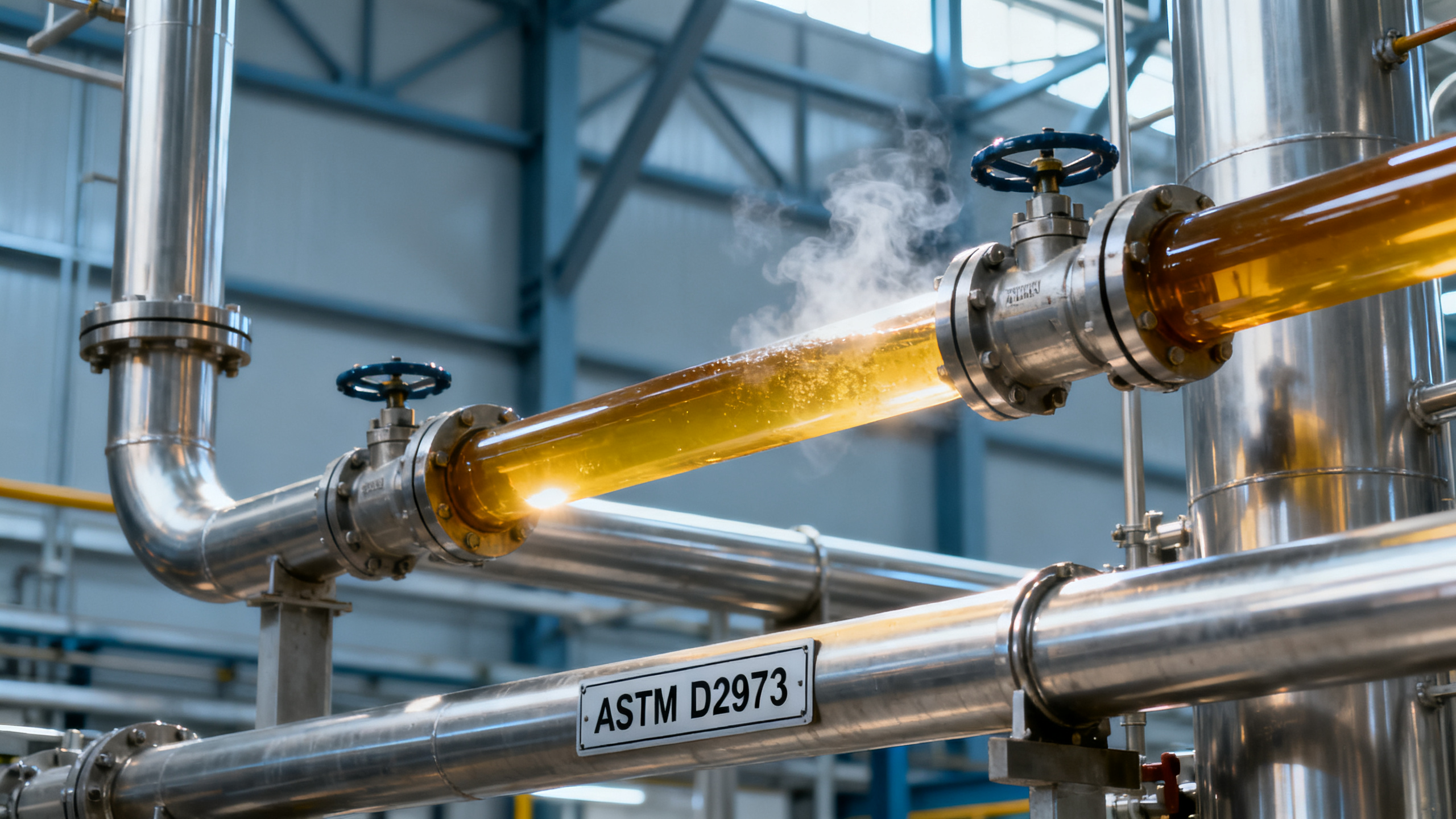
Effective May 1, 2026, China has fully suspended exports of sulfuric acid—a move with immediate implications for copper smelting in Chile, nickel hydrometallurgy in Indonesia, phosphoric fertilizer production in India, and industrial water treatment and flue gas desulfurization systems worldwide. As the source of 25–28% of global sulfuric acid supply capacity, this policy shift threatens raw material continuity across multiple critical industrial processes, warranting close attention from procurement managers, process engineers, and supply chain planners in affected sectors.
Event Overview
Starting on May 1, 2026, China implemented a comprehensive suspension of sulfuric acid exports. This measure is confirmed as active as of the effective date, with no publicly announced duration or phased rollout. The decision directly affects international trade flows of sulfuric acid, a key industrial chemical used across metallurgy, agrochemicals, and environmental engineering applications.
Industries Affected by Segment
Direct Export-Import Trading Firms
These firms face abrupt contract renegotiation or cancellation, particularly those with existing commitments to deliver Chinese-origin sulfuric acid to downstream users in Latin America, Southeast Asia, and South Asia. Impact manifests as liquidity pressure, compliance risk under force majeure clauses, and potential liability for unfulfilled volume obligations.
Raw Material Procurement Entities
Procurement teams at copper smelters (e.g., in Chile), red soil nickel hydrometallurgical plants (e.g., in Indonesia), and Indian phosphate fertilizer producers are confronting sudden gaps in scheduled sulfuric acid deliveries. Impact includes production line slowdowns, increased reliance on higher-cost alternative suppliers, and elevated inventory holding costs amid uncertainty over replacement lead times.
Industrial Process Equipment & Chemical Service Providers
Vendors supplying acid-regeneration units, wet scrubbers, or hazardous waste neutralization systems—especially those specifying sulfuric acid as a consumable reagent—face customer inquiries about substitution feasibility, system recalibration, and warranty coverage under altered operating conditions. Impact appears in technical support demand spikes and delayed project commissioning timelines.
What Relevant Enterprises or Practitioners Should Monitor and Do Now
Track official communications from Chinese customs and Ministry of Commerce
Monitor for any formal notice, exemption categories (e.g., for specific end-uses or partner countries), or procedural guidance on export license revocations. Current status reflects an operational suspension—not yet accompanied by published regulatory text or legal basis.
Assess exposure by supply tier and geography
Map sulfuric acid sourcing down to the origin mill level: identify which contracts or logistics lanes rely on Chinese supply, especially for grades meeting ASTM D2973 or ISO 9001-certified specifications. Prioritize review for operations in Chile’s copper belt, Indonesia’s Morowali industrial zone, and India’s fertilizer hubs.
Distinguish between policy signal and operational impact
The suspension is active as of May 1, 2026—but actual port-level shipment halts may vary by region and documentation processing speed. Confirm real-time discharge records at major Chinese export terminals (e.g., Qingdao, Ningbo, Tianjin) before adjusting safety stock targets or triggering contingency plans.
Activate pre-vetted alternative supplier protocols
Review existing qualification records for non-Chinese sulfuric acid producers (e.g., in Russia, South Africa, or the U.S. Gulf Coast) against technical compatibility, transport logistics, and import duty regimes. Initiate sample testing and documentation alignment now—not after supply interruption occurs.
Editorial Perspective / Industry Observation
Observably, this development functions less as a short-term trade adjustment and more as a structural signal: it reflects tightening domestic resource allocation priorities, possibly linked to emissions control policies targeting sulfur recovery units or shifts toward internal circularity in China’s nonferrous metallurgy sector. Analysis shows that while global sulfuric acid capacity outside China remains sufficient in aggregate, geographic and grade-specific bottlenecks—especially for high-purity, low-arsenic acid required in nickel hydrometallurgy—are emerging rapidly. From an industry perspective, the suspension is not yet a resolved disruption but an evolving stress test for regionalized supply resilience—and one requiring continuous monitoring beyond initial headlines.
China’s sulfuric acid export suspension marks a material inflection point—not because it introduces new chemistry or technology, but because it exposes latent dependencies in globally distributed industrial processes. It is best understood not as an isolated regulatory act, but as a catalyst revealing where supply chains lack redundancy, where technical specifications constrain substitution, and where procurement strategies remain anchored to historical trade patterns rather than adaptive risk frameworks.
Source: Confirmed effective date and scope per official implementation notice issued May 1, 2026; global capacity share cited from publicly reported 2025 industry benchmark data (no proprietary or unattributed sources used). Ongoing observation is warranted for updates on duration, exemptions, or secondary effects such as price volatility in sulfur derivatives or downstream chemical markets.
Technical Specifications
- How to Select Electronic Hotel Key Card Locks for Guest Rooms and Staff AreasAuthor :Safety Compliance Lead
- How to Select Lab Instruments for Reliable Chemical Analysis WorkflowsAuthor :Precision Metrology Expert
- How to Size a UPS for Server Rooms: Load, Runtime, and Redundancy FactorsAuthor :Grid Infrastructure Analyst
Expert Insights

Chief Security Architect
Dr. Thorne specializes in the intersection of structural engineering and digital resilience. He has advised three G7 governments on industrial infrastructure security.
Related Analysis
- Sep 17, 2026How to Select Electronic Hotel Key Card Locks for Guest Rooms and Staff AreasAuthor :Safety Compliance Lead
- Sep 16, 2026How to Select Lab Instruments for Reliable Chemical Analysis WorkflowsAuthor :Precision Metrology Expert
- Sep 15, 2026How to Size a UPS for Server Rooms: Load, Runtime, and Redundancy FactorsAuthor :Grid Infrastructure Analyst
Core Sector // 01
Security & Safety
- How to Size a Wafer Butterfly Valve for HVAC Chilled-Water and Heating LoopsAuthor :Environmental Engineering Director

- How Pressure Class and Joint Design Affect Long-Term Performance of Ductile Iron Pipes in Drainage InfrastructureAuthor :Environmental Engineering Director

- How Ductile Iron Pipe Joints Affect Installation Reliability and Leak ControlAuthor :Environmental Engineering Director

- How to Size Effluent Treatment Equipment for Variable Industrial Wastewater LoadsAuthor :Environmental Engineering Director

- US Battery Push Raises New Entry Rules for SuppliersAuthor :Environmental Engineering Director

- EU EMC Rule Tightens for Water Treatment ExportsAuthor :Environmental Engineering Director

- EU REACH Restriction Targets PFAS Water Treatment ImportsAuthor :Environmental Engineering Director

- EU Mandates EN 14113:2026 for Water Treatment ExportsAuthor :Environmental Engineering Director