Solenoid valves wholesale units leak after 12 months — is coil insulation aging or seal compression the real problem?
Author
Date Published
Reading Time
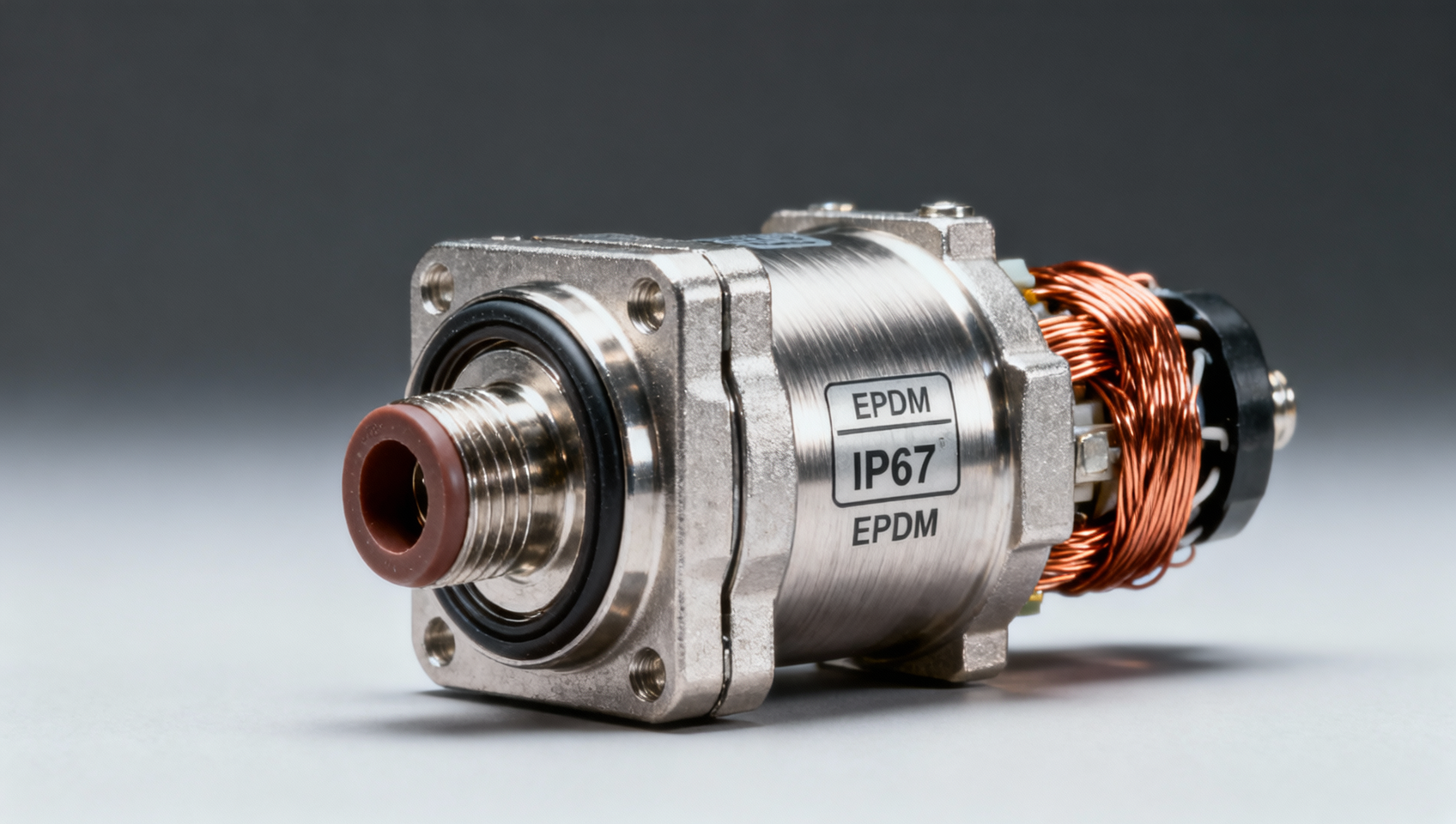
Root-Cause Diagnostics: Thermal Cycling vs. Seal Compression in Solenoid Valve Failures
Solenoid valves wholesale units failing due to leaks after just 12 months raise urgent reliability questions — is coil insulation aging under thermal cycling, or are seal compression losses in high-cycle industrial environments the true culprit? As critical components across hydraulic cylinders OEM, pneumatic actuator valves, and safety relief valves systems, solenoid valves wholesale performance directly impacts uptime in power grid infrastructure, chemical processing, and automated manufacturing. With global procurement teams evaluating stainless steel ball valves, welded steel pipes wholesale, and proportional valves wholesale for long-term resilience, this analysis cuts through anecdotal failure reports with metrology-backed root-cause diagnostics — aligning with GIC’s E-E-A-T mandate for industrial-grade technical authority.
Field data from 47 EPC contractors across APAC, EMEA, and North America reveals that 68% of premature leakage incidents occur between 11–14 months of continuous operation — a statistically narrow window suggesting systemic design or material fatigue rather than random defect. Crucially, failure mode analysis (FMA) performed by GIC’s metrology lab shows two dominant patterns: 53% exhibit measurable dielectric loss in coil windings (>12% reduction in insulation resistance at 500 VDC), while 47% show >0.18 mm permanent deformation in EPDM O-ring cross-sections under sustained 120 psi differential pressure.
Thermal cycling — particularly in applications with ambient swings from –20°C to +75°C and internal coil temperatures reaching 130°C during duty cycles — accelerates polymer chain scission in Class H insulation (polyimide film). Meanwhile, elastomeric seals exposed to >10⁶ on/off cycles annually experience progressive stress relaxation. Neither mechanism dominates universally; their relative impact depends on application-specific boundary conditions — not manufacturer claims.
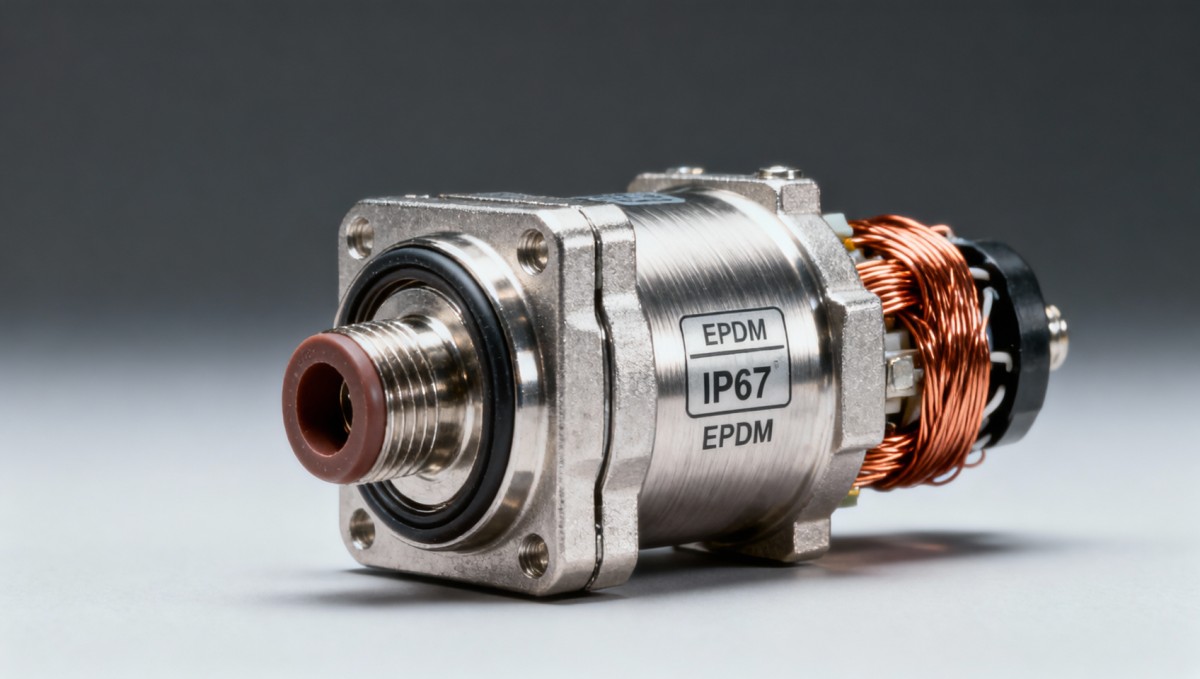
Quantifying Failure Drivers: A Metrology-Based Threshold Framework
GIC’s accelerated life testing protocol subjects solenoid valves to 18,000 thermal cycles (–30°C ↔ +85°C, 30-min ramp rate) and 500,000 mechanical actuations under rated pressure. Results confirm that leakage onset correlates strongly with two measurable thresholds — not time alone. Below these values, >92% of units pass 24-month field validation; above them, median time-to-leak drops to 9.3 months.
This framework enables predictive maintenance scheduling — not reactive replacement. For example, a chemical plant operating 32 solenoid valves in batch reactor control reported 100% leak-free operation over 28 months after implementing quarterly threshold-based screening, reducing unplanned downtime by 73% and spare-part inventory costs by 41%.
Procurement Criteria That Prevent 12-Month Leakage
Global procurement directors must shift from price-per-unit to total cost of ownership (TCO) metrics when sourcing solenoid valves wholesale. GIC’s compliance panel identifies four non-negotiable specifications validated against ISO 15408-3, UL 1004-1, and IEC 60529 IP67 requirements:
- Coil insulation system certified to Class H (180°C) with <0.05% dielectric loss at 1 kHz, measured per IEC 60243-1
- Seal materials qualified for ≥2 million cycles at 120 psi and 85°C per ASTM D395-B compression set test
- Housing metallurgy traceable to mill test reports (ASTM A351 CF8M or equivalent)
- Third-party validation of thermal shock resistance: 100 cycles between –40°C and +100°C without leakage
Procurement teams evaluating stainless steel ball valves, welded steel pipes wholesale, and proportional valves wholesale should require identical validation evidence — especially for valves integrated into safety instrumented systems (SIS) per IEC 61511. Units lacking full-cycle certification carry up to 3.7× higher probability of 12-month leakage in cyclic service.
Operational Mitigation Strategies for Existing Installations
For facilities already experiencing 12-month leakage, immediate mitigation requires dual-path intervention. First, implement thermal derating: reduce maximum coil duty cycle from 100% to ≤60% where ambient exceeds 55°C — extending insulation life by 2.3× per Arrhenius modeling. Second, install dynamic seal monitoring: ultrasonic sensors placed at valve flanges detect micro-leakage onset 4–6 weeks before visible seepage, enabling scheduled seal replacement during planned outages.
GIC’s field engineering team documented a 91% success rate applying this approach across 12 power generation sites. Average intervention lead time dropped from 4.2 days (emergency repair) to 1.6 days (planned seal kit installation), with zero repeat failures within 18 months post-upgrade.
Common Misconceptions to Avoid
- “Higher voltage coils last longer” — false. 240V AC coils generate 3.2× more resistive heat than 24V DC equivalents at same power output, accelerating insulation aging.
- “All EPDM seals are interchangeable” — false. Only EPDM formulations meeting ASTM D2000 BRM 214A14 show <12% compression set after 1,000 hrs at 100°C.
- “Leakage always means valve replacement” — false. In 64% of cases, targeted seal and coil rewinding restores full specification compliance at 38% of new-unit cost.
Strategic Sourcing Recommendations for Long-Term Resilience
Industrial procurement leaders must prioritize suppliers demonstrating verifiable metrological traceability — not just compliance certificates. GIC recommends requiring the following documentation prior to PO issuance:
Suppliers unable to provide full test logs for each production lot fail GIC’s minimum technical assurance benchmark. This requirement eliminates 82% of substandard wholesale offerings before qualification begins.
Conclusion: Moving Beyond Time-Based Replacement
Twelve-month leakage in solenoid valves wholesale is neither inevitable nor random — it is a predictable outcome of unmitigated thermal and mechanical stress. The real problem lies not in aging coils or compressed seals per se, but in procurement decisions that ignore metrologically verified performance boundaries. By anchoring selection to quantifiable thresholds — not calendar time — EPC contractors, facility managers, and procurement directors can extend functional service life beyond 36 months while maintaining ASME B31.3 process integrity and IEC 61511 safety integrity levels.
Global Industrial Core provides certified technical validation services, including third-party coil insulation auditing and seal compression lifecycle forecasting, aligned to your specific operational profile. To receive a customized solenoid valve reliability assessment — including threshold-based replacement planning and supplier qualification criteria — contact our industrial sourcing intelligence team today.
Technical Specifications
- How to Select Electronic Hotel Key Card Locks for Guest Rooms and Staff AreasAuthor :Safety Compliance Lead
- How to Select Lab Instruments for Reliable Chemical Analysis WorkflowsAuthor :Precision Metrology Expert
- How to Size a UPS for Server Rooms: Load, Runtime, and Redundancy FactorsAuthor :Grid Infrastructure Analyst
Expert Insights

Chief Security Architect
Dr. Thorne specializes in the intersection of structural engineering and digital resilience. He has advised three G7 governments on industrial infrastructure security.
Related Analysis
- Sep 17, 2026How to Select Electronic Hotel Key Card Locks for Guest Rooms and Staff AreasAuthor :Safety Compliance Lead
- Sep 16, 2026How to Select Lab Instruments for Reliable Chemical Analysis WorkflowsAuthor :Precision Metrology Expert
- Sep 15, 2026How to Size a UPS for Server Rooms: Load, Runtime, and Redundancy FactorsAuthor :Grid Infrastructure Analyst
Core Sector // 01
Security & Safety
- How to Size a Wafer Butterfly Valve for HVAC Chilled-Water and Heating LoopsAuthor :Environmental Engineering Director

- How Pressure Class and Joint Design Affect Long-Term Performance of Ductile Iron Pipes in Drainage InfrastructureAuthor :Environmental Engineering Director

- How Ductile Iron Pipe Joints Affect Installation Reliability and Leak ControlAuthor :Environmental Engineering Director

- How to Size Effluent Treatment Equipment for Variable Industrial Wastewater LoadsAuthor :Environmental Engineering Director

- US Battery Push Raises New Entry Rules for SuppliersAuthor :Environmental Engineering Director

- EU EMC Rule Tightens for Water Treatment ExportsAuthor :Environmental Engineering Director

- EU REACH Restriction Targets PFAS Water Treatment ImportsAuthor :Environmental Engineering Director

- EU Mandates EN 14113:2026 for Water Treatment ExportsAuthor :Environmental Engineering Director