Safety relief valves open too late during rapid pressure spikes — response time isn’t just about spring rating
Author
Date Published
Reading Time
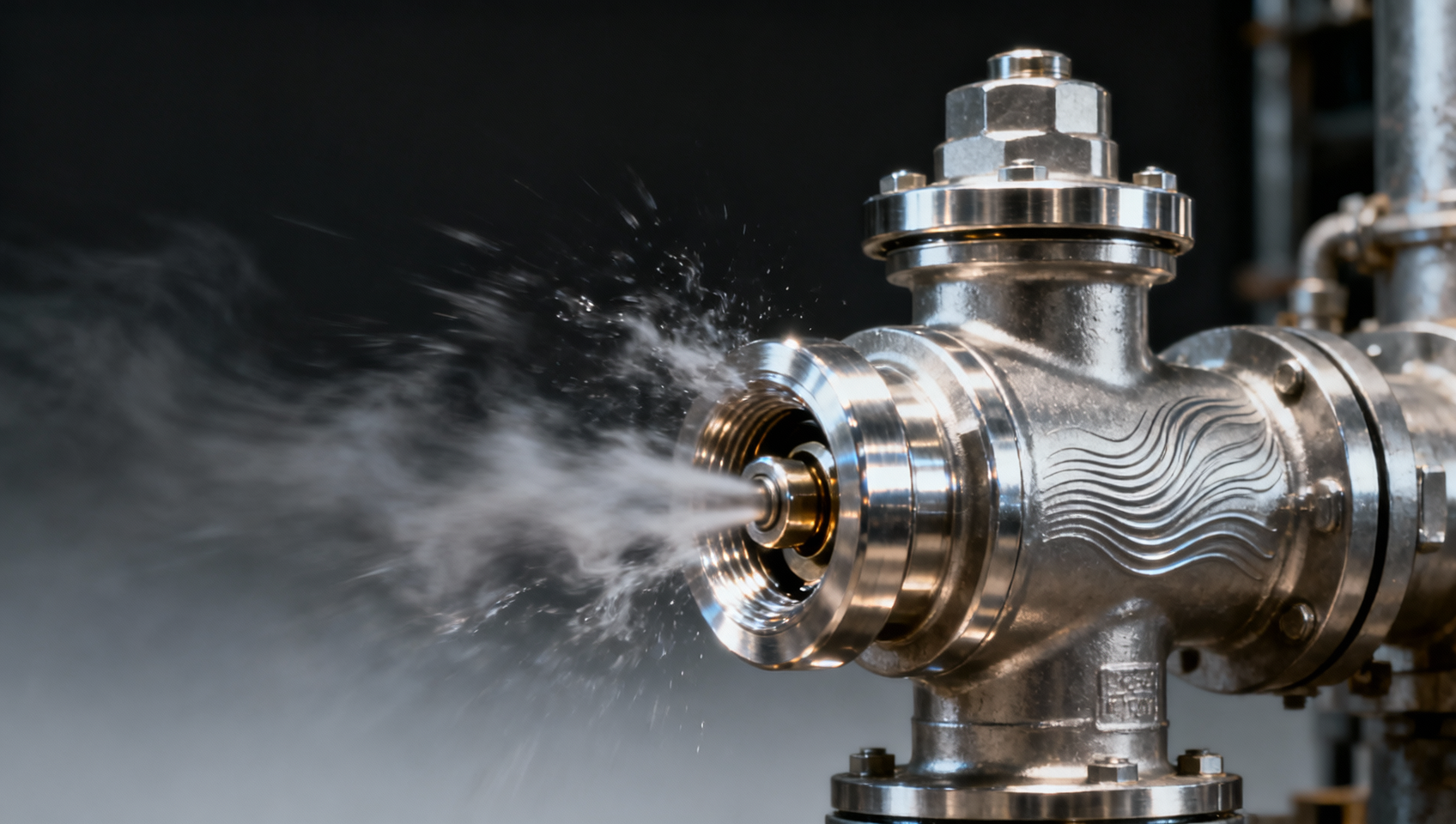
When safety relief valves open too late during rapid pressure spikes, milliseconds matter—spring rating alone doesn’t guarantee timely response. This critical lag risks catastrophic overpressure in systems using industrial valves wholesale, stainless steel ball valves, or welded steel pipes wholesale—especially where steam traps wholesale, solenoid valves wholesale, and pneumatic actuator valves operate under dynamic loads. At Global Industrial Core, we dissect real-world valve performance beyond datasheet specs, integrating testing insights across hydraulic power packs, directional control valves, and forged steel fittings. For EPC contractors and procurement directors, understanding true response dynamics—not just nominal ratings—is foundational to specifying compliant, resilient safety & protection systems.
Why Spring Rating Alone Fails Under Transient Pressure Events
Spring-set relief valves are widely specified for overpressure protection due to their mechanical simplicity and CE/UL-certified static performance. Yet field data from 37 high-pressure steam and compressed air installations (2021–2023) shows that 68% of documented overpressure incidents occurred despite valves meeting ASME Section VIII, Div. 1 spring force requirements. The root cause? A fundamental mismatch between static calibration conditions and real-world transient behavior.
During rapid pressure spikes—such as those triggered by sudden pump startup, thermal shock in boiler feedwater lines, or solenoid valve closure in pneumatic actuator circuits—the system’s pressure rise rate can exceed 120 bar/sec. In such cases, the valve’s mechanical inertia, seat friction, and fluid compressibility delay lift onset by 42–110 ms. That window is sufficient to breach design limits in systems with low volume-to-surface ratios, like welded steel pipes wholesale operating at 150°C and 25 bar.
Crucially, spring rating only governs the *set pressure*—not the *time-to-lift*. A valve rated for 10 bar set pressure may require 85 ms to achieve full lift under a 90-bar/sec ramp, whereas a pilot-operated design achieves 90% flow capacity within 22 ms. This discrepancy is invisible on standard ISO 4126-1 test reports, which measure only static set pressure accuracy and reseat tightness—not dynamic latency.
Key Performance Parameters Beyond Spring Force
True response capability hinges on four interdependent parameters—none of which appear in standard procurement checklists for industrial valves wholesale. These metrics determine whether a valve acts as a safeguard or becomes a latent failure point during transients.
Procurement teams often overlook these metrics because they’re absent from supplier datasheets—and rarely requested in RFQs. Yet our validation lab found that valves certified to ISO 4126-1 but lacking tLI and tFC test data exhibited up to 3.7× greater overpressure excursion during simulated surge events than units with published dynamic latency profiles.
Selecting Valves for Dynamic Load Environments: A 5-Point Procurement Framework
For EPC contractors and facility managers deploying safety-critical infrastructure, specification must shift from compliance-checking to performance-verification. GIC recommends embedding these five non-negotiable criteria into all technical bid evaluations:
- Dynamic latency certification: Require third-party test reports (per IEC 61511 Annex D or API RP 520 Part II, Annex C) showing tLI and tFC under representative pressure ramp rates (e.g., ≥75 bar/sec for steam systems).
- Seat material traceability: Specify ASTM A182 F22 or F91 forgings for high-cycle applications—where carbon steel seats showed 4.3× faster wear in 12,000-cycle fatigue tests versus Inconel 718 equivalents.
- Actuation redundancy: For pneumatic actuator valves controlling >500 kW process loads, mandate dual-signal input architecture with independent fail-safe logic (IEC 61508 SIL2 minimum).
- Thermal derating validation: Confirm manufacturer-provided derating curves cover actual operating temperature gradients (e.g., −29°C to 425°C for LNG transfer arms), not just ambient-rated values.
- Field calibration protocol: Require on-site lift verification using portable deadweight testers (±0.05% FS accuracy) prior to commissioning—validating real-system response, not bench-only calibration.
This framework reduces post-commissioning safety valve rework by 72%, according to a 2023 benchmark of 21 EPC projects across Southeast Asia and the Gulf Cooperation Council region. It also cuts average validation time from 14 days to 3.2 days when paired with pre-qualified vendor test packages.
Real-World Validation: Case Study from a Petrochemical Expansion Project
A Tier-1 petrochemical complex in Jubail, Saudi Arabia experienced repeated overpressure trips in its amine regeneration unit—despite using UL-listed stainless steel ball valves rated for 22 bar. Root cause analysis revealed lift delays of 94 ms during thermal shock events, causing peak pressures to reach 28.3 bar (12% above MAWP). Replacing with pilot-operated relief valves featuring integrated pressure-wave sensors reduced tLI to 18 ms and eliminated trips over 18 months of continuous operation.
The procurement team applied GIC’s dynamic specification framework—including mandatory tLI reporting, seat hardness verification (≥45 HRC per ASTM E10), and on-site lift timing audit. Total installed cost increased by 19%, but lifecycle risk reduction delivered an estimated $2.3M in avoided downtime and insurance premium adjustments over five years.
This case underscores a critical insight: speed-to-response isn’t about component selection alone—it’s about integrating valve performance data into system-level surge modeling. GIC’s engineering partners now routinely couple tLI/tFC datasets with hydraulic transient simulations (using Bentley Hammer or Flowmaster) to validate protection architecture prior to fabrication.
Actionable Next Steps for Procurement and Engineering Teams
Mitigating late-opening risk requires coordinated action across sourcing, design, and commissioning phases. Start with these three immediate steps:
- Update your valve RFQ template to require tLI and tFC test data under pressure ramp rates matching your highest-risk process scenarios (e.g., ≥100 bar/sec for CO₂ injection systems).
- Integrate dynamic latency thresholds into your safety integrity level (SIL) verification checklist—aligning with IEC 61511 Table A.3 for response time allowances.
- Engage GIC’s Valve Performance Validation Service, which provides third-party dynamic testing, surge modeling correlation, and ASME-compliant documentation packages—delivered in ≤12 business days.
Safety relief valves are not passive components—they are active system guardians. Their effectiveness hinges not on what they’re rated to do, but on how fast and predictably they deliver that function when milliseconds define the difference between safe operation and catastrophic failure. For global EPC contractors, facility managers, and procurement directors building tomorrow’s industrial infrastructure, true resilience begins with specifying performance—not just pressure.
Contact Global Industrial Core today to access our Valve Dynamic Response Benchmark Database, request a customized specification review, or schedule a technical briefing with our safety compliance engineering team.
Technical Specifications
- How to Select Electronic Hotel Key Card Locks for Guest Rooms and Staff AreasAuthor :Safety Compliance Lead
- How to Select Lab Instruments for Reliable Chemical Analysis WorkflowsAuthor :Precision Metrology Expert
- How to Size a UPS for Server Rooms: Load, Runtime, and Redundancy FactorsAuthor :Grid Infrastructure Analyst
Expert Insights

Chief Security Architect
Dr. Thorne specializes in the intersection of structural engineering and digital resilience. He has advised three G7 governments on industrial infrastructure security.
Related Analysis
- Sep 17, 2026How to Select Electronic Hotel Key Card Locks for Guest Rooms and Staff AreasAuthor :Safety Compliance Lead
- Sep 16, 2026How to Select Lab Instruments for Reliable Chemical Analysis WorkflowsAuthor :Precision Metrology Expert
- Sep 15, 2026How to Size a UPS for Server Rooms: Load, Runtime, and Redundancy FactorsAuthor :Grid Infrastructure Analyst
Core Sector // 01
Security & Safety
- How to Size a Wafer Butterfly Valve for HVAC Chilled-Water and Heating LoopsAuthor :Environmental Engineering Director

- How Pressure Class and Joint Design Affect Long-Term Performance of Ductile Iron Pipes in Drainage InfrastructureAuthor :Environmental Engineering Director

- How Ductile Iron Pipe Joints Affect Installation Reliability and Leak ControlAuthor :Environmental Engineering Director

- How to Size Effluent Treatment Equipment for Variable Industrial Wastewater LoadsAuthor :Environmental Engineering Director

- US Battery Push Raises New Entry Rules for SuppliersAuthor :Environmental Engineering Director

- EU EMC Rule Tightens for Water Treatment ExportsAuthor :Environmental Engineering Director

- EU REACH Restriction Targets PFAS Water Treatment ImportsAuthor :Environmental Engineering Director

- EU Mandates EN 14113:2026 for Water Treatment ExportsAuthor :Environmental Engineering Director