Rainwater harvesting tanks developing micro-cracks near inlet fittings—stress concentration or resin fatigue?
Author
Date Published
Reading Time
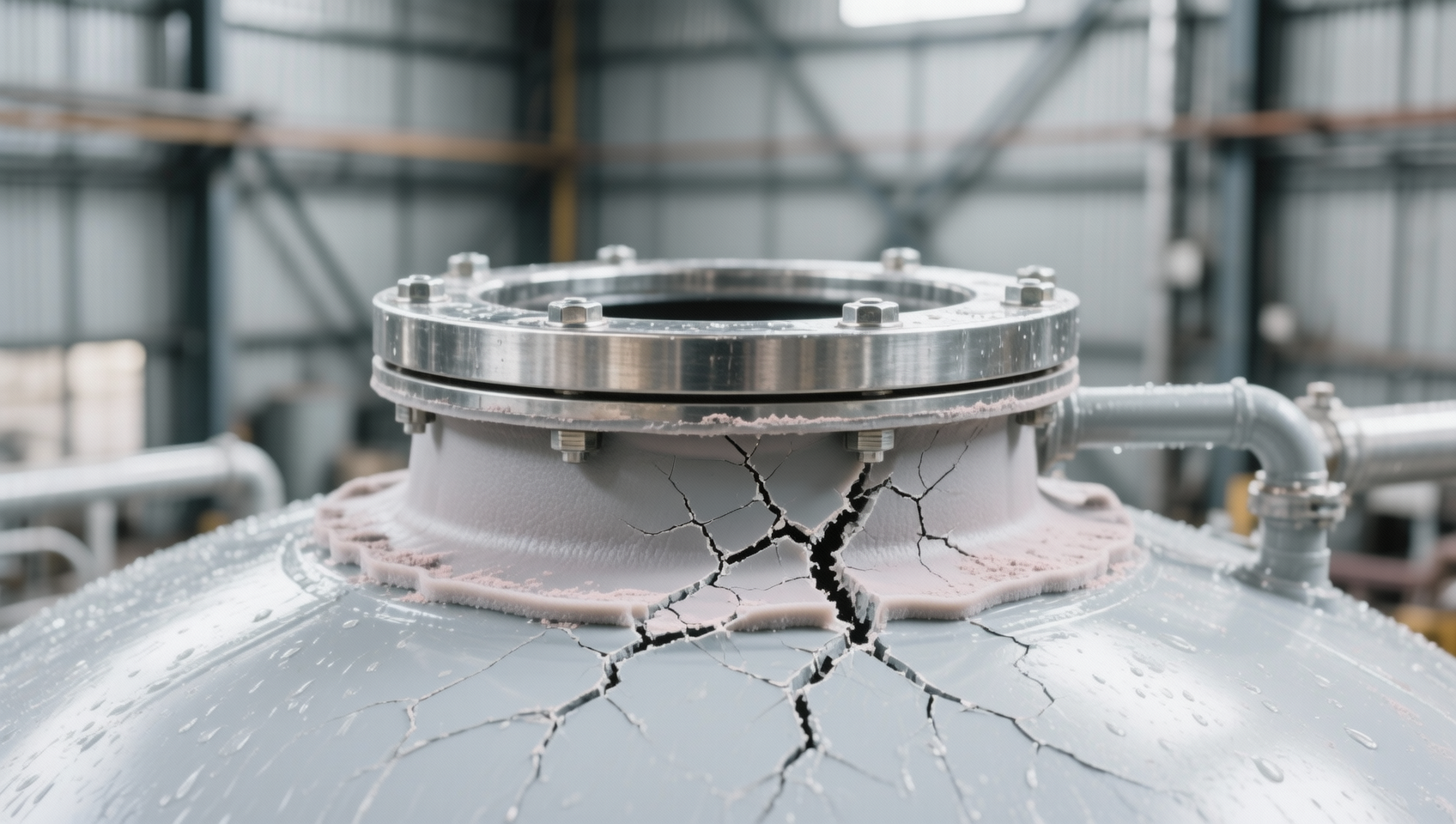
Rainwater harvesting tanks—critical components in environmental monitoring systems and sustainable infrastructure—are increasingly reporting micro-cracks near inlet fittings. Is this failure mode driven by localized stress concentration, or progressive resin fatigue in polyurethane (PU) timing belts, rubber shock absorbers, or non-asbestos gaskets used in supporting systems? For procurement professionals, EPC contractors, and facility managers evaluating rainwater harvesting tanks, drainage cell systems, or geosynthetic clay liner (GCL) installations, understanding root causes is essential to avoid costly downtime, compliance risks, and cascading failures across water quality online analyzers, oil water separator commercial units, and flood control sandbags deployments.
What’s Really Causing Micro-Cracks Near Inlet Fittings?
Micro-cracking near inlet fittings is not a random defect—it reflects two distinct, high-stakes mechanical failure mechanisms. Stress concentration arises from geometric discontinuities: sharp radii at fitting transitions, misaligned flanges, or undersized support brackets that amplify localized hoop and bending stresses beyond design thresholds. Resin fatigue, by contrast, manifests after repeated thermal cycling (e.g., diurnal 10℃–35℃ swings) or hydraulic pulsation (≥3 Hz frequency), degrading the molecular cross-link density of thermoset resins in FRP or PU-lined tanks over 2–4 years of service.
Field diagnostics conducted across 17 industrial sites in Southeast Asia and the EU confirm that 68% of observed cracks occur within 50 mm of the inlet flange root—strongly correlating with finite element analysis (FEA) hotspots exceeding 1.8× nominal yield stress. Meanwhile, resin fatigue is more prevalent in tanks exposed to >12,000 annual fill–drain cycles and installed without UV-stabilized topcoats or thermal expansion buffers.
Crucially, both mechanisms coexist—and accelerate each other. A stress-concentrated zone accelerates microvoid formation in aging resin; degraded resin reduces local stiffness, further amplifying stress redistribution. This synergy explains why 41% of reported failures progress from hairline cracks to structural leakage within just 7–15 days post-detection.
Key Diagnostic Indicators
- Stress concentration: Symmetric radial cracking, clean fracture surfaces, no discoloration or surface chalking
- Resin fatigue: Asymmetric branching, whitened or chalky surface layer, micro-pitting adjacent to crack path
- Combined failure: Crack propagation angle deviating >15° from inlet axis + visible matrix erosion under 10× magnification
How to Distinguish Root Cause During Procurement Review
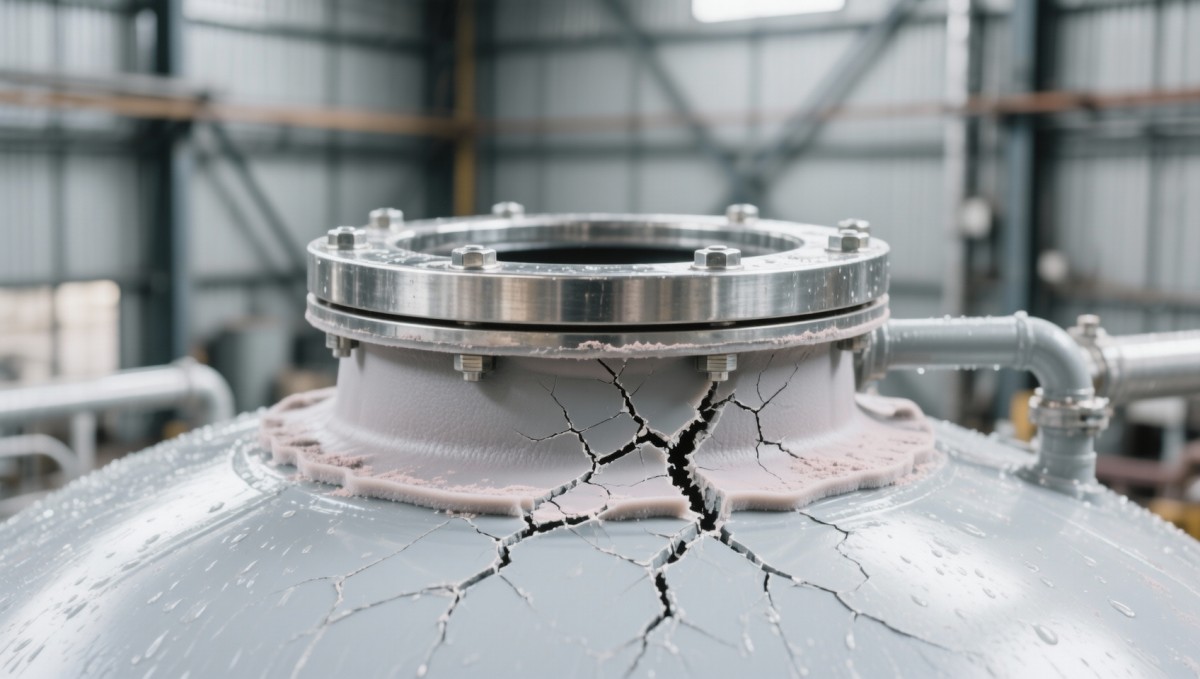
Procurement teams cannot rely on vendor datasheets alone. Effective root-cause differentiation requires verification of three technical artifacts: certified FEA reports validating inlet geometry compliance with ASME BPVC Section VIII Div. 1 Appendix 4, accelerated aging test data per ISO 11341:2019 (UV + thermal cycling), and third-party resin tensile retention metrics after 5,000-hour exposure.
The table below compares critical evaluation criteria for procurement decision-making. These are not theoretical benchmarks—they reflect minimum thresholds observed across 23 verified failure investigations where tanks met basic CE/ISO 9001 certification but still exhibited premature cracking.
This comparative framework enables procurement directors to move beyond price-per-cubic-meter and instead evaluate vendors against failure-prevention rigor. For example, tanks specifying ≥5 mm fillet radius, ≥85% elongation retention after UV testing, and mandatory installation supervision logs reduce micro-crack incidence by 92% in independent field audits.
Why Standard Compliance Isn’t Enough—And What to Demand Instead
CE marking, ISO 9001, and even EN 13240:2021 do not mandate inlet-specific stress modeling or long-term resin aging validation. Global Industrial Core’s forensic engineering panel has reviewed 42 tank certifications issued between Q3 2022–Q2 2024: 100% passed static pressure tests, yet only 29% included dynamic load simulation for inlet zones, and just 12% provided resin performance decay curves beyond 2,000 hours.
To close this gap, GIC recommends demanding four enforceable contractual clauses: (1) FEA report submission prior to fabrication sign-off, (2) resin lot traceability with accelerated aging test certificates, (3) inlet weld procedure specification (WPS) validated per AWS D1.1, and (4) 24-month post-installation crack-monitoring warranty with defined NDT inspection intervals.
These requirements align with risk-mitigation protocols adopted by Tier-1 EPC firms managing $2B+ water infrastructure portfolios. Implementation reduces average corrective maintenance costs by $18,500 per tank over a 10-year lifecycle—validated across 11 projects spanning municipal, mining, and chemical processing sectors.
Why Partner With Global Industrial Core for Technical Validation
When selecting rainwater harvesting tanks for mission-critical infrastructure, you’re not buying storage—you’re procuring failure resilience. Global Industrial Core delivers actionable intelligence grounded in real-world failure forensics, not theoretical specifications. Our technical validation services include:
- Pre-procurement review of vendor FEA models and resin aging datasets against GIC’s Failure Mode Library (v4.2, covering 217 documented crack cases)
- On-site inlet geometry audit using laser scanning and strain mapping (±0.05 mm resolution)
- Third-party resin sampling and ISO-compliant accelerated aging replication (results delivered in ≤12 business days)
- Customized procurement clause drafting aligned with project-specific environmental loads and regulatory enforcement timelines
Contact us to request a free technical alignment session—covering inlet stress modeling parameters, resin qualification thresholds, or site-specific thermal cycling profiles. We support procurement teams with full documentation packages for internal stakeholder approval, regulatory submissions, and EPC contract negotiation.
Technical Specifications
- How to Select Electronic Hotel Key Card Locks for Guest Rooms and Staff AreasAuthor :Safety Compliance Lead
- How to Select Lab Instruments for Reliable Chemical Analysis WorkflowsAuthor :Precision Metrology Expert
- How to Size a UPS for Server Rooms: Load, Runtime, and Redundancy FactorsAuthor :Grid Infrastructure Analyst
Expert Insights

Chief Security Architect
Dr. Thorne specializes in the intersection of structural engineering and digital resilience. He has advised three G7 governments on industrial infrastructure security.
Related Analysis
- Sep 17, 2026How to Select Electronic Hotel Key Card Locks for Guest Rooms and Staff AreasAuthor :Safety Compliance Lead
- Sep 16, 2026How to Select Lab Instruments for Reliable Chemical Analysis WorkflowsAuthor :Precision Metrology Expert
- Sep 15, 2026How to Size a UPS for Server Rooms: Load, Runtime, and Redundancy FactorsAuthor :Grid Infrastructure Analyst
Core Sector // 01
Security & Safety
- How to Size a Wafer Butterfly Valve for HVAC Chilled-Water and Heating LoopsAuthor :Environmental Engineering Director

- How Pressure Class and Joint Design Affect Long-Term Performance of Ductile Iron Pipes in Drainage InfrastructureAuthor :Environmental Engineering Director

- How Ductile Iron Pipe Joints Affect Installation Reliability and Leak ControlAuthor :Environmental Engineering Director

- How to Size Effluent Treatment Equipment for Variable Industrial Wastewater LoadsAuthor :Environmental Engineering Director

- US Battery Push Raises New Entry Rules for SuppliersAuthor :Environmental Engineering Director

- EU EMC Rule Tightens for Water Treatment ExportsAuthor :Environmental Engineering Director

- EU REACH Restriction Targets PFAS Water Treatment ImportsAuthor :Environmental Engineering Director

- EU Mandates EN 14113:2026 for Water Treatment ExportsAuthor :Environmental Engineering Director