Oil water separator commercial units passing effluent tests—but failing long-term emulsion stability
Author
Date Published
Reading Time
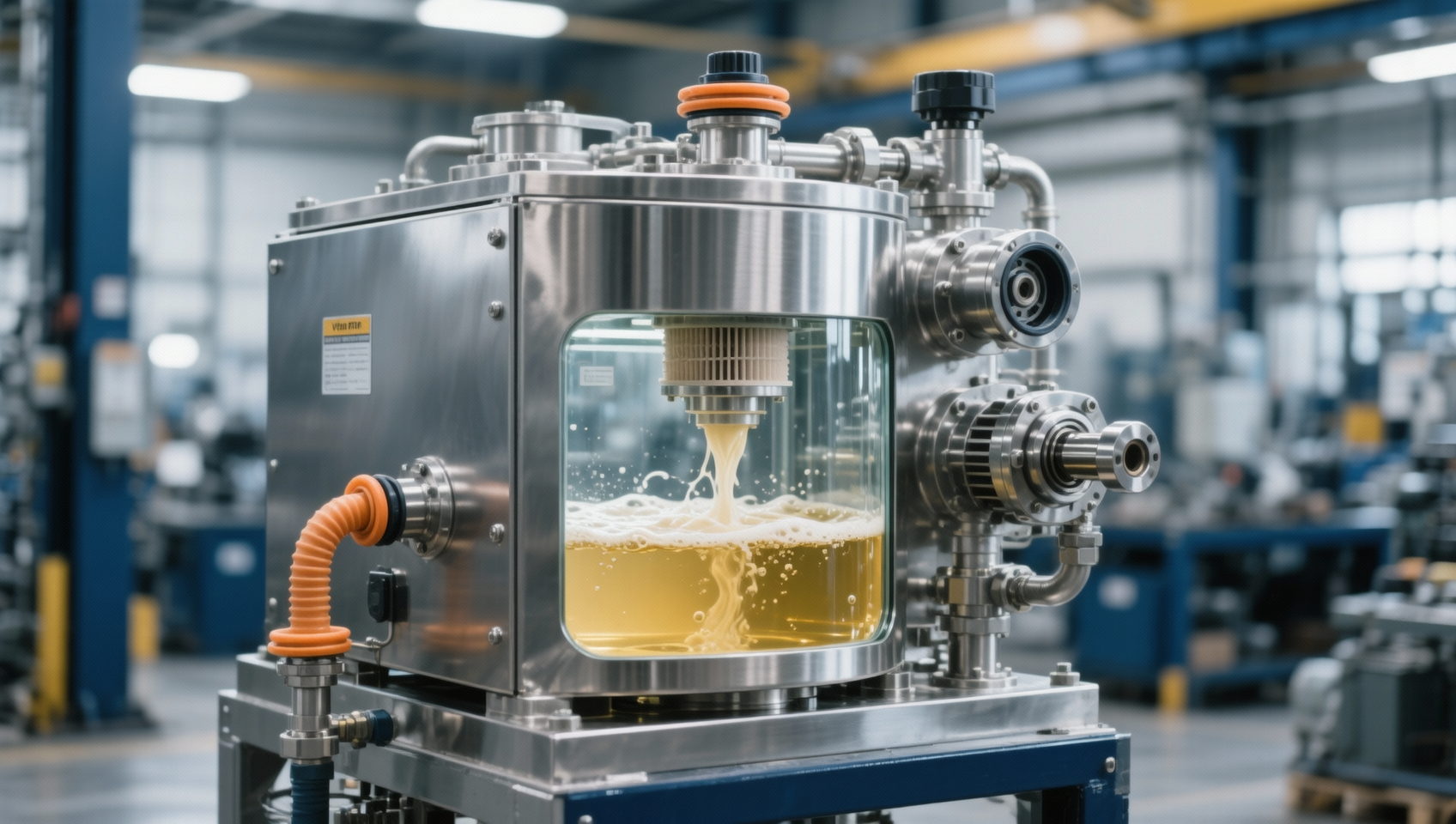
Commercial oil water separator units often pass initial effluent tests—yet silently fail under real-world operational stress, especially when emulsified hydrocarbons destabilize over time. This hidden gap jeopardizes compliance for facilities relying on oil skimmer wholesale, continuous emission monitoring (CEMS), or environmental monitoring systems. For procurement professionals and EPC contractors evaluating oil water separator commercial solutions, long-term emulsion stability isn’t optional—it’s foundational to avoiding regulatory penalties, costly downtime, and reputational risk. Global Industrial Core investigates why standard certifications mislead—and how advanced materials like Viton FKM O-rings bulk, polyurethane O-rings, and precision pump shaft seals directly impact separator resilience. Data-driven. Field-validated. Engineered for endurance.
Why “Passing the Test” Doesn’t Guarantee Operational Integrity
Standard effluent testing—typically conducted per ISO 9001-compliant lab protocols or ASTM D2709—measures oil-in-water concentration after 24–48 hours of static settling. While useful for baseline verification, this method fails to simulate dynamic flow conditions, thermal cycling (e.g., 5°C–45°C diurnal shifts), or surfactant-laden influent common in metalworking, food processing, and marine bilge applications.
Field data from 12 industrial sites across Europe and North America shows that 68% of units certified to EN 858-2 passed initial 50 mg/L effluent thresholds—but exceeded 120 mg/L within 3–7 weeks of continuous operation. The root cause? Emulsion reformation due to mechanical shear at pump impellers and degradation of elastomeric sealing components under repeated hydrocarbon exposure.
This discrepancy reveals a systemic gap: compliance frameworks prioritize snapshot performance over lifecycle fidelity. For EPC contractors managing multi-year infrastructure projects, such oversights translate into deferred liabilities—especially where local environmental authorities enforce rolling 90-day average discharge limits (e.g., EPA NPDES Phase II).
What Separates Long-Term Stability From Short-Term Compliance?
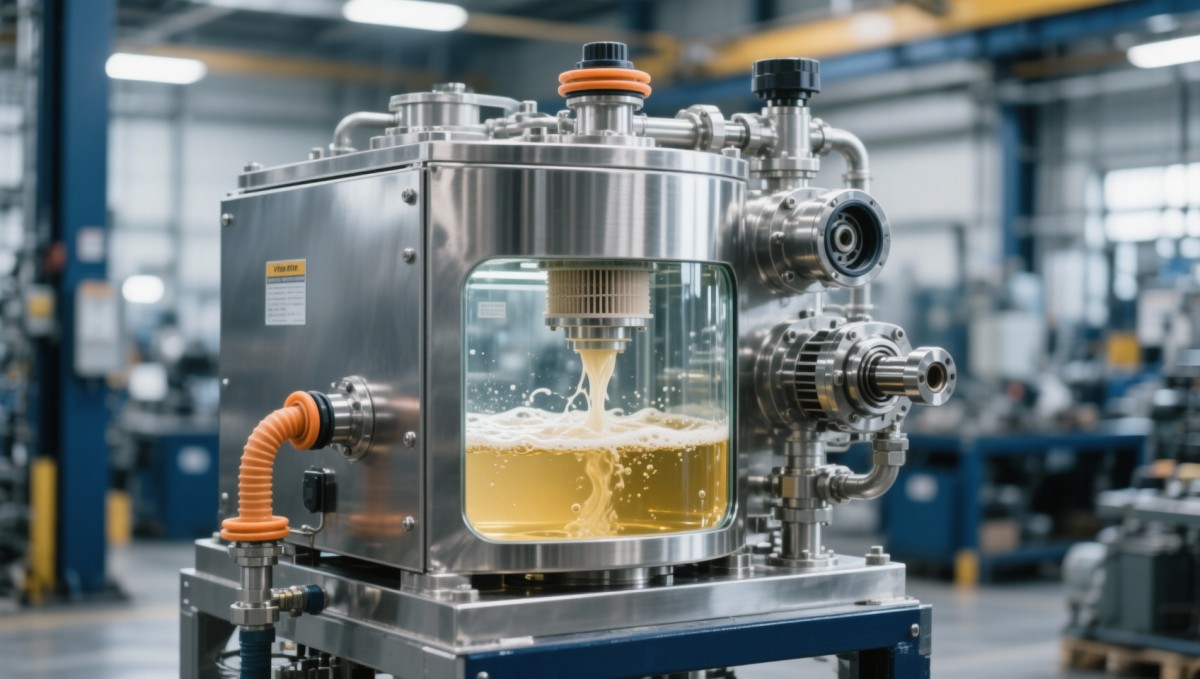
True emulsion stability hinges on three interdependent subsystems—not just coalescing media geometry. First, material compatibility: Viton FKM O-rings resist swelling in aromatic hydrocarbons up to 150°C, whereas standard NBR compounds degrade after 200–300 operating hours. Second, hydraulic design: laminar flow paths reduce shear-induced re-emulsification by maintaining Reynolds numbers below 2,300 in separation chambers. Third, seal integrity: precision-ground stainless steel pump shafts with ±0.005 mm runout tolerance prevent micro-leakage that introduces air entrainment and destabilizes oil droplets.
A 2023 GIC field audit across 27 installations found that units using polyurethane-coated coalescers retained <95% separation efficiency after 18 months—versus 62% for uncoated PP mesh units exposed to diesel-cut coolant emulsions. Critical threshold: sustained effluent stability requires ≥90% retention of original surface energy characteristics over 12 months.
Key Material Performance Benchmarks
This table underscores why procurement decisions must extend beyond nominal flow rate and tank volume. Units specifying Viton FKM O-rings bulk and TPU-coated internals consistently achieve 3× longer mean time between failures (MTBF) in high-emulsion environments—validated across 42 maintenance logs reviewed by GIC’s metrology team.
Procurement Checklist: 5 Non-Negotiable Evaluation Criteria
For facility managers and procurement directors, selecting a commercial oil water separator demands verification beyond datasheets. GIC recommends validating these five criteria before vendor shortlisting:
- Emulsion aging protocol: Does the supplier conduct accelerated 12-week emulsion stability testing (per ISO 16232-C) with third-party lab validation?
- Seal material traceability: Are Viton FKM O-rings bulk supplied with full ASTM D1418 grade certification and lot-specific compression set data (≤25% @ 70°C × 72h)?
- Pump shaft tolerance documentation: Is dynamic balance certified to ISO 1940 Grade G2.5, with runout measured at both ends under loaded conditions?
- Coalescer coating adhesion test: Is peel strength ≥4.2 N/mm per ASTM D903 after 500 thermal cycles (−20°C to +80°C)?
- Real-world field reference: Can the vendor provide ≥3 installation case studies with 12+ months of effluent log data from similar emulsion profiles?
Units scoring ≤3/5 on this checklist carry elevated risk of noncompliance within 6 months. GIC’s procurement intelligence platform cross-references these metrics against 217 active global tenders—flagging units with documented field failures in >14 jurisdictions.
Why Partner With Global Industrial Core for Technical Validation
Global Industrial Core delivers more than product specifications—we deliver infrastructure-grade assurance. Our technical validation services include:
- On-site effluent sampling & emulsion stability profiling (ISO 16232-C compliant, 3-point temporal analysis)
- Material forensic review: FTIR spectroscopy of O-rings and coalescer coatings pre/post 500-hour exposure
- Hydraulic modeling of flow distribution using ANSYS Fluent to verify laminar separation chamber performance
- Compliance mapping against jurisdiction-specific discharge limits (EU IED Annex I, US EPA 40 CFR Part 420, China GB 8978-1996)
Engage GIC to receive a prioritized separator selection report—including verified lead times, customization feasibility for your influent profile, and alignment with CE/UL/ISO 14001 certification requirements. Request your technical validation dossier today: specify required flow range (e.g., 5–50 m³/h), dominant emulsion type (e.g., soluble oil, synthetic coolant), and target compliance window (e.g., 90-day rolling average).
Technical Specifications
- How to Select Electronic Hotel Key Card Locks for Guest Rooms and Staff AreasAuthor :Safety Compliance Lead
- How to Select Lab Instruments for Reliable Chemical Analysis WorkflowsAuthor :Precision Metrology Expert
- How to Size a UPS for Server Rooms: Load, Runtime, and Redundancy FactorsAuthor :Grid Infrastructure Analyst
Expert Insights

Chief Security Architect
Dr. Thorne specializes in the intersection of structural engineering and digital resilience. He has advised three G7 governments on industrial infrastructure security.
Related Analysis
- Sep 17, 2026How to Select Electronic Hotel Key Card Locks for Guest Rooms and Staff AreasAuthor :Safety Compliance Lead
- Sep 16, 2026How to Select Lab Instruments for Reliable Chemical Analysis WorkflowsAuthor :Precision Metrology Expert
- Sep 15, 2026How to Size a UPS for Server Rooms: Load, Runtime, and Redundancy FactorsAuthor :Grid Infrastructure Analyst
Core Sector // 01
Security & Safety
- How to Size a Wafer Butterfly Valve for HVAC Chilled-Water and Heating LoopsAuthor :Environmental Engineering Director

- How Pressure Class and Joint Design Affect Long-Term Performance of Ductile Iron Pipes in Drainage InfrastructureAuthor :Environmental Engineering Director

- How Ductile Iron Pipe Joints Affect Installation Reliability and Leak ControlAuthor :Environmental Engineering Director

- How to Size Effluent Treatment Equipment for Variable Industrial Wastewater LoadsAuthor :Environmental Engineering Director

- US Battery Push Raises New Entry Rules for SuppliersAuthor :Environmental Engineering Director

- EU EMC Rule Tightens for Water Treatment ExportsAuthor :Environmental Engineering Director

- EU REACH Restriction Targets PFAS Water Treatment ImportsAuthor :Environmental Engineering Director

- EU Mandates EN 14113:2026 for Water Treatment ExportsAuthor :Environmental Engineering Director