Hazardous waste treatment facility facing unexpected corrosion in neutralization tanks—pH overshoot or chloride ingress?
Author
Date Published
Reading Time
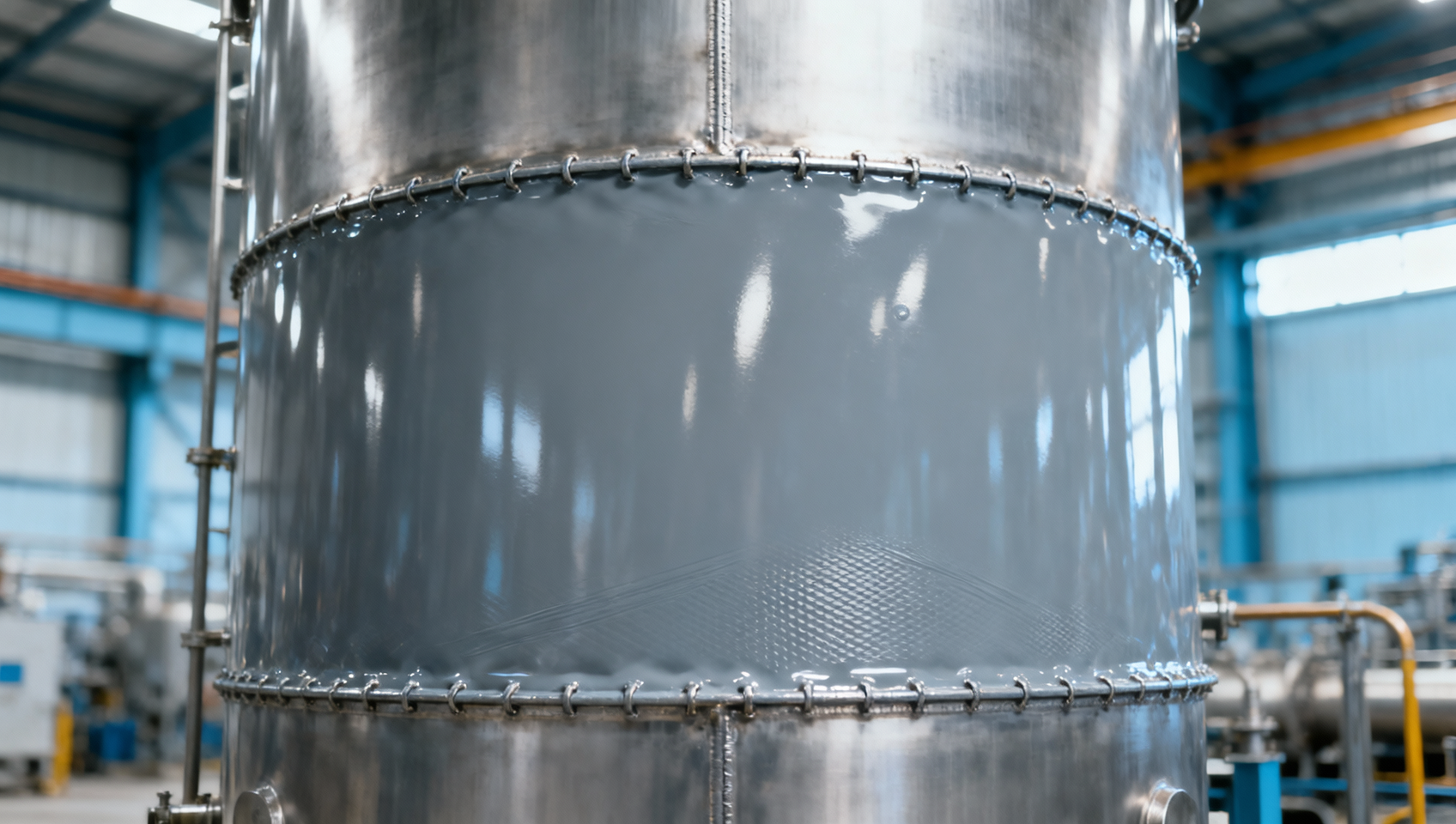
A hazardous waste treatment facility reports rapid, unexplained corrosion in neutralization tanks—raising urgent questions: is pH overshoot destabilizing tank linings, or has chloride ingress compromised material integrity? This failure mode directly impacts critical environmental monitoring systems, oil water separator commercial units, and corrosion-resistant components like Viton FKM O-rings bulk and polyurethane O-rings. For EPC contractors, facility managers, and procurement directors sourcing from hazard waste treatment to stack gas analyzer deployments, identifying the root cause isn’t just operational—it’s regulatory and safety-critical. Global Industrial Core delivers forensic-grade analysis grounded in E-E-A-T–validated expertise across Environment & Ecology and Mechanical Components & Metallurgy.
How to Diagnose the Root Cause: pH Overshoot vs. Chloride Ingress
Corrosion in neutralization tanks rarely appears without warning—but when it does, two primary mechanisms dominate failure investigations: transient pH excursions beyond design limits (overshoot), and chloride-induced localized attack on passive metal layers or polymer linings. Both can occur simultaneously, yet demand distinct diagnostic protocols, mitigation strategies, and procurement responses.
pH overshoot typically arises from imprecise reagent dosing control, especially during high-flow or variable-strength influent events. A deviation beyond pH 11.5 for >90 seconds—or below pH 2.0 for >60 seconds—can hydrolyze epoxy phenolic linings within 3–5 operational cycles. Chloride ingress, by contrast, often stems from upstream process leaks, seawater intrusion in coastal facilities, or chloride-rich leachate blending. Concentrations exceeding 500 ppm Cl⁻ at temperatures above 40°C initiate pitting in 316 stainless steel within 7–14 days of continuous exposure.
Field verification requires layered diagnostics: real-time pH logging with <1-second sampling intervals, chloride ion-selective electrode (ISE) validation against ASTM D4192-22, and ultrasonic thickness mapping at 12 standardized grid points per tank quadrant. Without synchronized temporal correlation between pH spikes and chloride concentration surges, misattribution remains probable—and costly.
Key Diagnostic Signatures
- pH overshoot corrosion: Uniform thinning of lining near agitator shafts and inlet nozzles; absence of red-brown rust staining; accelerated degradation only during peak-dosing shifts.
- Chloride ingress corrosion: Isolated pits <0.3 mm diameter beneath liner seams; white crystalline deposits (NaCl/KCl) in crevices; measurable galvanic potential shift (>85 mV) between weld zones and base metal.
- Co-occurring failure: Liner blistering at weld overlays, combined with intergranular cracking in heat-affected zones—indicating synergistic alkaline hydrolysis + chloride stress corrosion cracking (SCC).
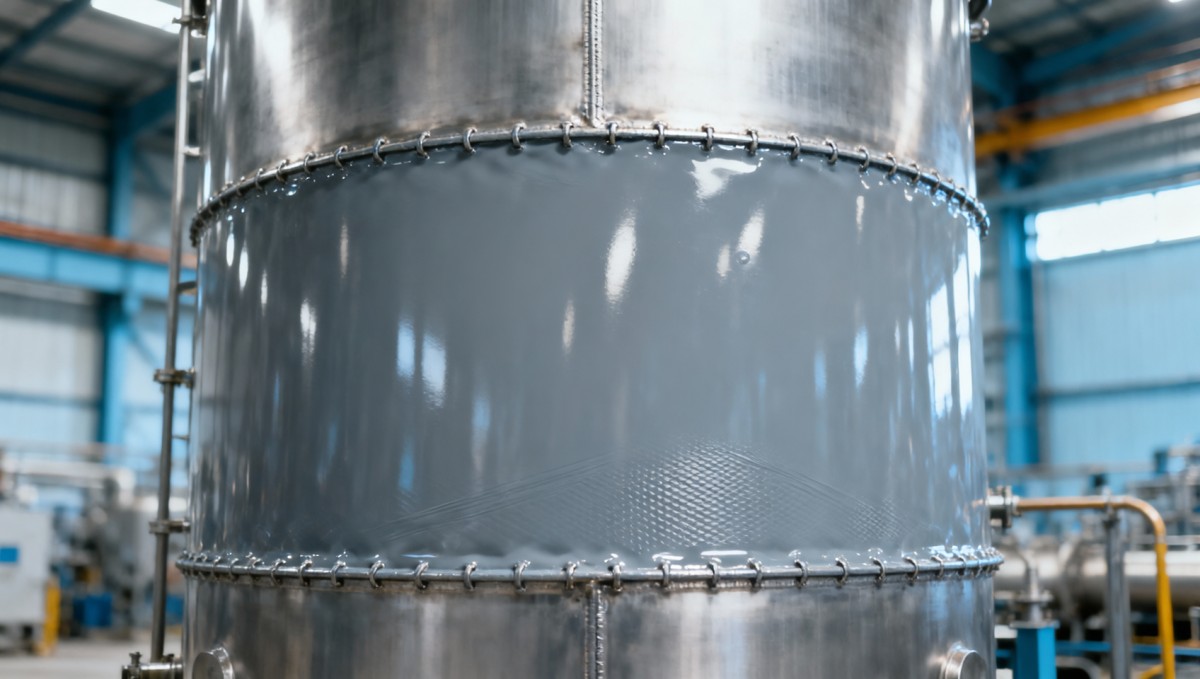
Material Selection Criteria for Neutralization Tanks Under Dual-Threat Conditions
Selecting tank construction materials under dual-threat conditions demands performance validation across three non-negotiable axes: chemical resistance (per ISO 2812-3 immersion testing), thermal stability (ASTM D6927-23 cyclic thermal shock at 20°C–85°C), and mechanical integrity under dynamic loading (EN 14015 fatigue cycling at 2× design pressure). No single material satisfies all requirements universally—but validated hybrid approaches do.
For tanks handling mixed industrial streams with chloride variability and pH volatility, dual-layered systems outperform monolithic solutions. A 4-mm thick fluorinated ethylene propylene (FEP) inner liner bonded to ASTM A516 Gr.70 carbon steel provides chloride immunity up to 5,000 ppm Cl⁻ at 60°C, while maintaining pH tolerance from 0–14. Alternatively, duplex stainless steel 2205 offers superior SCC resistance but requires strict control of dissolved oxygen (<0.1 ppm) and free chlorine (<0.05 ppm) to prevent selective phase attack.
Procurement teams must verify third-party test reports—not vendor datasheets—for each claimed performance parameter. GIC mandates independent validation of at least 3 immersion cycles (72 hours each) per material batch, with post-test FTIR spectroscopy to confirm bond integrity and no hydrolytic degradation.
Procurement Decision Framework: What to Verify Before Contract Finalization
For EPC contractors and facility managers, procurement decisions must extend beyond unit price and lead time. Five technical verification checkpoints separate resilient infrastructure from premature failure:
- Confirm liner adhesion strength ≥12 N/mm² per ASTM D4541-23 pull-off testing on 3 random field weld samples.
- Require full traceability of base metal mill test reports (MTRs), including ferrite content (40–50% for duplex) and intergranular corrosion test results (ASTM A262 Practice E).
- Validate pH control system redundancy: dual-loop PID controllers with independent sensors, calibrated weekly per ISO/IEC 17025 accredited lab protocols.
- Verify chloride monitoring frequency: online ISE probes must log data every 15 seconds, with automatic alarm thresholds set at 300 ppm (warning) and 600 ppm (shutdown).
- Ensure documentation package includes 3D as-built lining thickness maps, not just nominal thickness specs.
Global Industrial Core provides pre-vetted supplier dossiers that include verified compliance evidence for all five checkpoints—reducing due diligence time by 60–75% versus standalone procurement audits.
Why Partner With Global Industrial Core for Corrosion-Critical Infrastructure Sourcing
When neutralization tank integrity affects EPA Title 40 compliance, worker safety, and multi-million-dollar project timelines, procurement cannot rely on generic specifications. GIC delivers mission-critical intelligence anchored in five foundational pillars—Security & Safety, Instruments & Measurement, Electrical & Power Grid, Environment & Ecology, and Mechanical Components & Metallurgy—with rigorous validation by certified environmental engineers and metallurgical auditors.
We support your team with: real-time access to corrosion failure databases covering 142 global hazardous waste facilities; vendor-agnostic material selection matrices aligned with ISO 15663 and NACE SP0106; and rapid-response engineering consultations—including custom pH/chloride co-exposure testing protocols developed in partnership with accredited laboratories.
Contact Global Industrial Core today to request: (1) a site-specific corrosion risk assessment template, (2) vetted supplier shortlist for FEP-lined tanks meeting EN 14015 + ISO 2812-3, or (3) technical review of your current neutralization control logic architecture—including dosing algorithm validation against ASTM D7225-22.
Technical Specifications
- How to Select Electronic Hotel Key Card Locks for Guest Rooms and Staff AreasAuthor :Safety Compliance Lead
- How to Select Lab Instruments for Reliable Chemical Analysis WorkflowsAuthor :Precision Metrology Expert
- How to Size a UPS for Server Rooms: Load, Runtime, and Redundancy FactorsAuthor :Grid Infrastructure Analyst
Expert Insights

Chief Security Architect
Dr. Thorne specializes in the intersection of structural engineering and digital resilience. He has advised three G7 governments on industrial infrastructure security.
Related Analysis
- Sep 17, 2026How to Select Electronic Hotel Key Card Locks for Guest Rooms and Staff AreasAuthor :Safety Compliance Lead
- Sep 16, 2026How to Select Lab Instruments for Reliable Chemical Analysis WorkflowsAuthor :Precision Metrology Expert
- Sep 15, 2026How to Size a UPS for Server Rooms: Load, Runtime, and Redundancy FactorsAuthor :Grid Infrastructure Analyst
Core Sector // 01
Security & Safety
- How to Size a Wafer Butterfly Valve for HVAC Chilled-Water and Heating LoopsAuthor :Environmental Engineering Director

- How Pressure Class and Joint Design Affect Long-Term Performance of Ductile Iron Pipes in Drainage InfrastructureAuthor :Environmental Engineering Director

- How Ductile Iron Pipe Joints Affect Installation Reliability and Leak ControlAuthor :Environmental Engineering Director

- How to Size Effluent Treatment Equipment for Variable Industrial Wastewater LoadsAuthor :Environmental Engineering Director

- US Battery Push Raises New Entry Rules for SuppliersAuthor :Environmental Engineering Director

- EU EMC Rule Tightens for Water Treatment ExportsAuthor :Environmental Engineering Director

- EU REACH Restriction Targets PFAS Water Treatment ImportsAuthor :Environmental Engineering Director

- EU Mandates EN 14113:2026 for Water Treatment ExportsAuthor :Environmental Engineering Director