Mobile RO Water Purification Plant: Key Capacity and Water Quality Specs to Compare
Author
Date Published
Reading Time
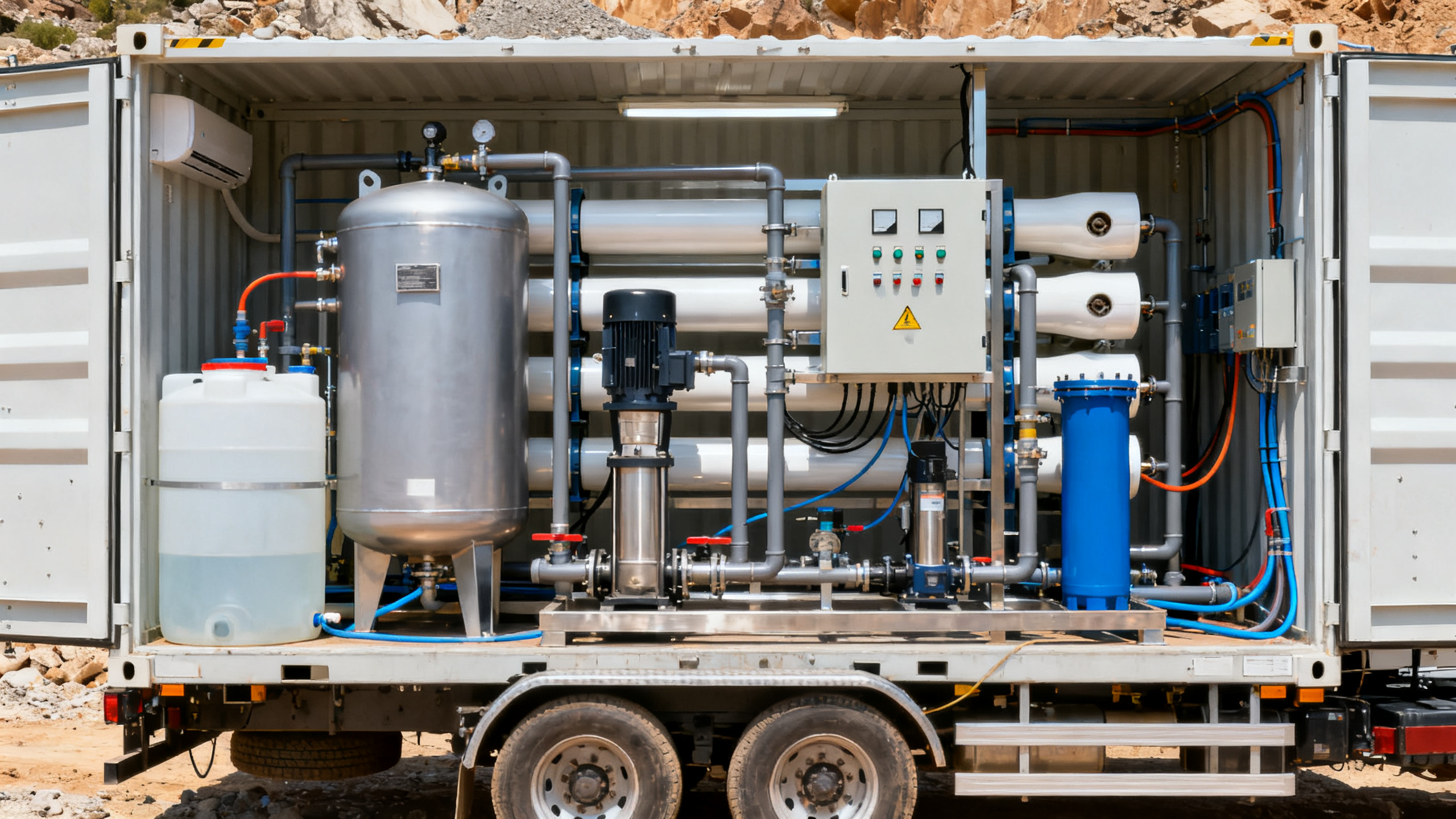
Selecting a mobile RO water purification plant is rarely a simple transport decision. In industrial field work, the real comparison starts with output stability, feed water variability, permeate quality, recovery rate, and how well the system fits compliance and site control requirements.
That matters more now because temporary water treatment is supporting broader project schedules. Construction camps, remote utility work, shutdown maintenance, mining support, and emergency response all depend on purified water without waiting for fixed infrastructure.
From the perspective of Global Industrial Core, this is exactly where procurement discipline matters. A mobile RO water purification plant must be evaluated as a critical industrial system, not just a convenient packaged unit.
Why Capacity Alone Does Not Tell the Full Story
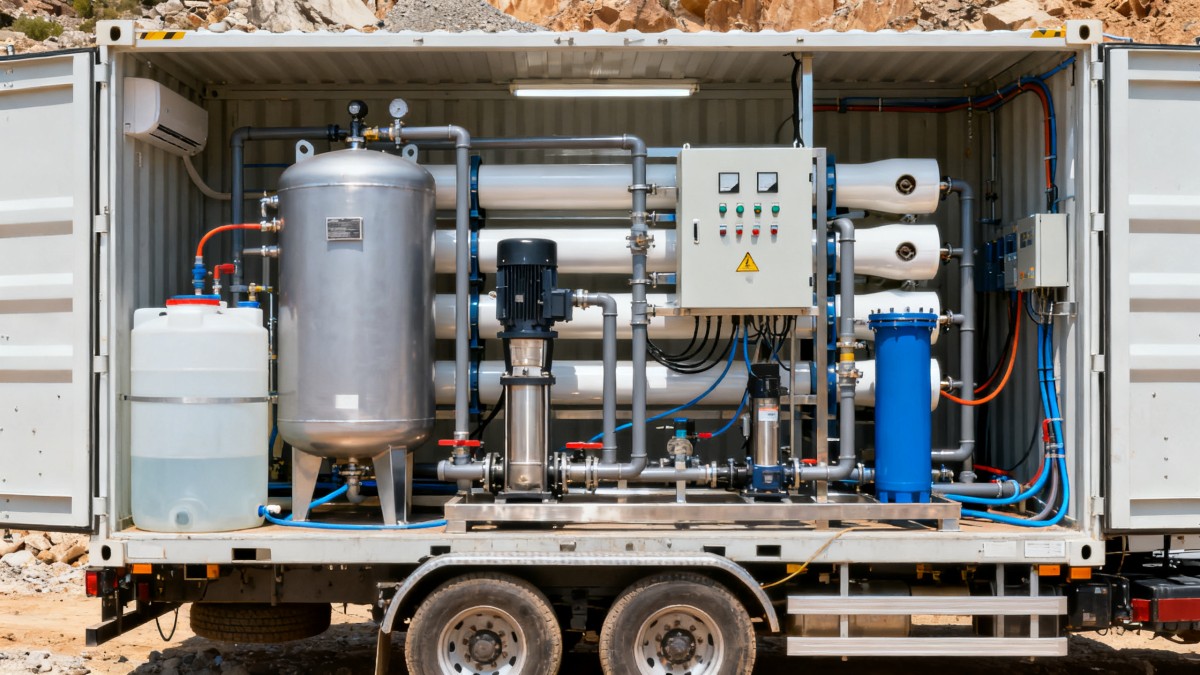
Nameplate flow is usually the first number people compare. It is important, but it is also the easiest figure to misread when site conditions differ from laboratory assumptions.
A mobile RO water purification plant rated at a certain cubic meters per hour may only reach that output under moderate salinity, stable temperature, and well-controlled pretreatment. Once turbidity rises or dissolved solids increase, actual production can drop fast.
This is why practical capacity should be reviewed in two ways. One is peak design flow. The other is sustained daily production under expected feed water conditions, cleaning intervals, and operator routines.
For project planning, the more useful question is not “What is the maximum output?” It is “What volume can this unit reliably deliver across the full operating week?”
Capacity figures worth checking together
- Permeate flow at rated feed TDS and temperature
- Minimum and maximum operating hours per day
- Clean-in-place frequency under realistic fouling conditions
- Buffer storage needed to cover demand spikes
- Generator or power source limitations during field deployment
Feed Water Tolerance Often Decides Field Performance
A mobile RO water purification plant may be used on river water, bore water, municipal supply, brackish sources, or mixed temporary feed. Each source creates a different risk profile for membranes and pretreatment stages.
Feed water tolerance includes more than TDS. It also includes suspended solids, silica, hardness, iron, manganese, organics, microbiological load, and occasional chemical contamination.
In actual use, pretreatment defines whether the RO section can remain stable. Multimedia filtration, cartridge filtration, activated carbon, antiscalant dosing, softening, or ultrafiltration may all be necessary depending on the source.
That makes source-water mapping essential before comparing units. A skid designed for relatively clean municipal water may struggle in a mining camp where suspended solids and hardness swing day by day.
Common feed water questions before selection
Permeate Quality Must Match the End Use
Not every project needs the same purified water quality. Drinking water support, boiler makeup, process rinsing, laboratory support, and cooling system feed all require different targets.
For that reason, comparing a mobile RO water purification plant by “RO treated water” alone is too vague. The required permeate conductivity, TDS, hardness, microbial condition, and post-treatment arrangement should be written into the evaluation.
Sometimes the RO stage is only part of the treatment train. UV disinfection, EDI, remineralization, chlorination, or final polishing may be needed to make water suitable for the intended duty.
A unit that produces very low TDS water may still be unsuitable if the downstream distribution loop cannot preserve hygienic quality. Water quality should therefore be reviewed as a system outcome, not a membrane brochure claim.
Useful quality checkpoints
- Permeate conductivity range at design conditions
- Salt rejection performance over membrane life
- Residual bacteria control strategy after RO
- Storage tank material and sanitation provisions
- Instrumentation for online verification and alarm logging
Recovery Rate, Energy Use, and Operating Stability
A high recovery rate looks attractive because it reduces raw water demand and reject volume. Yet pushing recovery too far can raise scaling risk, increase cleaning frequency, and shorten membrane life.
In remote work, stability usually has more value than chasing the highest theoretical efficiency. A mobile RO water purification plant that runs predictably at moderate recovery may outperform a tighter design that is harder to maintain on site.
Energy consumption also deserves closer attention. Specific energy per cubic meter should be read alongside pump efficiency, feed salinity, pressure range, and generator compatibility.
This is especially relevant where electrical quality is inconsistent. Voltage fluctuation, hot climates, and frequent start-stop operation can reduce real efficiency and stress control components.
A balanced comparison framework
The better unit is often the one that balances recovery, membrane protection, service interval, and site utility constraints. Looking at one number in isolation usually leads to later operating tradeoffs.
Mobility, Compliance, and Site Integration
Mobility is not only about putting RO equipment on a trailer or skid. It also includes setup time, lifting points, footprint, weather protection, drainage routing, and how quickly operators can commission the package.
For industrial infrastructure, compliance readiness is equally important. CE, UL, ISO-aligned documentation, pressure vessel certification, electrical safety, and material traceability often influence approval timelines.
This is where GIC’s broader sourcing lens becomes useful. Industrial buyers rarely assess water treatment in isolation. They also check instrumentation quality, safety interlocks, enclosure durability, and long-term service documentation.
A mobile RO water purification plant should therefore be treated as a packaged utility system. Controls, alarms, sampling points, spare parts access, and maintenance ergonomics all affect total deployment value.
Where These Systems Create the Most Value
The strongest use cases are usually tied to time-sensitive or infrastructure-limited operations. In those settings, water reliability directly supports schedule control and risk reduction.
- Remote construction sites needing temporary potable or process water
- Power and utility outages requiring rapid treatment replacement
- Plant turnarounds where existing treatment trains are offline
- Mining and oilfield support with variable source water quality
- Disaster recovery projects where logistics matter as much as treatment
In each case, the mobile RO water purification plant reduces dependence on tanker supply or incomplete local infrastructure. The value is not merely cleaner water. It is operational continuity under uncertain site conditions.
A Practical Way to Compare Options Before Approval
A sound evaluation starts by defining the real feed water envelope, not the best-case sample. Then match that range to pretreatment, membrane design, expected permeate target, and daily demand profile.
Next, compare operating assumptions. Review cleaning interval, consumables use, membrane replacement cycle, instrumentation package, and the level of operator skill required for stable performance.
It also helps to request documented references from similar environments. Site water chemistry, ambient temperature, compliance expectations, and maintenance logistics often decide success more than brochure specifications.
Before moving forward, build a short comparison sheet around capacity under real conditions, feed tolerance, permeate quality, recovery, energy demand, safety compliance, and serviceability. That approach makes a mobile RO water purification plant easier to judge on lifecycle performance rather than headline numbers.
When those criteria are clear, the next step is straightforward: align the unit with the actual water source, operating duty, and site constraints, then validate the specification against field conditions before final selection.
Technical Specifications
- Air Handling Unit Supplier Checklist: Performance Data, Lead Times, and SupportAuthor :Environmental Engineering Director
- Buying Fiberglass Water Tanks Wholesale: Compare Quotes and Delivery CostsAuthor :Environmental Engineering Director
- Choosing an XLPE Power Cable Supplier: Test Reports, Traceability, and Lead TimesAuthor :Grid Infrastructure Analyst
Expert Insights

Chief Security Architect
Dr. Thorne specializes in the intersection of structural engineering and digital resilience. He has advised three G7 governments on industrial infrastructure security.
Related Analysis
- Oct 19, 2026Air Handling Unit Supplier Checklist: Performance Data, Lead Times, and SupportAuthor :Environmental Engineering Director
- Oct 18, 2026Buying Fiberglass Water Tanks Wholesale: Compare Quotes and Delivery CostsAuthor :Environmental Engineering Director
- Oct 17, 2026Choosing an XLPE Power Cable Supplier: Test Reports, Traceability, and Lead TimesAuthor :Grid Infrastructure Analyst
Core Sector // 01
Security & Safety
- Buying Fiberglass Water Tanks Wholesale: Compare Quotes and Delivery CostsAuthor :Environmental Engineering Director

- How to Select Industrial pH Meters for Continuous Wastewater Process ControlAuthor :Environmental Engineering Director

- How to Size a Rinse Fill Cap Machine for Your Bottle Format and Target OutputAuthor :Environmental Engineering Director

- How to Size a Heavy-Duty Submersible Sewage Pump for High-Solids Lift StationsAuthor :Environmental Engineering Director

- How to Size a Wafer Butterfly Valve for HVAC Chilled-Water and Heating LoopsAuthor :Environmental Engineering Director

- How Pressure Class and Joint Design Affect Long-Term Performance of Ductile Iron Pipes in Drainage InfrastructureAuthor :Environmental Engineering Director

- How Ductile Iron Pipe Joints Affect Installation Reliability and Leak ControlAuthor :Environmental Engineering Director

- How to Size Effluent Treatment Equipment for Variable Industrial Wastewater LoadsAuthor :Environmental Engineering Director