IMO Mandates AI Water Quality Alerts for Ship Treatment Systems
Author
Date Published
Reading Time
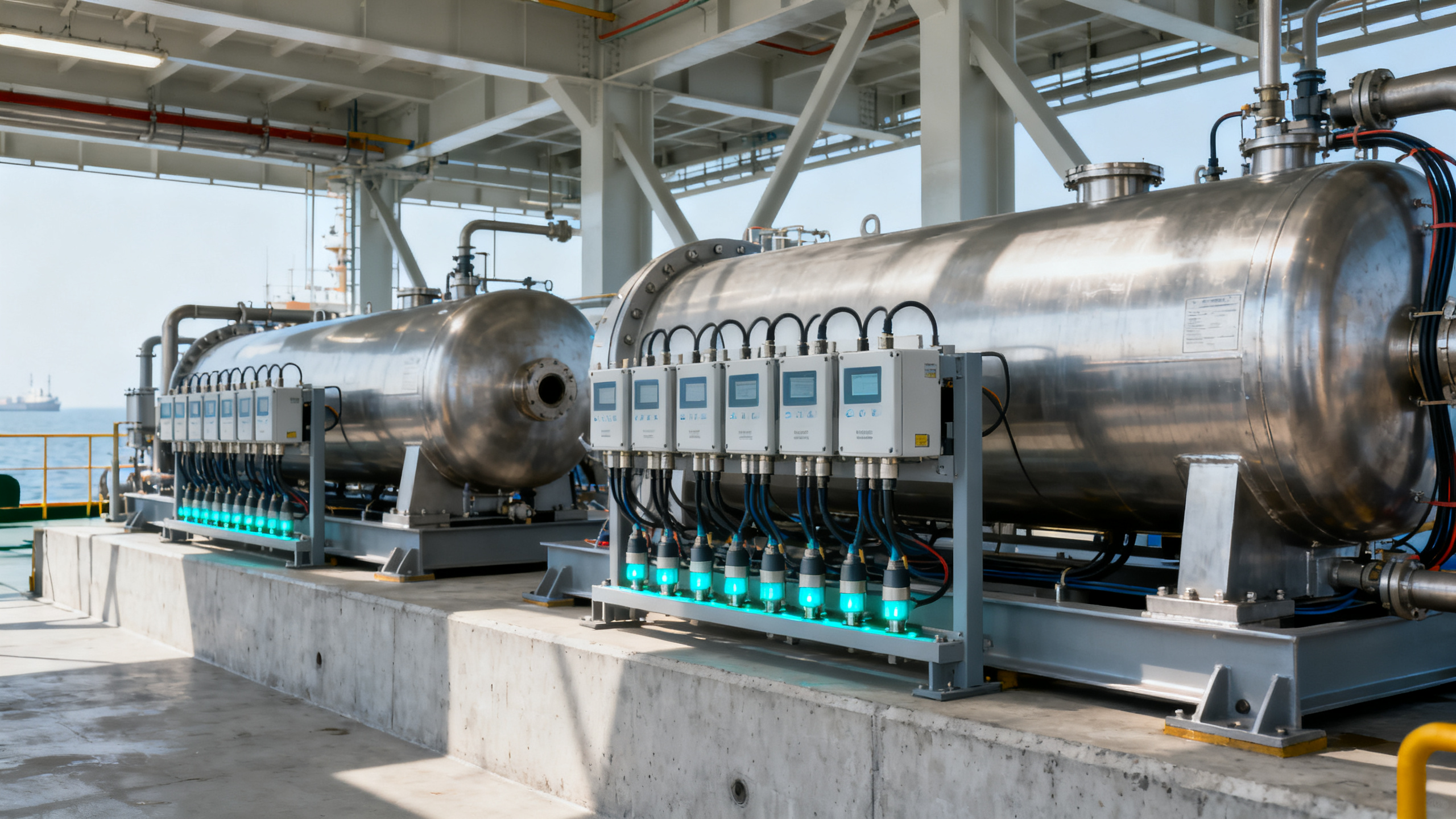
On May 15, 2026, the International Maritime Organization (IMO) officially implemented Resolution MEPC.382(80), requiring AI-powered real-time water quality anomaly detection modules in all new and retrofitted shipboard ballast water treatment systems (BWTS) and sewage treatment plants. The regulation directly impacts global marine environmental equipment manufacturers, certification bodies, and maritime supply chain actors — particularly those engaged in export-oriented production and compliance-critical system integration.
Event Overview
The IMO adopted Resolution MEPC.382(80) during its 80th session, entering into force on May 15, 2026. It mandates that all newly installed or upgraded BWTS and onboard sewage treatment units must integrate an AI-driven real-time water quality anomaly warning module compliant with ISO/IEC 23053:2026. Certification by recognized classification societies — a prerequisite for market access — will require full software-hardware validation of this module. Chinese BWTS exporters must complete the required upgrades by Q4 2026 to retain type approval eligibility.
Industries Affected
Direct Export Enterprises: Chinese BWTS manufacturers exporting to IMO-contracting states face immediate compliance deadlines. Non-compliance risks rejection of type approval applications, delayed deliveries, contract penalties, and loss of tender eligibility for vessel retrofit programs — especially in EU-flagged and major Asian shipowner fleets.
Raw Material Procurement Firms: Suppliers of AI inference chips (e.g., low-power edge SoCs), corrosion-resistant sensor housings, and certified IoT communication modules will see revised technical specifications and accelerated qualification timelines. Demand for ISO/IEC 23053-aligned firmware validation services is expected to rise, pressuring procurement lead times and component traceability documentation.
Manufacturing & Integration Firms: System integrators must redesign control architecture to embed AI inference pipelines within legacy PLC- or SCADA-based platforms. This includes hardware-level security provisioning (e.g., TPM 2.0), real-time data ingestion from multi-parameter sensors (turbidity, residual biocide, microbial ATP), and model retraining workflows validated under IEC 62443-4-2. Engineering resource allocation and firmware update protocols become critical bottlenecks.
Supply Chain Service Providers: Third-party testing labs, cybersecurity auditors, and classification society subcontractors must expand capacity for AI model validation (including bias, drift, and edge-case robustness testing per ISO/IEC 23053 Annex B). Logistics providers handling certified modules may need updated customs classification codes and enhanced documentation for AI-enabled maritime equipment under dual-use export controls.
Key Focus Areas and Recommended Actions
Verify AI Module Certification Pathways
Confirm whether your AI warning module qualifies as a standalone “cyber-physical safety component” (per IMO MSC.428(98)) or must be validated as part of the full BWTS stack. Engage early with ABS, DNV, or CCS to align test plans with MEPC.382(80) Annex 3 verification criteria.
Assess Legacy System Retrofit Feasibility
Conduct a hardware-in-the-loop (HIL) audit of existing control units: determine if field-upgradable firmware suffices, or if gateway-level hardware replacement is unavoidable. Prioritize vessels scheduled for dry-docking between Q3 2026–Q2 2027 to sequence upgrades without operational disruption.
Update Technical Documentation and Cybersecurity Protocols
Revise user manuals, cybersecurity management plans (CSMP), and software bill-of-materials (SBOM) to reflect AI model versioning, data provenance, and anomaly response logic. Align with IMO’s 2025 Guidelines on AI System Transparency for Maritime Equipment (MSC-FAL.1/Circ.172).
Editorial Perspective / Industry Observation
Observably, this regulation marks the first IMO-mandated deployment of production-grade AI in shipboard environmental systems — not merely as a diagnostic add-on, but as a safety-critical control enabler. Analysis shows the requirement goes beyond algorithmic capability: it institutionalizes lifecycle accountability for AI behavior in harsh, intermittently connected maritime environments. From an industry perspective, the emphasis on ISO/IEC 23053:2026 — a standard co-developed by ISO and IEC specifically for AI in industrial water systems — signals a broader shift toward interoperable, auditable AI modules across regulated infrastructure sectors. Current more relevant concern is not technical feasibility, but harmonization of national interpretation: e.g., whether onboard model updates require re-certification, or how ‘real-time’ latency thresholds (currently unspecified in MEPC.382(80)) will be enforced during surveys.
Conclusion
This mandate does not simply raise the bar for product compliance — it redefines the boundary between mechanical engineering and embedded AI governance in marine environmental technology. For manufacturers, success hinges less on building smarter models and more on demonstrating verifiable, maintainable, and surveyor-accessible AI assurance. A rational interpretation is that the IMO is treating AI not as a feature, but as foundational infrastructure — demanding the same rigor historically applied to pressure vessels or fire-detection systems.
Source Attribution
Primary source: IMO Resolution MEPC.382(80), adopted December 2025; entered into force May 15, 2026. Supporting standards: ISO/IEC 23053:2026 (published March 2026); IMO MSC-FAL.1/Circ.172 (Guidelines on AI Transparency, April 2025). Note: Classification society implementation guidance (e.g., DNV-RU-SHIP Pt.6 Ch.18, ABS NR 2026 Addenda) remains under revision — ongoing monitoring recommended through Q3 2026.
Technical Specifications
- How to Select Electronic Hotel Key Card Locks for Guest Rooms and Staff AreasAuthor :Safety Compliance Lead
- How to Select Lab Instruments for Reliable Chemical Analysis WorkflowsAuthor :Precision Metrology Expert
- How to Size a UPS for Server Rooms: Load, Runtime, and Redundancy FactorsAuthor :Grid Infrastructure Analyst
Expert Insights

Chief Security Architect
Dr. Thorne specializes in the intersection of structural engineering and digital resilience. He has advised three G7 governments on industrial infrastructure security.
Related Analysis
- Sep 17, 2026How to Select Electronic Hotel Key Card Locks for Guest Rooms and Staff AreasAuthor :Safety Compliance Lead
- Sep 16, 2026How to Select Lab Instruments for Reliable Chemical Analysis WorkflowsAuthor :Precision Metrology Expert
- Sep 15, 2026How to Size a UPS for Server Rooms: Load, Runtime, and Redundancy FactorsAuthor :Grid Infrastructure Analyst
Core Sector // 01
Security & Safety
- How to Size a Wafer Butterfly Valve for HVAC Chilled-Water and Heating LoopsAuthor :Environmental Engineering Director

- How Pressure Class and Joint Design Affect Long-Term Performance of Ductile Iron Pipes in Drainage InfrastructureAuthor :Environmental Engineering Director

- How Ductile Iron Pipe Joints Affect Installation Reliability and Leak ControlAuthor :Environmental Engineering Director

- How to Size Effluent Treatment Equipment for Variable Industrial Wastewater LoadsAuthor :Environmental Engineering Director

- US Battery Push Raises New Entry Rules for SuppliersAuthor :Environmental Engineering Director

- EU EMC Rule Tightens for Water Treatment ExportsAuthor :Environmental Engineering Director

- EU REACH Restriction Targets PFAS Water Treatment ImportsAuthor :Environmental Engineering Director

- EU Mandates EN 14113:2026 for Water Treatment ExportsAuthor :Environmental Engineering Director