EU EN 61000-6-4:2026 Mandated: EMC Re-testing Costs Up 35% for Industrial Water Treatment
Author
Date Published
Reading Time
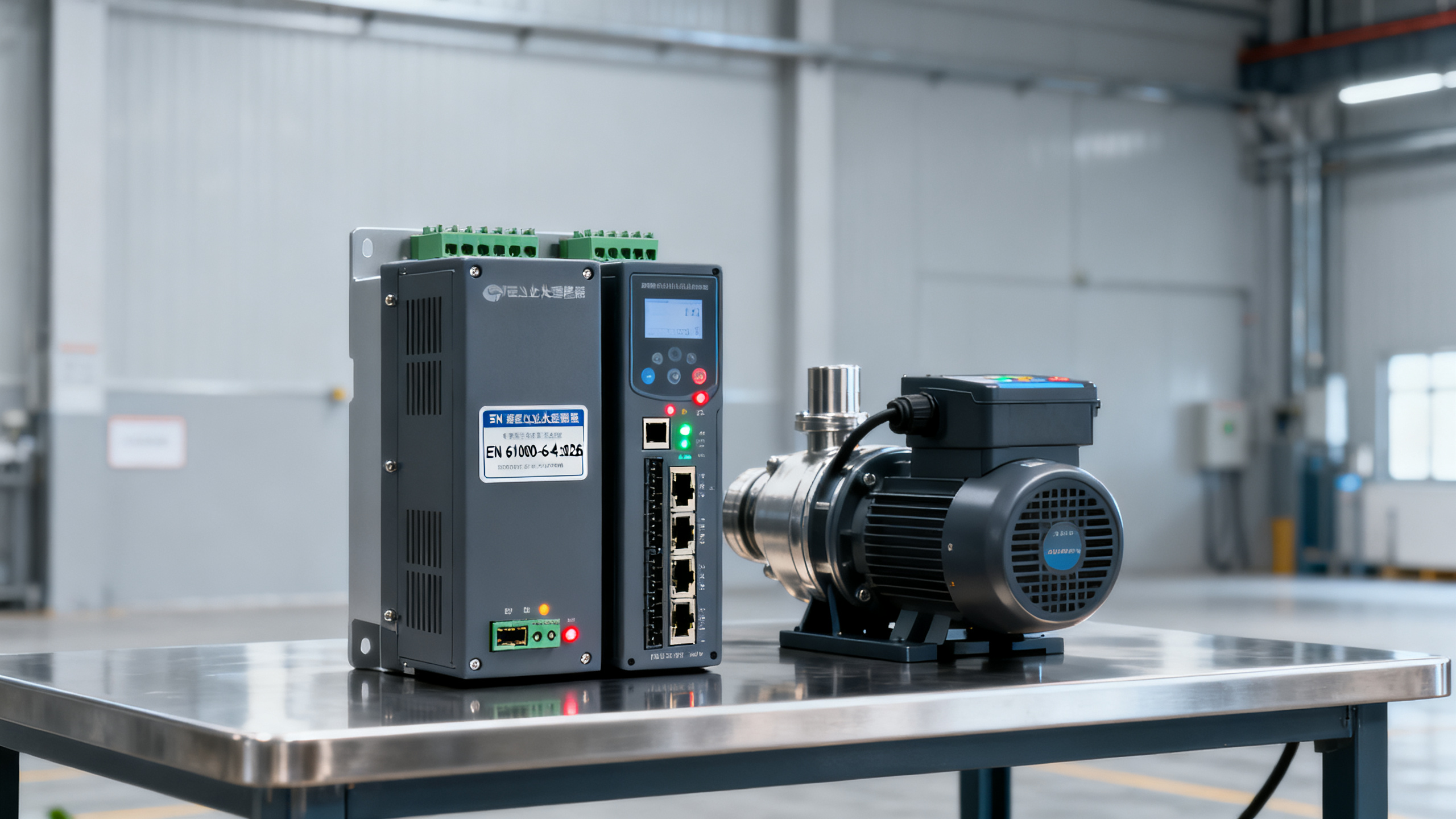
On 15 May 2026, the European Union’s Official Journal (OJEU) confirmed the mandatory application of EN 61000-6-4:2026 — the latest electromagnetic compatibility (EMC) standard for industrial equipment. This update directly affects manufacturers and exporters of industrial water treatment controllers, pump drive systems, and online water quality analyzers targeting the EU market. With its introduction of wideband transient immunity testing, the revision triggers significant compliance adjustments — particularly for Chinese exporters — making it a critical development for global water infrastructure supply chains.
Event Overview
The European Union published EN 61000-6-4:2026 in the Official Journal of the European Union (OJEU) on 15 May 2026, confirming its entry into force as a harmonised standard under the EU EMC Directive (2014/30/EU). The standard applies to industrial water treatment equipment including controllers, motor-driven pump assemblies, and online water quality analysers. It introduces new wideband transient immunity test requirements. As reported, average re-testing cycles for affected products have extended to 11 weeks, and certification costs have risen by 35% for Chinese exporting enterprises. Procurement specifications for projects in Southeast Asia and Africa have begun incorporating this standard as a pre-tender compliance requirement.
Industries Affected
Direct Exporting Manufacturers (e.g., Chinese OEMs of water treatment controllers)
These enterprises are directly subject to conformity assessment under the updated standard. Because EN 61000-6-4:2026 mandates new wideband transient immunity tests not required under prior versions, existing CE-marked products must undergo full re-evaluation — triggering delays and cost increases.
Industrial Equipment Integrators & System Builders
Integrators sourcing components from third-party suppliers face cascading compliance risks. If sub-assemblies (e.g., variable-speed drives or sensor modules) lack valid EN 61000-6-4:2026 certification, the final system may fail EU market access — even if the integrator itself performs no internal EMC testing.
Procurement & Project Management Entities (e.g., EPC contractors in Southeast Asia/Africa)
These stakeholders now encounter tighter technical pre-qualification criteria. Tender documents increasingly reference EN 61000-6-4:2026 as a mandatory clause — shifting compliance responsibility upstream and increasing due diligence burden during supplier selection.
What Enterprises and Practitioners Should Monitor and Do Now
Track official interpretations and transitional provisions
Although OJEU confirms mandatory status from 15 May 2026, no grace period is stated in the published notice. Enterprises should monitor updates from national notified bodies and the European Commission for any clarifications on grandfathering of legacy certifications or phased implementation timelines.
Identify high-risk product categories and test configurations
Not all water treatment equipment faces equal impact. Controllers with Ethernet/fieldbus interfaces, inverters operating above 20 kHz switching frequency, and analyser units with wireless telemetry are especially vulnerable to the new wideband transient test. Prioritise re-testing for these variants first.
Distinguish between tender language and enforceable regulatory obligations
While Southeast Asian and African project tenders now cite EN 61000-6-4:2026, such references do not equate to local statutory law. Enterprises should verify whether the requirement stems from client risk mitigation (voluntary) or formal import regulation (mandatory) before committing to full re-certification.
Update procurement and supply chain communication protocols
Suppliers must provide documented evidence of EN 61000-6-4:2026 compliance — not just test reports, but full technical construction files (TCF) and EU Declaration of Conformity referencing the 2026 edition. Procurement teams should revise vendor questionnaires and contractual clauses accordingly.
Editorial Perspective / Industry Observation
Observably, EN 61000-6-4:2026 functions less as a technical refinement and more as a de facto market gatekeeper — especially for cost-sensitive export segments. Analysis shows the 35% cost increase reflects not only expanded test scope, but also limited global lab capacity for wideband transient testing, creating bottlenecks. From an industry perspective, this revision signals growing alignment between EU regulatory expectations and real-world electromagnetic stress environments in modern industrial plants — yet its immediate effect is procedural friction rather than safety enhancement. Current attention should focus on implementation volatility: while the standard is formally in force, enforcement consistency across EU member states remains unconfirmed and warrants ongoing observation.
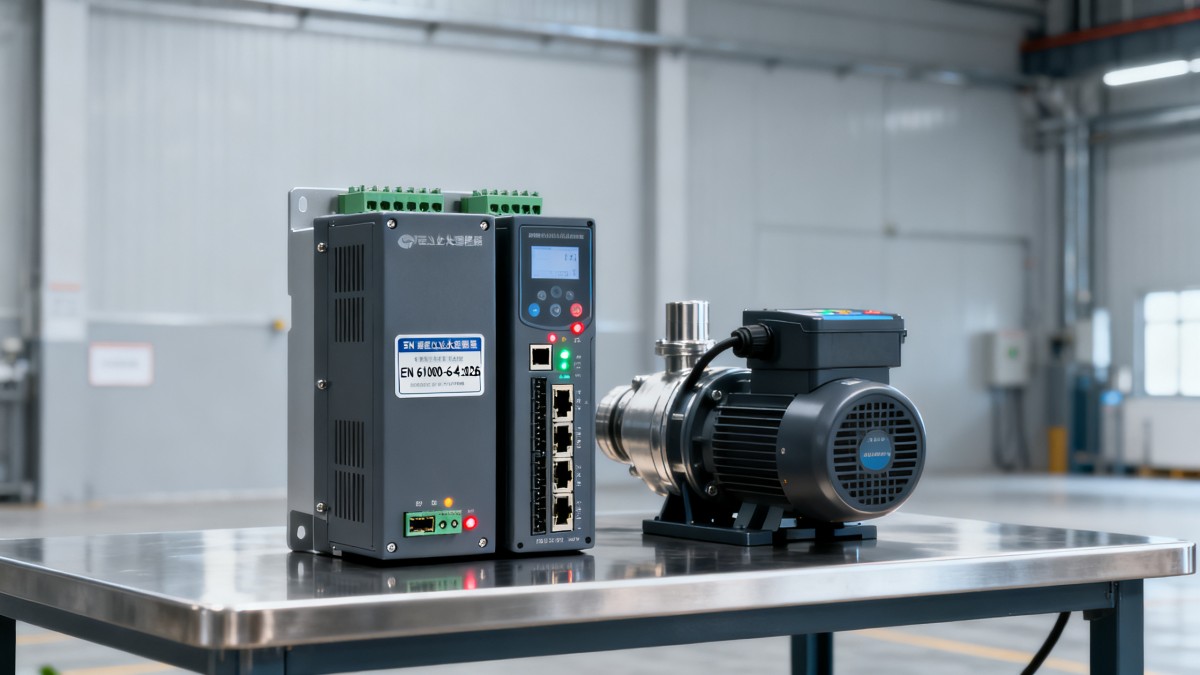
In summary, EN 61000-6-4:2026 represents a material shift in compliance expectations for industrial water treatment equipment entering regulated markets. Its primary impact lies in operational cost and timeline pressure — not fundamental redesign — for most existing products. It is better understood as a procedural escalation tied to evolving test methodology, rather than a broad-based technology mandate. Enterprises should treat it as a near-term supply chain coordination challenge requiring targeted verification, not a wholesale product redevelopment trigger.
Source: Official Journal of the European Union (OJEU), 15 May 2026 edition; public notices from EU notified bodies regarding EN 61000-6-4:2026 implementation. Note: Transitional arrangements, national enforcement practices, and lab accreditation status for wideband transient testing remain under observation.
Technical Specifications
- How to Select Electronic Hotel Key Card Locks for Guest Rooms and Staff AreasAuthor :Safety Compliance Lead
- How to Select Lab Instruments for Reliable Chemical Analysis WorkflowsAuthor :Precision Metrology Expert
- How to Size a UPS for Server Rooms: Load, Runtime, and Redundancy FactorsAuthor :Grid Infrastructure Analyst
Expert Insights

Chief Security Architect
Dr. Thorne specializes in the intersection of structural engineering and digital resilience. He has advised three G7 governments on industrial infrastructure security.
Related Analysis
- Sep 17, 2026How to Select Electronic Hotel Key Card Locks for Guest Rooms and Staff AreasAuthor :Safety Compliance Lead
- Sep 16, 2026How to Select Lab Instruments for Reliable Chemical Analysis WorkflowsAuthor :Precision Metrology Expert
- Sep 15, 2026How to Size a UPS for Server Rooms: Load, Runtime, and Redundancy FactorsAuthor :Grid Infrastructure Analyst
Core Sector // 01
Security & Safety
- How to Size a Wafer Butterfly Valve for HVAC Chilled-Water and Heating LoopsAuthor :Environmental Engineering Director

- How Pressure Class and Joint Design Affect Long-Term Performance of Ductile Iron Pipes in Drainage InfrastructureAuthor :Environmental Engineering Director

- How Ductile Iron Pipe Joints Affect Installation Reliability and Leak ControlAuthor :Environmental Engineering Director

- How to Size Effluent Treatment Equipment for Variable Industrial Wastewater LoadsAuthor :Environmental Engineering Director

- US Battery Push Raises New Entry Rules for SuppliersAuthor :Environmental Engineering Director

- EU EMC Rule Tightens for Water Treatment ExportsAuthor :Environmental Engineering Director

- EU REACH Restriction Targets PFAS Water Treatment ImportsAuthor :Environmental Engineering Director

- EU Mandates EN 14113:2026 for Water Treatment ExportsAuthor :Environmental Engineering Director