IMO Mandates AI-Powered Water Quality Alert Modules for Ballast Water Systems
Author
Date Published
Reading Time
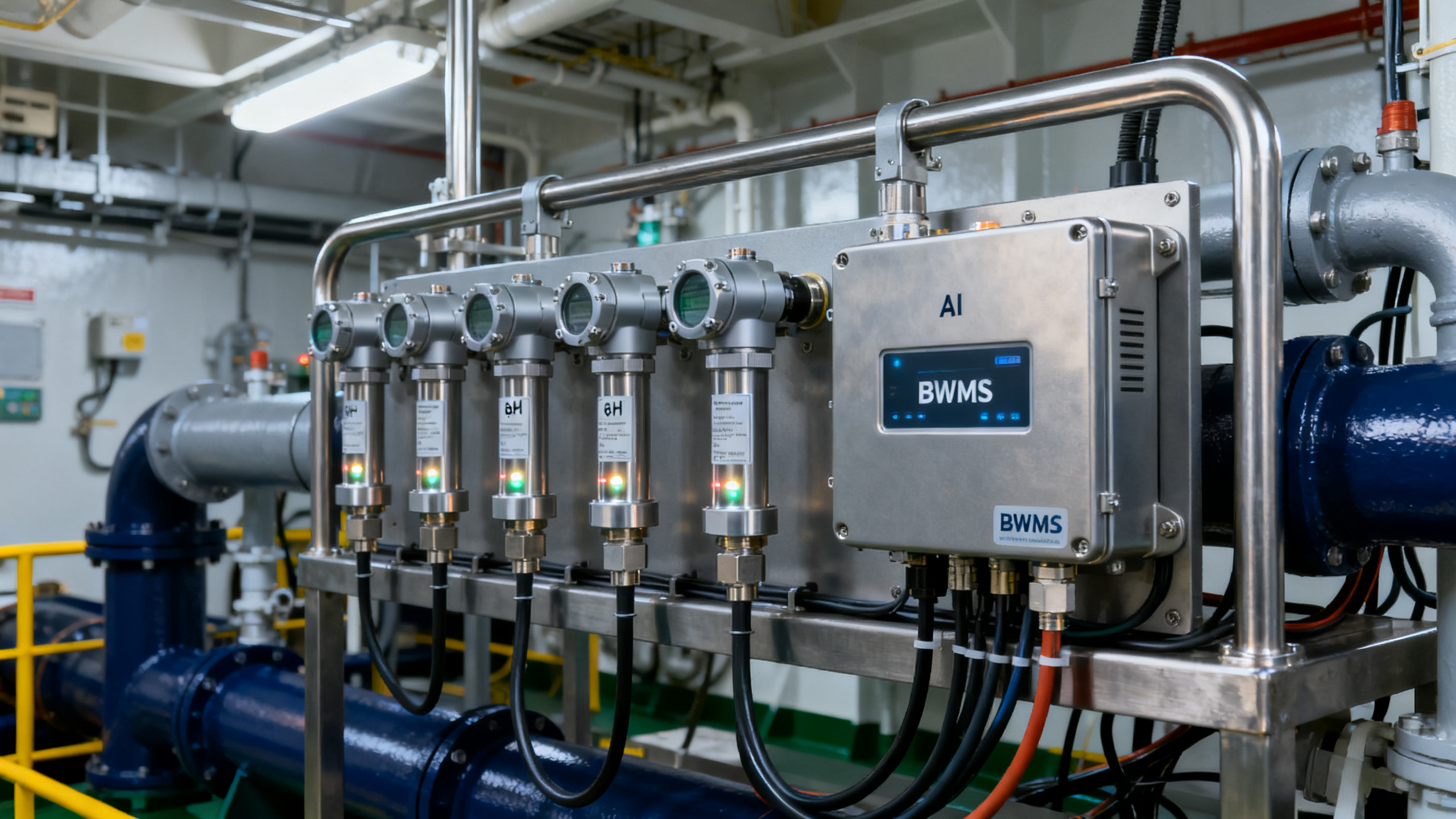
On May 9, 2026, the International Maritime Organization (IMO) brought into force resolution MEPC.382(80), requiring all newly delivered ships from July 1, 2026 onward to integrate real-time AI-based water quality anomaly alert modules into their Ballast Water Management Systems (BWMS). This development directly impacts industrial water treatment equipment manufacturers, sensor suppliers, classification societies, and shipbuilders — particularly those involved in BWMS design, certification, or integration.
Event Overview
The IMO’s MEPC.382(80) amendment entered into force on May 9, 2026. It stipulates that Ballast Water Management Systems installed on ships delivered on or after July 1, 2026 must incorporate an AI-driven water quality anomaly alert module. The module must support multi-parameter fusion analysis of pH, turbidity, residual chlorine, and microbial fluorescence signals. The amendment is publicly confirmed, and leading Chinese BWMS manufacturers have already received initial type approval from DNV GL.
Industries Affected by This Regulation
Industrial Water Treatment Equipment Manufacturers
These manufacturers are directly affected because the regulation mandates functional upgrades to BWMS hardware and software architecture. Integration of edge computing modules and AI inference capabilities is now a compliance requirement—not optional enhancement. Impact manifests in revised product specifications, extended development cycles, and increased demand for certified embedded AI sensors.
Sensor and Edge Computing Module Suppliers
Suppliers of industrial-grade pH, turbidity, and fluorescence sensors—and those providing low-latency edge AI processing units—face heightened demand. The regulation specifies real-time multi-parameter fusion analysis, which requires tighter hardware-software co-design and interoperability validation. This raises technical entry barriers and shifts procurement criteria toward pre-validated, IMO-aligned components.
Classification Societies and Certification Bodies
Organizations such as DNV GL, LR, ABS, and CCS must now assess and approve not only mechanical and chemical performance of BWMS, but also the reliability, false-alarm rate, and data traceability of AI alert logic. Type approval processes will increasingly involve algorithm documentation review and edge inference testing under simulated ballast operation conditions.
Ship Designers and Newbuilding Contractors
Naval architects and shipyards must allocate additional space, power, and data infrastructure for AI modules within BWMS skids or control cabinets. Integration timelines may extend due to software validation requirements and cross-vendor interface coordination. Early-stage design packages now need to include AI module footprint, cooling, and cybersecurity provisions.
What Relevant Enterprises or Practitioners Should Focus On
Monitor official implementation guidance from IMO and flag state administrations
While MEPC.382(80) is in force, detailed technical guidelines—including acceptable AI model validation protocols, data retention periods, and human-in-the-loop requirements—are still pending publication. Enterprises should track updates issued by IMO’s Marine Environment Protection Committee (MEPC) and national maritime authorities.
Assess current BWMS hardware and firmware against AI module integration readiness
Manufacturers and integrators should audit whether existing sensor interfaces, communication buses (e.g., Modbus TCP, CANopen), and onboard controllers support secure, time-synchronized multi-parameter data ingestion. Legacy systems lacking edge-ready architectures may require redesign—not just software overlay.
Distinguish between regulatory signal and operational rollout timelines
The rule applies to ships delivered on or after July 1, 2026—not retroactively. However, forward-looking tender specifications from major shipowners and leasing companies are already referencing AI alert capability. Companies should treat this as a near-term commercial expectation, even if full regulatory enforcement begins mid-2026.
Prepare for supply chain coordination with sensor and AI module vendors
Procurement teams should initiate early engagement with sensor suppliers offering pre-certified, IMO-aligned edge AI modules. Joint verification of data fusion logic, calibration traceability, and cybersecurity hardening (e.g., TLS 1.3 for OTA updates) will be critical to avoid integration delays during type approval.
Editorial Perspective / Industry Observation
Observably, this amendment marks a structural shift—from rule-based monitoring toward adaptive, AI-augmented environmental compliance in marine systems. Analysis shows the mandate is less about immediate enforcement than about signaling long-term system intelligence expectations across the BWMS value chain. It is currently more of a policy signal than a fully implemented operational standard: type approval frameworks for AI logic remain emergent, and no standardized test bench for microbial fluorescence AI inference exists yet. From an industry perspective, sustained attention is warranted—not only for compliance, but because this sets precedent for AI-integration requirements in other IMO-regulated marine systems (e.g., exhaust gas cleaning, wastewater treatment).
Conclusion: The IMO’s AI alert module requirement reflects a calibrated step toward intelligent environmental controls in maritime operations. It does not represent a sudden technology mandate, but rather a formalized inflection point where data integrity, edge processing, and algorithmic transparency become embedded in marine equipment certification. Enterprises are better served treating it as a foundational upgrade cycle—rather than a one-off compliance task—with implications spanning R&D, supply chain, and certification strategy.
Source: International Maritime Organization (IMO) Resolution MEPC.382(80); DNV GL public type approval announcements (confirmed as of May 2026).
Noted for ongoing observation: Technical guidance documents from IMO’s MEPC Working Group on Ballast Water Management, expected in Q3 2026.
Technical Specifications
- How to Select Electronic Hotel Key Card Locks for Guest Rooms and Staff AreasAuthor :Safety Compliance Lead
- How to Select Lab Instruments for Reliable Chemical Analysis WorkflowsAuthor :Precision Metrology Expert
- How to Size a UPS for Server Rooms: Load, Runtime, and Redundancy FactorsAuthor :Grid Infrastructure Analyst
Expert Insights

Chief Security Architect
Dr. Thorne specializes in the intersection of structural engineering and digital resilience. He has advised three G7 governments on industrial infrastructure security.
Related Analysis
- Sep 17, 2026How to Select Electronic Hotel Key Card Locks for Guest Rooms and Staff AreasAuthor :Safety Compliance Lead
- Sep 16, 2026How to Select Lab Instruments for Reliable Chemical Analysis WorkflowsAuthor :Precision Metrology Expert
- Sep 15, 2026How to Size a UPS for Server Rooms: Load, Runtime, and Redundancy FactorsAuthor :Grid Infrastructure Analyst
Core Sector // 01
Security & Safety
- How to Size a Wafer Butterfly Valve for HVAC Chilled-Water and Heating LoopsAuthor :Environmental Engineering Director

- How Pressure Class and Joint Design Affect Long-Term Performance of Ductile Iron Pipes in Drainage InfrastructureAuthor :Environmental Engineering Director

- How Ductile Iron Pipe Joints Affect Installation Reliability and Leak ControlAuthor :Environmental Engineering Director

- How to Size Effluent Treatment Equipment for Variable Industrial Wastewater LoadsAuthor :Environmental Engineering Director

- US Battery Push Raises New Entry Rules for SuppliersAuthor :Environmental Engineering Director

- EU EMC Rule Tightens for Water Treatment ExportsAuthor :Environmental Engineering Director

- EU REACH Restriction Targets PFAS Water Treatment ImportsAuthor :Environmental Engineering Director

- EU Mandates EN 14113:2026 for Water Treatment ExportsAuthor :Environmental Engineering Director