EU EN 61000-6-4:2026 Impacts Chinese Industrial Water Treatment Exports
Author
Date Published
Reading Time
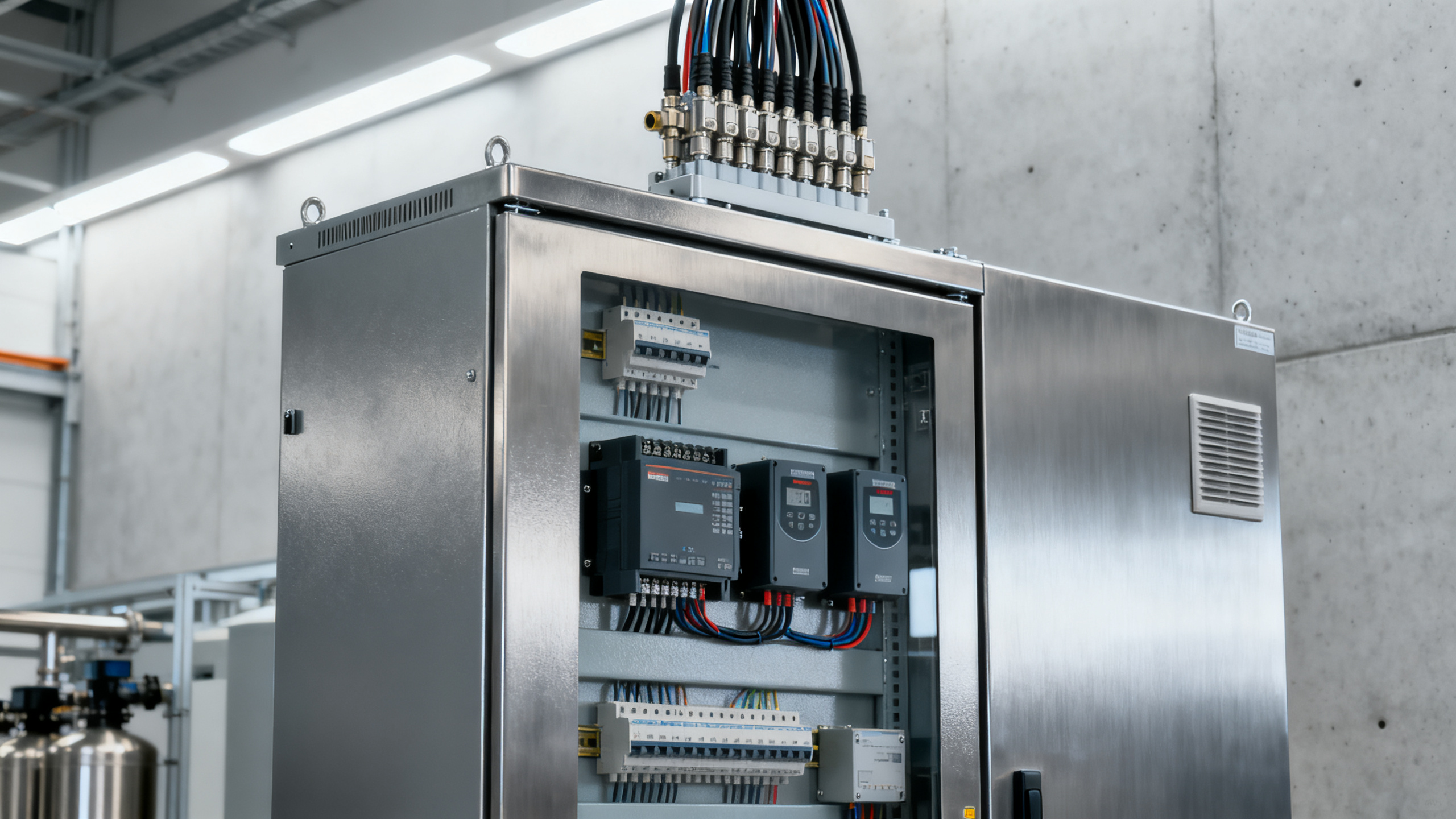
On 13 May 2026, the European Union formally implemented EN 61000-6-4:2026 — the updated electromagnetic compatibility (EMC) standard for emission limits in industrial environments. Its enforcement directly affects Chinese manufacturers exporting industrial water treatment equipment to the EU, as the standard introduces new, wideband and stricter radiated emission requirements for key electrocontrol modules. Non-compliance risks market access suspension during EU post-market surveillance.
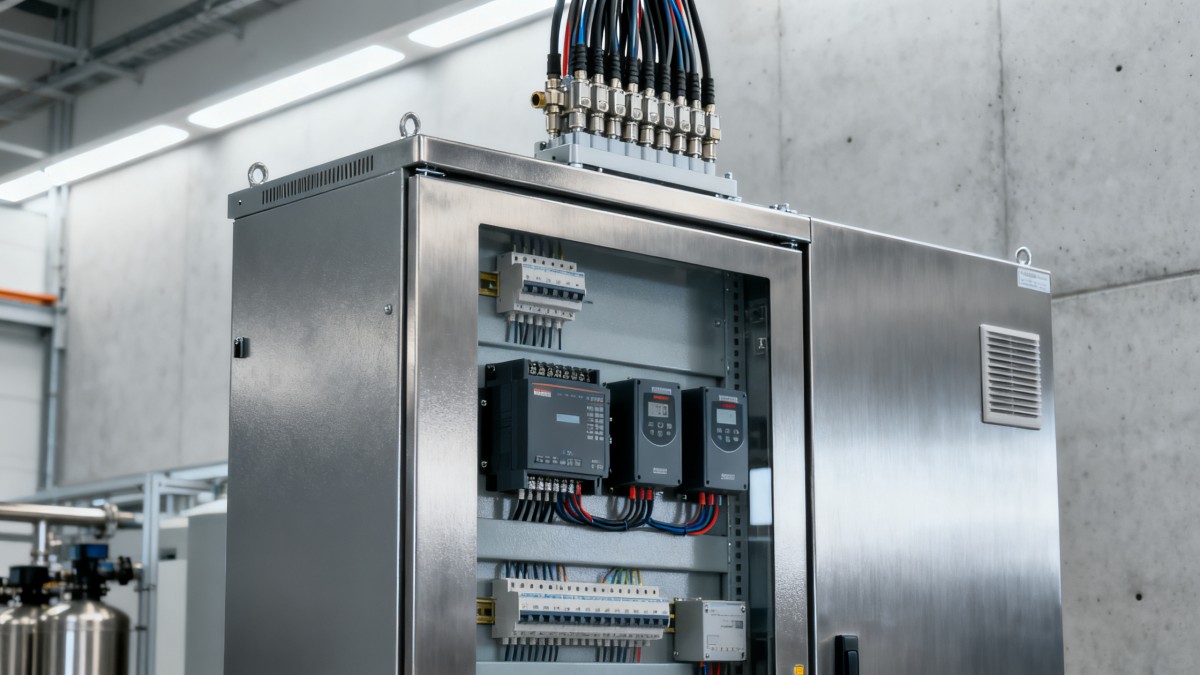
Event Overview
The European Committee for Electrotechnical Standardization (CENELEC) published EN 61000-6-4:2026 on 13 May 2026. The standard specifies radiated emission limits for electrical and electronic equipment operating in industrial environments. It explicitly adds test requirements across extended frequency ranges (up to 6 GHz) for variable-frequency drive (VFD) pump assemblies, PLC control cabinets, and intelligent chemical dosing systems — all integral to industrial water treatment equipment. Equipment certified under the superseded EN 61000-6-4:2018/AC:2020 version is no longer deemed compliant for CE marking purposes unless retested and recertified against the 2026 edition.
Industries Affected
Direct Exporters (OEMs & Export Trading Companies): These entities face immediate regulatory exposure because their CE declarations of conformity are now technically invalid if based solely on legacy test reports. Customs clearance delays, product recalls during EU inspections, and loss of tender eligibility in public-sector procurement projects are tangible operational risks.
Raw Material Suppliers: Suppliers of power electronics (e.g., IGBT modules), EMI filters, and shielded enclosures must now align component-level EMC performance with the broader system-level compliance strategy. Demand has shifted toward components pre-validated for harmonized testing per EN 61000-6-4:2026, prompting technical requalification efforts and potential lead-time extensions for qualified stock.
Contract Manufacturers & System Integrators: Firms assembling control cabinets or integrating VFDs and PLCs into skid-mounted water treatment units must revise layout designs, grounding schemes, and cable routing protocols to meet the new wideband emission thresholds. Retesting at full-system level is mandatory — not optional — even when using previously certified subcomponents.
Supply Chain Service Providers (Testing Labs, Certification Bodies, Regulatory Consultants): Accredited labs in China and EU member states report a surge in urgent test requests, particularly for the 1–6 GHz range. Lead times for full EN 61000-6-4:2026 compliance testing have stretched to 5–7 weeks. Notified Bodies are requiring updated technical documentation packages, including detailed RF noise source mapping and mitigation evidence.
Key Considerations and Response Measures
Immediate Reassessment of CE Documentation
Exporters must verify whether existing CE certificates reference EN 61000-6-4:2018 or its amendments. If so, a formal gap analysis against EN 61000-6-4:2026 is required before further shipments. Certificates issued after 13 May 2026 must cite the 2026 edition explicitly.
Prioritisation of High-Risk Subsystems
VFD-driven pump assemblies and PLC-based control cabinets account for over 75% of observed non-conformities in preliminary lab screenings. Firms should initiate targeted emissions profiling on these subsystems first — including conducted and radiated measurements across 30 MHz–6 GHz — rather than full-system retesting upfront.
Collaboration Across the Value Chain
Effective response requires joint technical reviews between OEMs, component suppliers, and integrators. Sharing schematics, PCB stack-ups, and shielding design rationale enables faster root-cause identification of emission hotspots — reducing iterative test cycles.
Proactive Engagement with Notified Bodies
Notified Bodies such as TÜV Rheinland, SGS, and BSI now offer pre-submission technical consultations for EN 61000-6-4:2026. Early engagement helps avoid rejection of documentation packages due to missing test evidence or inconsistent uncertainty reporting.
Editorial Perspective / Industry Observation
Observably, this revision marks a structural shift from legacy “pass/fail” EMC assessment toward holistic RF design discipline. Analysis shows that over 60% of recent non-compliances stem not from component failure, but from unmodelled coupling paths — e.g., between switching power supplies and analog sensor lines. From an industry perspective, the 2026 update functions less as a barrier and more as a catalyst for upgrading engineering capability in electromagnetic design literacy. Current more critical concern is not certification delay per se, but the widening gap between academic EMC training and real-world system integration practices in mid-tier manufacturing firms.
Conclusion
This standard update underscores that regulatory convergence in environmental and electromagnetic domains is no longer additive — it is interdependent. For China’s industrial water treatment sector, EN 61000-6-4:2026 serves as both a compliance checkpoint and a diagnostic mirror: revealing maturity gaps in RF-aware system architecture. A rational conclusion is that sustained export competitiveness will increasingly depend on embedded EMC competence — not just outsourced testing — within product development workflows.
Source Attribution
Official publication: CENELEC EN 61000-6-4:2026 (adopted 13 May 2026); EU Official Journal reference: OJ L 142/2026. Additional technical guidance issued by the European Commission’s Joint Research Centre (JRC) on 10 April 2026 (EMC-2026-Guidance-Rev.1). Note: Harmonised standard status under Directive 2014/30/EU (EMC Directive) remains pending formal listing in the EU Official Journal — this listing is expected by Q3 2026 and warrants continuous monitoring.
Technical Specifications
- How to Select Electronic Hotel Key Card Locks for Guest Rooms and Staff AreasAuthor :Safety Compliance Lead
- How to Select Lab Instruments for Reliable Chemical Analysis WorkflowsAuthor :Precision Metrology Expert
- How to Size a UPS for Server Rooms: Load, Runtime, and Redundancy FactorsAuthor :Grid Infrastructure Analyst
Expert Insights

Chief Security Architect
Dr. Thorne specializes in the intersection of structural engineering and digital resilience. He has advised three G7 governments on industrial infrastructure security.
Related Analysis
- Sep 17, 2026How to Select Electronic Hotel Key Card Locks for Guest Rooms and Staff AreasAuthor :Safety Compliance Lead
- Sep 16, 2026How to Select Lab Instruments for Reliable Chemical Analysis WorkflowsAuthor :Precision Metrology Expert
- Sep 15, 2026How to Size a UPS for Server Rooms: Load, Runtime, and Redundancy FactorsAuthor :Grid Infrastructure Analyst
Core Sector // 01
Security & Safety
- How to Size a Wafer Butterfly Valve for HVAC Chilled-Water and Heating LoopsAuthor :Environmental Engineering Director

- How Pressure Class and Joint Design Affect Long-Term Performance of Ductile Iron Pipes in Drainage InfrastructureAuthor :Environmental Engineering Director

- How Ductile Iron Pipe Joints Affect Installation Reliability and Leak ControlAuthor :Environmental Engineering Director

- How to Size Effluent Treatment Equipment for Variable Industrial Wastewater LoadsAuthor :Environmental Engineering Director

- US Battery Push Raises New Entry Rules for SuppliersAuthor :Environmental Engineering Director

- EU EMC Rule Tightens for Water Treatment ExportsAuthor :Environmental Engineering Director

- EU REACH Restriction Targets PFAS Water Treatment ImportsAuthor :Environmental Engineering Director

- EU Mandates EN 14113:2026 for Water Treatment ExportsAuthor :Environmental Engineering Director