IEA: Solar PV to Meet >25% of Global New Energy Demand in 2025, China Accounts for >75% of Additions
Author
Date Published
Reading Time
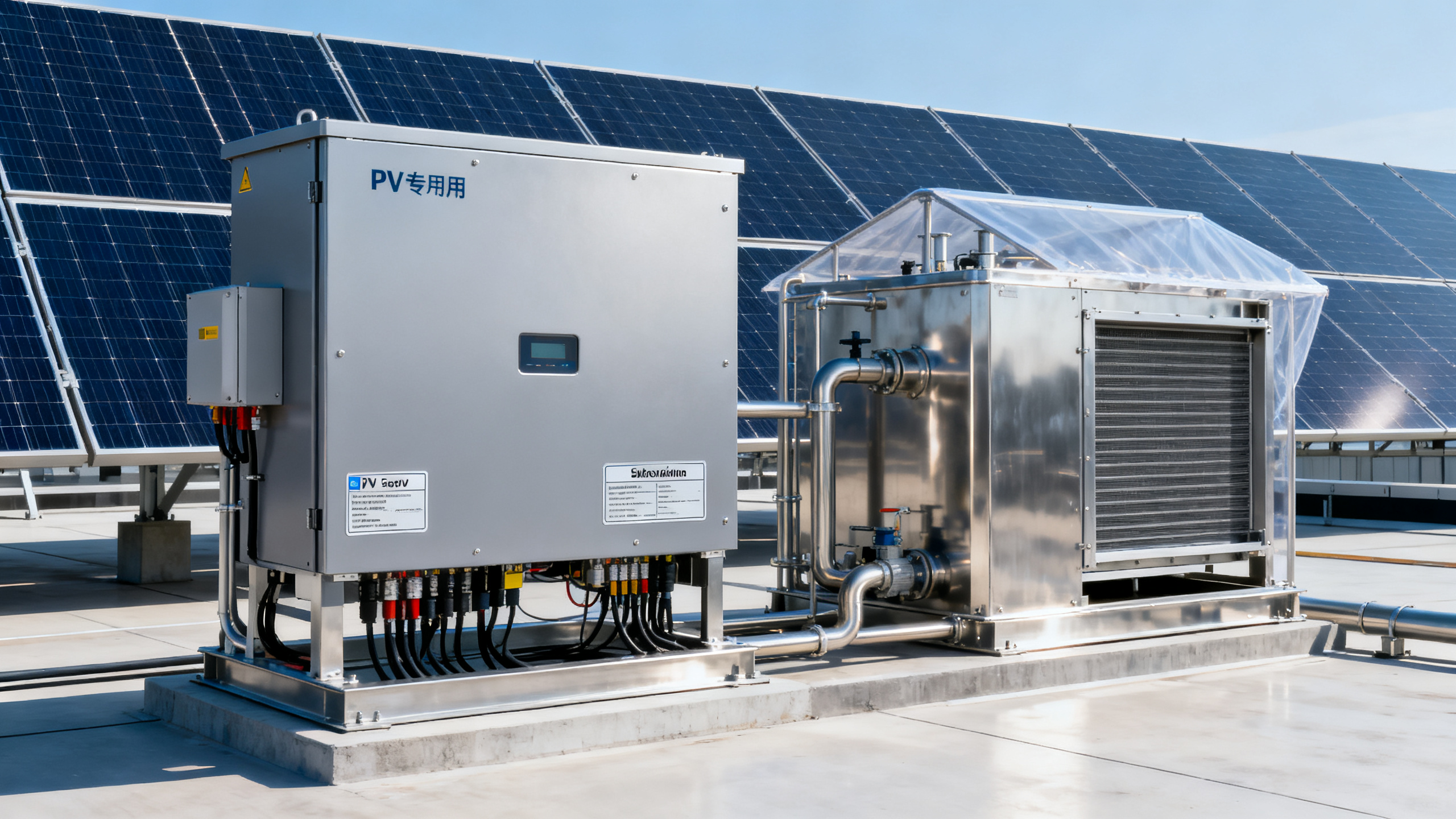
According to the International Energy Agency’s (IEA) Global Energy Review 2026, released on 31 December 2025, solar photovoltaic (PV) capacity additions reached 800 GW globally in 2025 — with over 75% originating from China. This scale of deployment is directly strengthening the export competitiveness and delivery reliability of several green industrial equipment categories, including PV-powered seawater desalination systems, industrial air purifiers and dust collectors, and PV-integrated power transmission equipment (e.g., step-up inverters and converters). The development signals material implications for trade, manufacturing, and supply chain actors serving off-grid and low-carbon infrastructure projects worldwide.
Event Overview
The IEA’s Global Energy Review 2026, published on 31 December 2025, reports that global solar PV installations in 2025 totaled 800 GW. Of this, 75% — approximately 600 GW — was added in China. The report identifies this expansion as a key enabler of Chinese-made, solar-powered industrial equipment exports, specifically citing applications in industrial water treatment (e.g., PV-driven seawater desalination), air purification and dust control systems, and power transmission hardware such as PV-specific step-up inverters and converters.
Industries Affected
Direct Exporters of Green Industrial Equipment
Manufacturers exporting PV-integrated industrial equipment — including seawater desalination units, industrial air filtration and dust suppression systems, and grid-tie or off-grid power conversion gear — are experiencing strengthened order fulfillment capacity due to domestic PV supply chain scale and cost advantages. The surge in China’s PV deployment has accelerated standardization, volume-based component sourcing, and system-level integration experience — all contributing to improved unit economics and delivery timelines for overseas buyers.
Raw Material and Component Suppliers
Suppliers of critical subsystems — such as high-efficiency inverters, corrosion-resistant pumps for desalination, electrostatic precipitator modules, and medium-voltage transformers designed for distributed PV input — face increased demand volatility tied to PV installation cycles. Their production planning and inventory strategies must now account for tighter synchronization with China’s domestic PV build-out schedule, which influences both component lead times and design iteration pace.
OEMs and System Integrators
OEMs assembling complete PV-powered industrial solutions (e.g., containerized solar desalination plants or modular dust control skids) benefit from lower bill-of-materials costs and faster access to certified PV-compatible components. However, they also face heightened expectations from international procurement teams regarding technical documentation compliance (e.g., IEC 62109, UL 1741 SB), local certification readiness, and logistical traceability — especially for projects in remote or off-grid locations.
Distribution and Project Procurement Channels
Importers, EPC contractors, and procurement agencies serving off-grid energy, mining, or municipal water projects are gaining greater supply certainty for solar-powered industrial assets. This reduces bid risk and project financing uncertainty. Yet it also increases scrutiny on vendor qualification — particularly around field-proven performance data under variable solar irradiance and non-grid-referenced operation.
What Enterprises and Practitioners Should Monitor and Act On
Track Official Updates on Export Classification and Dual-Use Controls
Given the strategic role of PV-integrated industrial equipment in energy security and climate infrastructure, monitor national and multilateral regulatory updates — especially those related to export licensing, technology transfer restrictions, or classification of certain power conversion and water treatment systems as dual-use items. Early awareness supports proactive compliance structuring.
Focus on High-Adoption Subcategories and Emerging Markets
Prioritize technical and commercial alignment with product segments showing rapid uptake: PV-powered reverse osmosis units for arid-region utilities; compact electrostatic/dust suppression systems for mining and construction sites; and modular, pre-certified 1–35 kV DC/AC step-up converter stations. Also watch procurement trends in Southeast Asia, the Middle East, and Sub-Saharan Africa — where off-grid solar industrial deployments are scaling fastest.
Distinguish Policy Signals from Operational Readiness
While the IEA data confirms large-scale PV deployment, actual export growth depends on downstream factors — including international certification lead times, logistics infrastructure maturity, and local maintenance ecosystem development. Avoid conflating installed PV capacity with immediate export scalability; instead assess each target market’s technical acceptance thresholds and service support gaps.
Prepare for Supply Chain Coordination Across PV and Industrial Domains
Align procurement planning, engineering validation schedules, and after-sales service protocols with PV module and inverter manufacturers’ roadmaps — particularly around next-generation topologies (e.g., string-level MPPT integration, hybrid AC/DC architectures). Joint testing and interoperability documentation will increasingly inform tender eligibility.
Editorial Perspective / Industry Observation
Observably, this IEA finding reflects not just a statistical milestone but an inflection point in how solar PV infrastructure is reshaping adjacent industrial equipment markets. Analysis shows that China’s concentrated PV build-out is accelerating the industrialization — rather than just the electrification — of core process technologies. From an industry perspective, this is less a short-term export boom and more a structural recalibration of global supply capability for solar-native industrial hardware. It signals growing convergence between energy generation standards and industrial equipment specifications — a trend requiring cross-domain engineering coordination and certification strategy. Current attention should focus less on headline GW figures and more on how rapidly these capabilities translate into internationally deployable, bankable, and maintainable systems.
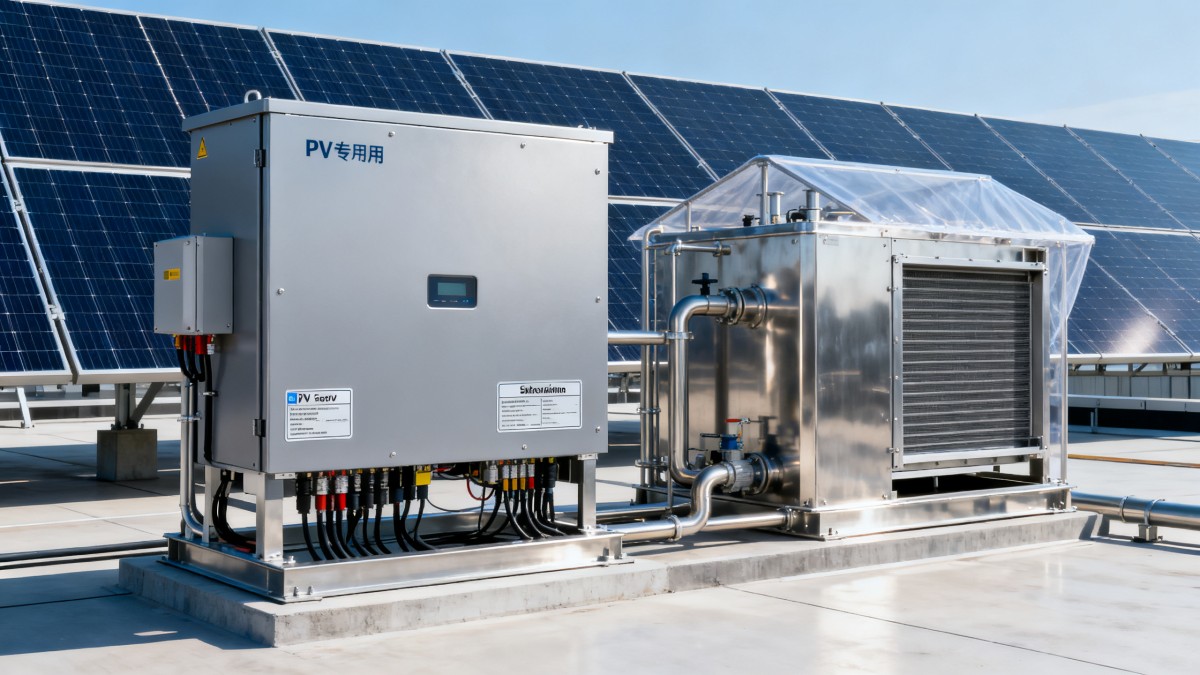
Conclusion: The IEA’s 2025 data underscores that solar PV is no longer only a power generation asset — it is becoming an embedded enabler of industrial process decarbonization. For stakeholders, this means shifting focus from standalone equipment specs to system-level integration readiness, certification portability, and supply chain resilience across energy and industrial domains. It is better understood as an early-stage infrastructure signal — indicating evolving capabilities rather than fully matured global market access.
Source: International Energy Agency (IEA), Global Energy Review 2026, published 31 December 2025.
Note: Ongoing observation is warranted regarding country-specific import regulations, certification harmonization efforts, and field performance reporting for PV-integrated industrial equipment outside China.
Technical Specifications
- How to Select Electronic Hotel Key Card Locks for Guest Rooms and Staff AreasAuthor :Safety Compliance Lead
- How to Select Lab Instruments for Reliable Chemical Analysis WorkflowsAuthor :Precision Metrology Expert
- How to Size a UPS for Server Rooms: Load, Runtime, and Redundancy FactorsAuthor :Grid Infrastructure Analyst
Expert Insights

Chief Security Architect
Dr. Thorne specializes in the intersection of structural engineering and digital resilience. He has advised three G7 governments on industrial infrastructure security.
Related Analysis
- Sep 17, 2026How to Select Electronic Hotel Key Card Locks for Guest Rooms and Staff AreasAuthor :Safety Compliance Lead
- Sep 16, 2026How to Select Lab Instruments for Reliable Chemical Analysis WorkflowsAuthor :Precision Metrology Expert
- Sep 15, 2026How to Size a UPS for Server Rooms: Load, Runtime, and Redundancy FactorsAuthor :Grid Infrastructure Analyst
Core Sector // 01
Security & Safety
- How to Size a Wafer Butterfly Valve for HVAC Chilled-Water and Heating LoopsAuthor :Environmental Engineering Director

- How Pressure Class and Joint Design Affect Long-Term Performance of Ductile Iron Pipes in Drainage InfrastructureAuthor :Environmental Engineering Director

- How Ductile Iron Pipe Joints Affect Installation Reliability and Leak ControlAuthor :Environmental Engineering Director

- How to Size Effluent Treatment Equipment for Variable Industrial Wastewater LoadsAuthor :Environmental Engineering Director

- US Battery Push Raises New Entry Rules for SuppliersAuthor :Environmental Engineering Director

- EU EMC Rule Tightens for Water Treatment ExportsAuthor :Environmental Engineering Director

- EU REACH Restriction Targets PFAS Water Treatment ImportsAuthor :Environmental Engineering Director

- EU Mandates EN 14113:2026 for Water Treatment ExportsAuthor :Environmental Engineering Director