EU Releases EN 61000-6-4:2026, Impacting Chinese Water Treatment Exports
Author
Date Published
Reading Time

On 12 May 2026, the European Union published EN 61000-6-4:2026 in the Official Journal of the European Union (OJEU), introducing stricter electromagnetic compatibility (EMC) requirements for industrial water treatment equipment exported from China to EU markets.
Event Overview
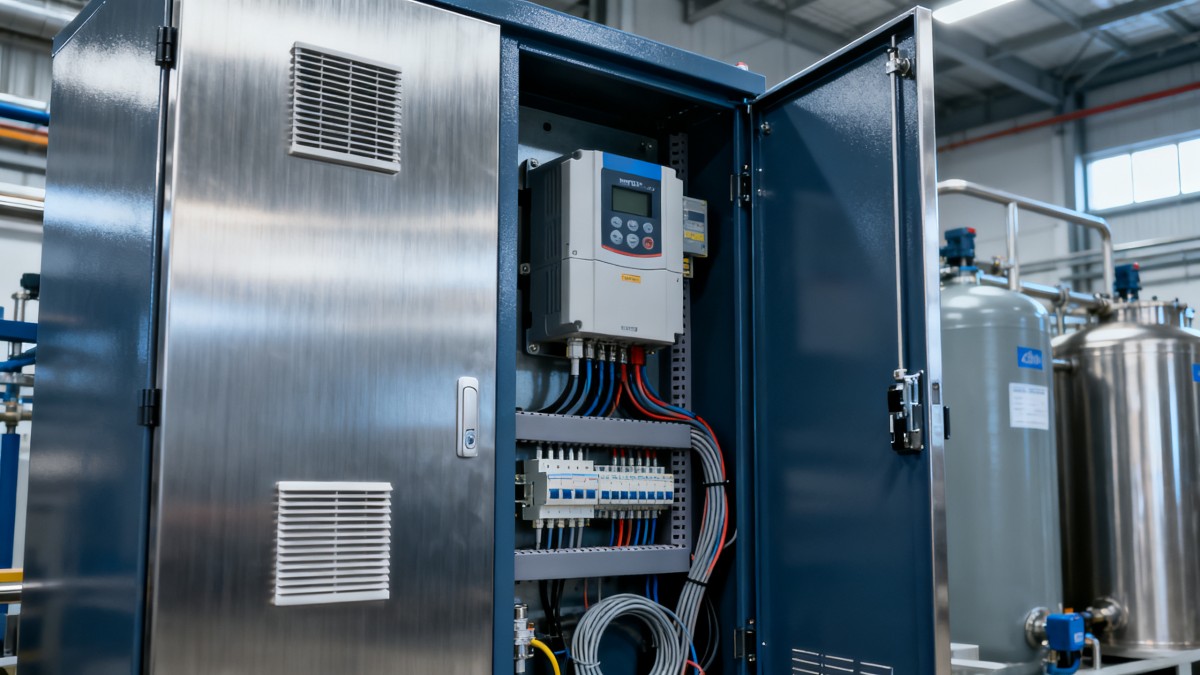
The European Standard EN 61000-6-4:2026 was officially published in the OJEU on 12 May 2026, superseding the 2019 edition. The revised standard tightens radiated emission limits—particularly in the 30–230 MHz frequency band—for key components used in industrial water treatment systems, including variable-frequency drive (VFD) pumps, PLC control cabinets, and remote water quality sensors. As a result, all affected Chinese-made equipment must undergo full retesting for EMC compliance. Average per-unit testing costs have increased by 35%, and certification timelines have extended to 14 weeks, directly delaying summer 2026 delivery schedules for multiple export projects.
Industries Affected
Direct Exporters (Trade Enterprises): These firms face immediate compliance pressure, as CE marking under the new harmonised standard is mandatory for market access. Re-testing applies not only to new models but also to previously certified units still in production or inventory—triggering cost recalculations, contract renegotiations, and potential penalties for late delivery.
Raw Material Suppliers: Suppliers of EMI filters, shielded cables, ferrite cores, and metal enclosures report rising demand for higher-grade components compliant with the tightened 30–230 MHz limits. However, lead times for such materials have lengthened, and some vendors lack traceable test reports aligned with EN 61000-6-4:2026, increasing qualification overhead for downstream manufacturers.
Equipment Manufacturers (OEMs/ODMs): Domestic producers must revise PCB layouts, grounding schemes, and cabinet shielding designs—especially for VFD-integrated pump skids and modular sensor nodes. Internal validation cycles are now longer, and design iterations require earlier engagement with notified bodies, compressing time-to-market windows.
Supply Chain Service Providers: Third-party EMC test labs in China and Southeast Asia report surging booking volumes and extended waitlists. Certification consultants note a spike in requests for pre-compliance screening and gap analysis against EN 61000-6-4:2026, particularly for firmware-controlled emissions profiles that were not assessed under the 2019 version.
Key Considerations and Recommended Actions
Prioritise product-level impact assessment
Manufacturers should map existing SKUs against the updated frequency bands and component categories listed in Clause 6 of EN 61000-6-4:2026—not assume legacy test reports remain valid. Devices with wireless telemetry or high-speed digital I/O are especially vulnerable to the new 30–230 MHz thresholds.
Engage notified bodies early for transitional arrangements
While EN 61000-6-4:2026 takes effect immediately upon OJEU publication, the EU allows a limited transition period for placing already-certified products on the market. Firms should verify whether their current certificates reference the repealed 2019 version—and if so, confirm with their notified body whether grandfathering applies to specific configurations or batches.
Review supplier declarations of conformity
Subcomponent suppliers (e.g., VFD module makers, sensor OEMs) must provide updated DoCs referencing EN 61000-6-4:2026. Relying on generic ‘EMC-compliant’ statements or outdated standards may invalidate final system-level certification.
Editorial Perspective / Industry Observation
Observably, this revision reflects a broader EU trend toward performance-based, application-specific EMC regulation—moving beyond generic industrial limits toward targeted controls for digitally intensive infrastructure equipment. Analysis shows the 30–230 MHz tightening aligns with growing concerns over interference with IoT-based monitoring networks and narrowband LPWAN deployments across municipal water systems. From an industry perspective, the timing suggests coordinated alignment with the EU’s Digital Product Passport (DPP) framework, where verified EMC data may soon feed into sustainability and interoperability reporting. That said, it is too early to conclude whether this change signals a permanent shift toward more frequent standard updates—or remains an isolated response to observed field interference incidents.
Conclusion
This update underscores that regulatory compliance for industrial exports is no longer a one-time certification event, but an ongoing technical lifecycle requirement. For Chinese water treatment equipment exporters, EN 61000-6-4:2026 serves as a material reminder: electromagnetic compatibility is increasingly inseparable from digital architecture, software-defined emissions, and supply chain traceability—not just hardware shielding.
Source Attribution
Official source: Official Journal of the European Union (OJEU), L 142/1, 12 May 2026, referencing Commission Implementing Decision (EU) 2026/XXXX amending the list of harmonised standards under Directive 2014/30/EU (EMC Directive).
Note: Full text of EN 61000-6-4:2026 is published by CENELEC and available via national standards bodies (e.g., DIN, AFNOR, BSI). Continued observation is warranted for any Commission guidance on transitional provisions, enforcement timelines, and implications for UKCA marking post-Brexit.
Technical Specifications
- How to Select Electronic Hotel Key Card Locks for Guest Rooms and Staff AreasAuthor :Safety Compliance Lead
- How to Select Lab Instruments for Reliable Chemical Analysis WorkflowsAuthor :Precision Metrology Expert
- How to Size a UPS for Server Rooms: Load, Runtime, and Redundancy FactorsAuthor :Grid Infrastructure Analyst
Expert Insights

Chief Security Architect
Dr. Thorne specializes in the intersection of structural engineering and digital resilience. He has advised three G7 governments on industrial infrastructure security.
Related Analysis
- Sep 17, 2026How to Select Electronic Hotel Key Card Locks for Guest Rooms and Staff AreasAuthor :Safety Compliance Lead
- Sep 16, 2026How to Select Lab Instruments for Reliable Chemical Analysis WorkflowsAuthor :Precision Metrology Expert
- Sep 15, 2026How to Size a UPS for Server Rooms: Load, Runtime, and Redundancy FactorsAuthor :Grid Infrastructure Analyst
Core Sector // 01
Security & Safety
- How to Size a Wafer Butterfly Valve for HVAC Chilled-Water and Heating LoopsAuthor :Environmental Engineering Director

- How Pressure Class and Joint Design Affect Long-Term Performance of Ductile Iron Pipes in Drainage InfrastructureAuthor :Environmental Engineering Director

- How Ductile Iron Pipe Joints Affect Installation Reliability and Leak ControlAuthor :Environmental Engineering Director

- How to Size Effluent Treatment Equipment for Variable Industrial Wastewater LoadsAuthor :Environmental Engineering Director

- US Battery Push Raises New Entry Rules for SuppliersAuthor :Environmental Engineering Director

- EU EMC Rule Tightens for Water Treatment ExportsAuthor :Environmental Engineering Director

- EU REACH Restriction Targets PFAS Water Treatment ImportsAuthor :Environmental Engineering Director

- EU Mandates EN 14113:2026 for Water Treatment ExportsAuthor :Environmental Engineering Director