IMO Mandates AI-Driven Water Quality Alert Modules for Shipboard Water Treatment Equipment
Author
Date Published
Reading Time
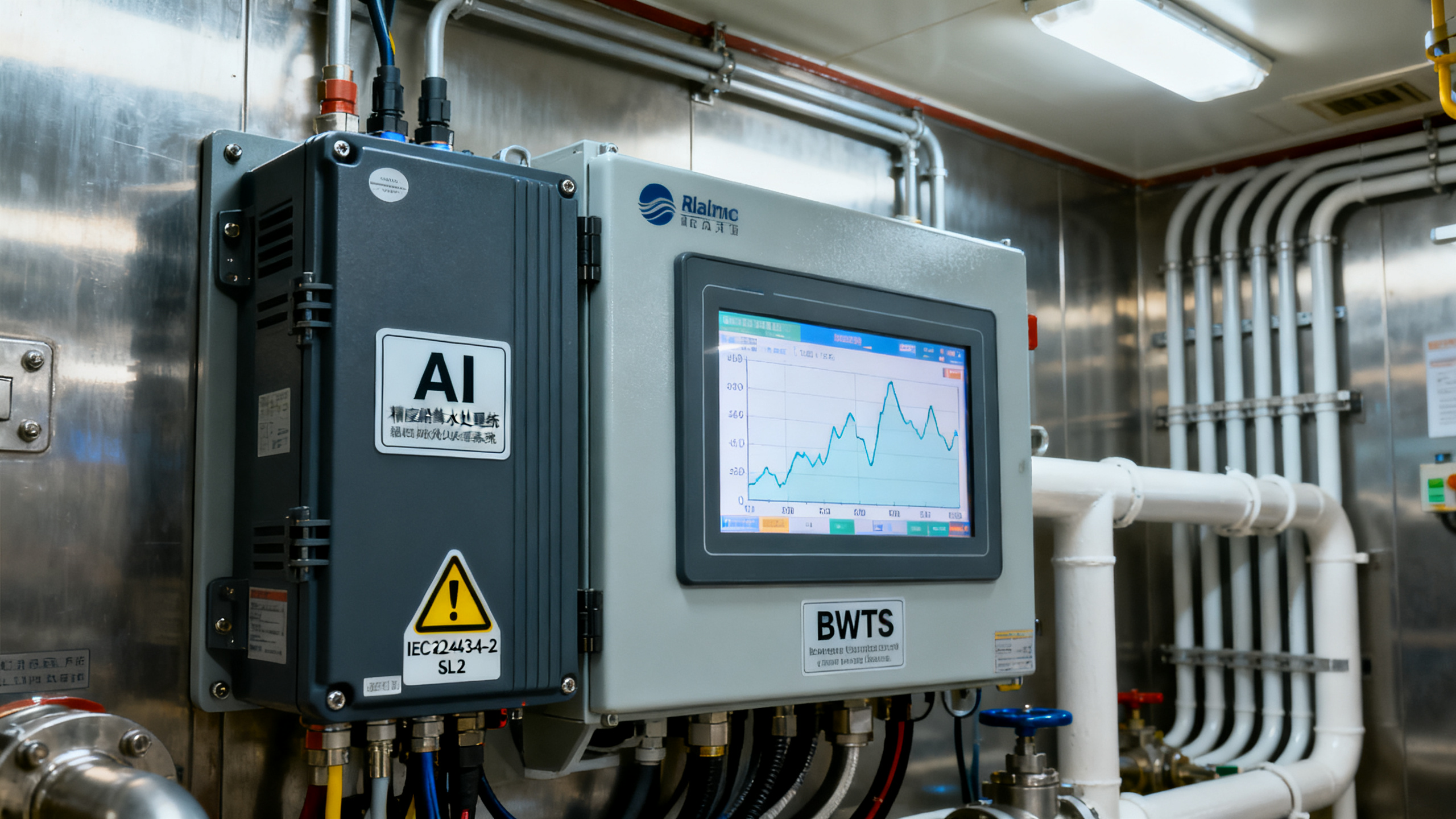
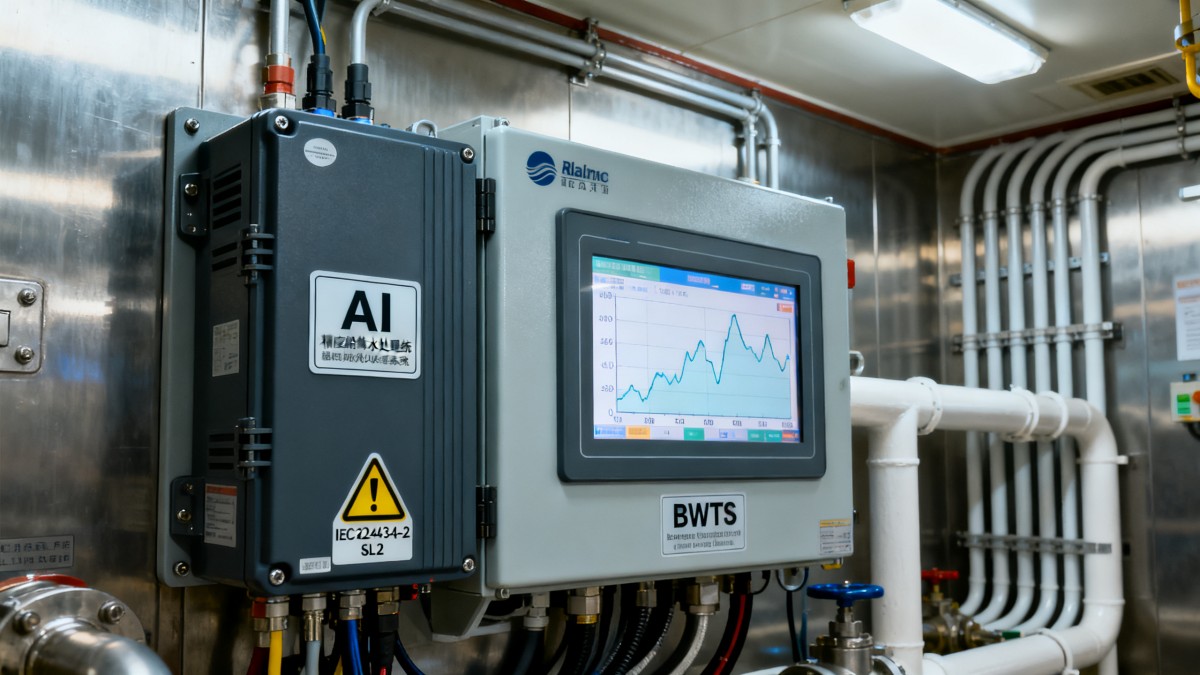
On May 11, 2026, the International Maritime Organization (IMO) officially brought into force resolution MEPC.382(80), requiring all newly built and retrofitted ships’ ballast water treatment systems (BWTS) and sewage treatment plants to integrate AI-powered real-time water quality anomaly alert modules compliant with IEC 62443-4-2 Security Level 2 (SL2). This development directly affects marine equipment exporters, system integrators, and certification service providers—particularly those in China supplying IMO-type-approved water treatment solutions.
Event Overview
The IMO announced on May 11, 2026, that resolution MEPC.382(80) has entered into force. The resolution mandates that all new and modified shipboard ballast water management systems (BWMS) and onboard domestic sewage treatment devices must incorporate an AI-driven real-time water quality anomaly warning module. The module must meet cybersecurity requirements specified in IEC 62443-4-2 at Security Level 2 (SL2). Chinese industrial water treatment equipment exporters must complete AI algorithm certification and obtain type approval from recognized classification societies—including DNV and Lloyd’s Register—by Q3 2026. Failure to do so will result in denial of IMO BWMS type approval certificates.
Impact on Specific Industry Segments
Export-Oriented Equipment Manufacturers
These companies supply BWTS or sewage treatment units to global shipyards and vessel operators. They are directly affected because IMO BWMS type approval is a mandatory prerequisite for market access in most flag states and major shipbuilding regions. Non-compliance after Q3 2026 means inability to affix the IMO type approval mark—effectively blocking entry into regulated maritime markets.
AI Algorithm Developers & Software Integrators
Firms providing embedded AI models for industrial water monitoring face new validation requirements. The mandate specifies not only functional performance (e.g., detection latency, false alarm rate) but also formal cybersecurity assurance under IEC 62443-4-2 SL2—a standard previously uncommon in marine water treatment software certification. Integration efforts now require traceable secure development lifecycle documentation.
Classification Society-Accredited Testing Laboratories
Laboratories authorized by DNV, LR, ABS, or CCS to conduct BWMS type approval tests must expand their assessment scope to include AI model behavior verification and cybersecurity evaluation. This implies updated test protocols, staff training, and potential accreditation extensions—especially for laboratories without prior IEC 62443-4-2 SL2 assessment experience.
Supply Chain & Certification Support Providers
Third-party consultants, technical documentation specialists, and conformity assessment facilitators supporting Chinese exporters must now advise on dual-track compliance: (1) functional AI performance aligned with MEPC.227(64) and (2) cybersecurity alignment with IEC 62443-4-2. Delays in either stream risk cascading certification bottlenecks ahead of the Q3 2026 deadline.
What Relevant Enterprises or Practitioners Should Focus On Now
Monitor official guidance updates from IMO and classification societies
While MEPC.382(80) is in force, detailed implementation guidelines—including acceptable AI validation methodologies and SL2 interpretation notes for embedded maritime systems—are still pending publication by DNV, LR, and IMO’s Sub-Committee on Ship Systems and Equipment (SSE). Enterprises should subscribe to official notifications rather than rely solely on current resolution text.
Prioritize AI model documentation and cybersecurity architecture review
Manufacturers should immediately audit existing AI modules for traceability of training data sources, explainability of anomaly triggers, and secure boot/update mechanisms. IEC 62443-4-2 SL2 requires evidence of secure development practices—not just runtime resilience—so internal process documentation matters as much as code behavior.
Distinguish between regulatory signal and operational readiness
Analysis shows that MEPC.382(80) represents a binding regulatory requirement, not a recommendation—but its enforcement depends on classification society capacity and flag state adoption timelines. Some flag administrations may allow transitional arrangements for vessels already under construction; however, no such exemptions are codified in the resolution itself.
Initiate early engagement with classification societies on AI module pre-assessment
Observably, DNV and LR have begun accepting pre-submission consultations for AI-integrated BWTS designs. Early technical dialogue—especially on threat modeling, secure communication interfaces, and anomaly logging formats—can reduce rework cycles during formal type approval testing.
Editorial Perspective / Industry Observation
This regulation is better understood as a structural inflection point rather than a one-off compliance update. From an industry perspective, it signals IMO’s increasing emphasis on cyber-resilient autonomy in critical marine environmental systems—not merely hardware performance. It reflects growing convergence between maritime safety regulation and industrial cybersecurity standards, particularly for AI-augmented equipment deployed in remote, high-consequence environments. Current observability suggests this is not an isolated mandate: similar AI integration expectations are emerging in IMO’s draft guidelines for autonomous ship systems and energy efficiency monitoring. Therefore, sustained attention is warranted—not only for immediate BWTS compliance, but as an indicator of broader regulatory trajectory.
Conclusion
The IMO’s enforcement of AI-driven water quality alert modules marks a formal shift toward cybersecurity-aware intelligence in marine environmental equipment. Its significance lies less in technical novelty and more in the binding linkage it establishes between algorithmic functionality, cyber assurance, and international market access. At present, this development is best interpreted as a firm regulatory baseline—not a provisional trial—with enforceable consequences beginning Q3 2026. Stakeholders should treat it as a fixed parameter in product development, certification planning, and supply chain coordination—not as a negotiable variable.
Source Attribution
Main source: International Maritime Organization (IMO), Resolution MEPC.382(80), effective May 11, 2026.
Additional context: Public notices issued by DNV and Lloyd’s Register regarding BWMS type approval procedures (as of May 2026).
Note: Detailed AI validation criteria and IEC 62443-4-2 SL2 implementation guidance for marine water treatment applications remain under development and are subject to ongoing observation.
Technical Specifications
- How to Select Electronic Hotel Key Card Locks for Guest Rooms and Staff AreasAuthor :Safety Compliance Lead
- How to Select Lab Instruments for Reliable Chemical Analysis WorkflowsAuthor :Precision Metrology Expert
- How to Size a UPS for Server Rooms: Load, Runtime, and Redundancy FactorsAuthor :Grid Infrastructure Analyst
Expert Insights

Chief Security Architect
Dr. Thorne specializes in the intersection of structural engineering and digital resilience. He has advised three G7 governments on industrial infrastructure security.
Related Analysis
- Sep 17, 2026How to Select Electronic Hotel Key Card Locks for Guest Rooms and Staff AreasAuthor :Safety Compliance Lead
- Sep 16, 2026How to Select Lab Instruments for Reliable Chemical Analysis WorkflowsAuthor :Precision Metrology Expert
- Sep 15, 2026How to Size a UPS for Server Rooms: Load, Runtime, and Redundancy FactorsAuthor :Grid Infrastructure Analyst
Core Sector // 01
Security & Safety
- How to Size a Wafer Butterfly Valve for HVAC Chilled-Water and Heating LoopsAuthor :Environmental Engineering Director

- How Pressure Class and Joint Design Affect Long-Term Performance of Ductile Iron Pipes in Drainage InfrastructureAuthor :Environmental Engineering Director

- How Ductile Iron Pipe Joints Affect Installation Reliability and Leak ControlAuthor :Environmental Engineering Director

- How to Size Effluent Treatment Equipment for Variable Industrial Wastewater LoadsAuthor :Environmental Engineering Director

- US Battery Push Raises New Entry Rules for SuppliersAuthor :Environmental Engineering Director

- EU EMC Rule Tightens for Water Treatment ExportsAuthor :Environmental Engineering Director

- EU REACH Restriction Targets PFAS Water Treatment ImportsAuthor :Environmental Engineering Director

- EU Mandates EN 14113:2026 for Water Treatment ExportsAuthor :Environmental Engineering Director