China's Air Quality Shows Significant Improvement in March 2026: Key Industries Affected and Strategic Responses
Author
Date Published
Reading Time

China's Air Quality Shows Significant Improvement in March 2026: Key Industries Affected and Strategic Responses

Introduction
China's environmental monitoring data reveals a notable improvement in air quality as of March 2026, with PM2.5 concentrations in key cities dropping by 12.3% year-on-year. The Beijing-Tianjin-Hebei (BTH) region achieved a historic milestone of 90 consecutive days without heavy pollution. This development is particularly relevant for industries such as energy, manufacturing, and environmental technology, as it signals the effectiveness of recent pollution control measures and potential shifts in regulatory focus.
Event Overview
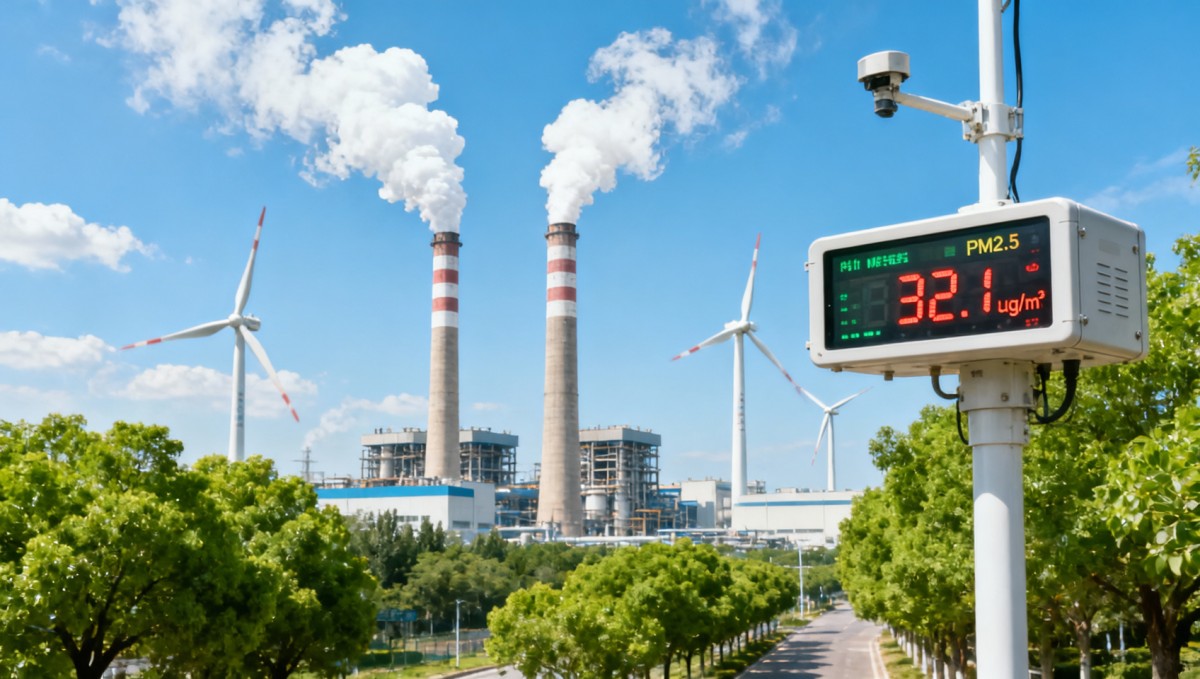
According to the China National Environmental Monitoring Center's monthly air quality report (data up to March 25, 2026), the average PM2.5 concentration across 339 prefecture-level cities stood at 32.1 μg/m³, showing significant year-on-year improvement. The BTH region and surrounding "2+26" cities marked a record-breaking 90 days without days where the Air Quality Index (AQI) exceeded 200. Officials attribute this progress to the completion of coal-to-clean-energy transitions and enhanced industrial VOC emissions controls.
Impact on Key Industries
Clean Energy Providers
The reported "coal phase-out completion" suggests accelerated demand for alternative heating solutions. Companies providing natural gas infrastructure, electric heat pumps, or district heating systems may see sustained policy support.
Industrial Emission Control Technology
With VOC treatment highlighted as a success factor, manufacturers of air pollution control equipment and monitoring systems should anticipate stricter enforcement of existing standards, particularly in chemical, coating, and printing sectors.
Construction Material Producers
The sustained clean air achievement in BTH—China's most regulated region—may prompt other provinces to adopt similar emission limits for cement, steel, and glass manufacturing, requiring preemptive technology upgrades.
Strategic Recommendations for Businesses
Monitor Policy Implementation Details
While the headline numbers show progress, companies should track provincial-level implementation rules for "coal phase-out" and VOC standards, which may introduce specific compliance timelines or technology requirements.
Reassess Regional Production Strategies
Manufacturers with operations in multiple regions should evaluate whether the BTH model will be replicated elsewhere, potentially necessitating facility upgrades or supply chain adjustments.
Prepare for Tighter Monitoring
The reported success may lead to expanded use of continuous emission monitoring systems (CEMS). Industrial operators should audit current monitoring capabilities and budget for potential upgrades.
Industry Perspective
From an industry standpoint, these results should be interpreted as validation of China's pollution control framework rather than a conclusion. The 90-day BTH milestone—while significant—represents a seasonal achievement during winter heating months when pollution typically peaks. More telling will be whether this performance can be maintained through summer ozone season. The emphasis on VOC treatment suggests this may become the next regulatory priority area after PM2.5 and SO2 reductions.
Conclusion
China's March 2026 air quality report demonstrates measurable progress from sustained emission control efforts. For industries affected by environmental regulations, the data underscores the need to view pollution control not as temporary compliance but as an ongoing operational requirement. The BTH region's performance may establish new benchmarks for other regions, making proactive adaptation strategically prudent.
Information Sources
Primary data sourced from China National Environmental Monitoring Center's monthly air quality report (March 2026). Regional implementation details and future policy directions require continued monitoring of provincial ecology department announcements.
Technical Specifications
- Air Handling Unit Supplier Checklist: Performance Data, Lead Times, and SupportAuthor :Environmental Engineering Director
- Buying Fiberglass Water Tanks Wholesale: Compare Quotes and Delivery CostsAuthor :Environmental Engineering Director
- Choosing an XLPE Power Cable Supplier: Test Reports, Traceability, and Lead TimesAuthor :Grid Infrastructure Analyst
Expert Insights

Chief Security Architect
Dr. Thorne specializes in the intersection of structural engineering and digital resilience. He has advised three G7 governments on industrial infrastructure security.
Related Analysis
- Oct 19, 2026Air Handling Unit Supplier Checklist: Performance Data, Lead Times, and SupportAuthor :Environmental Engineering Director
- Oct 18, 2026Buying Fiberglass Water Tanks Wholesale: Compare Quotes and Delivery CostsAuthor :Environmental Engineering Director
- Oct 17, 2026Choosing an XLPE Power Cable Supplier: Test Reports, Traceability, and Lead TimesAuthor :Grid Infrastructure Analyst
Core Sector // 01
Security & Safety
- Air Handling Unit Supplier Checklist: Performance Data, Lead Times, and SupportAuthor :Environmental Engineering Director

- How to Select Industrial Emission Control Systems for High-Dust Manufacturing LinesAuthor :Environmental Engineering Director

- Environmental Technologies for Heavy Industry: Choosing Cleaner Production SolutionsAuthor :Environmental Engineering Director

- Selecting Air Compliance Equipment for Dust, Fumes, and VOC ControlAuthor :Environmental Engineering Director

- EU Rule Tightens EN 1822-2 for Industrial Air PurifiersAuthor :Environmental Engineering Director

- EU Eco-Design Rules Tighten for Air PurifiersAuthor :Environmental Engineering Director

- Low-Maintenance Dust and Fume Control Systems: Best Options for Welding ShopsAuthor :Environmental Engineering Director

- EPA Sets VOC Labeling Rule for Air PurifiersAuthor :Environmental Engineering Director