PBOC Draft Rules May Reshape RMB Trade Finance Costs
Author
Date Published
Reading Time

The timing of the underlying event is not specified in the provided information, but the policy move now drawing attention is the People’s Bank of China’s June 5 public consultation on revised rules for the management of renminbi deposit and lending rates. For exporters, lenders, and buyers involved in cross-border industrial equipment deals, the development matters because it may affect how renminbi-denominated financing is priced in contracts, settlement, and trade finance arrangements, especially where long payment terms are common.
What the draft consultation explicitly covers
According to the provided summary, the People’s Bank of China opened a public consultation on a new version of the rules governing renminbi deposit and lending rates on June 5. The draft is intended to tighten pricing standards for renminbi financing under cross-border trade and to clarify financial institutions’ filing and disclosure obligations for loan rates offered to foreign-related enterprises.
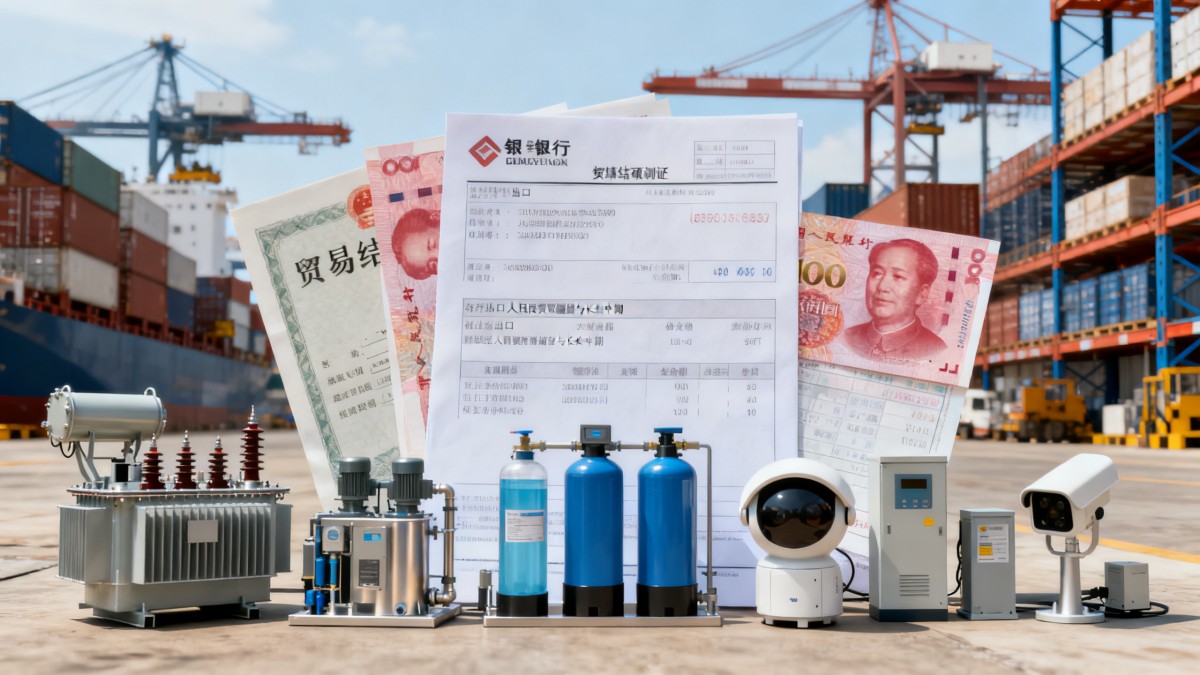
The same summary states that, if implemented, the new rules would affect financing costs for renminbi-denominated industrial equipment export contracts, forward exchange settlement pricing, and letter of credit discount rates. The impact identified in the input is especially relevant to high-value orders with long account periods, including transformers, industrial water treatment systems, and security equipment.
Where cost pressure may surface first
Export contract financing for equipment suppliers
From an industry perspective, exporters of high-value industrial equipment may be among the first to feel the effect because renminbi pricing discipline in cross-border financing can feed directly into contract funding structures. The business link to watch is not only the quoted product price, but also the financing terms attached to long-cycle export orders.
Trade finance desks and settlement service providers
Analysis shows that banks and service providers involved in forward exchange settlement and letter of credit discounting may need to pay closer attention to how renminbi trade finance is documented and priced. For these participants, the key issue is whether filing and disclosure requirements change the way external-facing loan pricing is presented and processed.
Overseas buyers using longer payment terms
Buyers relying on extended settlement periods may also face indirect changes. Observably, if financing costs linked to renminbi-denominated deals are adjusted, the impact may appear in payment schedules, discounting terms, or the structure of commercial negotiations rather than in product specifications themselves.
Supply chain coordinators handling large orders
For parties coordinating delivery, documentation, and payment across multiple counterparties, the main concern is execution risk around settlement arrangements. What deserves closer attention is whether renminbi financing terms, discount rates, or related banking disclosures begin to affect the timing and design of order settlement plans.
What companies should monitor now
Track the final wording rather than the draft alone
Analysis shows that the immediate task is to distinguish between consultation-stage language and binding implementation rules. Companies involved in renminbi export settlement should closely watch whether the final text keeps, narrows, or expands the treatment of cross-border trade financing and related disclosure requirements.
Review long-credit orders already in negotiation
For exporters of transformers, industrial water treatment systems, security equipment, and other high-value goods, deals with long payment cycles deserve special review. The practical focus is whether pricing clauses, financing assumptions, or discounting arrangements remain workable if renminbi financing costs are recalibrated.
Check documentation and lender communication channels
Because the draft summary highlights filing and disclosure obligations for foreign-related enterprise loan rates, companies should pay attention to how banks may request or present supporting materials. The operational issue is not just price, but also whether loan-related communication, disclosures, and supporting documents become more formalized.
Separate policy signal from transaction execution
What deserves closer attention is the gap between a regulatory signal and actual transaction practice. Even if the policy direction points to tighter pricing discipline, the real business effect may vary by financing structure, counterparty arrangement, and settlement design, so companies should avoid treating the consultation itself as a completed outcome.
Why this is more a signal than a settled outcome
Observably, this development is better understood as an important policy signal rather than a finalized market result. The confirmed fact is that a public consultation has been launched and that the draft, if implemented, may influence renminbi-denominated export financing, forward exchange settlement pricing, and letter of credit discounting.
From an industry perspective, the reason continued attention is warranted is that the affected areas sit at the intersection of pricing, trade execution, and bank compliance. That makes the issue relevant not only for finance teams, but also for export sales, contract management, and settlement planning functions.
How the market may best read this update
At this stage, the industry significance lies less in an immediate confirmed cost shift and more in the direction of tighter standardization around renminbi pricing in cross-border trade finance. It is more appropriate to understand this as a development that may alter transaction economics for certain export categories if the rules are implemented, especially where order values are high and account periods are long.
A neutral reading is that the consultation raises a practical watchpoint for companies using renminbi-denominated settlement in industrial equipment trade. The final business impact still depends on how the rules are finalized and applied in actual financing and settlement practice.
Basis of this article and items still to verify
This article is based on the user-provided news title, event timing note, and event summary. The specific official source link was not provided in the input, so the exact consultation document and any subsequent official clarification still need to be continuously verified.
For this type of policy-related industry update, commonly relevant source categories may include official regulatory announcements, company disclosures, industry association updates, authoritative media reporting, and standard-setting documents. The main follow-up points remain the final wording of the rules, any clarified implementation scope, and whether renminbi pricing, forward settlement, or letter of credit discounting practices show concrete changes after the consultation stage.
Technical Specifications
- Portable Gas Monitor Calibration: How Often Is It Needed for Safe Confined-Space Work?Author :Precision Metrology Expert
- Wholesale Borosilicate Lab Glassware: How Buyers Verify Quality, Specs, and Supply ReliabilityAuthor :Precision Metrology Expert
- How to Select Electronic Hotel Key Card Locks for Guest Rooms and Staff AreasAuthor :Safety Compliance Lead
Expert Insights

Chief Security Architect
Dr. Thorne specializes in the intersection of structural engineering and digital resilience. He has advised three G7 governments on industrial infrastructure security.
Related Analysis
- Sep 19, 2026Portable Gas Monitor Calibration: How Often Is It Needed for Safe Confined-Space Work?Author :Precision Metrology Expert
- Sep 18, 2026Wholesale Borosilicate Lab Glassware: How Buyers Verify Quality, Specs, and Supply ReliabilityAuthor :Precision Metrology Expert
- Sep 17, 2026How to Select Electronic Hotel Key Card Locks for Guest Rooms and Staff AreasAuthor :Safety Compliance Lead
Core Sector // 01
Security & Safety
- How to Size a UPS for Server Rooms: Load, Runtime, and Redundancy FactorsAuthor :Grid Infrastructure Analyst

- How to Choose a Step-Down Transformer for a Control Panel: Key Sizing FactorsAuthor :Grid Infrastructure Analyst

- How Often Should Overseas Power Systems Undergo Safety Inspections?Author :Grid Infrastructure Analyst

- How to Choose Panels for Extreme-Cold Industrial Sites?Author :Grid Infrastructure Analyst

- What Should a Cross-Border EPC Equipment Procurement Reference Include?Author :Grid Infrastructure Analyst

- How to Compare Low-Voltage Equipment for Panel IntegrationAuthor :Grid Infrastructure Analyst

- IEC-Compliant Power Infrastructure: Key Design and Verification RequirementsAuthor :Grid Infrastructure Analyst

- Updated EN 61000-6-4:2026 Raises EMC Compliance Bar for EU-Bound Industrial EquipmentAuthor :Grid Infrastructure Analyst