How to Select Low Voltage Distribution Systems for Commercial and Industrial Projects
Author
Date Published
Reading Time
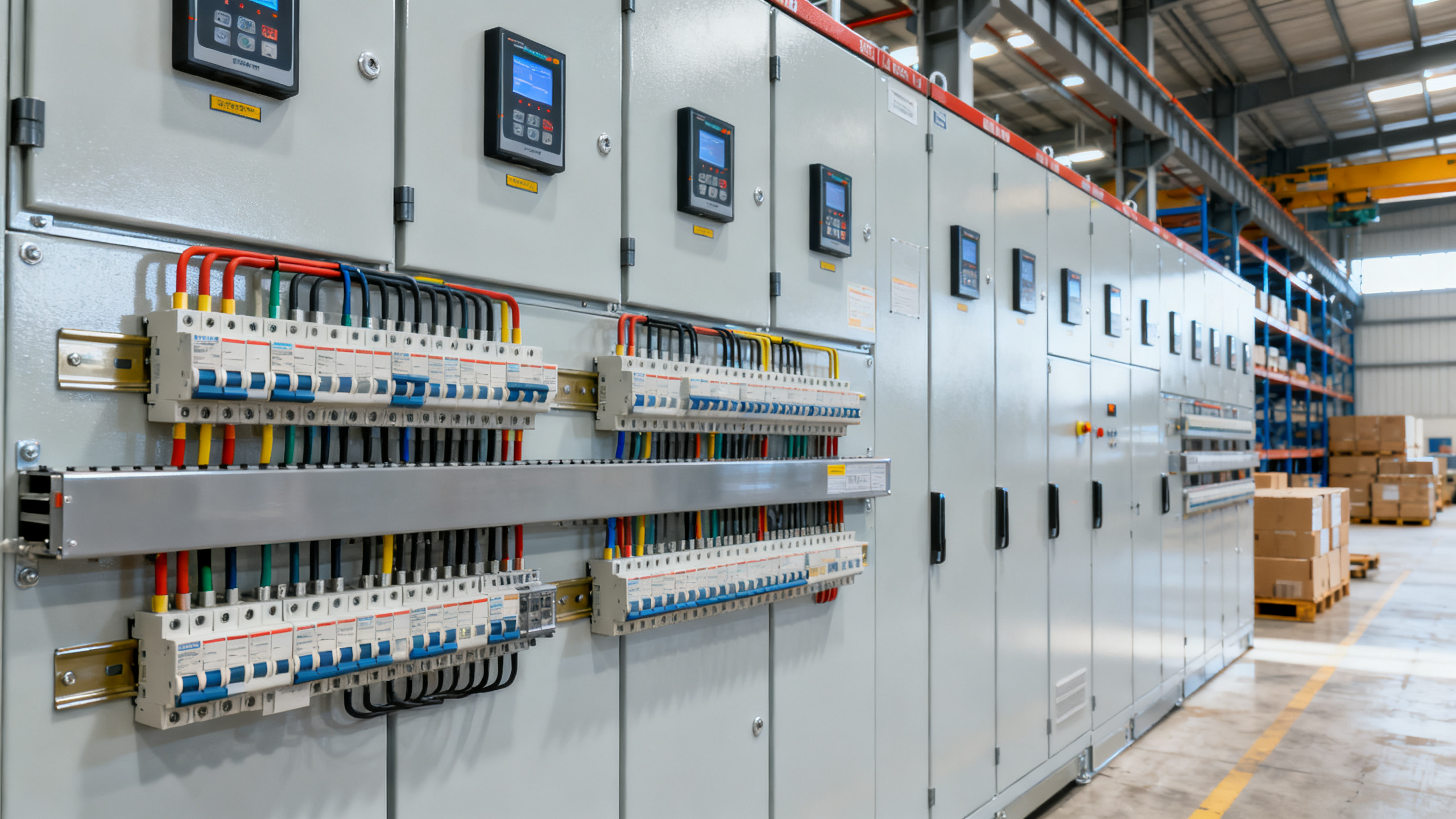
Selecting low voltage distribution systems for commercial and industrial projects is rarely a routine specification task. It shapes electrical safety, operating continuity, maintenance access, expansion flexibility, and compliance exposure across the full asset life cycle.
In practical terms, the right decision is not only about matching voltage and current ratings. It requires a clear view of load behavior, site conditions, protection coordination, equipment quality, and the standards that govern installation in different regions.
That is why low voltage distribution systems remain a major focus in commercial buildings, production plants, logistics hubs, utilities, and mixed-use infrastructure. Failures at this level can disrupt entire operations long before upstream power assets become the issue.
Why the selection process carries more weight today
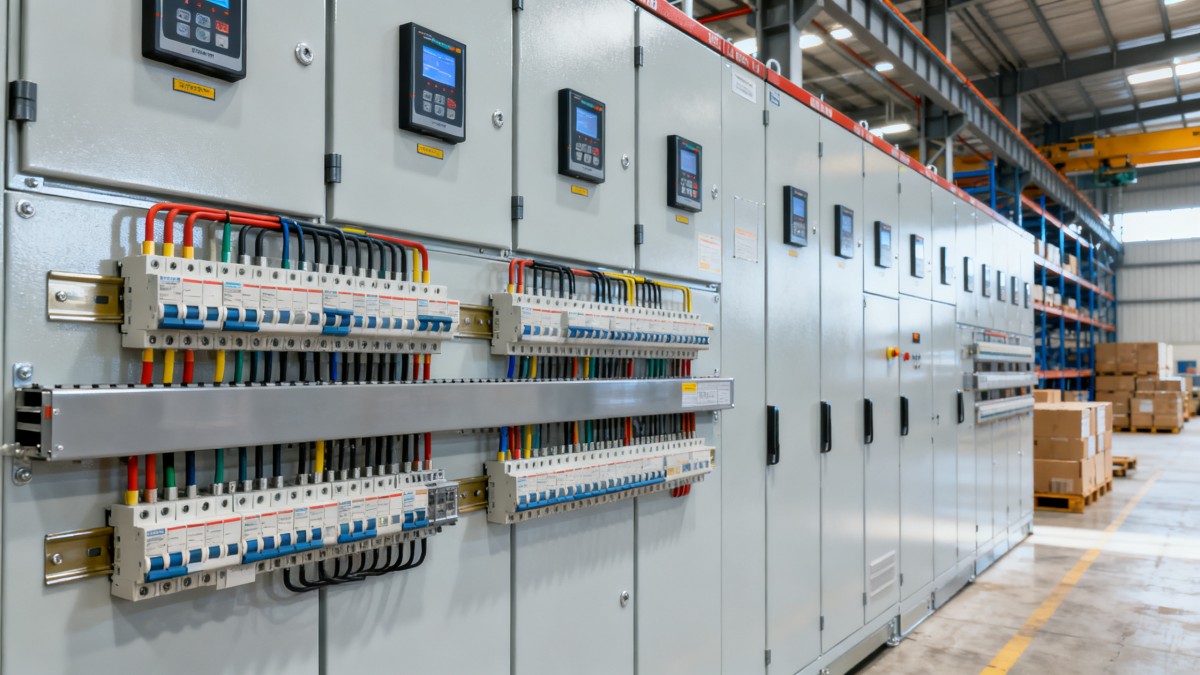
Electrical demand profiles are changing. Commercial facilities now carry more automation, digital control, HVAC intensity, EV charging, and backup integration. Industrial sites add motor loads, harmonics, variable frequency drives, and tighter uptime requirements.
At the same time, cost pressure has not reduced the need for resilience. Shortcuts in switchboards, panel architecture, busbar layout, or protective device selection often create expensive consequences during commissioning or later expansion.
From the broader market perspective, this is where informed sourcing matters. Global Industrial Core, or GIC, approaches foundational infrastructure through a compliance-first and reliability-driven lens, which is especially relevant when low voltage distribution systems must perform under demanding operational conditions.
What low voltage distribution systems actually include
The term covers the equipment and architecture that receive, divide, protect, and deliver electrical power at low voltage levels to final loads. In many projects, this means the system between the transformer secondary and the connected circuits.
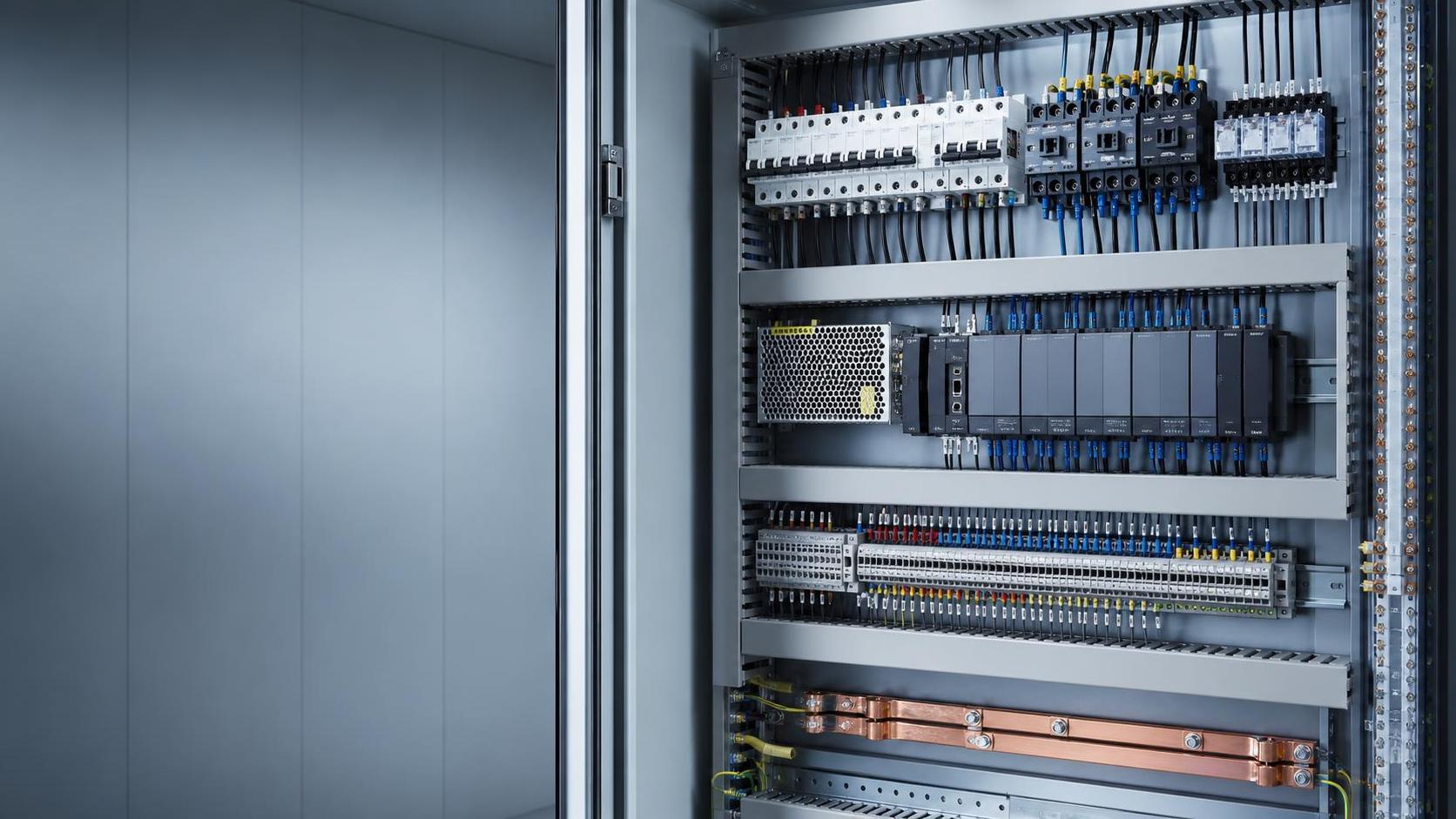
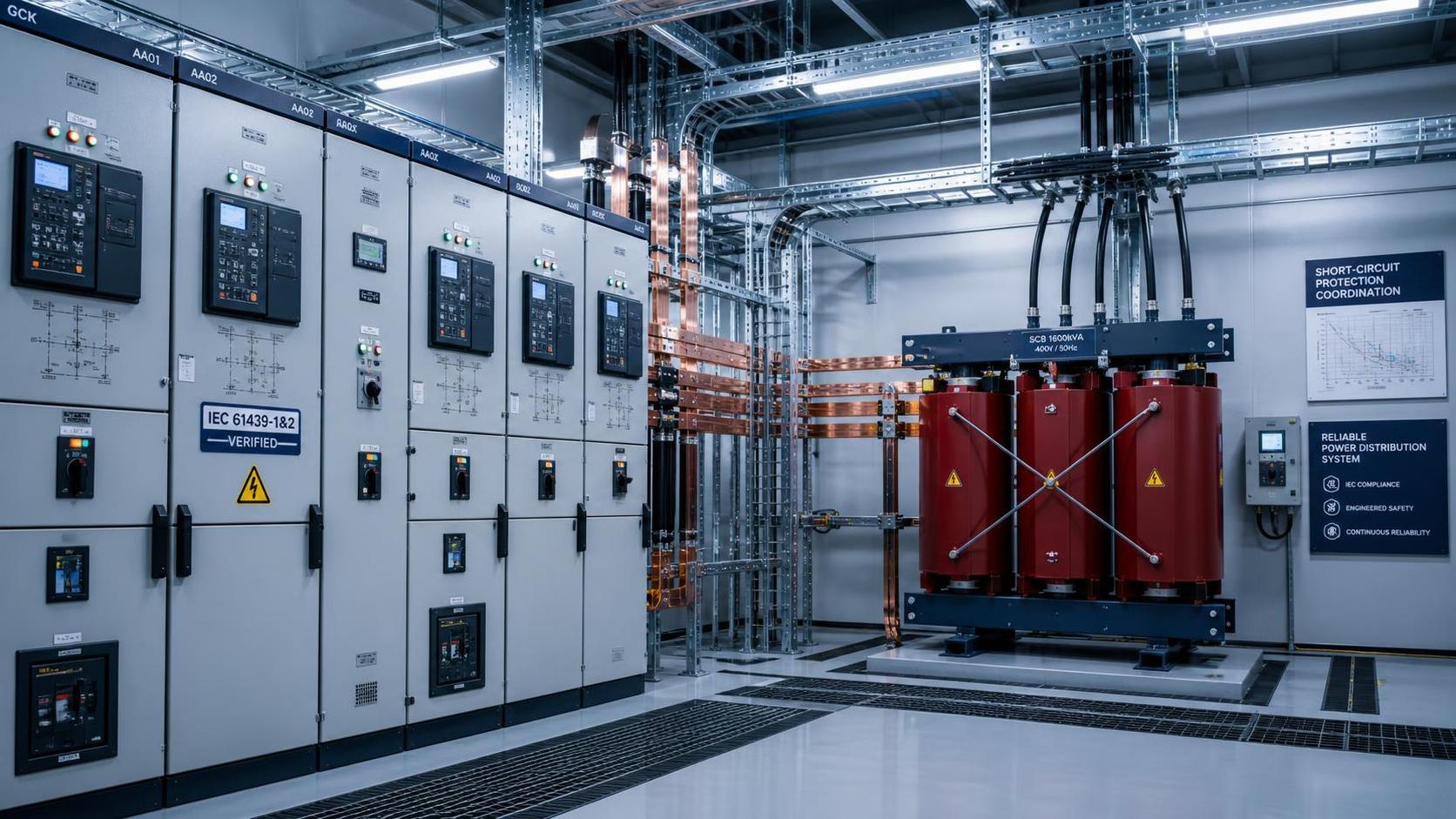
Typical components include main switchboards, distribution boards, motor control centers, busbar trunking systems, protective devices, meters, cable networks, and grounding arrangements. In more advanced installations, monitoring, power quality analysis, and remote diagnostics are also built in.
Simple definitions can miss an important point. Low voltage distribution systems are not just collections of products. They are coordinated systems, and their performance depends on how each element works with the others under normal, peak, and fault conditions.
Commercial and industrial priorities are not identical
A commercial tower may prioritize tenant continuity, space efficiency, fire compartmentation, and metering granularity. A manufacturing site may focus more on fault tolerance, motor starting behavior, maintenance isolation, and environmental durability.
That difference changes the right selection path. A technically acceptable design can still be operationally weak if it does not reflect the actual use case.
Start with the load profile, not the catalog
Many specification problems begin when equipment is chosen before load behavior is properly modeled. Nameplate demand alone is not enough. The better starting point is a realistic electrical map of how the site will run.
That usually means checking connected load, demand diversity, future expansion margin, starting currents, non-linear loads, and the likely sequence of operation across critical areas.
- Identify continuous, intermittent, and critical loads separately.
- Review motor-heavy zones for inrush and coordination impact.
- Allow realistic capacity for later additions, not only day-one demand.
- Check whether harmonics may affect transformers, breakers, or neutral conductors.
This early discipline helps avoid both under-specification and excessive oversizing. Either one can weaken project economics and system stability.
Key technical factors that shape system choice
Once the load picture is clear, the next step is evaluating the technical characteristics that define how low voltage distribution systems will perform in the field.
Short-circuit strength and protection coordination
Interrupting capacity must match the calculated fault level at each point in the network. Coordination between breakers, fuses, and relays is equally important, because selective tripping helps contain faults without shutting down healthy sections.
Environmental and installation conditions
Dust, humidity, corrosive atmospheres, vibration, ambient temperature, and washdown procedures all affect enclosure choice and equipment life. Indoor commercial settings and heavy industrial zones often require very different construction standards.
Maintainability and access
Front access, rear access, withdrawal mechanisms, cable termination space, and spare ways matter more than they may seem during design review. If maintenance is awkward, downtime usually becomes longer and riskier.
Monitoring and energy visibility
Modern low voltage distribution systems increasingly include digital metering, power quality tracking, and remote alarm capability. These functions support energy management, fault investigation, and predictive maintenance.
Standards and certifications should guide early decisions
Compliance should not be treated as a final documentation exercise. It affects equipment eligibility, factory assembly practices, test evidence, site acceptance, and insurability from the start.
Depending on geography and project type, low voltage distribution systems may need alignment with IEC frameworks, UL requirements, CE marking expectations, ISO-driven quality systems, and local electrical codes. The right combination depends on project jurisdiction and client standards.
This is where source quality becomes critical. GIC’s emphasis on verified technical analysis and certification-aware evaluation reflects a broader reality in industrial procurement: documentation quality is often as important as hardware quality.
Choosing the right architecture for the site
Not every facility needs the same topology. Some sites benefit from centralized switchboard arrangements. Others perform better with distributed boards, busbar trunking, zoned critical loads, or separate resilient feeders for life safety and process continuity.
Architecture should reflect how the facility operates, how quickly faults must be isolated, and how future modifications will be executed. In dense commercial buildings, space efficiency can dominate. In process plants, maintainability and segregation often take priority.
Typical fit by project environment
Commercial value goes beyond the electrical room
Well-selected low voltage distribution systems support faster commissioning, cleaner handover, lower maintenance uncertainty, and easier capacity planning. They also reduce disputes caused by undocumented substitutions or weak coordination studies.
In procurement terms, the cheapest assembly is rarely the lowest-cost decision. A better measure is the combined effect on compliance confidence, expected service life, spare strategy, training needs, and operational continuity.
That perspective is especially useful in cross-border projects, where sourcing decisions must account for certification compatibility, local support, and consistency between design intent and delivered equipment.
A practical review framework before approval
Before final selection, it helps to pressure-test the proposed system against a short set of operational questions rather than relying only on datasheets.
- Does the fault study support every rated device in its installed position?
- Will routine maintenance require shutdowns that the facility cannot tolerate?
- Are expansion ways, spare breakers, and cable routes realistically planned?
- Do enclosure ratings and materials match the actual environment?
- Is certification evidence complete and suitable for the target market?
- Can monitoring data be integrated into existing building or plant systems?
If any answer remains unclear, the design is usually not ready for confident release. Small uncertainties at this stage often become major operational issues later.
Where to focus next
A strong selection process for low voltage distribution systems starts with accurate load understanding and ends with documented confidence in safety, compliance, and maintainability. Everything in between should serve that goal.
The next useful step is to compare candidate architectures against site conditions, fault levels, expansion plans, and required standards in one review matrix. That makes technical trade-offs visible before procurement locks in long-term consequences.
For projects where reliability cannot be left to assumption, using trusted technical intelligence, verified certification data, and scenario-based evaluation creates a far more durable basis for decision-making.
Technical Specifications
- Selecting High-Temperature Gaskets for Steam, Flanges, and Thermal CyclingAuthor :Heavy Industry Strategist
- How to Select an Emissions Monitoring System Analyzer for Compliance ReportingAuthor :Precision Metrology Expert
- How to Select an Access Control Management System for Multi-Site FacilitiesAuthor :Safety Compliance Lead
Expert Insights

Chief Security Architect
Dr. Thorne specializes in the intersection of structural engineering and digital resilience. He has advised three G7 governments on industrial infrastructure security.
Related Analysis
- Sep 22, 2026Selecting High-Temperature Gaskets for Steam, Flanges, and Thermal CyclingAuthor :Heavy Industry Strategist
- Sep 21, 2026How to Select an Emissions Monitoring System Analyzer for Compliance ReportingAuthor :Precision Metrology Expert
- Sep 20, 2026How to Select an Access Control Management System for Multi-Site FacilitiesAuthor :Safety Compliance Lead
Core Sector // 01
Security & Safety
- How to Size a UPS for Server Rooms: Load, Runtime, and Redundancy FactorsAuthor :Grid Infrastructure Analyst

- How to Choose a Step-Down Transformer for a Control Panel: Key Sizing FactorsAuthor :Grid Infrastructure Analyst

- How Often Should Overseas Power Systems Undergo Safety Inspections?Author :Grid Infrastructure Analyst

- How to Choose Panels for Extreme-Cold Industrial Sites?Author :Grid Infrastructure Analyst

- What Should a Cross-Border EPC Equipment Procurement Reference Include?Author :Grid Infrastructure Analyst

- How to Compare Low-Voltage Equipment for Panel IntegrationAuthor :Grid Infrastructure Analyst

- IEC-Compliant Power Infrastructure: Key Design and Verification RequirementsAuthor :Grid Infrastructure Analyst

- Updated EN 61000-6-4:2026 Raises EMC Compliance Bar for EU-Bound Industrial EquipmentAuthor :Grid Infrastructure Analyst