Hormuz Reopening May Ease Equipment Shipping Delays
Author
Date Published
Reading Time

On June 19, 2026, the United States and Iran confirmed the signing of a peace agreement in Switzerland, with the Strait of Hormuz set to reopen fully. For industrial equipment exporters, buyers, and logistics providers, this development matters less as a headline and more as a trade and delivery signal: after a period of severe disruption on Middle East routes, shipping conditions tied to access, routing, and ETA reliability may begin to normalize, with direct implications for export scheduling, procurement coordination, and contract execution.
What has been confirmed so far
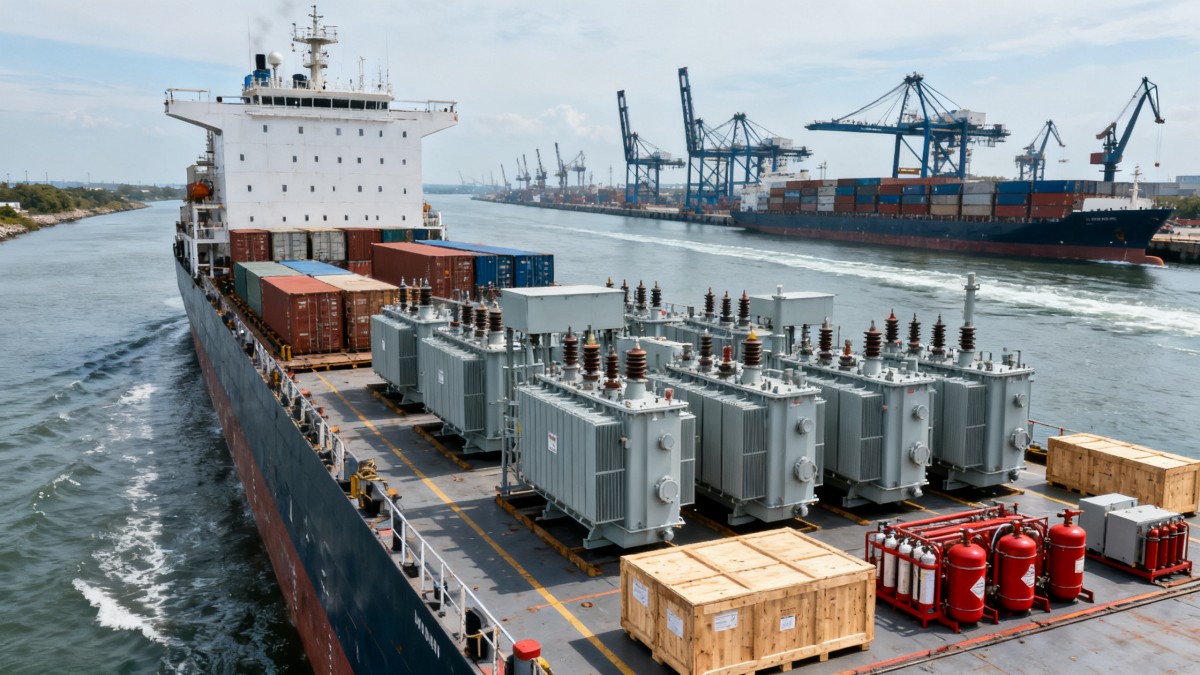
The confirmed information is limited but commercially significant. The two sides stated that a peace agreement was signed on June 19 in Switzerland and that the Strait of Hormuz will be fully reopened. Before this development, traffic through the strait had fallen by 94%, forcing vessels on Middle East routes to divert around the Cape of Good Hope and extending voyage times by 10 to 14 days. This placed notable pressure on delivery cycles for industrial equipment, including transformers, circuit breakers, and firefighting equipment. Major shipping lines such as Maersk and MSC have already begun assessments for service resumption, and key route capacity and ETA stability are expected to improve from early July.
Where the practical effects may appear first
Exporters facing delivery pressure
For equipment exporters, the main issue is not only freight transit time but also contract performance. When voyages lengthen and route certainty weakens, shipment windows, handover timing, and downstream installation schedules can all come under strain. From an industry perspective, these companies should pay closer attention to whether shipping schedules, booking conditions, and delivery commitments need to be updated in export documents and customer communications as route conditions improve.
Procurement and project buyers watching ETA reliability
Buyers of industrial equipment are likely to feel the impact through planning rather than pricing alone. Equipment such as transformers, circuit breakers, and firefighting systems is often linked to project sequencing, site readiness, or replacement schedules. Analysis shows that a recovery in route access may help procurement teams revisit delivery assumptions, but they should still verify the latest vessel arrangements, shipping notices, and contractual delivery terms before treating shorter lead times as operationally secure.
Supply chain service providers adjusting execution plans
Freight forwarders, shipping agents, and related supply chain service providers may be among the first to translate this change into execution decisions. Their focus will likely be on whether carrier assessments turn into confirmed sailings, more stable ETAs, and reduced need for contingency routing. What deserves closer attention is the alignment between carrier notices, booking documentation, and customer delivery expectations, especially where prior delays triggered revised shipment plans.
What companies should monitor next
Check whether reopening signals become executable shipping arrangements
Although reopening has been confirmed, the operational effect still depends on how quickly carrier assessments convert into actual route restoration. Observably, companies should distinguish between a positive access signal and a fully stabilized transport environment.
Reconfirm documents tied to delivery commitments
Where industrial equipment exports are already in process, firms should review shipping-related documents, technical delivery schedules, tender commitments, and customer-facing milestones. If prior diversions or delays changed expected arrival dates, the consistency of current paperwork becomes a practical compliance and execution issue.
Review procurement and installation sequencing
For buyers and project-linked users, a possible improvement in ETA stability may affect procurement timing, warehouse planning, and field installation coordination. Analysis shows that this is a point for cautious adjustment rather than aggressive rescheduling, because the summary provided does not yet establish detailed execution timelines beyond the expected early-July improvement.
Watch after-sales and traceability implications
Delayed industrial equipment shipments can affect commissioning, replacement cycles, and service response expectations. From an industry perspective, companies should keep product traceability records, shipment status files, and customer service communications aligned in case delivery schedules are revised again during the transition back to normal routing.
Why this looks more like an execution signal than a finished reset
Analysis shows that this development is best understood as an important execution signal for trade flows rather than as a completed return to normal conditions. The confirmed facts point to reopening and to carrier reassessment activity, which is meaningful for industrial equipment shipping. At the same time, the practical market effect still depends on how route access, vessel deployment, and ETA performance are carried through in actual operations. For that reason, continued attention to carrier updates, trade documentation, and contract implementation remains necessary.
How to read the current change
At this stage, the event carries clear relevance for companies tied to Middle East-bound industrial equipment shipments, especially where delivery cycles were disrupted by rerouting and longer voyages. A rational reading is that the market has received a stronger transport-access signal and an early indication of improving schedule stability, but not yet a fully settled operating baseline. It is more appropriate to understand this as a material easing signal with follow-through still needing observation.
Basis of this article
This article is generated from the user-provided news title, event date, and event summary. For developments of this kind, market participants would typically continue to compare information against official statements, regulatory or trade authority releases, shipping line notices, industry association updates, standards-related communications, and reporting by authoritative media. No specific official source link was provided in the input, so the exact official documentation still requires follow-up verification. Further observation should focus on implementation details, carrier execution notices, possible changes in tender or delivery documents, market feedback, and how companies reflect the change in actual shipping and fulfillment practice.
Technical Specifications
- How to Select Electronic Hotel Key Card Locks for Guest Rooms and Staff AreasAuthor :Safety Compliance Lead
- How to Select Lab Instruments for Reliable Chemical Analysis WorkflowsAuthor :Precision Metrology Expert
- How to Size a UPS for Server Rooms: Load, Runtime, and Redundancy FactorsAuthor :Grid Infrastructure Analyst
Expert Insights

Chief Security Architect
Dr. Thorne specializes in the intersection of structural engineering and digital resilience. He has advised three G7 governments on industrial infrastructure security.
Related Analysis
- Sep 17, 2026How to Select Electronic Hotel Key Card Locks for Guest Rooms and Staff AreasAuthor :Safety Compliance Lead
- Sep 16, 2026How to Select Lab Instruments for Reliable Chemical Analysis WorkflowsAuthor :Precision Metrology Expert
- Sep 15, 2026How to Size a UPS for Server Rooms: Load, Runtime, and Redundancy FactorsAuthor :Grid Infrastructure Analyst
Core Sector // 01
Security & Safety
- How to Size a UPS for Server Rooms: Load, Runtime, and Redundancy FactorsAuthor :Grid Infrastructure Analyst

- How to Choose a Step-Down Transformer for a Control Panel: Key Sizing FactorsAuthor :Grid Infrastructure Analyst

- How Often Should Overseas Power Systems Undergo Safety Inspections?Author :Grid Infrastructure Analyst

- How to Choose Panels for Extreme-Cold Industrial Sites?Author :Grid Infrastructure Analyst

- What Should a Cross-Border EPC Equipment Procurement Reference Include?Author :Grid Infrastructure Analyst

- How to Compare Low-Voltage Equipment for Panel IntegrationAuthor :Grid Infrastructure Analyst

- IEC-Compliant Power Infrastructure: Key Design and Verification RequirementsAuthor :Grid Infrastructure Analyst

- Updated EN 61000-6-4:2026 Raises EMC Compliance Bar for EU-Bound Industrial EquipmentAuthor :Grid Infrastructure Analyst