Marine Cables Wholesale: How to Compare Specs, MOQs, and Certifications
Author
Date Published
Reading Time

Marine Cables Wholesale: How to Compare Specs, MOQs, and Certifications
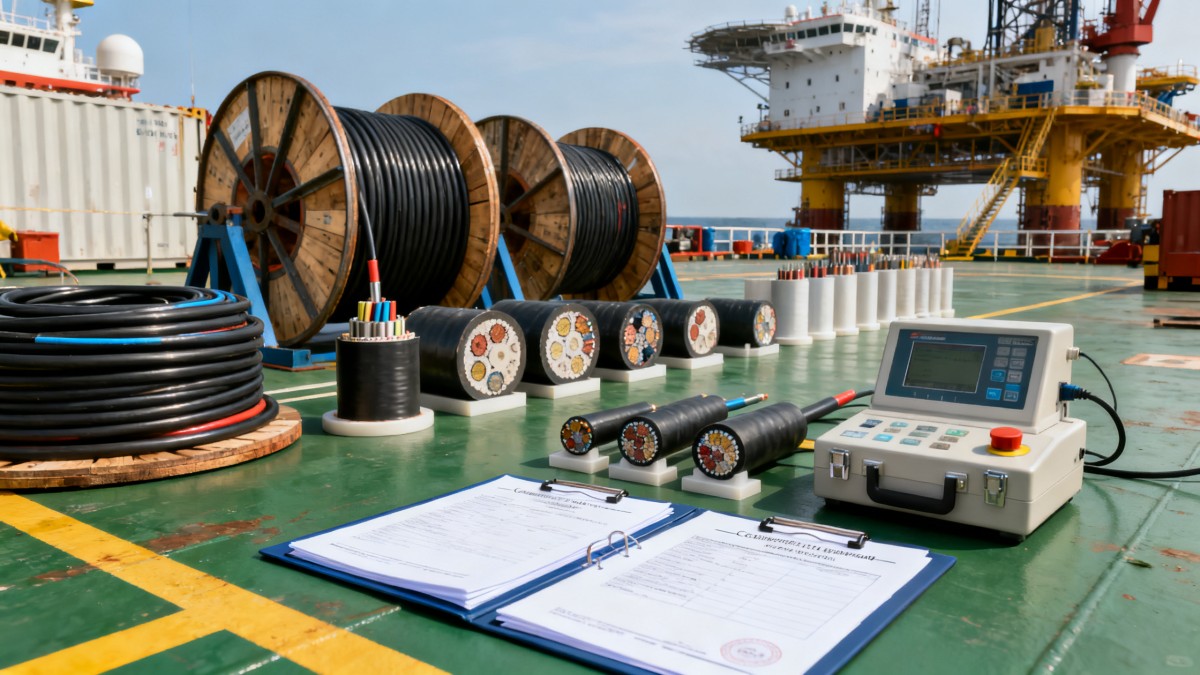
Sourcing through marine cables wholesale channels can reduce costs, but the wrong choice may create compliance, durability, and delivery risks.
For industrial projects, cable failure offshore is rarely a small problem. It can stop systems, delay commissioning, and increase safety exposure.
That is why marine cables wholesale decisions should not start with price alone. The better starting point is fit for service.
In practice, buyers usually compare three things first: technical specs, minimum order quantities, and certifications.
These three factors shape total cost, supply flexibility, and audit readiness. They also reveal which suppliers understand marine applications.
This guide explains how to evaluate marine cables wholesale offers with more confidence, especially when balancing cost, compliance, and delivery risk.
Start with the operating environment, not the catalog
Many marine cables look similar on a quotation sheet. Their real differences appear only when you match them to the service environment.
A vessel engine room, offshore platform, port crane, and coastal desalination plant do not create the same cable stress profile.
Before requesting marine cables wholesale pricing, define the application in a brief technical summary.
- Voltage rating and power or signal function
- Fixed installation or repeated flexing
- Exposure to oil, salt spray, UV, and abrasion
- Temperature range during operation and storage
- Indoor routing, deck routing, or submerged exposure
- Fire performance requirements and smoke limits
This step sounds basic, but it quickly removes unsuitable options. It also improves quote accuracy and reduces back-and-forth with suppliers.
More importantly, it prevents overbuying. Some marine cables wholesale offers include premium features that are unnecessary for the actual duty cycle.
How to compare marine cable specs without missing critical details
When reviewing marine cables wholesale options, focus on functional specification groups rather than product names alone.
Conductor and insulation
Check conductor material, class, and cross-sectional area. Tinned copper is often preferred in marine settings because corrosion resistance matters.
Then review insulation type. EPR, XLPE, and other compounds affect heat resistance, flexibility, and aging performance.
Sheath and mechanical protection
Outer sheath material influences oil resistance, flame spread, and abrasion behavior. This area often separates industrial-grade cables from marine-suitable ones.
If the route includes vibration or possible impact, compare armored and unarmored constructions carefully.
Fire and safety performance
Marine projects often require low smoke, halogen-free, or flame-retardant performance. Some applications also need fire-resistant circuit integrity.
This is where cheap marine cables wholesale offers can become risky. A lower unit price may hide a weaker fire-performance profile.
Shielding and signal integrity
For control, instrumentation, or communication lines, shielding matters. Check foil, braid, or combined shielding construction.
Also review capacitance, attenuation, and interference resistance where sensitive equipment is involved.
A practical way to compare marine cables wholesale quotations is to build a side-by-side spec sheet with pass, fail, and optional fields.
Why MOQs matter more than the unit price suggests
Minimum order quantity is not just a purchasing formality. In marine cables wholesale deals, MOQ affects working capital, inventory risk, and project flexibility.
A supplier may offer an attractive per-meter price, but require a drum length far above the actual installation demand.
That creates excess stock, higher storage needs, and possible obsolescence if specifications change later.
Questions to ask about MOQ
- Is MOQ based on meters, drums, or production batch size?
- Can mixed sizes or mixed cores be combined?
- Are custom markings available below standard MOQ?
- Does MOQ change for stocked versus made-to-order items?
- Can trial orders convert into volume pricing later?
In actual procurement work, flexible MOQ often has more value than a small discount. It supports phased installation and lowers forecast pressure.
This also matters when qualifying new vendors. Smaller first orders make marine cables wholesale supplier onboarding less risky.
Which certifications deserve the closest review
Certifications are often listed quickly on supplier pages, but not all claims carry equal procurement value.
For marine cables wholesale sourcing, the real question is whether the certification matches the target market, application, and audit expectations.
Core compliance categories
- Product certifications for marine and industrial use
- Factory quality systems such as ISO 9001
- Environmental or material compliance declarations
- Fire test reports and performance standards
- Third-party type approval where required
Depending on destination and application, buyers may need CE, UL, IEC references, RoHS declarations, or marine classification approvals.
Ask for current certificates, not just logos in a brochure. Then verify issue dates, scope, product family, and issuing body.
A common problem in marine cables wholesale sourcing is document mismatch. The certificate exists, but not for the quoted cable construction.
That gap may only appear during inspection, customs review, or project handover. By then, replacement cost is much higher.
A simple comparison framework for supplier evaluation
When several marine cables wholesale offers look competitive, a structured scorecard helps reduce subjective decisions.
Weight technical fit and certification highest for critical systems. For lower-risk applications, MOQ and delivery flexibility may carry more weight.
Cost comparison should include hidden procurement drivers
A true marine cables wholesale cost review goes beyond unit price per meter.
Look at total landed cost, documentation effort, waste from drum length, inspection requirements, and replacement exposure.
For example, a supplier with a slightly higher quote may still be cheaper if lead times are stable and certificates are complete.
The opposite is also true. Low-cost marine cables wholesale sourcing can become expensive when rework and delays enter the picture.
- Compare cut length efficiency
- Estimate inventory carrying cost
- Include freight by drum size and weight
- Price inspection and testing needs
- Model replacement cost for failure scenarios
This broader view makes supplier ranking more realistic and easier to defend internally.
Red flags that deserve immediate attention
Some warning signs appear early in marine cables wholesale discussions. Ignoring them usually increases downstream risk.
- Datasheets lack test standards or revision dates
- Certificates do not match the quoted model
- MOQ terms change after technical confirmation
- Lead times sound optimistic but unsupported
- Samples differ from production documentation
- Technical questions receive only sales answers
A capable marine cables wholesale partner should provide clear technical evidence, not vague assurance.
That difference becomes even more important for export projects, classified marine assets, and safety-related systems.
Final checklist for a stronger buying decision
Before placing a marine cables wholesale order, run a short final review.
- Confirm the cable matches the actual marine environment.
- Validate conductor, insulation, sheath, and fire-performance details.
- Check MOQ against installation schedule and stock strategy.
- Verify all certifications and supporting reports.
- Review lead time, packaging, and drum identification terms.
- Compare total procurement cost, not only quoted price.
A disciplined review process helps separate a low quote from a reliable solution.
In marine cables wholesale procurement, the best outcome is rarely the cheapest line item. It is the option that performs, complies, and arrives when needed.
If the next sourcing round is approaching, build a comparison sheet now. It will make supplier discussions faster, clearer, and far easier to justify.
Technical Specifications
- How to Select Electronic Hotel Key Card Locks for Guest Rooms and Staff AreasAuthor :Safety Compliance Lead
- How to Select Lab Instruments for Reliable Chemical Analysis WorkflowsAuthor :Precision Metrology Expert
- How to Size a UPS for Server Rooms: Load, Runtime, and Redundancy FactorsAuthor :Grid Infrastructure Analyst
Expert Insights

Chief Security Architect
Dr. Thorne specializes in the intersection of structural engineering and digital resilience. He has advised three G7 governments on industrial infrastructure security.
Related Analysis
- Sep 17, 2026How to Select Electronic Hotel Key Card Locks for Guest Rooms and Staff AreasAuthor :Safety Compliance Lead
- Sep 16, 2026How to Select Lab Instruments for Reliable Chemical Analysis WorkflowsAuthor :Precision Metrology Expert
- Sep 15, 2026How to Size a UPS for Server Rooms: Load, Runtime, and Redundancy FactorsAuthor :Grid Infrastructure Analyst
Core Sector // 01
Security & Safety
- Selecting PTFE Insulated Hookup Wire for High-Temperature Control PanelsAuthor :Grid Infrastructure Analyst

- How Contractors Can Evaluate EPC Sourcing Solutions for Cost, Lead Time, and RiskAuthor :Grid Infrastructure Analyst

- What Drives Silicone Cable Bulk Price in Industrial Orders?Author :Grid Infrastructure Analyst

- EN 61000-6-4:2026 Takes Effect for EU-Bound ControlsAuthor :Grid Infrastructure Analyst

- How to Choose Low Smoke Cables and Wiring for Safer Commercial Buildings?Author :Grid Infrastructure Analyst

- Medium Voltage Armored Cable Selection Guide: Voltage Rating, Armor Type, and InstallationAuthor :Grid Infrastructure Analyst

- EU Publishes EN IEC 61000-6-4:2026 for Industrial EMCAuthor :Grid Infrastructure Analyst

- Choosing an XLPE Power Cable Manufacturer: 7 Checks for Voltage Class and ComplianceAuthor :Grid Infrastructure Analyst