Vacuum Circuit Breakers VCB vs SF6 Breakers: Which Fits Medium-Voltage Projects Better?
Author
Date Published
Reading Time
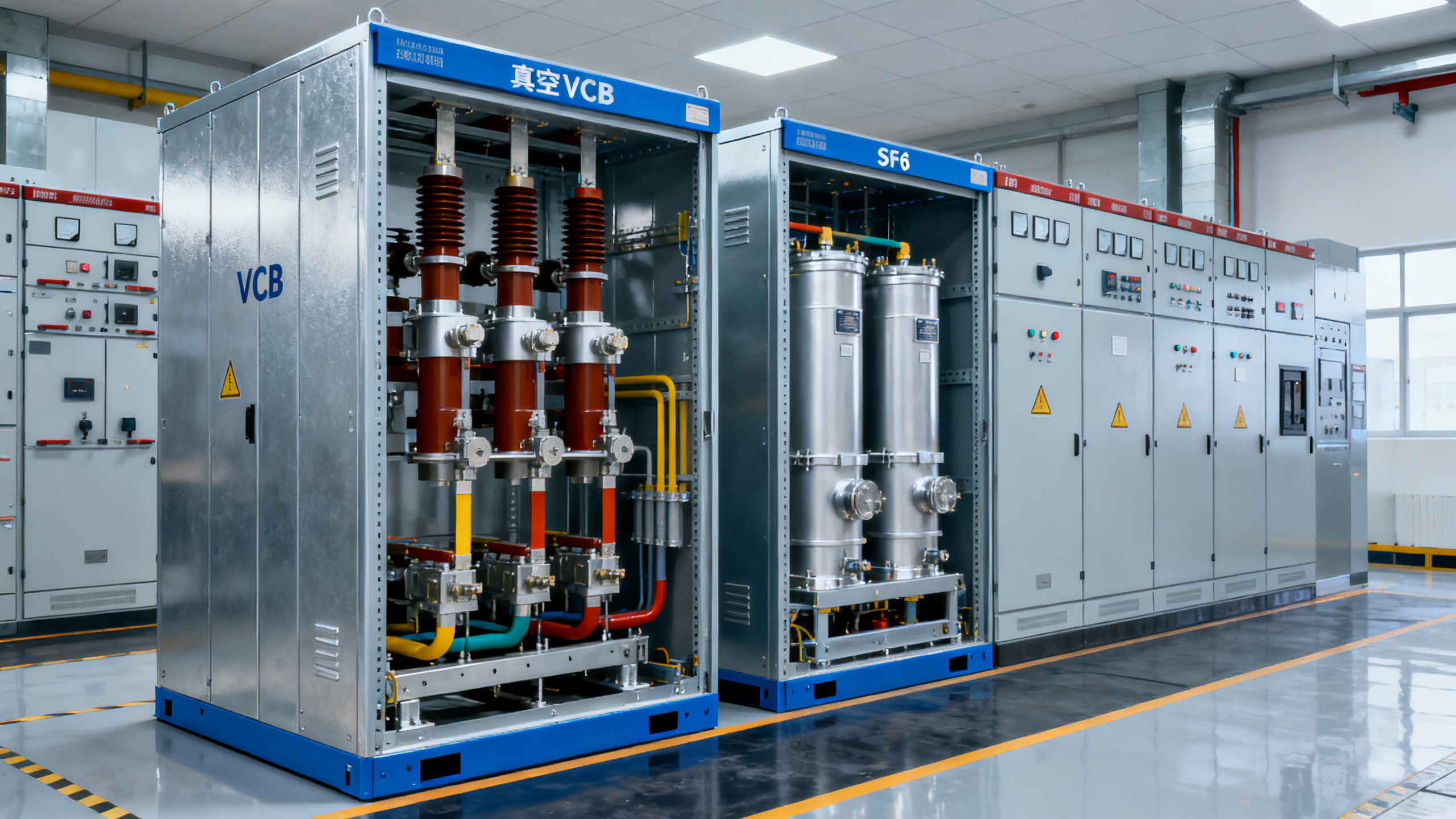
Choosing between vacuum circuit breakers VCB and SF6 breakers is rarely a narrow equipment decision. In medium-voltage projects, it shapes switching reliability, maintenance workload, environmental exposure, and long-term compliance strategy. For industrial infrastructure, where downtime can interrupt entire process lines, the comparison matters far beyond the switchgear room.
That is why the topic keeps surfacing across power distribution upgrades, EPC planning, and plant expansion programs. The better fit depends on fault duty, site conditions, asset life expectations, and how a project balances operational resilience with sustainability goals.
Why this choice has become more strategic
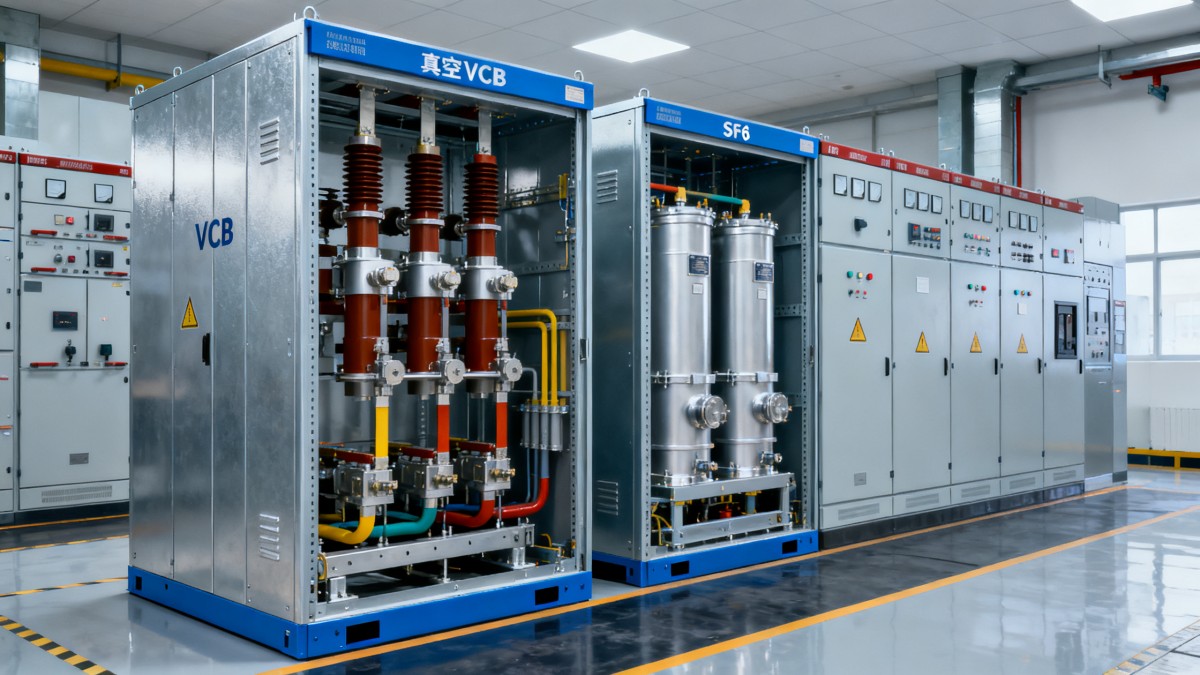
Medium-voltage networks now face tighter scrutiny from several directions at once. Electrical performance still leads the conversation, but environmental governance and service continuity are close behind.
SF6 has long been valued for strong insulation and arc-quenching performance. Yet its greenhouse impact has pushed many operators to reassess where it remains justified.
At the same time, vacuum circuit breakers VCB have matured into a mainstream option for indoor distribution, industrial feeders, substations, and motor control applications. Their profile aligns well with projects seeking lower maintenance intensity and cleaner environmental positioning.
From the perspective of Global Industrial Core, this is exactly the kind of decision that requires technical context, standards awareness, and lifecycle judgment rather than headline claims.
A practical way to understand both technologies
Both breaker types interrupt current and isolate faults, but they do so through different arc-extinguishing media.
How vacuum interruption works
Vacuum circuit breakers VCB interrupt the arc inside a sealed vacuum interrupter. With very little gas present, the arc collapses quickly as current crosses zero.
This design supports high mechanical endurance, stable operation, and relatively limited maintenance when used within rated conditions.
How SF6 interruption works
SF6 breakers use sulfur hexafluoride gas for insulation and arc extinction. The gas offers excellent dielectric strength, which helps in compact switchgear and demanding interruption duties.
However, gas handling, leak monitoring, and end-of-life management introduce responsibilities that extend beyond routine mechanical service.
Where vacuum circuit breakers VCB often lead
In many medium-voltage industrial projects, vacuum circuit breakers VCB are preferred because they match current priorities across reliability, maintenance planning, and environmental policy.
- No SF6 gas management, which simplifies compliance and reduces environmental reporting concerns.
- Strong switching performance for feeders, transformers, motors, and capacitor applications when correctly specified.
- Lower routine service burden in many indoor installations.
- Good fit for modernization projects replacing aging oil or legacy air-insulated equipment.
These advantages are especially relevant in manufacturing plants, utility distribution rooms, commercial campuses, data-intensive facilities, and process industries with limited tolerance for planned outages.
Another reason vacuum circuit breakers VCB gain attention is predictability. When project teams want fewer specialist interventions over the asset life, vacuum technology often offers a cleaner planning path.
Where SF6 breakers still make sense
The shift toward vacuum does not mean SF6 is obsolete. In some medium-voltage and higher-performance environments, SF6 breakers remain technically justified.
They can be attractive where compact equipment layouts are essential, where insulation margins must remain high in constrained footprints, or where existing system architecture already depends on gas-insulated designs.
Retrofit logic also matters. If a site already has established gas-handling procedures, trained service partners, and installed GIS assets, staying with SF6 may reduce redesign complexity.
In other words, SF6 breakers are not automatically the wrong answer. They simply require stronger justification in projects where environmental policy and lifecycle governance carry more weight than before.
Side-by-side comparison for project decisions
A direct comparison helps frame the decision in operational terms rather than brand preference or legacy habit.
This comparison does not replace engineering studies, but it helps clarify why vacuum circuit breakers VCB are gaining preference in a growing share of new medium-voltage projects.
Key application scenarios to evaluate
The right breaker choice becomes clearer when mapped to actual operating conditions.
Industrial process plants
For indoor switchgear serving motors, feeders, and transformer incomers, vacuum circuit breakers VCB usually provide a strong balance of reliability and manageable maintenance.
Utilities and substations
Where space, insulation coordination, and network design are more complex, both technologies may remain viable. Existing substation architecture often shapes the final answer.
Retrofit and brownfield projects
Legacy equipment replacement should consider panel compatibility, outage windows, operator familiarity, and disposal obligations. Vacuum circuit breakers VCB can reduce future environmental exposure, but retrofit mechanics still need careful review.
High-governance facilities
Sites with strict sustainability targets or ESG reporting often lean toward vacuum because the compliance narrative is simpler over the full asset life.
What to check before making a final specification
A sound decision usually comes from a shortlist of technical and operational questions rather than a single performance claim.
- Review rated voltage, short-circuit breaking capacity, and switching duty against the actual network study.
- Check whether the installation is indoor, outdoor, coastal, dusty, or temperature-stressed.
- Confirm maintenance capability on site, including access to qualified service partners.
- Assess environmental policy, leakage tolerance, and future regulatory exposure.
- Look at total lifecycle cost, not only initial panel pricing.
- Verify conformity with IEC requirements and any plant-specific safety procedures.
This is where disciplined sourcing matters. GIC’s editorial approach is useful because breaker selection should be anchored in evidence, certifications, and service reality, not simplified product positioning.
Which option fits better in most medium-voltage projects
For many new industrial and commercial medium-voltage installations, vacuum circuit breakers VCB are now the more balanced choice. They align well with lower maintenance expectations, stronger environmental posture, and dependable switching performance.
SF6 breakers still hold value in selected configurations, especially where compact gas-insulated solutions or legacy system continuity remain decisive. The better fit is not universal, but the direction of preference is increasingly clear.
The next step is to compare both technologies against one project-specific matrix: duty cycle, site conditions, service model, compliance burden, and asset-life strategy. Once those factors are visible in one place, the right breaker choice usually becomes far less ambiguous.
Technical Specifications
- How to Select an Access Control Management System for Multi-Site FacilitiesAuthor :Safety Compliance Lead
- Portable Gas Monitor Calibration: How Often Is It Needed for Safe Confined-Space Work?Author :Precision Metrology Expert
- Wholesale Borosilicate Lab Glassware: How Buyers Verify Quality, Specs, and Supply ReliabilityAuthor :Precision Metrology Expert
Expert Insights

Chief Security Architect
Dr. Thorne specializes in the intersection of structural engineering and digital resilience. He has advised three G7 governments on industrial infrastructure security.
Related Analysis
- Sep 20, 2026How to Select an Access Control Management System for Multi-Site FacilitiesAuthor :Safety Compliance Lead
- Sep 19, 2026Portable Gas Monitor Calibration: How Often Is It Needed for Safe Confined-Space Work?Author :Precision Metrology Expert
- Sep 18, 2026Wholesale Borosilicate Lab Glassware: How Buyers Verify Quality, Specs, and Supply ReliabilityAuthor :Precision Metrology Expert
Core Sector // 01
Security & Safety
- Can SPDs Handle Repeated Voltage Spikes in Tropical Grids?Author :Grid Infrastructure Analyst

- How to Evaluate IEC-Compliant Power Protection Devices for Industrial PanelsAuthor :Grid Infrastructure Analyst

- How to Choose Smart Industrial Control Equipment for Harsh Plant EnvironmentsAuthor :Grid Infrastructure Analyst

- EU EMC Update Triggers Re-Certification for BreakersAuthor :Grid Infrastructure Analyst

- How to Select the Right SPD for Solar Inverter Protection in PV Systems?Author :Grid Infrastructure Analyst

- Industrial Valve Systems Factory Checklist: What Buyers Should Verify Before OrderingAuthor :Grid Infrastructure Analyst

- Breaker and Relay Lead Times Hit 24 WeeksAuthor :Grid Infrastructure Analyst

- IEC 61850-10-3 Sets Cybersecurity Bar for Grid DevicesAuthor :Grid Infrastructure Analyst