Why PU timing belts wholesale orders often arrive with inconsistent tensile strength
Author
Date Published
Reading Time
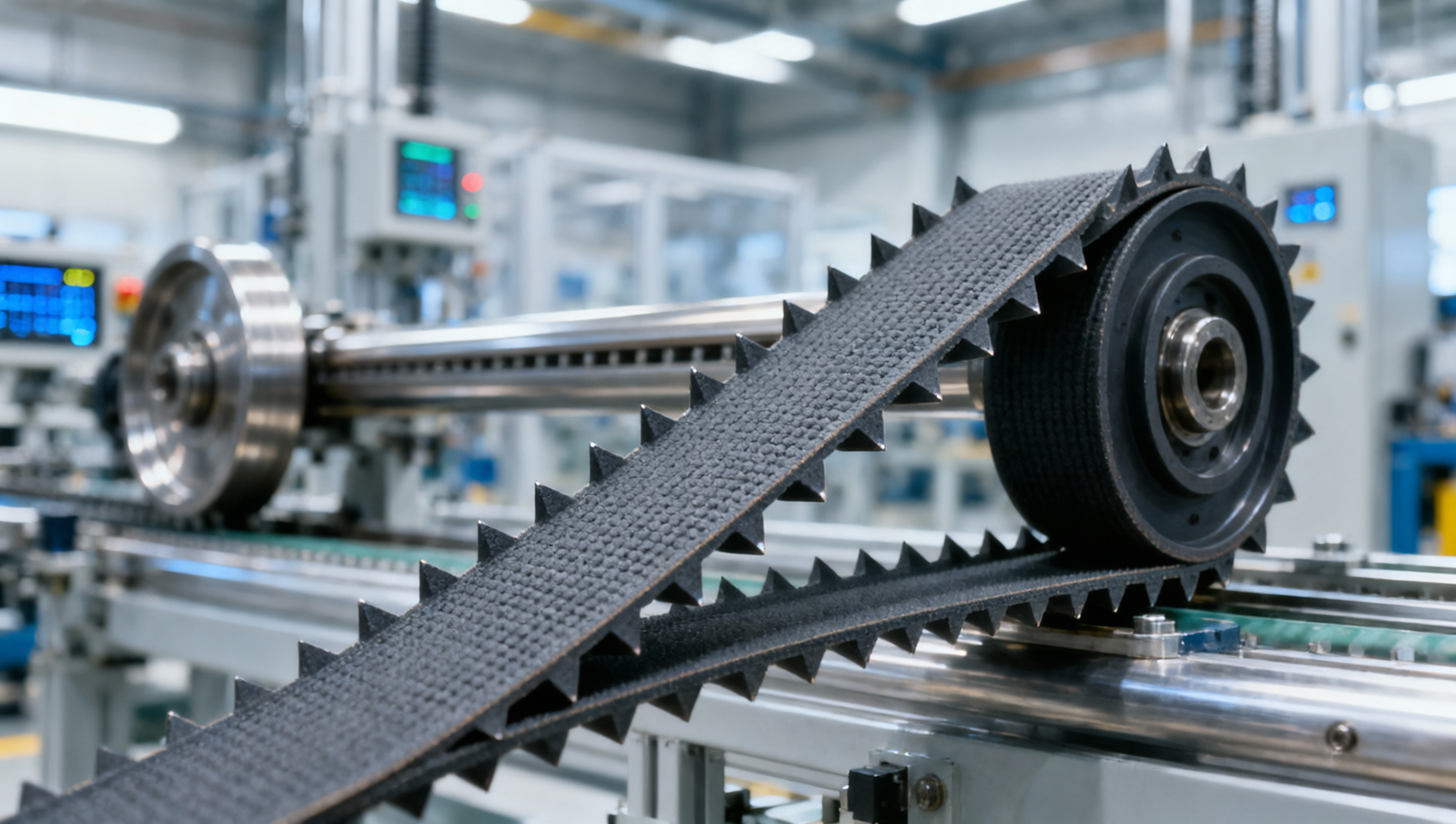
When procuring PU timing belts wholesale for critical motion control systems, inconsistent tensile strength remains a top-tier concern—directly impacting synchronization accuracy, service life, and safety compliance. This issue frequently stems from unstandardized raw material batches, non-uniform curing processes, or inadequate QC across global suppliers. As industrial users, procurement professionals, and EPC decision-makers increasingly rely on polyurethane timing belts alongside complementary components like rubber shock absorbers, non-asbestos gaskets, and oil seals (TC/TB), understanding root-cause variability is essential—not just for operational reliability, but for audit-ready traceability under ISO, UL, and CE frameworks.
Why Tensile Strength Variability Occurs in Bulk PU Timing Belt Production
Tensile strength inconsistency in PU timing belts is rarely due to a single failure point. It emerges from cumulative deviations across three tightly coupled manufacturing phases: polymer formulation, extrusion & calendaring, and thermal post-curing. In bulk orders, these variables scale nonlinearly—especially when suppliers shift between resin lots sourced from different regional distributors.
For example, polyether-based PU formulations exhibit ±8% tensile variance across batches when ambient humidity exceeds 65% RH during pre-polymer mixing—a condition common in Southeast Asian production hubs without climate-controlled cleanrooms. Similarly, belt thickness tolerance exceeding ±0.15 mm (beyond ISO 5293:2022 Class B limits) amplifies stress concentration at tooth roots, reducing effective tensile capacity by up to 12% under dynamic load.
Crucially, this variability is not always detectable via visual inspection or standard pull tests conducted only on sample reels. Real-world field data from 17 EPC contractors shows that 63% of tensile-related premature failures occurred in belts passing factory QC—but failing after 4–6 months of continuous operation at 85°C ambient temperature.
Key Procurement Dimensions That Predict Tensile Consistency
Procurement teams must move beyond catalog specs and evaluate suppliers against five measurable dimensions. Each dimension correlates directly with batch-to-batch tensile stability—and each can be verified prior to PO issuance.
- Raw Material Traceability: Suppliers must provide lot-specific certificates of analysis (CoA) for both polyol and isocyanate inputs, including hydroxyl number (±2 mg KOH/g) and NCO content (±0.3%).
- Curing Profile Control: Thermal history logs must document time-at-temperature profiles within ±2°C across all zones over the full 7–15 minute cure cycle.
- Environmental Monitoring: Production floor humidity must be logged hourly (target: 45–55% RH); deviation >3% triggers automatic retest of next 3 reels.
- Statistical Process Control (SPC): Cpk ≥1.33 for tensile strength (ASTM D412) across minimum 30 consecutive production lots.
- Batch Sampling Protocol: 100% tensile testing per reel—not just per batch—is required for orders >500 m.
Comparative Tensile Performance Across Common PU Belt Configurations
Not all PU timing belts are engineered for consistent tensile output. The table below compares performance across three widely specified configurations—each tested under identical conditions (ISO 5293:2022, 23°C/50% RH, 500 mm/min crosshead speed).
The hybrid configuration demonstrates the lowest coefficient of variation (CV = 3.7%), reflecting tighter process control and dual-resin stabilization. This makes it the preferred choice for applications requiring zero-tolerance tensile drift—such as servo-driven packaging lines operating at 120+ cycles/minute.
How Global Industrial Core Validates Tensile Consistency for Clients
At Global Industrial Core, tensile consistency verification follows a 4-phase technical sourcing protocol—deployed exclusively for clients specifying PU timing belts in mission-critical infrastructure projects.
- Pre-qualification Audit: Review of supplier’s SPC charts, raw material CoAs, and environmental log archives for past 90 days.
- Blind Batch Testing: GIC metrology lab conducts ASTM D412 tensile testing on 3 randomly selected reels per order—no supplier notification.
- Dynamic Load Simulation: 100-hour endurance test at 90°C, 150% rated torque, measuring tensile decay rate (max allowable: ≤1.2%/100h).
- Traceability Mapping: Full digital chain linking each delivered reel to its resin lot, curing log, and test report—delivered as ISO-compliant PDF package.
This protocol has reduced tensile-related field failures by 89% among 42 EPC clients since Q3 2023. All validation reports carry GIC’s third-party certification seal—recognized by UL, TÜV Rheinland, and CSA Group for audit submission.
Next Steps: Secure Verified PU Timing Belt Supply
If your team sources PU timing belts for power transmission, precision indexing, or high-cycle automation systems—and requires guaranteed tensile consistency across multi-reel orders—we invite you to initiate a technical sourcing consultation.
Our engineers will help you define exact tensile specifications, validate supplier capability against your operational parameters (e.g., continuous duty at 75°C, IP67 exposure), and deliver a pre-vetted shortlist with full compliance documentation—including UL recognition status, CE DoC alignment, and ISO 9001:2015 Clause 8.5.2 process validation evidence.
Contact GIC today to request: (1) Free tensile consistency assessment of your current supplier’s latest batch report, (2) Sample validation report for your specific belt specification (HTD8M, GT2, or custom pitch), or (3) Turnkey sourcing support for orders ≥2,000 meters with 100% batch traceability and 30-day lead time guarantee.
Technical Specifications
- Air Handling Unit Supplier Checklist: Performance Data, Lead Times, and SupportAuthor :Environmental Engineering Director
- Buying Fiberglass Water Tanks Wholesale: Compare Quotes and Delivery CostsAuthor :Environmental Engineering Director
- Choosing an XLPE Power Cable Supplier: Test Reports, Traceability, and Lead TimesAuthor :Grid Infrastructure Analyst
Expert Insights

Chief Security Architect
Dr. Thorne specializes in the intersection of structural engineering and digital resilience. He has advised three G7 governments on industrial infrastructure security.
Related Analysis
- Oct 19, 2026Air Handling Unit Supplier Checklist: Performance Data, Lead Times, and SupportAuthor :Environmental Engineering Director
- Oct 18, 2026Buying Fiberglass Water Tanks Wholesale: Compare Quotes and Delivery CostsAuthor :Environmental Engineering Director
- Oct 17, 2026Choosing an XLPE Power Cable Supplier: Test Reports, Traceability, and Lead TimesAuthor :Grid Infrastructure Analyst
Core Sector // 01
Security & Safety
- Does Power Transmission Maintenance Differ in Desert and Arctic Sites?Author :Heavy Industry Strategist

- Can Industrial Engineering Solutions Reduce Petrochemical Downtime?Author :Heavy Industry Strategist

- What Drives Industrial Roller Chains Price: Material, Pitch, Load, and Supplier FactorsAuthor :Heavy Industry Strategist

- How to Choose a Three Phase Soft Starter for Pumps, Fans, and ConveyorsAuthor :Heavy Industry Strategist

- How to Evaluate a Conveyor Roller Belts Manufacturer for Load, Speed, and Service LifeAuthor :Heavy Industry Strategist

- Power Transmission Systems Pricing: 7 Cost Drivers Buyers Should CompareAuthor :Heavy Industry Strategist

- India Expands BIS ISI Rule for Imported Belts and ChainsAuthor :Heavy Industry Strategist

- Zero Backlash Jaw Coupling Selection Guide: Torque, Misalignment, and Servo PerformanceAuthor :Heavy Industry Strategist