Forged Steel Socket Fittings vs Cast Fittings: Which Is Better for High-Pressure Lines?
Author
Date Published
Reading Time
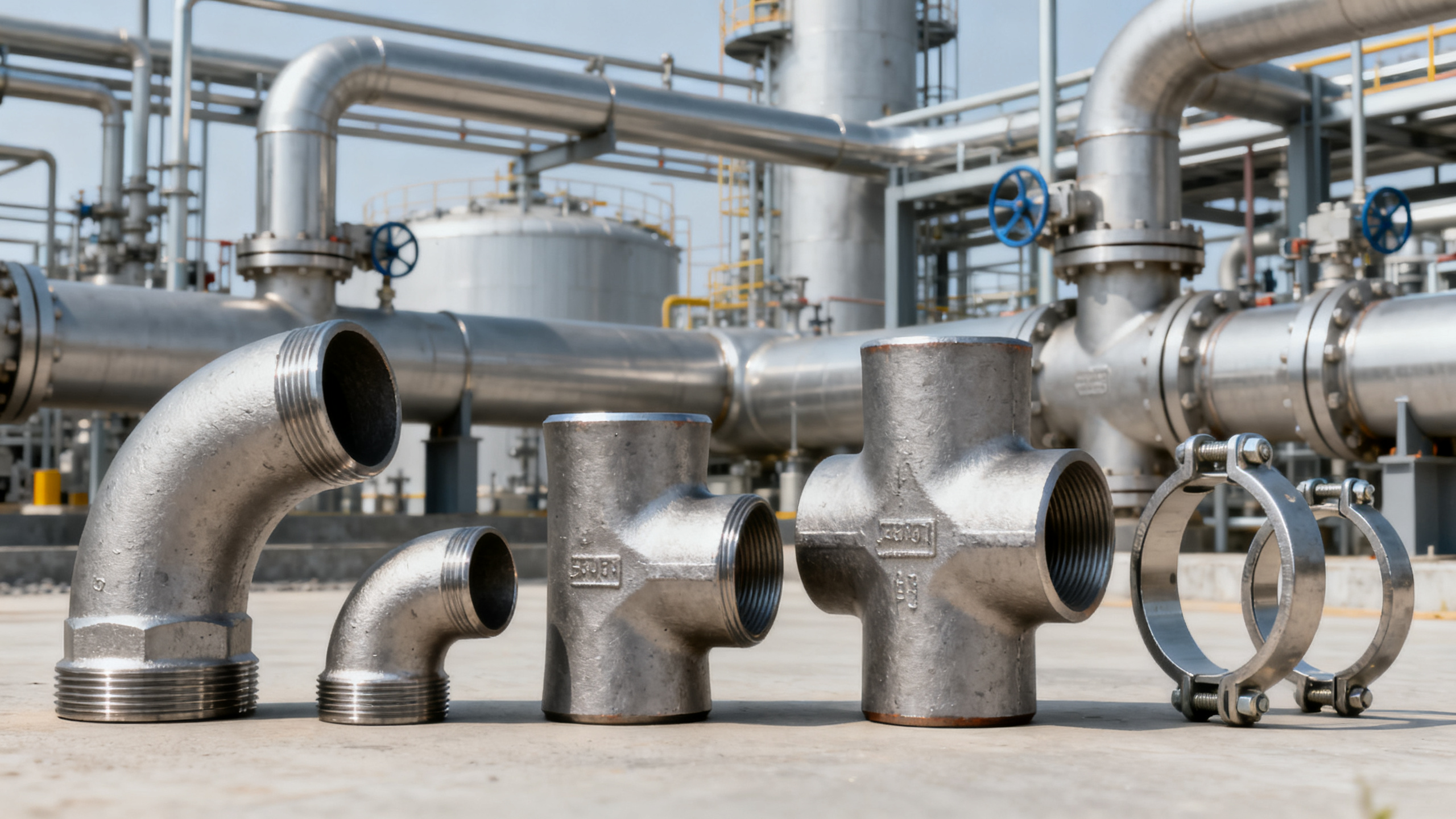
Forged Steel Socket Fittings vs Cast Fittings: Which Is Better for High-Pressure Lines?
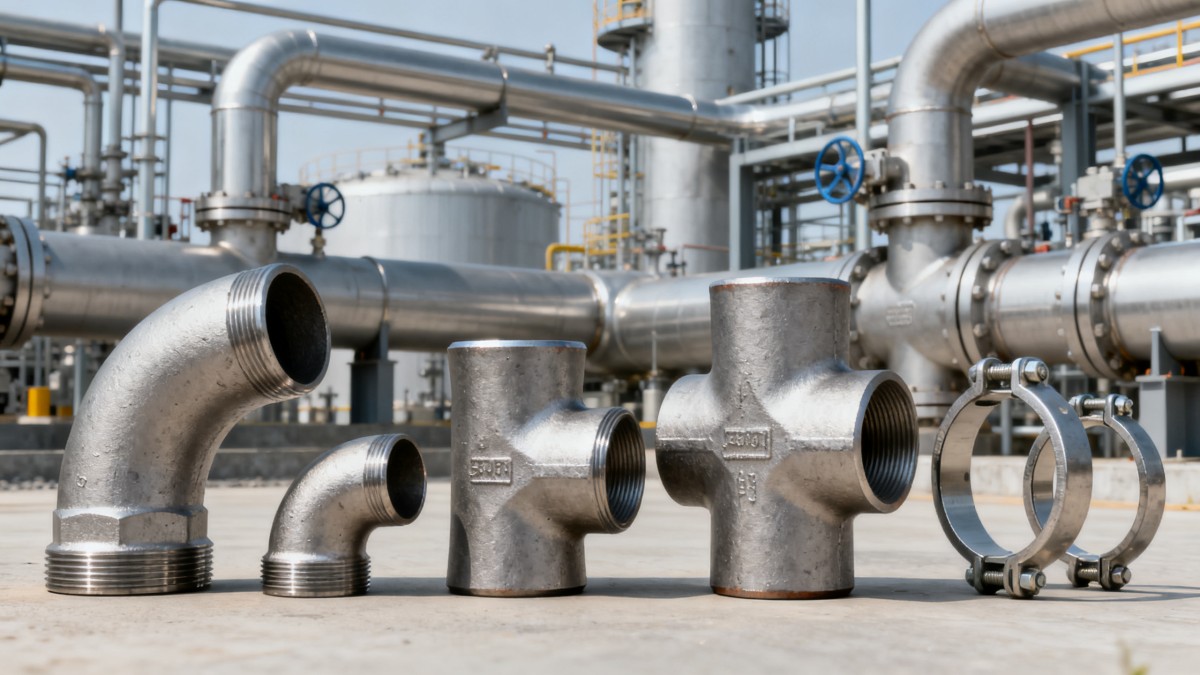
When high-pressure piping systems leave no room for failure, material choice moves from a technical detail to a business risk.
That is exactly why forged steel socket fittings and cast fittings are often compared during sourcing reviews.
Both can connect, redirect, or terminate flow.
But their performance under pressure, vibration, and temperature cycling can differ in meaningful ways.
In practical procurement work, the question is rarely which product is cheaper on paper.
The better question is which option reduces lifecycle risk in the actual operating environment.
For high-pressure lines, forged steel socket fittings usually lead because they offer tighter grain structure, better toughness, and stronger pressure containment.
Cast fittings still have a place, especially in lower-stress services and cost-sensitive installations.
The decision becomes clearer when you compare manufacturing method, defect risk, standards compliance, and total cost of ownership.
What Makes Forged Steel Socket Fittings Different?
Forged steel socket fittings are produced by shaping heated steel under compressive force.
That process refines the internal grain flow and improves mechanical strength.
Cast fittings are made by pouring molten metal into molds.
Casting allows complex shapes and efficient volume production, but it can introduce porosity, inclusions, and uneven structure.
For high-pressure service, these manufacturing differences matter more than they might first appear.
A forged component generally handles internal stress more predictably.
It also tends to respond better to pressure surges, thermal shock, and repeated load cycles.
This is one reason forged steel socket fittings are widely specified in oil and gas, petrochemical, power generation, and high-pressure steam systems.
Why socket weld design matters
Socket weld fittings are designed for small-bore piping, usually where leak integrity is critical.
The pipe slips into the fitting socket before welding.
That geometry supports alignment and creates a strong welded connection.
When this design is combined with forged steel, the result is a fitting well suited for compact, high-pressure systems.
Performance Comparison in High-Pressure Lines
The most direct comparison comes down to pressure retention, crack resistance, and failure mode.
In each area, forged steel socket fittings generally perform more reliably.
1. Pressure strength
Forged steel socket fittings are commonly supplied to ASME B16.11 pressure classes.
Typical classes include 3000, 6000, and 9000.
Those ratings align well with severe service conditions.
Cast fittings can serve pressurized systems too, but they are less preferred where pressure cycling is aggressive.
2. Structural integrity
The denser microstructure of forged steel lowers the chance of hidden voids.
That gives forged steel socket fittings a clear advantage in maintaining wall integrity under stress.
Cast fittings are more vulnerable to internal discontinuities that may only become visible after service exposure.
3. Fatigue and vibration resistance
In compressor lines, pump skids, and pulsating systems, vibration becomes a major issue.
Forged steel socket fittings typically tolerate these repeated stresses better.
This also means fewer premature replacements and fewer unplanned shutdown events.
4. Failure behavior
When forged components fail, they often show warning signs through deformation or crack propagation.
Cast materials can fail in a more brittle way, especially if defects concentrate stress locally.
For safety-critical lines, that difference deserves close attention.
Where Cast Fittings Still Make Sense
Cast fittings are not automatically the wrong choice.
They can be suitable in non-critical services where operating pressure is moderate and failure consequences are manageable.
They are also common where part geometry is complex and the process favors casting economics.
Examples may include utility water systems, general industrial piping, and certain low-risk process lines.
Still, once pressure, temperature, or consequence of failure increases, forged steel socket fittings usually become the safer commercial decision.
A simple rule of thumb
- Use forged steel socket fittings for high-pressure, high-temperature, cyclic, or hazardous services.
- Consider cast fittings for lower-pressure duties with stable conditions and lower risk exposure.
Standards, Testing, and Compliance Checks
A fitting is only as reliable as its manufacturing control and documentation trail.
That is why standards review should be part of every comparison.
For forged steel socket fittings, common references include ASME B16.11, ASTM material grades, MSS guidance, and pressure-temperature ratings.
Depending on project location, ISO, PED, CE, or NACE requirements may also apply.
More importantly, verify what the supplier can actually prove.
Check these documents before approval
- Material test certificates with full heat traceability.
- Dimensional inspection records.
- Pressure class and material grade confirmation.
- NDE reports when specified, such as MPI or UT.
- Corrosion compliance documents for sour or chloride-containing environments.
From a risk standpoint, forged steel socket fittings often come with stronger documentation culture in critical industrial supply chains.
That reduces ambiguity during audits, inspections, and warranty reviews.
Cost vs Lifecycle Value
Initial purchase price can make cast fittings look attractive.
But the lower upfront cost does not always translate into better project economics.
For high-pressure lines, the real cost includes downtime, maintenance labor, leak remediation, and safety exposure.
A single fitting failure can erase any savings from a lower bid package.
This is where forged steel socket fittings often deliver stronger value over time.
They usually cost more at the sourcing stage, but they reduce exposure in the operating stage.
Use this cost lens during evaluation
- Compare unit price only after confirming equal material grade and pressure class.
- Factor in inspection cost, replacement interval, and outage consequences.
- Rate supplier reliability, certification quality, and traceability support.
- Assign higher weight to failure consequence in flammable or toxic media.
Quick Comparison Table for Selection
How to Make the Final Decision
A good selection process starts with service conditions, not catalog habit.
Review pressure, temperature, medium, corrosion profile, and upset scenarios first.
Then match the fitting type to risk level.
For critical lines, forged steel socket fittings are usually the stronger answer because they combine mechanical reliability with better confidence in long-term service.
That does not mean every line needs the highest-spec part.
It means the fitting should reflect the real consequence of failure.
Final buying checklist
- Confirm ASME and ASTM compliance before price comparison.
- Check whether the line is exposed to pressure surges or vibration.
- Review traceability, testing scope, and heat number control.
- Calculate downtime risk, not just material spend.
- Choose forged steel socket fittings when service severity is high and operational continuity matters.
In most high-pressure applications, forged steel socket fittings are the better option.
They cost more upfront, but they usually buy back that premium through safety, stability, and reduced failure risk.
For selection decisions tied to critical infrastructure, that is often the more defensible procurement move.
Technical Specifications
- Air Handling Unit Supplier Checklist: Performance Data, Lead Times, and SupportAuthor :Environmental Engineering Director
- Buying Fiberglass Water Tanks Wholesale: Compare Quotes and Delivery CostsAuthor :Environmental Engineering Director
- Choosing an XLPE Power Cable Supplier: Test Reports, Traceability, and Lead TimesAuthor :Grid Infrastructure Analyst
Expert Insights

Chief Security Architect
Dr. Thorne specializes in the intersection of structural engineering and digital resilience. He has advised three G7 governments on industrial infrastructure security.
Related Analysis
- Oct 19, 2026Air Handling Unit Supplier Checklist: Performance Data, Lead Times, and SupportAuthor :Environmental Engineering Director
- Oct 18, 2026Buying Fiberglass Water Tanks Wholesale: Compare Quotes and Delivery CostsAuthor :Environmental Engineering Director
- Oct 17, 2026Choosing an XLPE Power Cable Supplier: Test Reports, Traceability, and Lead TimesAuthor :Grid Infrastructure Analyst
Core Sector // 01
Security & Safety
- How to Specify Steel Heavy-Duty Corner Guards for Loading Bays and High-Traffic AreasAuthor :Heavy Industry Strategist

- Selecting Non-Ferrous Metal Plates for Corrosion, Weight, and Formability RequirementsAuthor :Heavy Industry Strategist

- Stainless Steel Welded Tube Applications: Matching Tube Supply to Fabrication NeedsAuthor :Heavy Industry Strategist

- What Maintenance Do Furnace Components Need After 18 Months?Author :Heavy Industry Strategist

- How to Assess Metal Materials for Thermal Cycling in Power BoilersAuthor :Heavy Industry Strategist

- How to Evaluate Aluminum Extrusion Suppliers for Tight-Tolerance Components?Author :Heavy Industry Strategist

- How to Evaluate a Weld Neck Flange Manufacturer for High-Pressure Pipe ProjectsAuthor :Heavy Industry Strategist

- EU REACH Ban Hits Cr(VI)-Coated Steel ImportsAuthor :Heavy Industry Strategist
-Coated Steel Imports")